(7% discount is applied at checkout)
Cart is empty
Your go-to destination for cutting-edge server products


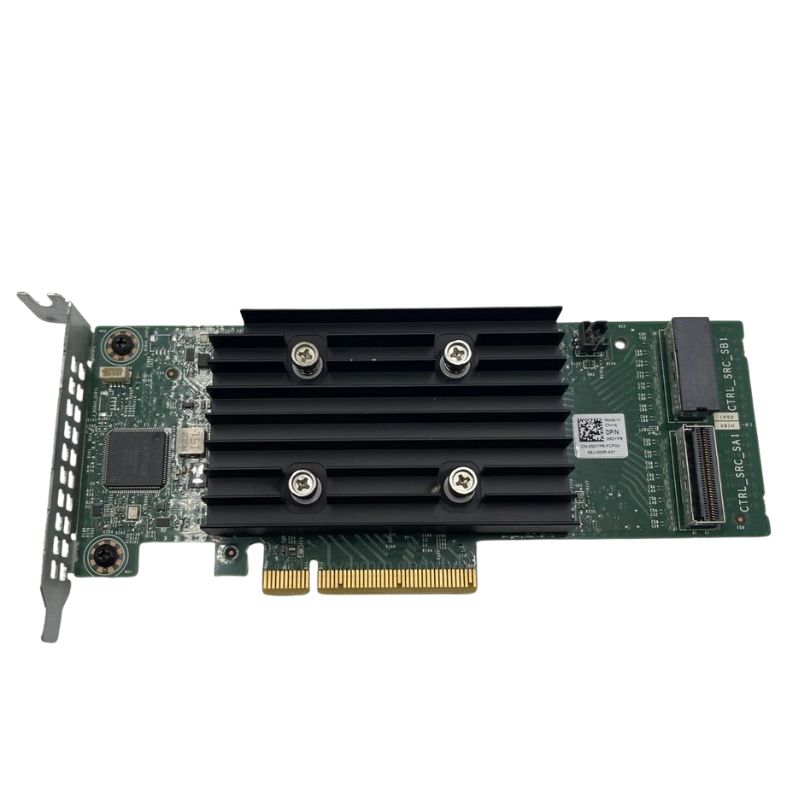
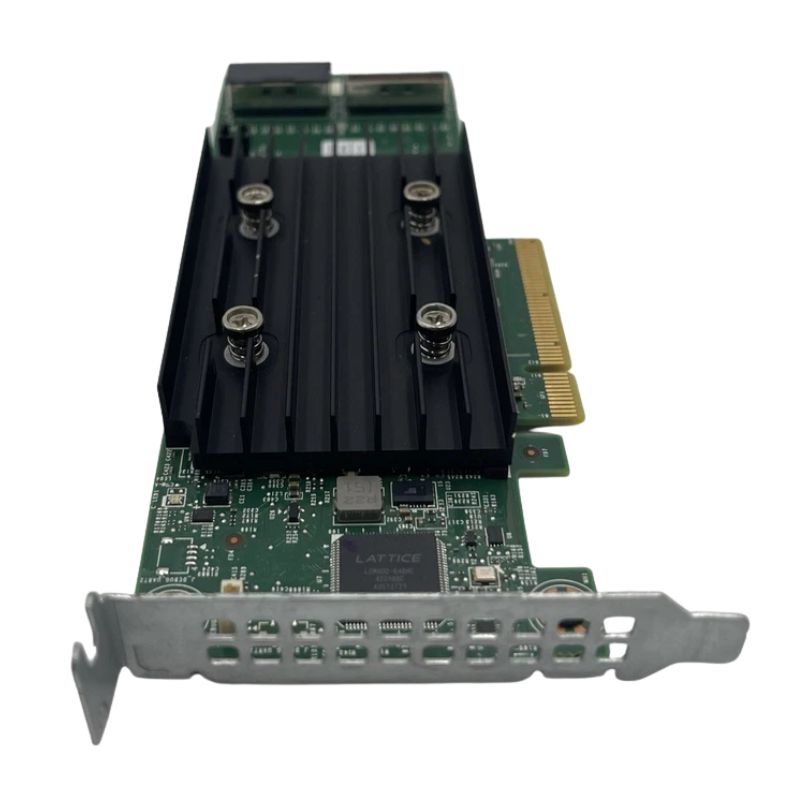
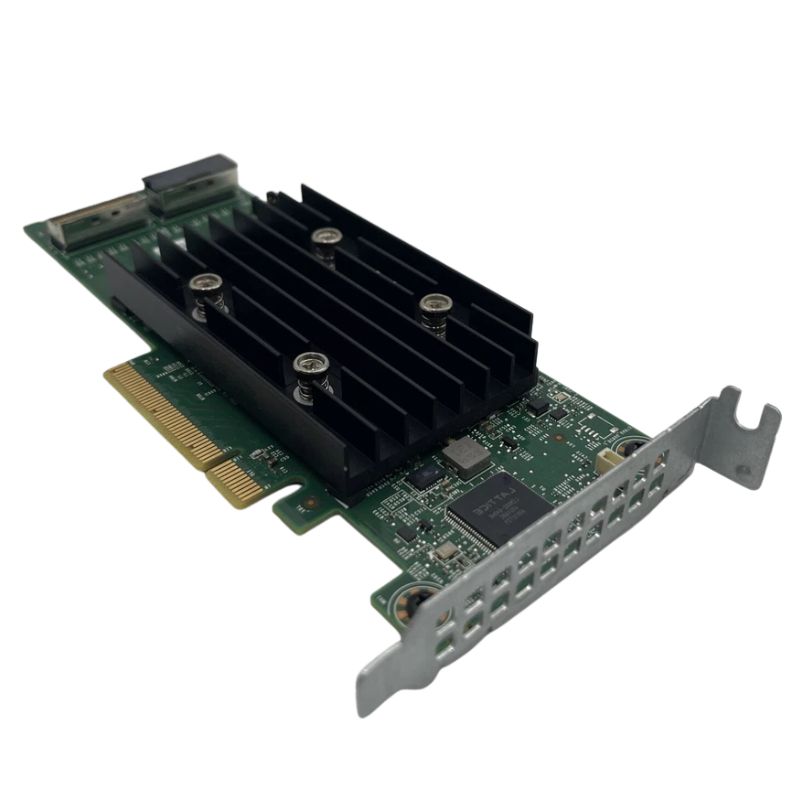
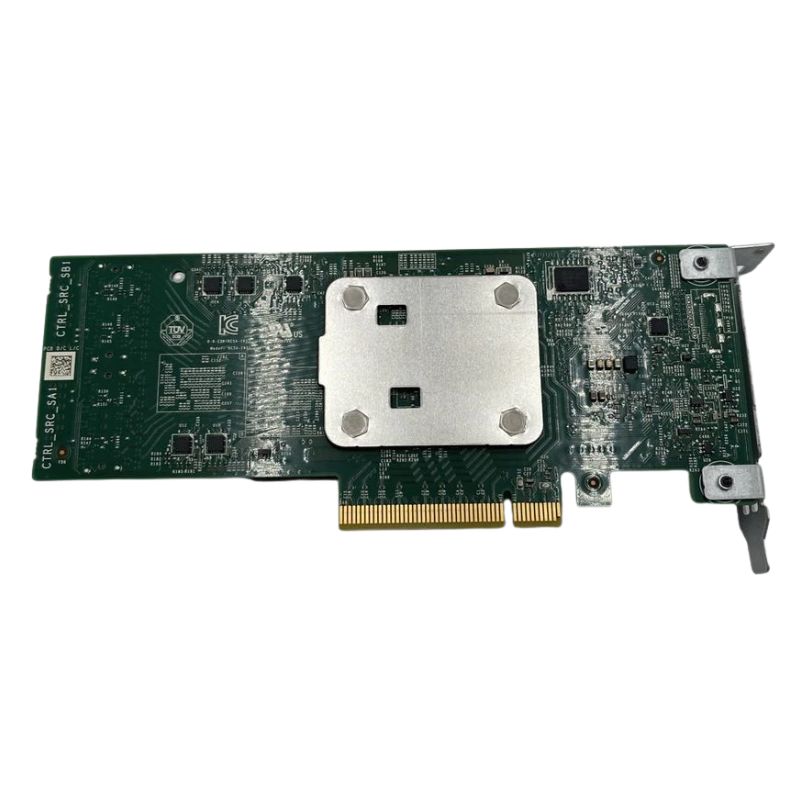
Dell GM130 PERC H345 12GBPS PCI-E 3.0 2x8 Internal SAS-SATA Connectors Raid Adapter. New (System) Pull with 1 Year Replacement Warranty
Product name: Dell GM130 PERC H345 12GBPS PCI-E 3.0 2x8 Internal SAS-SATA Connectors Raid Adapter.
This enterprise-grade RAID controller — also referred to as a RAID card, SAS/SATA adapter, or storage controller — delivers reliable hardware RAID for Dell servers and compatible systems. Engineered for sustained throughput and solid data protection, the GM130 (SKU: GM130) uses the PERC H345 controller chipset and supports PCIe 3.0 connectivity.
The Dell GM130 PERC H345 is a high-performance hardware RAID controller engineered for modern server environments that demand reliability, throughput and data integrity. Built on a PCI-Express 3.0 x8 interface and supporting 12Gbps SAS/SATA per port, this adapter enables enterprises to connect multiple drives with low latency and enterprise-grade feature sets. The PERC H345 is optimized for mixed workloads — from database hosting and virtualization to media streaming and backup— offering a balance between throughput, CPU offload and advanced RAID functions. Its support for 2x8 internal SAS-SATA connectors allows flexible drive topologies, enabling both direct-attached storage and expansion through compatible backplanes and mini-SAS cables.
Performance is the cornerstone of the GM130 PERC H345 design. The controller’s 12Gbps SAS lanes deliver sustained sequential throughput and improved command queuing over older 6Gbps models, making it particularly effective for NVMe-adjacent storage architectures where SAS/SATA tiers serve as caching, archival or bulk storage layers. In real-world workloads, the H345 reduces I/O wait times by offloading RAID calculations from the host CPU, improving IOPS for random read/write patterns and lowering latency for database transactions. The PCI-E 3.0 interface supplies sufficient bandwidth for most RAID arrays built on SAS or SATA HDDs and SSDs; pairing the adapter with high-quality enterprise SSDs and appropriate queue depths results in measurable gains in both read and write throughput.
The internal architecture of the PERC H345 integrates a dedicated RAID engine and onboard cache mechanisms to accelerate parity calculations and mirror synchronization tasks. Hardware acceleration of RAID levels such as 0, 1, 5, 6, 10 and advanced hybrid modes reduces CPU overhead and shortens rebuild windows. The adapter’s firmware implements intelligent caching policies — write-back and write-through — that can be tuned for performance or data safety depending on workload patterns and power protection options. For environments where predictable write latency is critical, administrators can configure caching alongside battery or supercapacitor-backed flush mechanisms to protect in-flight data during power loss events.
Dell’s GM130 PERC H345 is commonly validated for use in a wide range of Dell EMC PowerEdge servers and compatible third-party chassis that accept PCI-E 3.0 x8 cards. Compatibility extends to SAS and SATA mechanical drives as well as enterprise-class SAS SSDs. The adapter’s two 8-lane internal ports use the mini-SAS HD (SFF-8643) or equivalent connectors depending on OEM implementation, allowing connections to internal backplanes, drive cages and SAS expanders. When planning integration, it’s important to verify the server’s BIOS/UEFI and firmware compatibility matrix and to ensure the chassis provides the required power and airflow for the selected drive population. Using approved Dell firmware and drivers guarantees the broadest support and preserves management features such as PERC BIOS configuration utilities and lifecycle controller integration.
The PERC H345 supports hot-swap drive operations when paired with hot-swap capable drive bays and backplanes, enabling maintenance and replacement without server downtime. Expandability is achieved via SAS expanders or backplanes that allow the controller’s two internal ports to address more physical drives through port multiplication. For large-scale deployments, administrators often design hierarchical topologies in which a limited number of PERC controllers can drive multiple trays of drives through powered expanders, balancing throughput and management complexity. Properly configured expanders retain drive discovery and SMART reporting so administrators can monitor drive health across large arrays while the controller orchestrates RAID operations.
The PERC H345’s feature set addresses both performance optimization and data protection. Supported RAID levels include RAID 0 for stripe performance, RAID 1 for mirroring, RAID 5 and RAID 6 for parity-based redundancy, and RAID 10 for mirrored stripes that combine speed and protection. The controller also supports global hot-spare, dedicated hot-spare assignments and online capacity expansion. Advanced data protection features include rapid rebuild algorithms, background consistency checks and predictive failure alerts when paired with compatible drives. Management tools — accessible through the server’s lifecycle controller, Dell OpenManage suite and dedicated PERC BIOS utilities — provide administrators with an end-to-end workflow for provisioning arrays, monitoring health and scheduling maintenance windows.
Keeping the PERC H345 firmware and drivers up-to-date is critical to maintain compatibility with modern OS kernels, hypervisors and server firmware. Dell releases signed firmware bundles and driver packages that integrate with OpenManage and iDRAC for centralized lifecycle management. Firmware updates often deliver improved rebuild performance, enhanced SMART parsing, fixes for edge-case interoperability issues and occasionally new features such as expanded caching heuristics. For production systems, administrators should follow a controlled firmware upgrade path: stage updates in test environments, validate array integrity and ensure backups are current before rolling updates across critical servers.
The PERC H345 finds its place across a broad spectrum of enterprise scenarios. In virtualization clusters, it delivers the consistent I/O required for VMs hosting business-critical services. In database tiers, its low-latency characteristics and ability to accelerate parity based RAID levels make it a reliable controller for both OLTP and mixed OLAP workloads. For media and content delivery infrastructures, the adapter enables large capacity arrays with sequential throughput suited for streaming and bulk content storage. Backup and archive nodes benefit from its expandability and support for large-capacity SATA drives, while read-intensive analytics clusters can be tuned with cache policies and drive selection to optimize costs without sacrificing responsiveness.
Small and medium businesses may leverage the H345 to consolidate storage resources and reduce host CPU utilization, while enterprises exploit its management and scalability capabilities to orchestrate large arrays across server fleets. The controller’s balancing of cost and capabilities positions it as an attractive choice where the highest-end RAID controllers (with large BBUs and NV cache) are unnecessary, yet a reliable hardware RAID solution is still required. Dell’s certification for PowerEdge models and integration with OpenManage simplifies adoption for IT teams already operating in Dell ecosystems.


 Contact Us
 Information
 Catalog
 Solid State Drives (SSD)
 Network Switches
 Hard Disk Drives
 HBA & Controllers
 PC & Servers
 PC & Server Memory
 CPU & Processors
 Network Routers
 Power Supplies
 Tape Drives & Libraries
 Network Devices
 Computer & Network Cables