
(7% discount is applied at checkout)
Cart is empty
Your go-to destination for cutting-edge server products
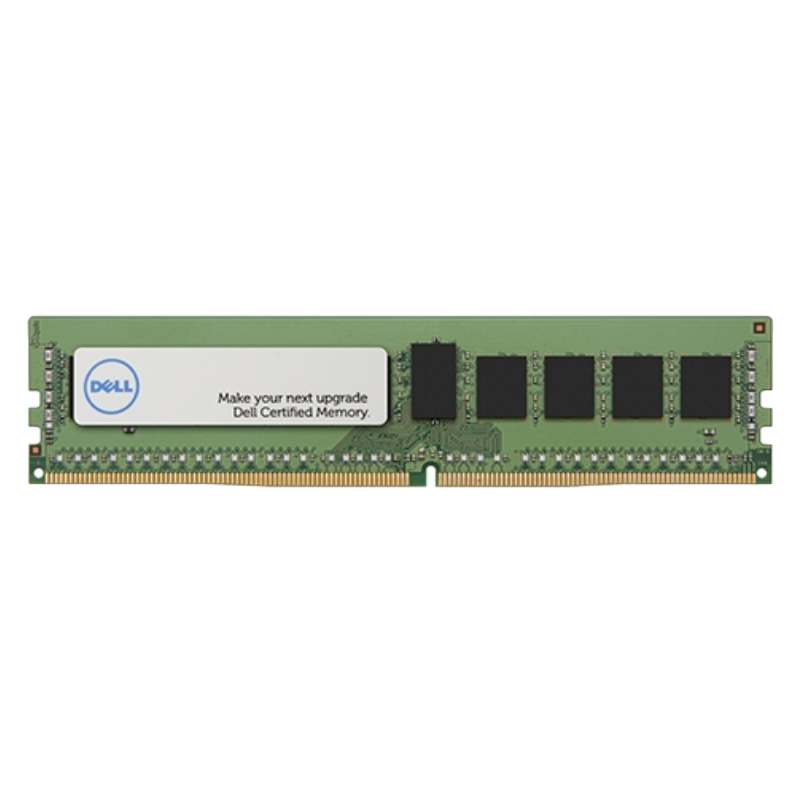
Dell H8PGN 8GB 2133MHz PC4-17000 ECC Reg Ddr4 SDRAM 288-Pin Memory. New (System) Pull with 1 Year Replacement Warranty
The Dell H8PGN 8GB 2133MHz PC4-17000 ECC Registered DDR4 module is a reliable and efficient server-grade memory solution crafted to boost system responsiveness, enhance multitasking, and maintain data accuracy. Designed for enterprise environments, this RAM delivers consistent performance for workstations and servers requiring dependable error-correcting capabilities.
Dell Precision Workstations
The Dell H8PGN 8GB 2133MHz PC4-17000 ECC Registered DDR4 288-Pin Memory module represents a specialized class of enterprise-ready components engineered to maintain unwavering performance within high-intensity computing ecosystems. As part of the broader family of professional workstation and server memory classifications, this module exemplifies the intersection of data integrity, bandwidth optimization, and secure processing. Its DDR4 technology, paired with advanced error-correcting mechanisms and a registered buffering design, positions it as a vital component for organizations relying on continuous uptime and operational reliability. In industrial sectors where complex modeling, analytics, and virtualization frameworks dominate daily workflow expectations, memory modules like the H8PGN function as the cornerstone for system stability and computational throughput.The overarching category of ECC Registered DDR4 server memory places emphasis on safeguarding data transactions, minimizing latency fluctuations, and enabling consistent execution even when workloads increase beyond baseline thresholds. This particular module expands on these core expectations by offering structured error mitigation, energy-efficient architecture, and timing accuracy essential for applications where system failures can lead to costly interruptions. Its compatibility ecosystem also contributes to its relevance across Dell’s high-performance workstation and PowerEdge server lines, reflecting a design philosophy centered around seamless hardware integration.
Within the domain of enterprise-class memory classifications, ECC Registered DDR4 modules serve as an evolution of traditional memory formats. Their capacity to autonomously detect and correct common memory faults reduces the potential for data corruption during read and write cycles. This intrinsic protection makes modules within this classification particularly suited for medical systems, financial analytics engines, scientific computing clusters, and other digital infrastructures where errors cannot be tolerated. The Dell H8PGN functions as a representative example of how ECC technology mitigates bit-level inconsistencies and preserves system continuity.The Registered (RDIMM) structure embedded within this memory type goes beyond simple capacity handling. By offloading some of the electrical load from the memory controller and distributing it more efficiently, RDIMM technology prevents signal distortion, especially when multiple modules operate within multi-channel server boards. This becomes crucial for high-density environments where extended uptime and predictable processing behavior take precedence.
With a rated speed of 2133MHz, the Dell H8PGN aligns with the PC4-17000 memory classification, delivering an accelerated data throughput environment essential for workloads that must respond in real time. Frequency advantages in DDR4 technology stem from enhanced prefetching capabilities and lower voltage consumption, which collectively contribute to reduced heat output and improved operational lifespan. The module’s ability to maintain this frequency consistently within professional workstations ensures that tasks involving rendering, coding, virtualization, and workload orchestration benefit from reduced bottlenecks.CAS Latency 15 further amplifies its responsiveness, enabling smoother execution of sequential and random access operations. Timing accuracy plays a decisive role when systems require the immediate delivery of critical data blocks, whether for cloud-based server operations or on-premise high-availability solutions. The H8PGN leverages this timing standard to deliver a balance between speed and stability, allowing it to function efficiently under sustained processing pressure. This balance underscores the value of memory modules within this category for organizations transitioning toward hardware infrastructures designed for both current workloads and future expansion.
Operating at 1.2 volts, the module embodies the low-energy characteristics typical of DDR4 memory architecture. Voltage efficiency plays an integral role in data center configurations where dozens of modules function within confined server racks. By reducing overall power draw, the H8PGN assists in maintaining safe thermal conditions while extending the operational longevity of surrounding components. Lower voltage also correlates with minimized thermal load, further supporting energy-conscious IT deployments that aim to maximize processing performance without surpassing thermal thresholds.This energy-efficient profile aligns with contemporary industry practices where sustainability and cost reduction strategies remain vital. As more corporations migrate toward hybrid-cloud and multi-server deployment models, components such as the H8PGN ensure that resource consumption remains predictable and environmentally considerate without sacrificing computational rigor.
The physical configuration of DDR4 288-pin RDIMMs introduces reduced spacing between pins, improved signal routing, and a redesigned notch placement intended to prevent incorrect installation. This level of structural precision contributes to the broader category of RDIMM modules recognized for their distinctive footprint and compatibility with server-grade motherboards. The Dell H8PGN utilizes this pin structure to maintain secure connections within workstation and server systems where constant vibration, heat cycling, and intensive throughput demand robust physical stability.The architecture also supports advanced channel layering, enhancing module-to-controller communication. Within systems fitted with multiple RDIMM modules, bandwidth distribution becomes evenly balanced due to improved channeling pathways. This ensures smoother data flow and higher memory access consistency during multitasking peaks. As the 288-pin RDIMM layout becomes standard across new server platforms, modules like the H8PGN reinforce the necessity for precise engineering, especially when optimizing platforms for large-scale database processing, virtualization clusters, and distributed computing environments.
The compact shipping dimensions of one inch in height and six point seventy-five inches in depth signify a protective and manageable packaging solution crafted to safeguard the module during transit. The twenty-hundredths of a pound weight further reflects a lightweight build, though the internal circuitry remains reinforced for long-term dependability. Many data centers depend on bulk shipments of such modules, making compact and reliable packaging crucial for maintaining the integrity of semiconductor components throughout global delivery networks.Durability in memory design extends beyond construction and packaging. It involves the reliability of each electronic trace, capacitor, and silicon pathway. The Dell H8PGN belongs to a category recognized for its stringent testing standards, thermal cycling assessments, and extensive compatibility checks. These quality measures reduce the incidence of early-life failures and ensure optimal performance once integrated into high-demand workstation and server platforms.
Compatibility remains one of the defining features of the Dell H8PGN memory category, showcasing a broad alignment with Dell’s Precision workstation series and PowerEdge server families. Systems such as the Precision T7910, T7810, T5810, and R7910 utilize this memory classification to support compute-intensive professional applications ranging from engineering modeling to digital content creation. The module’s Registered ECC design ensures that these systems maintain stable processing frameworks even when heavily burdened with parallel workloads or large datasets.Within the server domain, PowerEdge models such as the R630, R730, R430, R530, T430, and R730xd rely on this type of memory to perform mission-critical computations with minimal downtime risk. Server frameworks benefit considerably from ECC Registered memory due to its capacity to mitigate the risks associated with long processing cycles, extensive virtual machine hosting, and multi-user environments. The fault-tolerance embedded in the H8PGN’s architecture preserves operational continuity, especially in redundant or clustered server arrays where system integrity must remain uncompromised.
The scalability potential of the H8PGN memory category becomes evident when deployed in multi-DIMM configurations commonly found within rack server infrastructures. Registered memory allows multiple modules to operate simultaneously without overwhelming the memory controller. This characteristic becomes vital when enterprise workloads begin expanding through virtualization layers, cloud orchestration platforms, and storage-heavy database operations. As organizations continue to expand their compute infrastructures, modules within this category adapt seamlessly to progressively higher performance demands.The strict compatibility matrix associated with this memory type also ensures that system administrators can upgrade or replace modules without experiencing instability. Because the H8PGN adheres to uniform standards in voltage, speed, latency, and structural format, it remains consistent across numerous platforms, reducing procurement complications and minimizing downtime during maintenance cycles.
ECC and RDIMM classifications are defined by their emphasis on data correction, load distribution, and protection against transient faults. The Dell H8PGN is engineered to address the challenges of modern computing infrastructures where data streams grow exponentially and applications require instant access to massive pools of information. ECC technology automatically rectifies single-bit errors and can detect multi-bit deviations, preventing data corruption from infiltrating critical processes. This becomes fundamental in scenarios such as medical imaging analysis, continuous monitoring systems, or high-stakes financial computations where accuracy dictates operational success.The Registered feature offloads electrical strain from the memory controller by buffering commands before execution. This minimizes signal degradation, allowing servers to maintain consistent performance even when equipped with numerous memory modules. As computational tasks become increasingly parallelized across cores and processors, the role of RDIMM architecture strengthens the stability of the overall memory environment. Organizations rely on this category of memory to maintain efficiency across extensive workflow cycles, ensuring both high bandwidth and dependable execution.
The Dell H8PGN module occupies a distinct position within the hierarchy of DDR4 server memory classifications. Its combination of ECC protection, Registered structural integrity, 2133MHz frequency, and Dell-certified compatibility underscores its relevance across a wide range of professional computing platforms. DDR4 memory in general introduces lower power consumption, increased density potential, and improved transaction efficiency over previous generations. The H8PGN extends these advancements through specialized features tailored for mission-critical environments.
Modern organizations seek memory solutions that meet strict standards for safety, longevity, and performance uniformity. The H8PGN aligns with JEDEC specifications and adheres to Dell’s internal testing criteria, guaranteeing dependable behavior under strenuous conditions. This alignment ensures that enterprises adopting this category of memory benefit from a highly predictable hardware component designed to interface flawlessly with certified Dell systems.
Data-heavy industries including artificial intelligence, automation, predictive analytics, and scientific simulation rely on memory components that can process massive datasets without delay or corruption. This memory category plays an essential role in enabling analytical engines to store and manipulate data in real time, ensuring that performance does not degrade during high-volume tasks. The low-latency structure of the H8PGN supports instantaneous access to mission-critical data pools, allowing organizations to maintain efficiency throughout each analytical cycle.
As companies expand their digital frameworks, scalability becomes a crucial consideration. Modules like the H8PGN ensure that new servers or workstations added to an existing ecosystem can integrate seamlessly without creating performance discrepancies. This memory category supports both vertical and horizontal scaling, preserving system coherence across expansions.


 Contact Us
 Information
 Catalog
 Solid State Drives (SSD)
 Network Switches
 Hard Disk Drives
 HBA & Controllers
 PC & Servers
 PC & Server Memory
 CPU & Processors
 Network Routers
 Power Supplies
 Tape Drives & Libraries
 Network Devices
 Computer & Network Cables