(7% discount is applied at checkout)
Cart is empty
Your go-to destination for cutting-edge server products
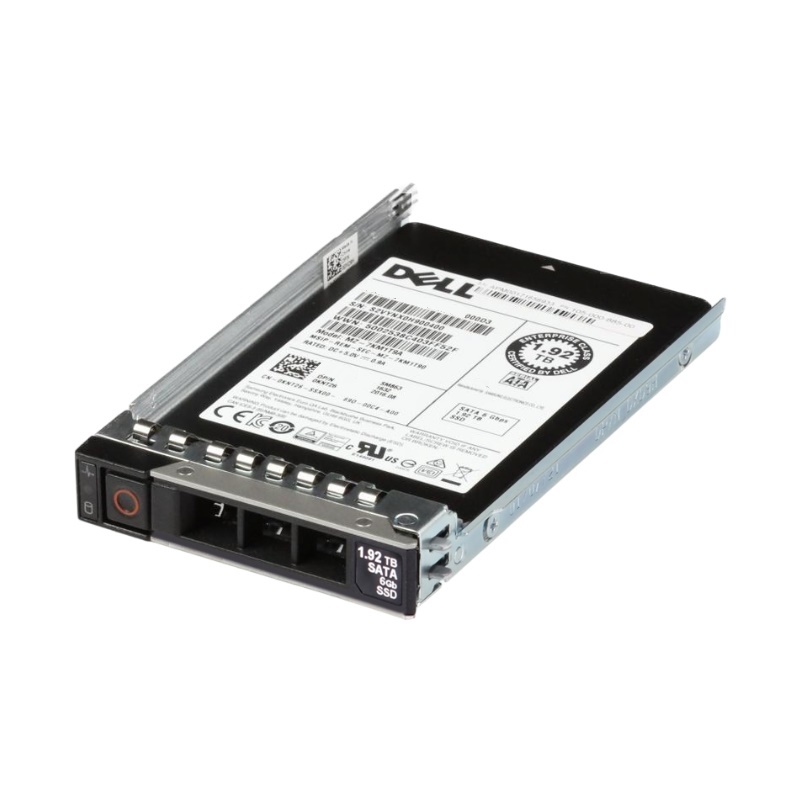


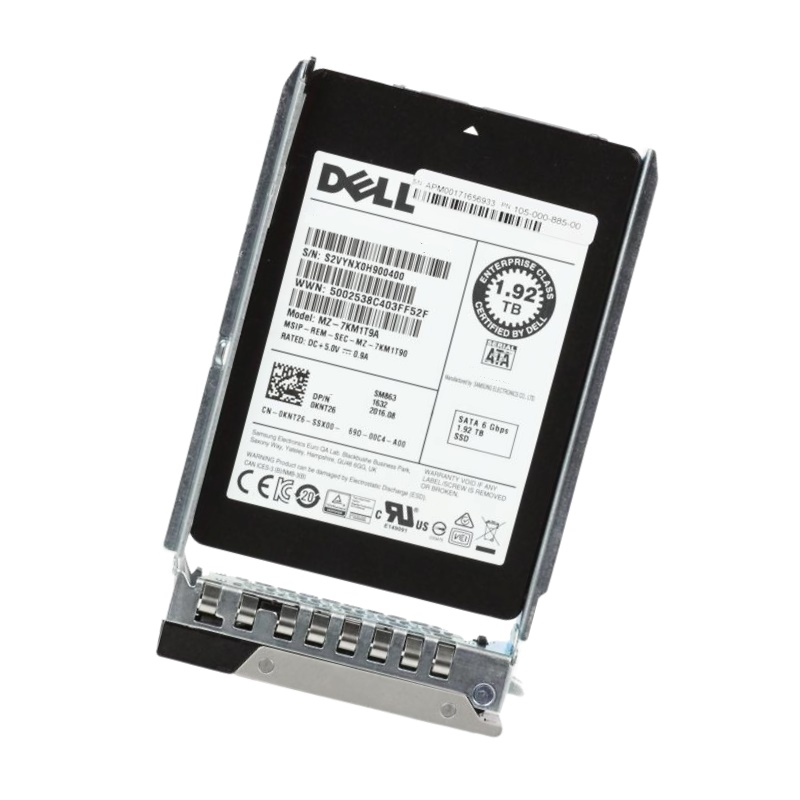
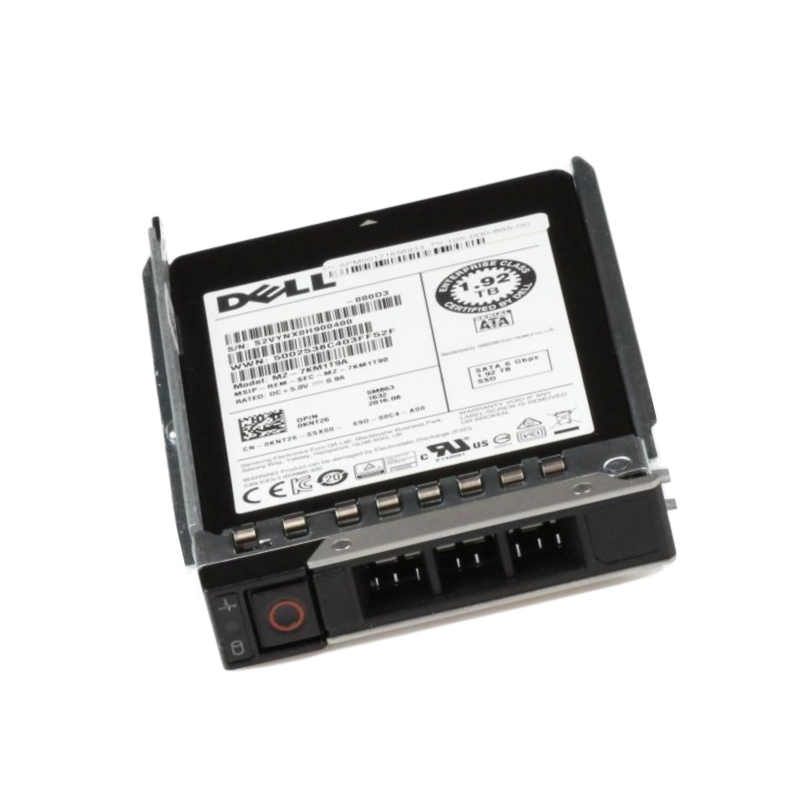
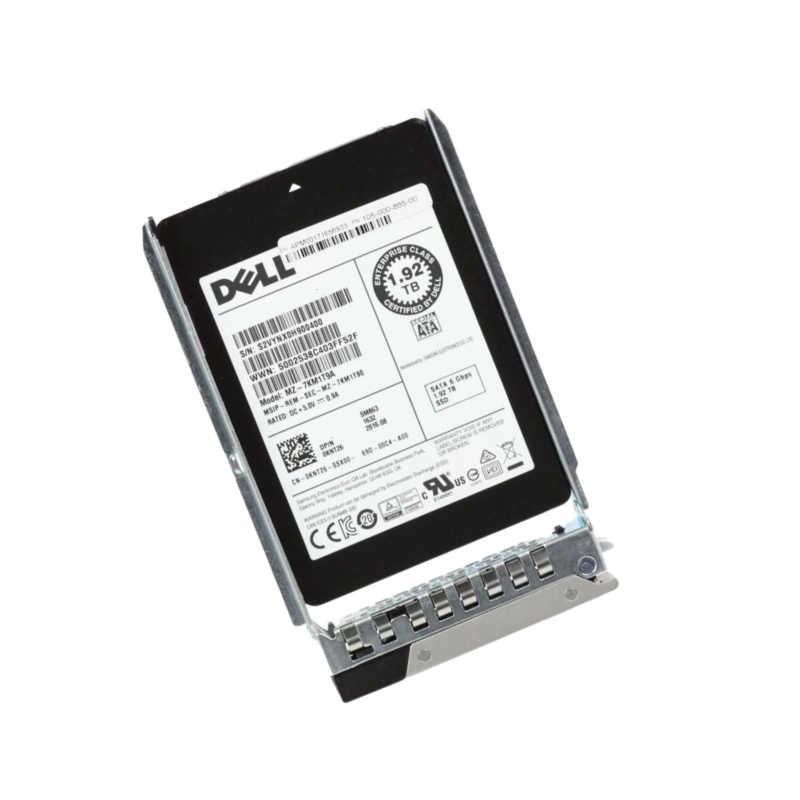
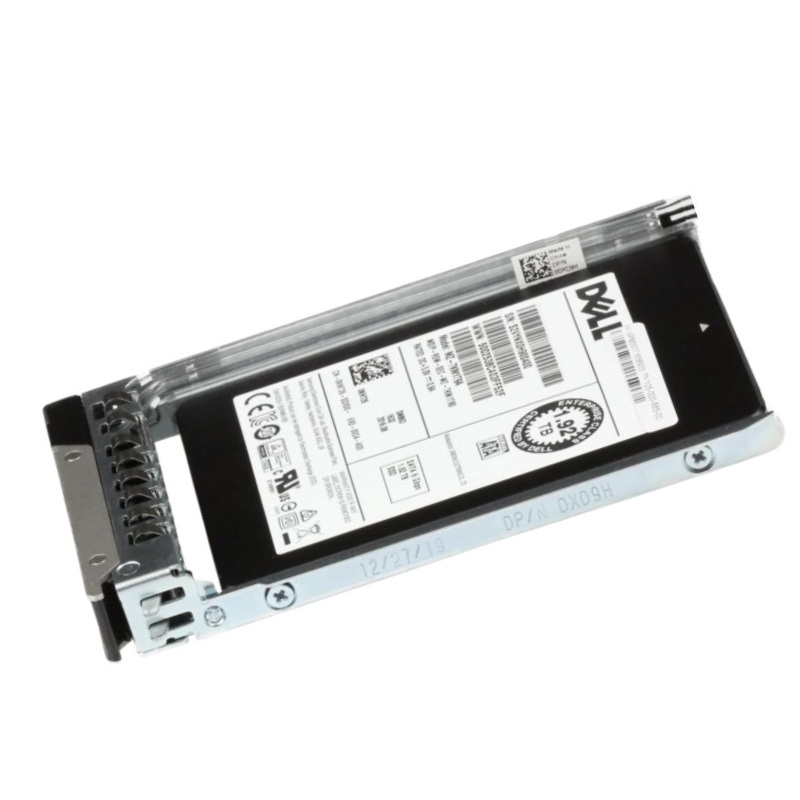
Dell HGHHG 1.92TB Mixed Use TLC SATA-6GBPS Hybrid Carrier Hot-swap SSD. New Sealed in Box (NIB) with 1-Year Replacement Warranty
Details of DELL HGHHG Dell 1.92TB Mixed Use TLC SATA SSD
Boost your server’s responsiveness and reliability with the DELL 1.92TB SATA SSD, engineered for mixed-use environments. Featuring a 3.5-inch hybrid tray and hot-plug capability, this enterprise-grade drive is optimized for consistent performance across a wide range of PowerEdge systems.
The HGHHG Dell 1.92TB Mixed Use TLC SATA-6GBPS Hybrid Carrier Hot-swap SSD category captures a balanced, enterprise-ready storage solution designed for mixed workload environments where performance, reliability, and capacity converge. This category covers drives engineered for business-critical applications that require consistent read and write performance across a broad spectrum of tasks. Suitable for database servers, virtualization hosts, content delivery platforms, and mixed transactional/analytical workloads, these hybrid carrier hot-swap SSDs bridge the gap between traditional spinning media and higher-cost NVMe alternatives by offering an optimized mix of endurance, throughput, and cost-effectiveness.
The design philosophy behind this SSD family centers on delivering a dependable, high-capacity SATA-based storage medium that integrates seamlessly into existing server infrastructures. Dell-certified hybrid carrier units are purpose-built to fit into hot-swap bays within rack and tower servers, enabling administrators to scale storage without downtime. The mixed use TLC (Triple-Level Cell) NAND provides a thoughtful balance: it increases bit density for larger capacities while employing firmware and controller strategies to ensure consistent write amplification control, wear leveling, and error correction. These SSDs follow industry best practices for enterprise storage, incorporating SMART telemetry, power-loss protection features, and thermal safeguards to maintain data integrity under sustained workloads.
Physically, the hybrid carrier concept bundles the 2.5-inch SATA SSD with a carrier tray or caddy specifically tailored for Dell server rails. This allows tool-less insertion and extraction in hot-swap bays, minimizing maintenance windows. The carrier acts as a mechanical and thermal bridge between the drive and the chassis, ensuring consistent airflow and physical stability. Hot-swap capability is critical for enterprise operations because it enables drive replacements and upgrades with the system online, reducing planned downtime and supporting high-availability configurations such as RAID arrays and storage pools.
Performance in this category is characterized by sustained sequential throughput at SATA III limits coupled with robust random I/O performance tailored for mixed read/write patterns. Mixed use drives are calibrated to handle a combination of transactional IOPS and sequential throughput, making them versatile for multi-tenant virtualized environments and databases with varied access profiles. Controller firmware plays an outsized role in smoothing out bursts, managing write caches, and handling garbage collection without significant latency spikes. Dell-validated firmware ensures compatibility with server RAID controllers and host operating systems, delivering predictable performance in enterprise deployments.
While SATA III maxes out at approximately 6 Gbps at the interface level, real-world sequential read/write speeds and random IOPS will depend on the controller implementation, NAND configuration, and workload patterns. Mixed use SSDs in this family typically prioritize consistent IOPS across a wide workload mix rather than absolute peak sequential speeds. This makes them especially suited for mixed-service workloads where maintaining steady performance under concurrent access is crucial for application responsiveness.
Endurance is a paramount concern for mixed use drives. TLC NAND, while denser, traditionally offered lower write endurance than SLC or MLC; however, enterprise-grade mixed use devices compensate through over-provisioning, advanced wear-leveling algorithms, and dynamic provisioning of spare blocks. These devices are often specified with a drive writes per day (DWPD) rating appropriate for mixed workloads, alongside a mean time between failures (MTBF) figure that reflects enterprise acceptance criteria. Built-in power-loss protection ensures that in-flight data is either committed to non-volatile buffers or reconstructed at next power-up, mitigating risk in unplanned shutdown scenarios.
Reliable error correction code (ECC) schemes are integrated to detect and correct bit errors arising from NAND wear. Firmware-level safeguards include scrub operations, SMART monitoring APIs, and background health scans that preemptively surface issues to system management tools. Dell systems commonly integrate with management suites that can ingest SMART telemetry and predictive failure alerts, enabling proactive maintenance and capacity planning.
Compatibility is a key selling point for category listings that explicitly mention Dell. These hybrid carrier SSDs are validated to work with Dell’s firmware stacks and server architectures, reducing the integration friction that organizations face when standardizing on enterprise storage. Compatibility testing includes thermal behavior within specific Dell enclosures, mechanical fit with carrier trays, and validated interoperability with hardware RAID controllers such as PERC series controllers. These validations increase confidence that the drives will perform as intended in production environments and receive predictable vendor support.
It is essential to match drive firmware with system BIOS and controller firmware versions to achieve optimal performance and to prevent edge-case incompatibilities. Dell provides firmware bundles and update paths for drive firmware and RAID controller updates, and system administrators should plan firmware maintenance windows carefully. Patch compatibility matrices and vendor release notes are a practical resource for confirming that a specific drive firmware revision is recommended for a given server model.
The mixed-use profile makes these SSDs ideal for a wide range of enterprise workloads. Primary use cases include virtualization and hyperconverged infrastructure, where multiple virtual machines with varied I/O patterns coexist. Content delivery and caching servers benefit from the strong read performance, while database systems operating with mixed transactional and analytical queries can achieve favorable latency profiles. Backup staging, log aggregation, and analytics ingestion nodes are also realistic placements, particularly where organizations seek to replace mechanical drives without a complete overhaul of storage protocols and controllers.
In virtualized environments, predictable tail latency is often more important than raw peak throughput. Mixed use SSDs emphasize steady-state performance and consistent response times for random small-block I/O, which directly translates to smoother virtual machine performance. When deployed in RAID configurations, these drives can dramatically reduce boot times, application latency, and overall operational friction for multi-tenant services.
When planning capacity, administrators must balance initial procurement cost against operational savings from lower power draw, reduced rack space, and improved application performance. The 1.92TB capacity point represents a pragmatic middle ground for many enterprise applications: it is large enough to consolidate substantial datasets while still fitting into dense storage arrays. Cost-per-gigabyte for TLC-based mixed use drives is typically favorable compared to higher-endurance alternatives, but organizations should account for total cost of ownership including expected lifespan, warranty coverage, and potential replacement cycles.
Hybrid carrier hot-swap SSDs contribute to improved rack-level density. The 2.5-inch form factor and hot-swap capability allow administrators to pack more usable capacity per rack unit while simplifying maintenance procedures. This densification can lower the physical footprint of storage tiers and reduce cooling and power costs compared to equivalent spinning disk solutions, although thermal management strategies must ensure adequate airflow for sustained performance.
Proactive drive management is central to achieving enterprise reliability. Disk health and lifecycle tools ingest SMART parameters and vendor-specific telemetry to produce actionable maintenance guidance. Lifecycle management includes planned replacement based on write endurance thresholds, firmware updates for bug fixes and performance improvements, and secure erase procedures when decommissioning drives. Dell’s ecosystem commonly offers integration points for these tasks, enabling centralized monitoring and automated alerts to operations teams.
Provisioning with adequate over-provisioning, either via built-in drive spare capacity or controller-level reservation, helps extend effective endurance and performance stability. Careful RAID planning should consider rebuild times and the impact of drive density on rebuild durations. In many mixed-use environments, adopting RAID levels that balance redundancy and rebuild performance can protect against data loss while minimizing operational risk.
Security features in enterprise SSDs often include hardware-based encryption and secure erase capabilities. Self-encrypting drive (SED) options can provide inline real-time encryption without host CPU impact, simplifying compliance with data protection regulations. When decommissioning or repurposing drives, secure erase and cryptographic erase functions provide methods to ensure that residual data cannot be recovered, supporting corporate governance and regulatory requirements.
Organizations operating under strict data protection standards should confirm that the chosen drives and their secure erase features meet relevant compliance frameworks. Audit logs, chain-of-custody procedures, and verifiable sanitization processes are often mandated in regulated industries and should be part of any procurement checklist.
The hot-swap carrier approach facilitates field replacement by operations staff without requiring server downtime. Advanced replacement services can further reduce recovery time by providing pre-shipped replacement drives that can be installed immediately, while failed units are returned under warranty. These services vary by vendor and region and should be factored into procurement decisions for business-critical systems.
Selecting the correct SKU within this product family depends on workload characteristics, expected endurance needs, and compatibility with existing infrastructure. Key decision criteria include the rated DWPD, MTBF, firmware revision, support for SED features if required, and the physical carrier compatibility with target servers. Procurement teams should test candidate drives in representative environments to verify thermal, performance, and firmware compatibility before wide-scale deployment.
Proof-of-concept testing is recommended to validate performance under anticipated workload mixes. Evaluate worst-case scenarios such as sustained write pressure during backups or rebuilds, and monitor drive temperatures under full rack load. Use vendor diagnostic utilities to verify SMART metrics and to ensure firmware compatibility. Consider staggered rollouts and maintain inventory of compatible replacement units to reduce exposure to unexpected failures.


 Contact Us
 Information
 Catalog
 Solid State Drives (SSD)
 Network Switches
 Hard Disk Drives
 HBA & Controllers
 PC & Servers
 PC & Server Memory
 CPU & Processors
 Network Routers
 Power Supplies
 Tape Drives & Libraries
 Network Devices
 Computer & Network Cables