(7% discount is applied at checkout)
Cart is empty
Your go-to destination for cutting-edge server products
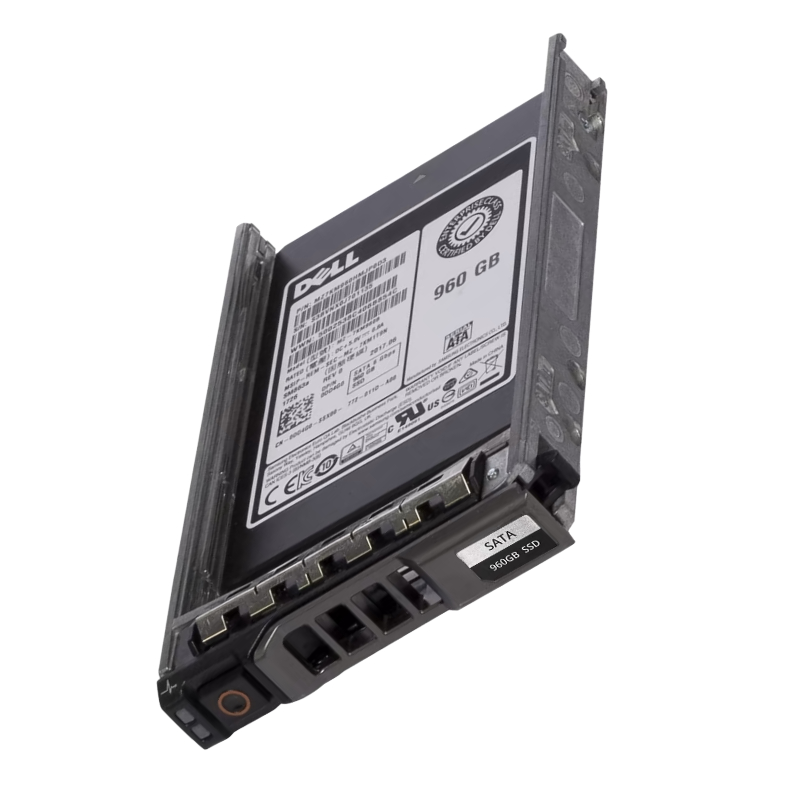


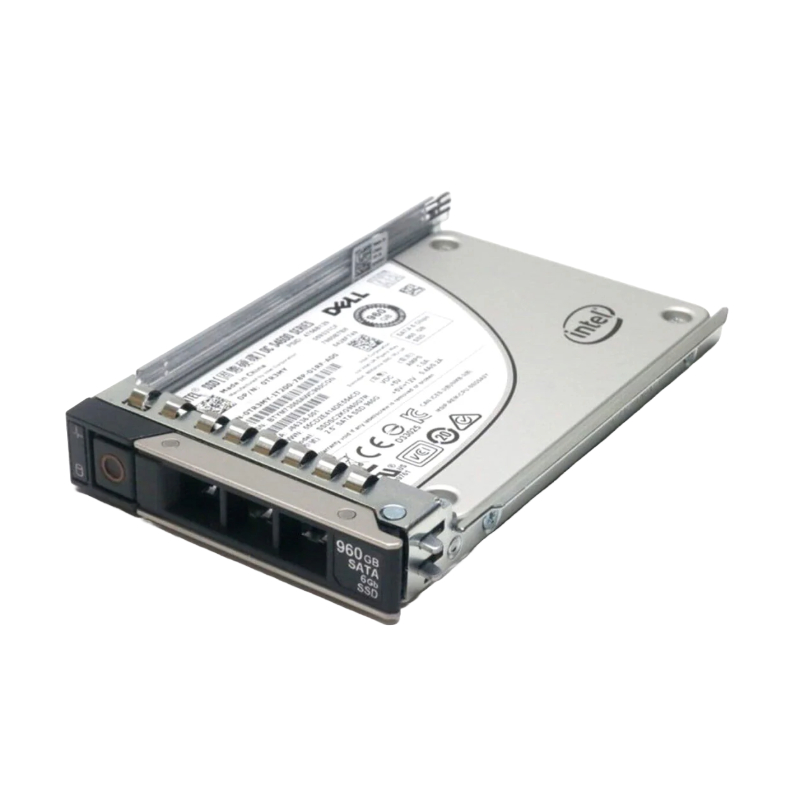
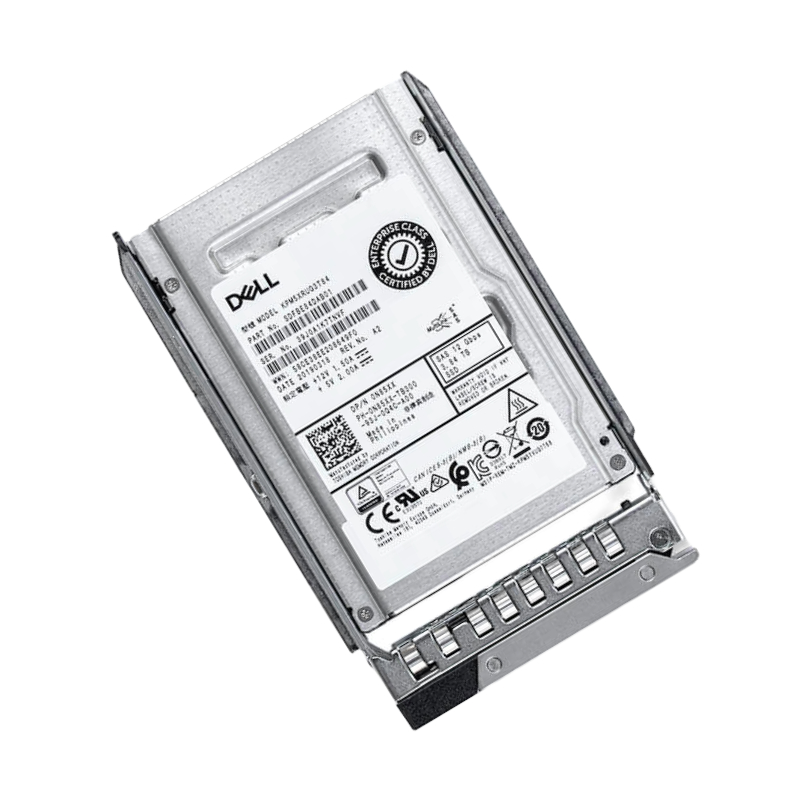
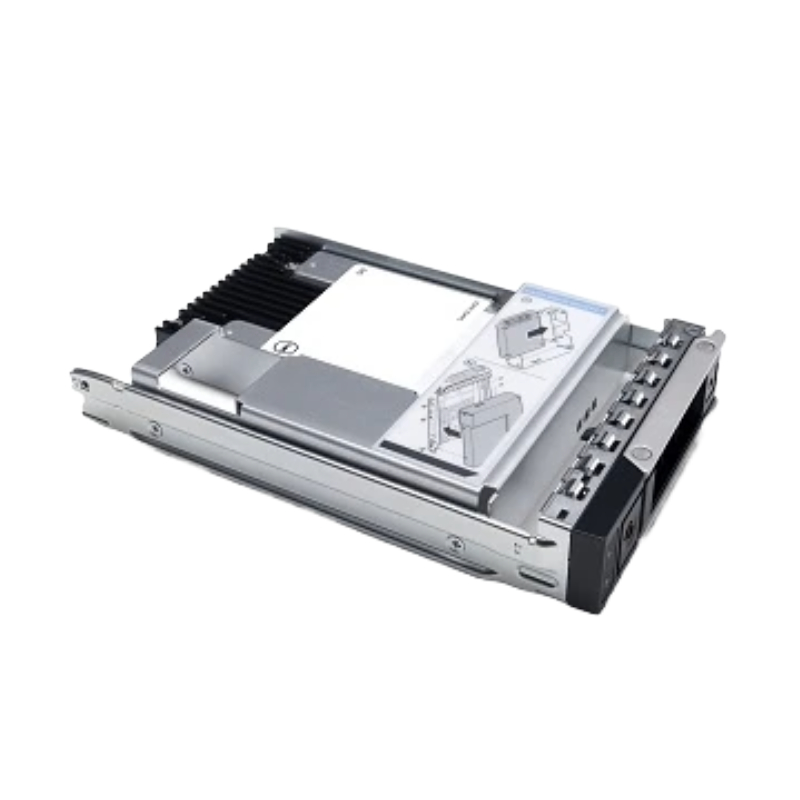
Dell HY1F8 960GB SATA 6GBPS TLC SSD. New Sealed in Box (NIB) with 1 Year Warranty
| SKU/MPN | Warranty | Price | Condition | You save |
|---|---|---|---|---|
| HY1F8 | 1 Year Warranty | $427.00 | Excellent Refurbished | You save: $149.45 (26%) |
| HY1F8 | 1 Year Warranty | $997.00 | New Sealed in Box (NIB) | You save: $348.95 (26%) |
The Dell HY1F8 960GB SATA SSD is a high-performance, reliable storage solution designed for enterprise-grade servers and data centers. This solid-state drive delivers excellent speed, durability, and compatibility for various Dell PowerEdge systems.
This Dell HY1F8 960GB SSD is engineered to integrate seamlessly with a wide range of PowerEdge systems, ensuring optimal performance and long-term reliability.
With its 3 DWPD endurance and advanced TLC flash technology, this drive ensures dependable storage for high-demand workloads.
Tailored for Dell PowerEdge servers, the HY1F8 guarantees seamless integration and optimized system performance.
Enjoy faster data access with high sequential read and write speeds, ideal for virtualization, database, and cloud applications.
The HY1F8 Dell 960GB SATA 6Gbps TLC SSD belongs to a specialized category of enterprise‑grade solid‑state storage that combines high capacity, stable performance, and strong endurance. In this category description, we explore the defining attributes of HY1F8 Dell SATA SSDs, their technical subcategories, performance characteristics, endurance profiles, interface families, deployment use cases, and the compatibility considerations that drive selection in server and data center environments. By delving into these facets, prospective buyers and IT professionals can better understand how this class of SSDs fits into storage architectures.
Within the broader SSD market, HY1F8 Dell 960GB SATA SSDs occupy a niche at the intersection of mid‑to-high capacity, SATA interface reliability, and enterprise endurance. These drives are designed for deployments where the SATA 6Gbps interface remains the standard — typically in legacy rack servers, mixed workload scenarios, or systems that are not ready to migrate to NVMe. They are more advanced than low-end consumer SATA drives because they incorporate enterprise features such as 3D TLC NAND, firmware optimized for data center use, and endurance ratings suitable for sustained workloads.
The 960GB capacity tier is a sweet spot within enterprise SATA SSDs. It offers a balanced tradeoff between usable storage space and cost‑efficiency. Drives in this capacity range are often used for application data stores, cache tiers, and mixed read/write databases. In this subcategory, HY1F8 Dell SSDs seek to deliver maximum usable space without pushing toward the cost or complexity of multi‑terabyte designs. The 960GB model also allows for comfortable overhead for wear leveling, firmware reserves, and overprovisioning, which contribute to long-term performance stability.
SSDs in this category adhere to the SATA revision 3.0 (6Gbps) standard and typically communicate via the AHCI command set. This ensures broad compatibility with legacy server backplanes and SATA controllers. Within this interface grouping, HY1F8 drives are engineered to sustain high throughput close to the physical limits of SATA, while offering features such as command queuing, error correction, and power‑loss protection. The category also includes variants optimized for hot‑plug support or enhanced cooling and form factor constraints.
The use of 3D TLC NAND is a pivotal defining characteristic for this category. In contrast to single-level cell (SLC) or multi-level cell (MLC) designs, 3D TLC stores three bits per cell while stacking memory in multiple layers, offering a cost-efficient balance of capacity, performance, and endurance. HY1F8 Dell SSDs leverage this NAND type with specific firmware tuning and error correction to ensure reliable data integrity over time. In the category context, 3D TLC distinguishes these drives from older planar TLC or QLC offerings that might suffer in write-intensive workloads.
A key differentiator in this category is how efficiently the drives handle large contiguous transfers. HY1F8 drives are rated to deliver up to 540 MB/s sequential reads and up to 520 MB/s sequential writes under ideal conditions. These figures place them among the upper echelon of SATA SSDs, approaching the interface’s theoretical ceiling. Within the category, products that fall significantly below those thresholds are considered lower‑tier and more suited for light workloads or archival duties.
Enterprise SATA SSDs in this category are also evaluated on their random read/write IOPS under mixed loads. Although exact IOPS vary by implementation, HY1F8 Dell SSDs are intended to sustain consistent performance in mixed read/write environments, such as database operations, virtualization, or caching layers. Drives in this category often incorporate dynamic caching, read/write path optimization, and latency control to balance responsiveness under concurrent workloads.
Another dimension in performance is latency under load. The HY1F8 Dell SSD category emphasizes tight latency distribution, avoiding performance cliffs under heavy I/O. These drives use advanced firmware scheduling, background garbage collection tuning, and efficient write amplification control to maintain predictable latency, especially in sustained or bursty enterprise workloads.
This category is often defined by endurance ratings, and the HY1F8 Dell 960GB SSD carries a rating of 3 DWPD (drive writes per day). That means the drive can be overwritten by its full capacity three times per day over its warranty period without compromising reliability. The mixed-use designation indicates the drive is built to handle a mix of reads and writes, rather than just sequential writes or archival tasks. Within this endurance subcategory, drives with 3 DWPD or higher are viewed as stronger options in write-heavy environments.
The HY1F8 Dell SSDs in this category conform to the 2.5‑inch form factor, which is standard in server and storage arrays. Many drives in the category also conform to 7mm or 9.5mm thickness profiles to fit various drive bay caddies. Adhering to 2.5‑inch dimensions ensures wide compatibility with existing sleds, backplanes, and enclosure frameworks commonly used in data centers.
Because enterprise servers demand predictable thermal behavior, devices in this category are engineered to dissipate heat effectively. The HY1F8 Dell SSD design balances performance and power consumption, typically drawing minimal idle power and implementing thermal throttling thresholds to maintain safe temperatures under sustained load. In the category landscape, products with inadequate thermal control or aggressive energy draw are deemed suboptimal for dense rack deployments.
Drives in this category present a single SATA 6Gb/s interface connector compatible with standard server backplanes and cable arrangements. The HY1F8 Dell SSD category ensures adherence to SATA signal integrity, grounding, and compatibility norms, enabling drop-in integration in hot plug bays, blind mate connections, or backplane-driven SATA enclosures typical of enterprise servers.
An essential qualification of this category is compatibility with numerous Dell PowerEdge server models. The HY1F8 Dell SSD category supports models such as PowerEdge C6420, C6520, C6525, C6620, HS5610, M620, R340, R440, R450, R550, R640, R650, R650xs, R6515, R6525, R660, R6615, R6625, R740, R740xd, R7425, R750, R750xa, R750xs, R7515, R7525, R760, R760xs, R7625, and R940. This broad compatibility ensures that the category covers many generations and configurations of Dell server platforms, making the HY1F8 SSD a versatile choice in Dell installations.
Within enterprise environments, drives in this category are suited for write-intensive databases, virtualization storage tiers, input/output caching, and virtual machine swap or paging volumes. Because HY1F8 Dell SSDs offer balanced read/write performance, they excel in scenarios where workloads are mixed and latency-sensitive. Their endurance and optimized firmware handle the unpredictable demands of multiuser and multi-VM environments in ways that consumer or low-end SSDs cannot.
In hybrid storage arrays, the HY1F8 Dell SSD category often occupies a performance tier between high-speed NVMe and bulk HDD tiers. It serves as an intermediate cache or acceleration layer, speeding read and write operations for frequently accessed data. The consistent throughput and reliability of these SSDs make them ideal candidates in tiering strategies, automated storage movement, and storage tier consolidation.
Many data centers and enterprises still employ servers based on SATA backplanes or controllers. In such contexts, the HY1F8 Dell SSD category enables performance refreshes without needing full architecture migration to NVMe or PCIe. Organizations can upgrade storage performance while retaining existing SATA infrastructure. This makes the HY1F8 class attractive to environments requiring incremental upgrades, compatibility with existing backplane capacities, or risk‑averse storage improvements.
Compared to lower‑capacity variants (e.g., 480GB or 960‑ish lower grade models), the HY1F8 960GB model offers more headroom for overprovisioning, better write distribution, and more sustained performance over time. In the category cost curve, the 960GB tier often delivers the best price per gigabyte while maintaining enterprise features that lower capacity drives may omit.
Some SATA SSDs push toward 1.92TB or 3.84TB sizes, but those often come with trade-offs in firmware complexity, thermal stress, and write amplification. Within the HY1F8 Dell SSD category, the 960GB model often strikes optimal balance — larger drives might suffer marginal returns in performance or cost, while smaller drives may be unable to sustain mixed‑use workloads as effectively.
While NVMe and SAS SSDs operate at higher throughput levels and lower latency, they also require different backplanes, controllers, and architecture. The HY1F8 Dell SATA SSD category retains relevance in systems bound to SATA ecosystems. In comparisons, HY1F8 may lag in peak IOPS or latency but wins in compatibility, cost predictability, and deployment simplicity in SATA environments.
In this SSD category, firmware plays a critical role. Administrators should ensure HY1F8 Dell SSDs run Dell‑certified firmware revisions to maintain compatibility, data integrity, and feature support. Firmware updates may include improvements to wear leveling, error correction, and performance stability. Proper upgrade procedures that integrate into monitoring systems help preserve reliability in enterprise deployments.
Even though HY1F8 drives ship with built‑in spare area, it is sometimes beneficial to reserve additional overprovisioning space at the logical layer. By leaving unused regions or configuring reserved partitions, administrators can reduce write amplification and improve endurance. This practice is well aligned with the design intentions of the HY1F8 Dell SSD category and helps maximize drive life and performance headroom.
Because the HY1F8 Dell SSD category supports mixed workloads, governance of I/O patterns helps. Spreading writes across multiple drives, avoiding continuous large random writes to a single drive, and balancing heavy I/O across an array minimizes hot spots. Such workload balancing preserves uniform wear and leverages the drive’s full potential.
While 3D TLC NAND remains the standard in this class, future transitions may incorporate QLC or PLC designs for higher density. However, these successors must address endurance, latency, and write performance before displacing TLC in enterprise settings. The HY1F8 Dell SSD category may evolve to include hybrid NAND techniques, error correction enhancements, or stacked cell layering improvements.
As newer interconnects such as 12Gbps SATA or enhanced SAS evolve, future iterations in this category might support dual-mode interfaces or backward compatibility with SATA environments. The HY1F8 Dell SSD category could expand to hybrid SATA/SAS offerings that enable migration paths while preserving backward compatibility.
An emerging direction is modular, firmwarere‑defined feature sets, where capabilities like encryption, compression, tiering control, and data reduction can be enabled or disabled in the same physical drive. The HY1F8 Dell SSD category may become more flexible, allowing administrators to tailor feature sets to specific deployment needs without changing hardware.


 Contact Us
 Information
 Catalog
 Solid State Drives (SSD)
 Network Switches
 Hard Disk Drives
 HBA & Controllers
 PC & Servers
 PC & Server Memory
 CPU & Processors
 Network Routers
 Power Supplies
 Tape Drives & Libraries
 Network Devices
 Computer & Network Cables