(7% discount is applied at checkout)
Cart is empty
Your go-to destination for cutting-edge server products


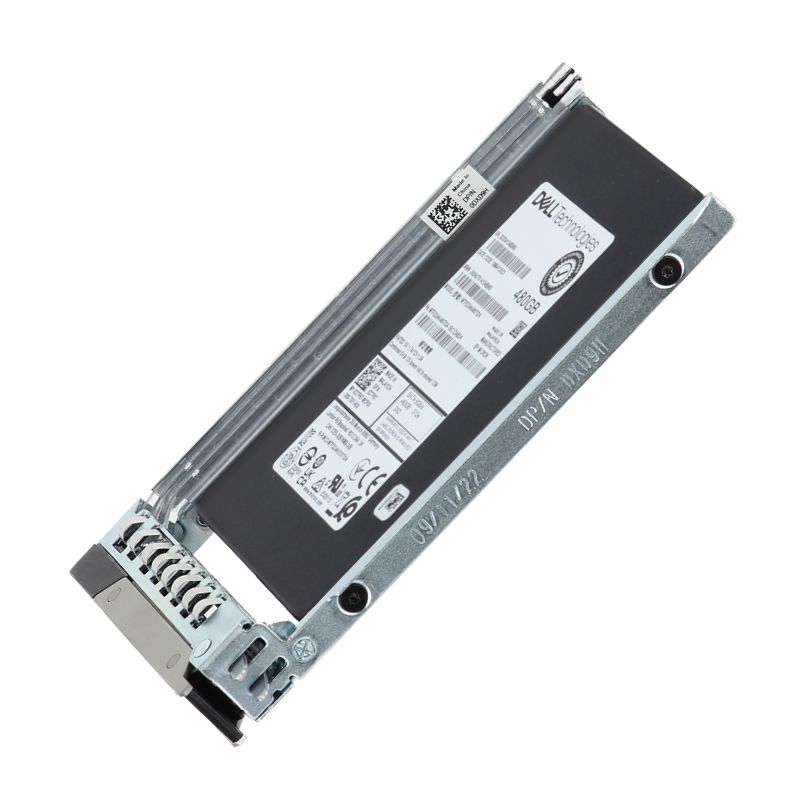
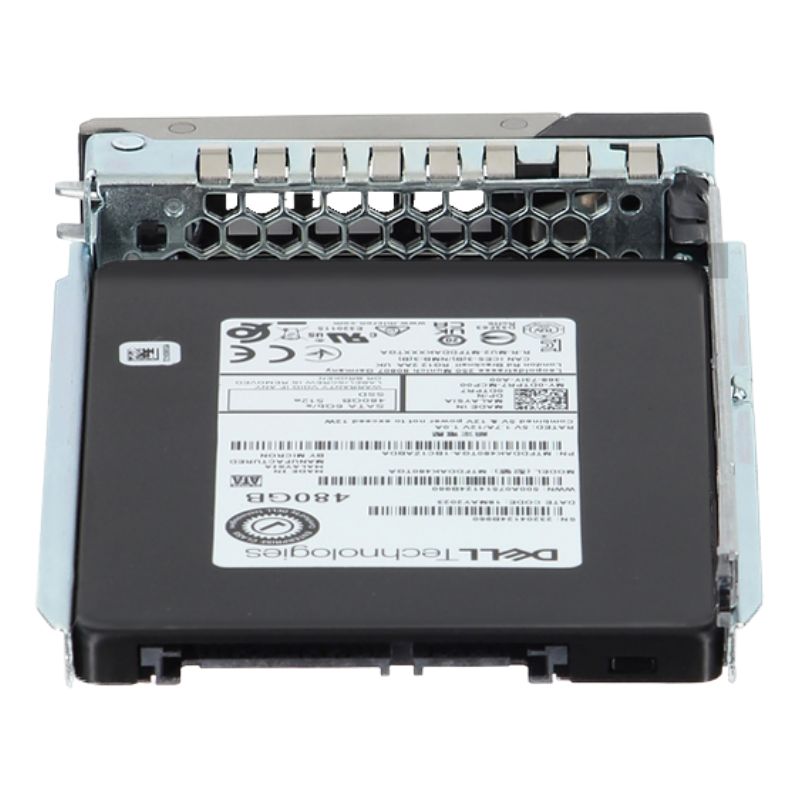
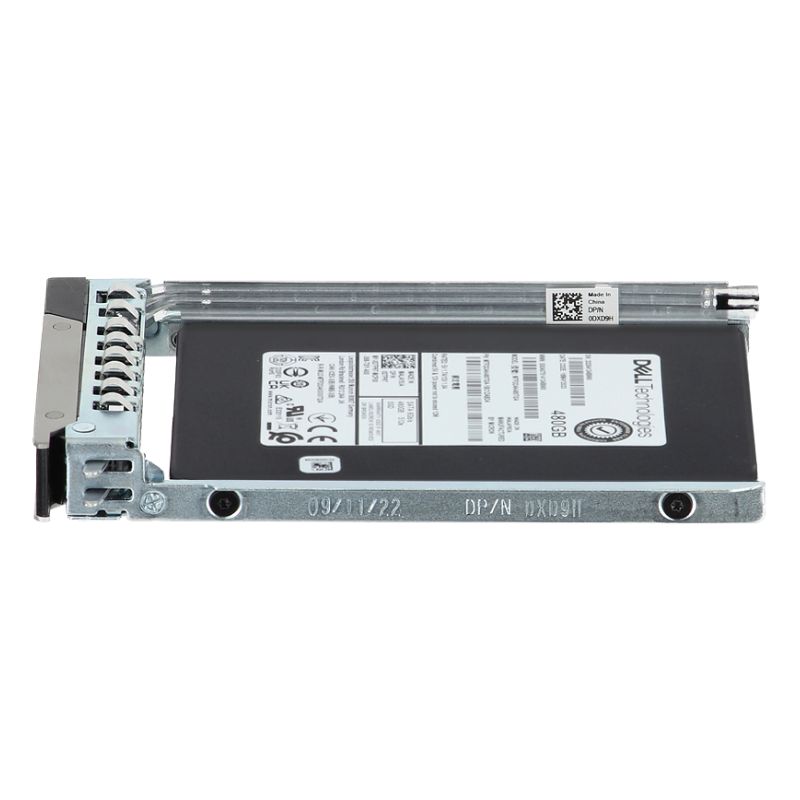
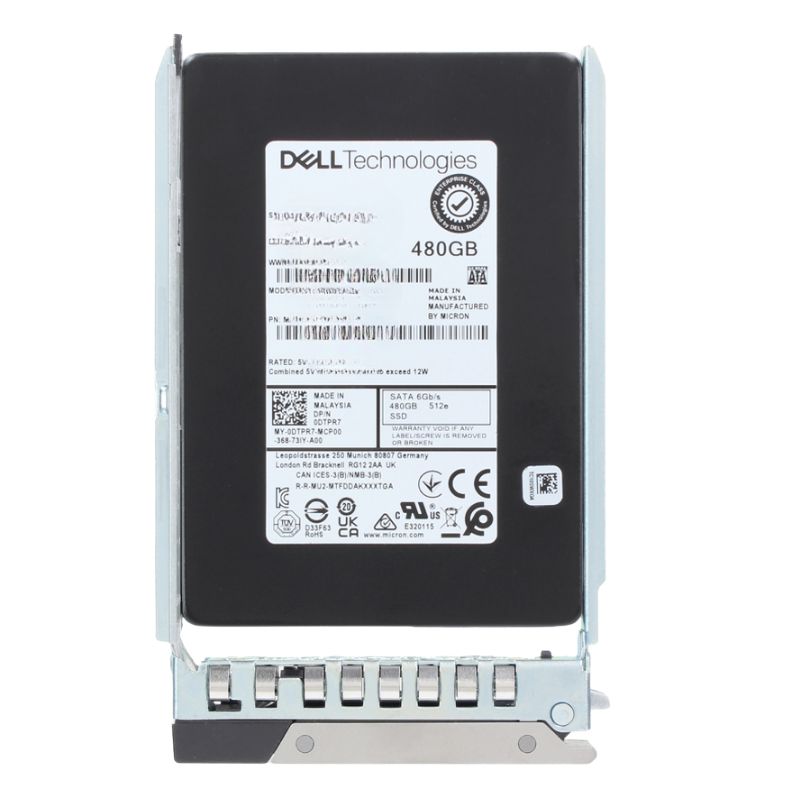
Dell HYYGJ 480GB SATA-6GBPS Mixed Use 3 DWPD 2.5 Inch Hot Plug Solid State Drive. New Sealed in Box (NIB) with 1-Year Replacement Warranty
The Dell HYYGJ 480GB SATA-6Gbps Mixed Use 3 DWPD 2.5-inch Hot Plug SSD is engineered for balanced performance, durability, and reliability in enterprise-grade computing environments. Its combination of TLC NAND architecture, mixed-workload endurance, and high-speed data transfer capabilities makes it an exceptional storage choice for servers handling diverse operational demands. This optimized analysis explores the hardware attributes, operational benefits, use cases, and system compatibility to help organizations deploy the drive efficiently within modern infrastructure.
As a mixed-use solid-state drive, the Dell HYYGJ is intended for servers managing balanced read-and-write operations. The TLC flash foundation is reinforced by firmware-driven wear leveling and durability enhancements to deliver long-lasting performance even in heavy workload cycles.
Performance is central to enterprise storage selection, and the Dell HYYGJ 480GB SSD delivers consistent throughput suitable for virtualization clusters, storage arrays, cloud nodes, and local server workloads.
While SAS and NVMe drives dominate ultra-high-performance tiers, SATA remains a leading solution for dependable, flexible, and cost-efficient storage. The 6Gbps interface used by the Dell HYYGJ supports accelerated performance for a wide range of standard server applications.
Broad server compatibility is one of the major benefits of this Dell SSD. Designed to function in multiple generations of Dell PowerEdge servers, the HYYGJ drive ensures smooth deployment in diverse IT ecosystems.
Compatible with a wide range of rack, blade, and modular systems, including:
The hot-plug design enables technicians to install or replace the SSD without powering down the system, enhancing uptime and simplifying storage maintenance. This is particularly valuable in clustered environments, high-availability deployments, and production-critical applications.
With its mix of endurance, read/write balance, and deployment flexibility, the Dell HYYGJ SSD fits a wide spectrum of enterprise workloads. Organizations can integrate the drive into servers handling mission-critical functions or as part of scalable storage racks for expanding data requirements.
Beyond raw performance, the Dell HYYGJ drive introduces reliability, compatibility, and cost efficiency—factors that significantly simplify IT planning and lifecycle management.
The Dell HYYGJ 480GB SATA SSD delivers exceptional value by blending durability, competitive performance, and broad compatibility. It is a compelling choice for companies modernizing server storage infrastructure without transitioning to more expensive high-speed NVMe tiers.
The Dell HYYGJ 480GB SATA-6GBPS Mixed Use 3 DWPD 2.5 Inch Hot Plug Solid State Drive belongs to a specialized enterprise-grade category of storage devices engineered for consistency, durability, and seamless integration into data-intensive server frameworks. This category focuses on mixed-use SSD models optimized for read and write equilibrium, sustaining demanding operational cycles while delivering stable throughput under rigorous workloads. The architecture of this storage class emphasizes reliability for virtualized infrastructure, database clusters, cloud computing stacks, analytics ecosystems, and transactional processing environments requiring dependable access, minimal latency, and efficient energy consumption. The category further supports essential enterprise attributes, including advanced data protection, longevity validation, predictable response times, and interoperability with Dell PowerEdge platforms.
Mixed use SATA SSDs such as the Dell HYYGJ model operate as a bridge between write-centric and read-optimized storage tiers, offering a versatile foundation for data operations that cannot rely exclusively on extremes of endurance or read performance. The SATA-6GBPS interface ensures a consistent transfer framework suitable for standardized enterprise workloads where predictability is as valuable as speed. This category prioritizes dependable IOPS delivery, sustained throughput under continuous load, and responsive access patterns essential to maintaining high-availability server functions. The technology supports mixed workloads such as virtualization hosts, active software-defined storage layers, distributed file systems, and business-critical transactional services that require prompt access to structured and unstructured information.
These drives fulfill a wide array of operational roles, including functioning as primary storage for mid-range and high-density server fleets. They sustain hypervisor caches, boot partitions, application directories, and frequently accessed databases. Their endurance rating ensures stable performance throughout prolonged deployment cycles, enabling servers to handle ongoing data manipulations without compromising drive health. Their capacity per watt value also enhances the efficiency of enterprise IT infrastructures, enabling data centers to reduce overhead and energy consumption while maintaining high deployment density. The category further excels in structured data handling, streaming workloads, and latency-sensitive operations that demand rapid transactional execution.
Endurance forms a core pillar of value for this category, with the Dell HYYGJ SSD achieving a 3 DWPD rating designed for continuous daily write activity. This rating ensures that the drive can accommodate substantial write volumes every day throughout its lifecycle. Enterprise applications such as log processing, virtualization snapshots, active data transformation tasks, and dynamic content creation rely on this sustained resilience. Endurance also influences long-term reliability, reducing the chances of unexpected wear-out scenarios and ensuring consistent operational throughput for mission-critical infrastructures. Drive endurance intersects closely with thermal governance, error correction capacity, and firmware-based wear leveling algorithms that collectively extend the lifespan of Dell mixed-use storage solutions.
The 2.5-inch hot plug design featured in the Dell HYYGJ SSD category underscores operational continuity and maintenance efficiency within enterprise server ecosystems. The hot plug capability allows technicians to install, replace, or upgrade drives without halting system operations or disrupting active application workloads. This is essential for high-availability clusters, remote-access server farms, distributed compute environments, and data center infrastructures requiring uninterrupted uptime. The standardized 2.5-inch drive footprint maximizes compatibility across multiple Dell server chassis, power-optimized enclosures, and modular storage arrays. It also supports efficient use of rack space, enabling enterprises to scale storage density without requiring significant physical restructuring.
Hot swap mechanisms in enterprise servers rely on advanced connector interfaces that safely manage power cycling during insertion and removal. Mixed use SATA SSDs built for hot plug functionality protect data integrity even during live replacement procedures. The category highlights compatibility with Dell’s proprietary backplane designs, ensuring that signal integrity, power allocation, and slot recognition occur automatically when the drive is engaged. This reduces maintenance time, minimizes operational risk during component servicing, and supports large-scale server clusters that require frequent storage adjustments.
The compact form factor helps maintain efficient thermal properties, enabling predictable cooling performance under high-density rack layouts. Efficient airflow channels within Dell PowerEdge chassis align closely with the 2.5-inch SSD profile to ensure that temperature remains stabilized during read and write cycles. Sustained temperature control directly influences drive durability, performance consistency, and error correction efficiency during peak workloads. The category also benefits from firmware-regulated thermal management mechanisms that reduce clock speeds or adjust operational parameters to preserve hardware integrity under demanding conditions.
The SATA-6GBPS interface utilized by the Dell HYYGJ 480GB SSD category provides a balanced performance architecture for enterprise deployments where deterministic behavior is valued more highly than maximum theoretical speed. This interface delivers fast enough throughput to meet the needs of business applications while offering stable compatibility across server generations. SATA connectivity simplifies deployment, reduces integration challenges, and ensures seamless migration from legacy storage devices to modern SSD frameworks. This level of compatibility is crucial for organizations evolving their data infrastructures incrementally while minimizing costly downtime or configuration overhauls.
Dell mixed use SATA SSDs are designed to minimize latency through optimized NAND flash access patterns and advanced controller firmware. These drives maintain predictable I/O response times critical for workloads such as real-time analytics, transactional data processing, virtualization hosting, microservices deployment, and multi-tenant cloud architecture. Latency reduction enhances user experience, accelerates application responsiveness, and facilitates efficient server orchestration.
The SATA framework supports advanced data protection and error management features that reinforce enterprise storage reliability. These mechanisms include end-to-end data path protection, internal ECC processes, and robust command queuing systems that ensure consistency during high activity intervals. This level of protection supports sustained operational integrity, safeguarding critical assets within servers running business-defining workloads.
By moderating write amplification and distributing write cycles evenly across NAND cells, Dell HYYGJ mixed use SSDs achieve extended endurance while maintaining steady performance. This ensures predictable drive lifespan even under workloads involving repetitive data changes, ensuring long-term efficiency in enterprise data centers, financial systems, and virtual service environments.
This category of SSDs is strategically engineered for deployment across diverse enterprise infrastructures, including mid-scale server arrays, virtualized compute clusters, and multi-node application environments where stability and efficiency drive overall service quality. These drives excel in supporting secure transactional systems, distributed workload patterns, agile cloud computing frameworks, and real-time business intelligence pipelines. Their strong endurance profile accommodates demanding server operations with minimal degradation over time.
In database hosting environments, the Dell HYYGJ category ensures consistent read and write speeds essential for maintaining predictable query execution times and stable transactional throughput. These drives support structured databases, relational and non-relational models, and application frameworks dependent on rapid access to large datasets. Their strong durability aligns with high-volume transaction logs, indexing operations, data replication activities, and memory caching routines. Predictable I/O behavior ensures that application performance remains steady during peak utilization periods.
Virtualized environments gain significant performance stability from mixed use SATA SSDs due to their ability to handle simultaneous I/O streams. These drives help maintain responsive VM operations and promote efficient resource consolidation within hypervisor platforms. The category supports cloud modularity, enabling flexible provisioning, rapid scaling, instance replication, and fluid migration between physical hosts. Enterprises operating hybrid cloud or multi-cloud infrastructures benefit from the standardized performance model offered by these SSDs.
This storage category integrates seamlessly with Dell PowerEdge servers, modular enclosures, high-availability clusters, and storage expansion systems. Embedded firmware compatibility maintains smooth BIOS interaction, automatic identification, and controller-level optimizations that maximize throughput and reliability. The category functions effectively within RAID arrays, ensuring redundancy, data protection, and continuous service availability.
Mixed use SATA SSDs are commonly featured in high availability configurations where uptime is a mission-critical requirement. They support fault-tolerant storage architecture, rapid failover events, real-time mirroring, and continuous service delivery even during hardware maintenance cycles. Their hot plug design further reinforces redundancy practices by simplifying drive replacement in live environments.
Performance characteristics of the Dell HYYGJ category prioritize balanced read and write operation, predictable sustained throughput, and reduced variability under load. These drives handle data-rich workflows such as containerized microservices, multi-layered software applications, analytical workloads, and system boot processes with ease. The consistent performance model ensures operational continuity across high-demand computing environments.
Mixed use SSD architecture excels at managing both sequential data streams and random access operations. Sequential throughput enables efficient handling of large files, database tables, and virtual machine images. Random I/O capability supports tasks involving small-block data updates, application logs, transaction queries, and user-generated content processing. Balanced optimization across these workload types ensures adaptability in multi-role server environments.
Predictable performance under stress is an integral quality of this storage category. The Dell HYYGJ drive series is tested for endurance under sustained heavy workloads, ensuring reliable throughput during peak utilization cycles. This includes handling multiple simultaneous I/O commands, processing rapid-fire read operations, and maintaining operation under constrained thermal conditions.
The category incorporates essential security mechanisms that align with modern enterprise security protocols. Data pathways are monitored by firmware-level safeguards that minimize corruption risk, enforce integrity verification, and protect mission-critical application data. Secure erase functionality supports compliance with industry guidelines during drive decommissioning or reassignment.
In long-term IT planning, mixed-use SSDs provide significant benefits by delivering endurance, stability, compatibility, and predictable performance longevity. Organizations seeking to optimize infrastructure investments depend on these characteristics to maintain reliable data handling and reduce operational interruptions. Deployment flexibility across server generations supports future-proofing strategies, enabling enterprises to scale without excessive overhaul.
The category ensures cost-efficiency by reducing the frequency of drive replacements and minimizing service interruptions that can impact production timelines. The endurance model supports sustainable operation across multiple years of continuous utilization. Its reliability helps organizations control maintenance expenses and reduce downtime-related productivity losses.


 Contact Us
 Information
 Catalog
 Solid State Drives (SSD)
 Network Switches
 Hard Disk Drives
 HBA & Controllers
 PC & Servers
 PC & Server Memory
 CPU & Processors
 Network Routers
 Power Supplies
 Tape Drives & Libraries
 Network Devices
 Computer & Network Cables