(7% discount is applied at checkout)
Cart is empty
Your go-to destination for cutting-edge server products
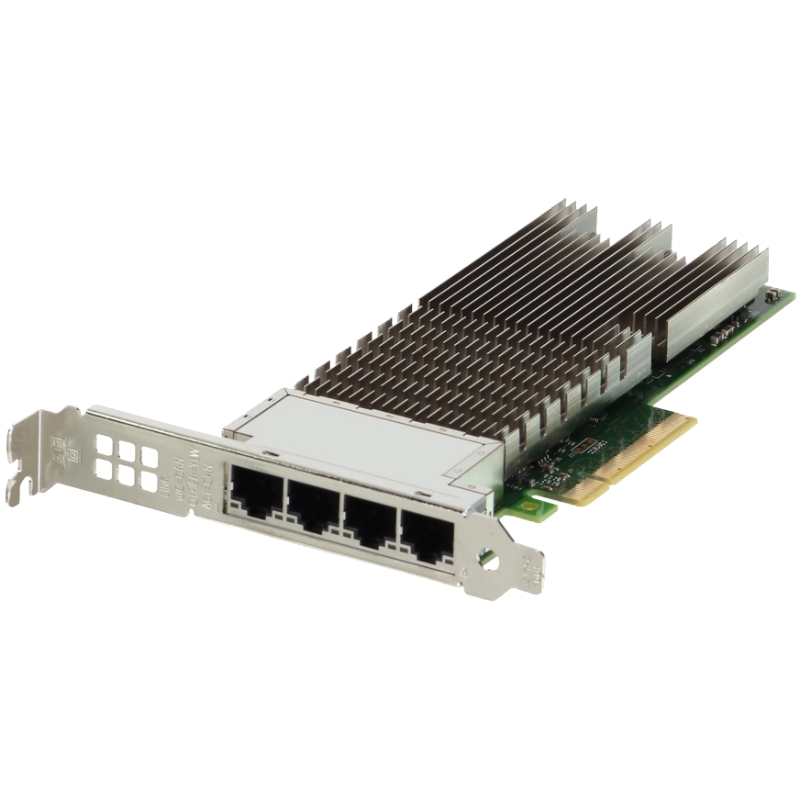


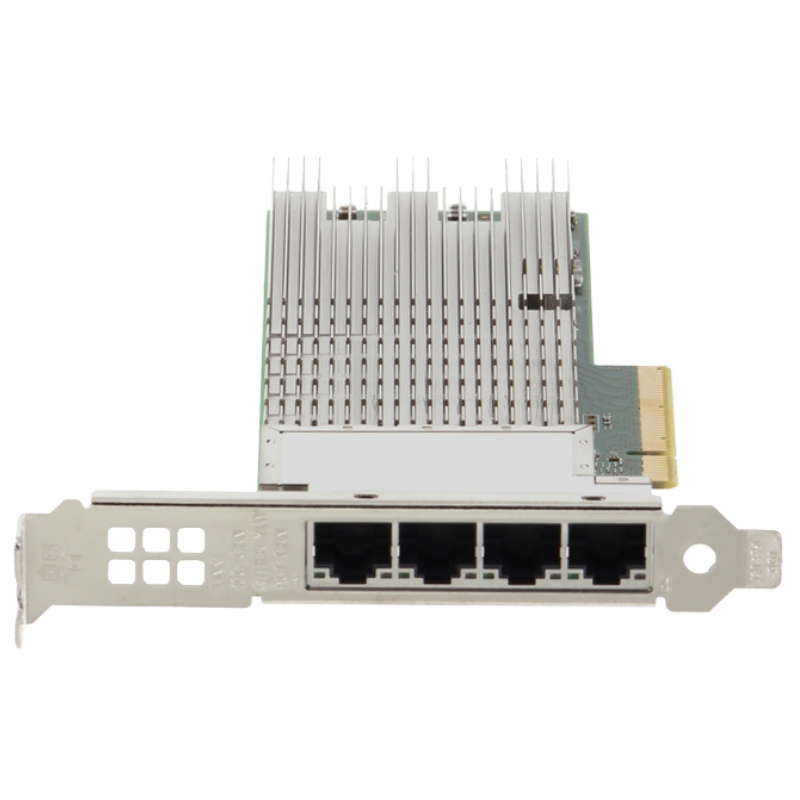
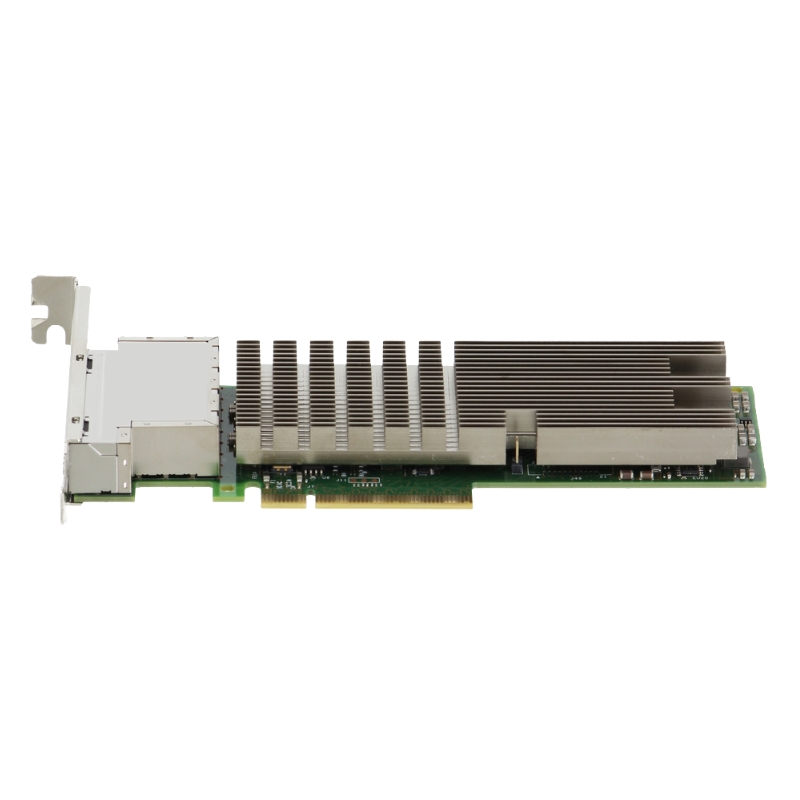
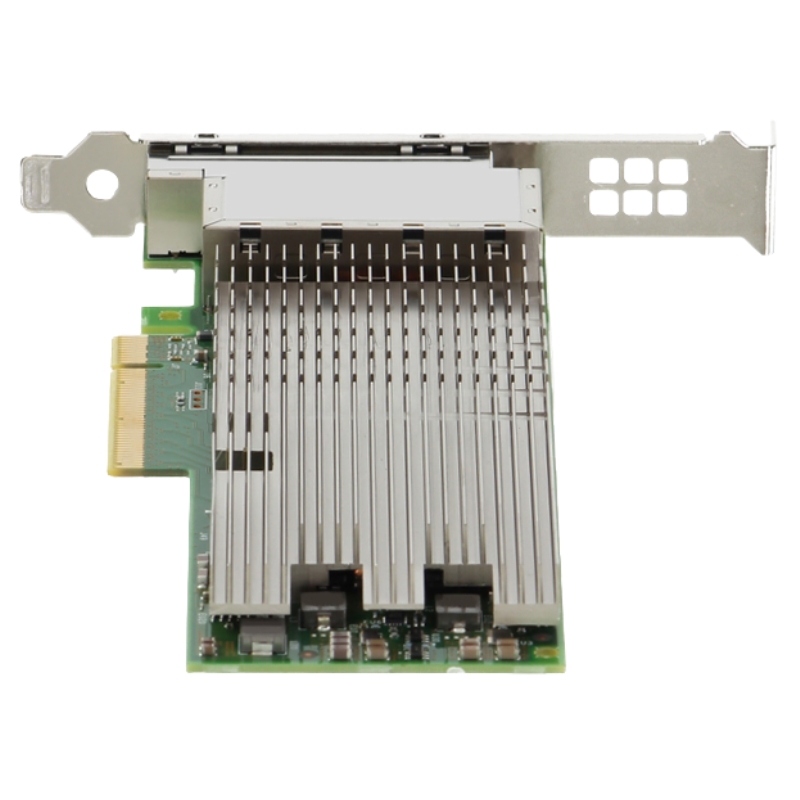
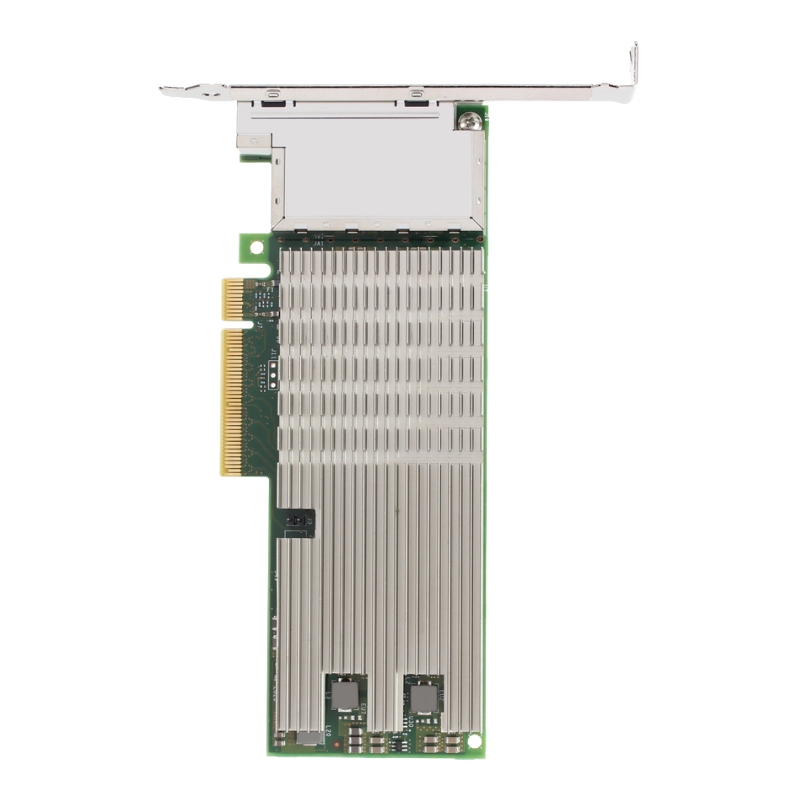
Dell FFHM7 Quad Port 10GbE Base-T PCIe Adapter Intel X710-T4L. New Sealed in Box (NIB) with 1 Year Warranty
The Dell FFHM7 Quad Port 10GbE Base-T PCIE Adapter powered by Intel X710-T4L is engineered for high-speed networking, offering robust connectivity and advanced virtualization features for enterprise environments.
The Dell FFHM7 Quad Port 10GbE Base-T PCIE Adapter Intel X710-T4L represents a high-performance networking solution designed for enterprise environments that demand scalable bandwidth, low latency communication, and robust virtualization support. Built around the advanced architecture of the Intel Ethernet X710 series, this adapter integrates four independent 10 Gigabit Ethernet Base-T ports into a single PCI Express form factor, enabling servers to achieve significantly higher network throughput without requiring multiple discrete network cards.
The Dell FFHM7 adapter utilizes a PCI Express interface designed to maximize data throughput between the server motherboard and network interface controller. By leveraging multiple PCIe lanes, the adapter ensures that each of the four 10GbE ports can operate at full capacity without bottlenecks. This is particularly important in high-density computing environments where simultaneous data streams must be processed with minimal latency.
Designed primarily for Dell PowerEdge servers and compatible enterprise systems, this adapter integrates seamlessly into standardized server architectures. The hardware-level compatibility ensures minimal configuration overhead while maximizing plug-and-play deployment efficiency. The adapter is typically installed in full-height or low-profile PCIe slots depending on chassis configuration, making it suitable for rack-mounted and blade server environments.
10GBASE-T technology enables 10 Gigabit Ethernet connectivity over twisted-pair copper cabling, typically Cat6a or higher. The Dell FFHM7 Quad Port adapter leverages this standard to provide flexible deployment options in environments where fiber optic infrastructure may not be feasible or cost-effective. Unlike SFP+ optical modules, Base-T connectivity allows organizations to reuse existing copper cabling while still achieving high-speed data transfer rates.
The implementation of 10GBASE-T in this adapter allows automatic negotiation between 1GbE, 2.5GbE, 5GbE, and 10GbE speeds, making it highly adaptable to mixed network environments. This backward compatibility ensures that the adapter can integrate into legacy systems while still providing a clear upgrade path toward full 10GbE infrastructure.
The Intel X710-T4L controller embedded in this adapter introduces advanced packet processing capabilities designed to reduce CPU overhead and improve overall system responsiveness. Features such as checksum offloading, TCP segmentation offload, and interrupt moderation allow the system CPU to focus on application-level tasks rather than repetitive network processing functions.
One of the defining features of the Dell FFHM7 adapter is its quad-port configuration, which allows a single PCIe card to replace multiple single-port or dual-port network adapters. This consolidation reduces PCIe slot usage while increasing total available network bandwidth. It also simplifies server design by minimizing cabling complexity and improving airflow within densely packed chassis environments.
The Dell FFHM7 adapter is optimized for virtualization platforms through support for Single Root I/O Virtualization (SR-IOV). This feature allows the physical network adapter to be divided into multiple virtual functions, each of which can be assigned directly to virtual machines. This reduces hypervisor overhead and improves network performance for virtualized workloads.
In cloud computing environments where virtualization density is high, SR-IOV ensures that each virtual machine receives dedicated network resources with minimal contention. This is critical for maintaining consistent performance across multi-tenant infrastructures.
The adapter is widely compatible with major virtualization platforms, including VMware ESXi, Microsoft Hyper-V, and various Linux-based hypervisors. Its driver support and firmware optimizations ensure stable operation across diverse virtualization stacks, making it suitable for hybrid cloud deployments and private data center environments.
Driver support for Windows Server, Linux distributions, and network appliance operating systems ensures broad compatibility across enterprise environments. This flexibility allows IT administrators to standardize hardware while maintaining operational consistency across multiple platforms.
The Intel Ethernet X710-T4L controller integrated into this adapter introduces advanced offloading capabilities that reduce CPU utilization significantly. By handling tasks such as checksum computation, packet segmentation, and large receive offload directly on the hardware, the adapter frees system resources for application workloads.
Receive Side Scaling (RSS) enables the adapter to distribute incoming network traffic across multiple CPU cores. This parallel processing capability ensures that no single CPU core becomes a bottleneck, improving overall system performance in multi-threaded environments.
The adapter dynamically adjusts packet distribution based on network load conditions. This adaptive behavior ensures optimal performance during fluctuating traffic conditions commonly found in enterprise environments such as virtualization clusters and storage networks.
The Dell FFHM7 Quad Port adapter is engineered with efficient thermal dissipation characteristics to ensure stable operation under sustained high-bandwidth loads. The compact design allows airflow to pass through the heatsink structure efficiently, preventing thermal throttling even in densely populated server chassis configurations.
In modern data centers, the Dell FFHM7 adapter plays a crucial role in enabling high-speed east-west and north-south traffic flow. Its quad-port configuration supports dense server deployments where multiple high-speed connections are required for storage, compute, and management networks.
The adapter is particularly well-suited for Storage Area Network (SAN) and Network Attached Storage (NAS) systems where high throughput and low latency are essential. It ensures that large data transfers, backups, and replication tasks occur efficiently without network congestion.
In distributed storage systems, the adapter provides consistent connectivity between nodes, enabling reliable data synchronization and redundancy. This is essential for maintaining data integrity across geographically distributed infrastructures.
The high bandwidth and low latency characteristics of this adapter make it ideal for Virtual Desktop Infrastructure deployments, where multiple users access centralized computing resources simultaneously. The quad-port design ensures smooth user experiences even under heavy concurrent load conditions.
Single-port and dual-port network adapters require multiple PCIe slots to achieve similar throughput levels. The quad-port design of the Dell FFHM7 significantly reduces hardware complexity while increasing total bandwidth availability, making it a more efficient solution for high-performance computing environments.
The Intel X710-T4L architecture includes security features designed to protect against packet injection, spoofing, and unauthorized access attempts. These hardware-level protections complement software-based security measures to provide a more robust defense posture.


 Contact Us
 Information
 Catalog
 Solid State Drives (SSD)
 Network Switches
 Hard Disk Drives
 HBA & Controllers
 PC & Servers
 PC & Server Memory
 CPU & Processors
 Network Routers
 Power Supplies
 Tape Drives & Libraries
 Network Devices
 Computer & Network Cables