(7% discount is applied at checkout)
Cart is empty
Your go-to destination for cutting-edge server products


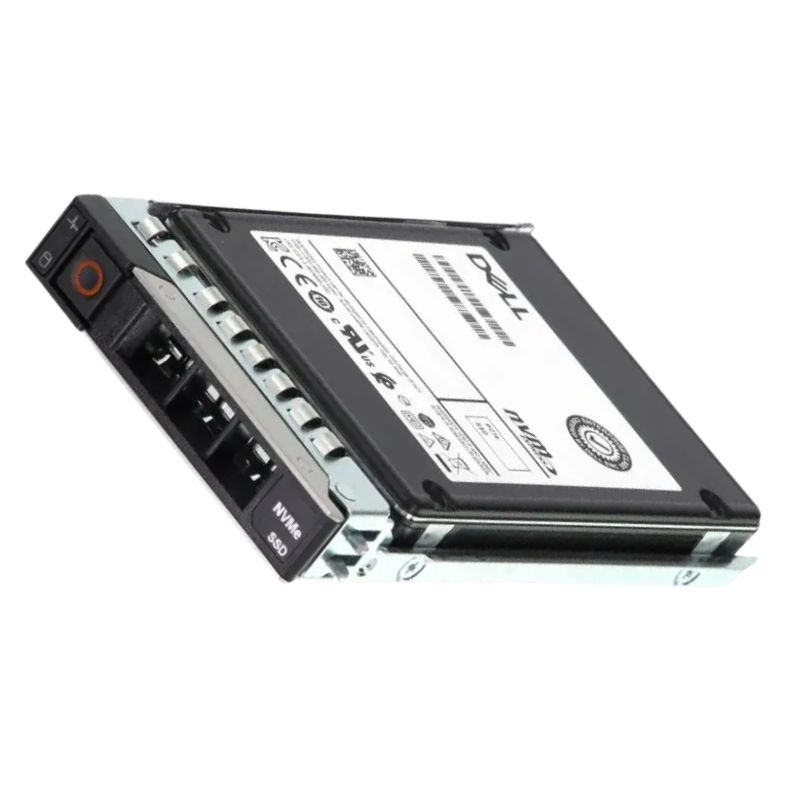
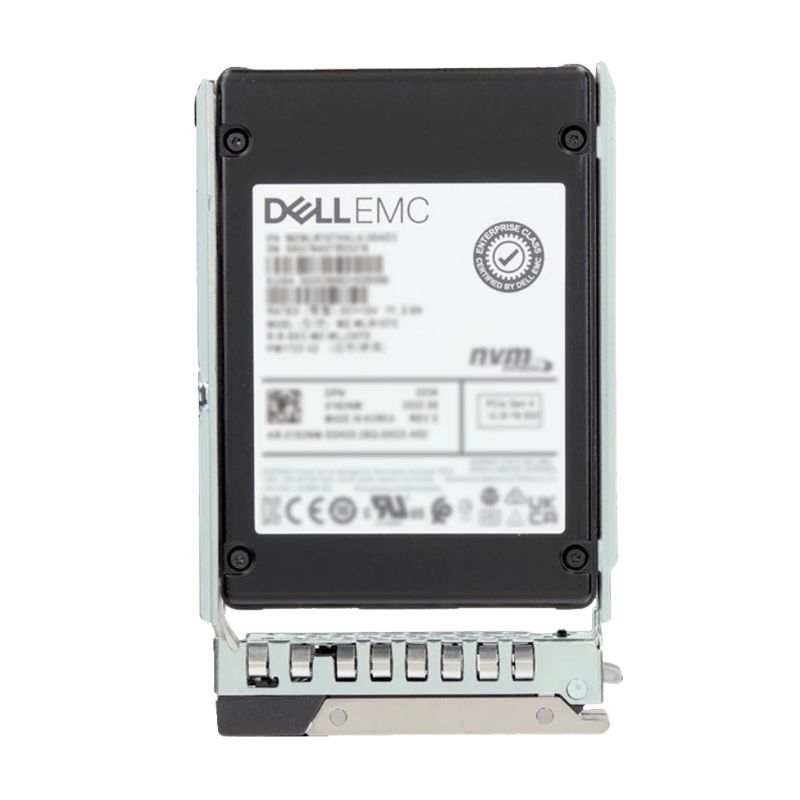
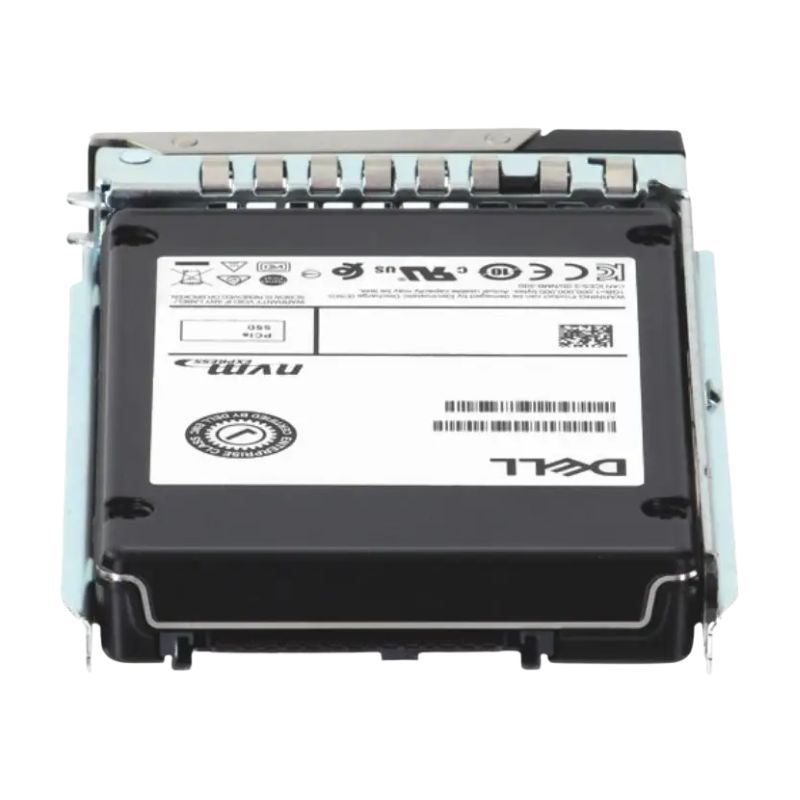
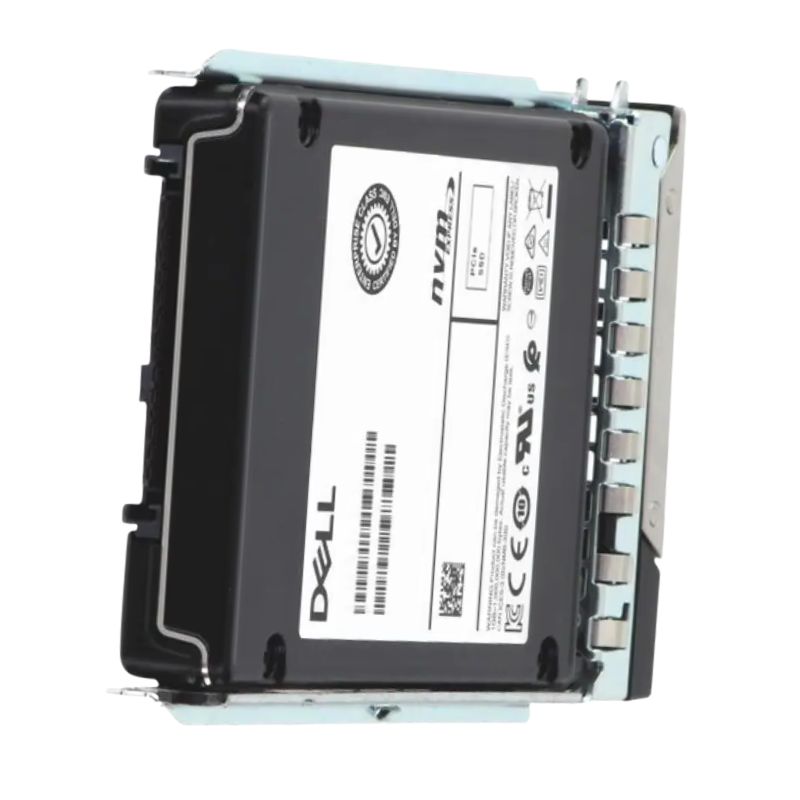
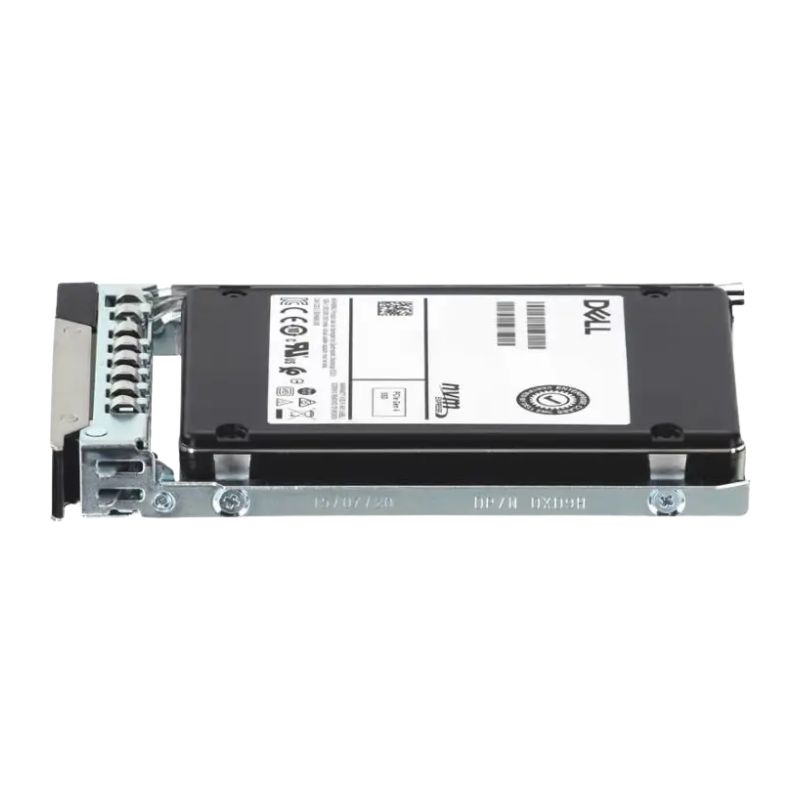
Dell J21XC 61.44TB PCI-E 4.0 x4 NVMe U.2 2.5 Inch SFF Enterprise Class Qlc 3d Nand Solid State Drive. New Sealed in Box (NIB) with 1-Year Replacement Warranty. Call
The Dell J21XC 61.44TB PCI-E 4.0 x4 NVMe U.2 2.5-inch SFF enterprise-grade QLC 3D NAND SSD is engineered for data-dense server infrastructures requiring exceptional capacity, stable responsiveness, and optimized throughput. Designed for heavy workloads and large-scale storage architectures, this high-capacity solid-state drive offers a balance of robustness, endurance, and impressive transfer efficiency suitable for modern datacenter environments.
This drive delivers impressive read/write metrics designed for data-driven enterprises. Its high sequential bandwidth, robust IOPS capability, and NVMe-optimized pipeline ensure minimal latency and high parallel command performance.
The Dell J21XC SSD is validated for seamless integration with multiple Dell PowerEdge servers, ensuring stable firmware compatibility and optimal performance across enterprise-class platforms.
The 192-layer QLC 3D NAND configuration enables elevated density per die, achieving massive storage volumes while maintaining acceptable endurance for enterprise read-centric applications.
Built for next-generation datacenters, the PCIe 4.0 interface multiplies bandwidth capacity while lowering bottlenecks common with older drive standards.
With an MTBF rating of 2 million hours, the Dell J21XC SSD ensures exceptional dependability, reducing maintenance cycles and lowering total operating costs.
The landscape of enterprise flash storage continues to evolve at an extraordinary pace, with ultra-dense NVMe platforms emerging as the backbone of modern data-intensive environments. The Dell J21XC 61.44TB PCI-E 4.0 x4 NVMe U.2 2.5 Inch SFF Enterprise Class QLC 3D NAND Solid State Drive epitomizes this transition by presenting a tremendous leap in storage density, endurance engineering, performance scaling and reliability. This category of solutions is designed to meet the continuous growth of structured and unstructured data while providing predictable throughput and economic efficiency for hyperscale, cloud, virtualized and mixed-workload infrastructures. The move toward extremely large-capacity U.2 NVMe drives is driven by growing operational demands such as real-time analytics, global content distribution, large-scale virtualization, deep learning dataset caching, high-volume imaging, log ingestion workflows and archival consolidation in cloud architectures. As organizations prioritize sustainability, optimization and reduced data center sprawl, these high-capacity units fill a critical performance-per-watt, performance-per-rack and cost-per-gigabyte niche.
The category defined by products similar to the Dell J21XC places emphasis on maximizing capacity in a 2.5-inch small form factor footprint while maintaining data security, integrity and stable performance under sustained workloads. The U.2 interface allows seamless integration with contemporary server backplanes, supporting hot-swappability and efficient serviceability during maintenance cycles. PCI-E 4.0 x4 throughput delivers parallelism and low-latency performance designed for modern computational needs. The evolution from SATA and SAS options toward NVMe over PCI-E highlights the requirement for greater I/O channels, reduced command overhead and minimized latency across transactional or sequential data streams.
Within this category, QLC 3D NAND technology plays a significant role in elevating capacity above previous generations. Quad-level cell enables exceptionally dense storage arrays while leveraging modern error-correction algorithms, wear-leveling logic and advanced controllers to maintain predictability for enterprise workloads. QLC-based U.2 NVMe solutions enable architects and IT administrators to consolidate multiple storage arrays into fewer physical devices, reducing the complexity and overall cost structure of large-fleet deployments. These drives are engineered for read-intensive or mixed-use scenarios where the combination of capacity and sustained throughput delivers substantial operational value. Real-time content servers, cloud data lakes, virtualized desktops, scale-out architectures, software-defined storage nodes and large-capacity RAID groups all find a place within this category.
The high-capacity NVMe class represented by the Dell J21XC allows enterprises to achieve extremely large storage pools while maintaining high queue-depth efficiency and significant parallelism. PCI-E Gen4 connectivity doubles the throughput available in previous generations, ensuring that data pipelines are not bottlenecked by interface limitations. This empowers organizations to accelerate I/O-bound applications, improve service delivery and support high-density virtual machines without the latency drawbacks associated with legacy interfaces.
This category also emphasizes sustained performance behavior rather than only peak throughput. Enterprise NVMe architectures prioritize predictable response times even under heavy and prolonged workloads. For environments such as large-scale virtual desktop infrastructures, cloud clusters, database indexing engines, multimedia repositories and AI dataset hosts, consistent latency is more important than burst performance. Storage architects benefit from drives engineered with large SLC caching layers, intelligent controller firmware and end-to-end data integrity protection which together maintain stable performance across read-dominated operations.
The arrival of capacities exceeding 60TB in a single 2.5-inch U.2 device creates opportunities previously unattainable with traditional storage solutions. One of the distinguishing traits of this category is the consolidation of storage arrays that once required numerous drives into only a few high-density NVMe units. This significantly decreases the energy footprint and simplifies cable routing, thermal distribution and rack layout planning. Data-center operators adopting drives like the Dell J21XC can optimize rack real estate utilization, reduce the number of required chassis and streamline long-term expansion plans.
The category further benefits from the endurance strategies applied to QLC designs. Although QLC stores more bits per cell, enterprise-grade QLC relies on refined wear-management algorithms, robust error correction and strong overprovisioning models. These features ensure that longevity, data retention and performance remain stable within heavy read or analytics-oriented ecosystems. Workloads such as machine-learning inference, log processing, object storage platforms, content delivery systems and deep archive virtualization operate effectively within such high-capacity infrastructures, which thrive on constant read cycles and sequential operations.
The enterprise NVMe category mandates stringent reliability metrics and multilayered data protection. Devices like the Dell J21XC incorporate end-to-end data-path protection, power-loss safeguards, firmware redundancy and real-time error correction to maintain data integrity. As storage density expands, the importance of advanced ECC engines increases. Modern controllers process significant data volumes per cycle, ensuring that corruption risks remain minimal across long-term operation. Power-loss protection is crucial in environments where sudden interruptions could compromise data. Enterprise-class U.2 NVMe drives therefore employ capacitive modules or equivalent mechanisms to flush in-flight data safely to the NAND.
From a reliability standpoint, the thermal design of these high-density units remains equally important. The category standard for NVMe enterprise drives includes heat dissipation features optimized for tightly packed server enclosures. Temperature-regulating firmware ensures that sustained operations remain within safe thermal envelopes, extending drive lifespan and maintaining performance consistency. In parallel, robust firmware management allows data-center administrators to deploy updates non-disruptively, maintaining security posture and reducing downtime across entire storage groups.
Power-loss protection is critical when dealing with large data transactions across multi-petabyte infrastructures. The high-capacity NVMe category emphasizes safe data termination during unexpected outages. Drives modeled after the Dell J21XC retain metadata and cached writes using dedicated hardware layers that prevent data corruption. Redundant internal pathways within the controller and firmware ensure an additional layer of operational stability. These features support storage clusters used in financial applications, university data warehouses, scientific research arrays, government data centers and global content management platforms.
Compatibility forms one of the greatest advantages of the U.2 NVMe category. Enterprises can upgrade legacy infrastructures gradually by incorporating newer NVMe Gen4 devices without requiring complete server replacement. Many existing backplane configurations support U.2 NVMe, making transition pathways more accessible. This interoperability simplifies modernization strategies and financial planning for organizations balancing technological advancement with budget constraints. The 2.5-inch small form factor remains a standard in enterprise clusters, providing reliable physical compatibility across numerous platforms from edge computing nodes to hyperscale server farms.
Hot-swap support enhances serviceability by enabling drive replacement without shutting down the entire server. The category benefits technicians managing mission-critical environments requiring continuous uptime. Faulty units can be replaced seamlessly, minimizing disruptions to virtualized workloads, distributed file systems and database clusters. This is particularly important in environments relying on continuous replication, high availability configurations or real-time analytics systems where downtime can create cascading operational issues.
High-density NVMe U.2 drives empower scale-out architectures such as those used by global cloud providers, enterprise SDS frameworks, HPC clusters and big-data lakes. The category excels in delivering predictable high-bandwidth read performance across distributed nodes, enabling efficient data sharding, replication and multi-node parallel access. As dataset sizes grow exponentially, utilization of fewer, larger capacity NVMe devices allows for simplified node scaling, reduced network congestion and better overall system coordination.
The category that encompasses the Dell J21XC demonstrates how QLC 3D NAND has matured into a reliable component for enterprise deployment. Layer stacking technology expands storage density while maintaining structural integrity and efficient power consumption. The combination of QLC NAND and modern controller logic offers significant improvements in affordability relative to historic TLC-based devices at similar capacities. This makes QLC drives ideal for read-optimized scenarios where dataset size outweighs write-intensive requirements.
Although QLC stores more bits per cell compared with TLC or MLC, modern enterprise QLC drives include advanced wear-management techniques enabling years of sustained operation under appropriate workloads. Overprovisioning, dynamic SLC caching and continuous background calibration ensure write amplification remains controlled. These attributes help maintain endurance over long duty cycles, supporting an extensive range of enterprise workflows. The category prioritizes predictable reliability despite the extreme density of QLC media.
As storage density increases, thermal challenges become more prominent. Enterprise NVMe U.2 drives utilize thermal throttling algorithms, temperature-adaptive firmware and efficient heat-spread design to prevent overheating. This assures sustained performance during large sequential reads, heavy virtualization loads and back-to-back analytics operations. The category requires drives that maintain predictable performance even under continuous I/O pressure. Effective heat management further extends drive lifespan, reduces error rates and contributes to overall system stability.
The category of high-capacity NVMe U.2 drives enables a broad spectrum of modern enterprise applications. In large virtualization clusters, these drives support high VM density, rapid provisioning, low latency boot volumes and improved user responsiveness. Within hybrid cloud infrastructures, large NVMe drives allow faster replication between nodes, accelerating failover mechanisms and disaster recovery processes. Businesses hosting large repositories can serve content quickly and maintain optimal performance during peak demand periods.
Media enterprises depend on vast libraries consisting of high-resolution video, digital imaging and rendering datasets. High-capacity NVMe U.2 drives expedite rendering workloads, version management, distribution and post-production workflows. They also support rapid file indexing, fast transport processes and simultaneous multi-user editing. In hosting and content delivery, the category enables servers to handle large file transfers with minimal latency. The combination of massive density and high throughput allows organizations to store more content while delivering faster user experiences.
Dell enterprise hardware is engineered to support long life cycles with consistent firmware validation, optimized thermal profiles and platform-specific integration. Products like the Dell J21XC exemplify engineering refinement that aligns with Dell PowerEdge platforms and other enterprise server families. The category benefits from Dell’s validated firmware stacks, intelligent monitoring systems and compatibility optimization across entire server generations. Dell’s integration practices ensure that power distribution, airflow paths, load balancing and diagnostic frameworks work seamlessly with high-capacity NVMe storage.
Sustainability is increasingly important for modern enterprises. High-capacity NVMe drives reduce the number of physical devices required to store large datasets. This reduces overall energy consumption, cooling overhead and equipment waste. In large data-center environments, even slight improvements in efficiency translate into substantial cost savings. The category supports environmental goals by significantly reducing hardware footprint without sacrificing storage capability or performance consistency.
The Dell J21XC exemplifies the category of ultra-dense enterprise NVMe solutions designed for high-volume data storage, predictable performance and exceptional efficiency. Its 61.44TB capacity enables consolidation, while PCI-E 4.0 connectivity ensures that even massive datasets can be accessed quickly. With enterprise-class QLC 3D NAND, the drive balances density with reliability. It stands as a representative model demonstrating how far NVMe technologies have progressed in supporting cloud infrastructures, virtualization, big-data analytics, content hosting, object storage, archive modernization and large-scale data processing platforms.
By providing immense capacity and strong sustained throughput, this category empowers organizations to handle diverse workloads. Virtualization clusters experience improved balance of storage density and I/O performance. Cloud infrastructures boost replication speeds and service responsiveness. Big-data engines ingest and analyze data with greater efficiency. Media environments accelerate rendering and content delivery processes. Backup and archival operations benefit from greater density and rapid read access. Across each of these domains, high-capacity NVMe storage delivers measurable operational improvements.
High-capacity NVMe drives offer performance consistency that scales effectively across distributed architectures. When deployed in multi-node clusters, these drives reduce data retrieval times and improve synchronous operations. This leads to faster cluster-wide data availability, better load distribution, reduced latency across distributed file systems and improved coordination among virtual machines and containers. The category exhibits strong performance benefits even under large queue depths and concurrent access loads.
This category prioritizes consistent low-latency response times for read-dominated workflows. Because many enterprise operations revolve around sequential read patterns, object retrieval, file indexing, inference routines, backup scanning, search engines and log evaluation sequences, predictable behavior is essential. The Dell J21XC class of NVMe drives ensures that data flows remain uninterrupted, which is vital for uninterrupted service quality.


 Contact Us
 Information
 Catalog
 Solid State Drives (SSD)
 Network Switches
 Hard Disk Drives
 HBA & Controllers
 PC & Servers
 PC & Server Memory
 CPU & Processors
 Network Routers
 Power Supplies
 Tape Drives & Libraries
 Network Devices
 Computer & Network Cables