(7% discount is applied at checkout)
Cart is empty
Your go-to destination for cutting-edge server products
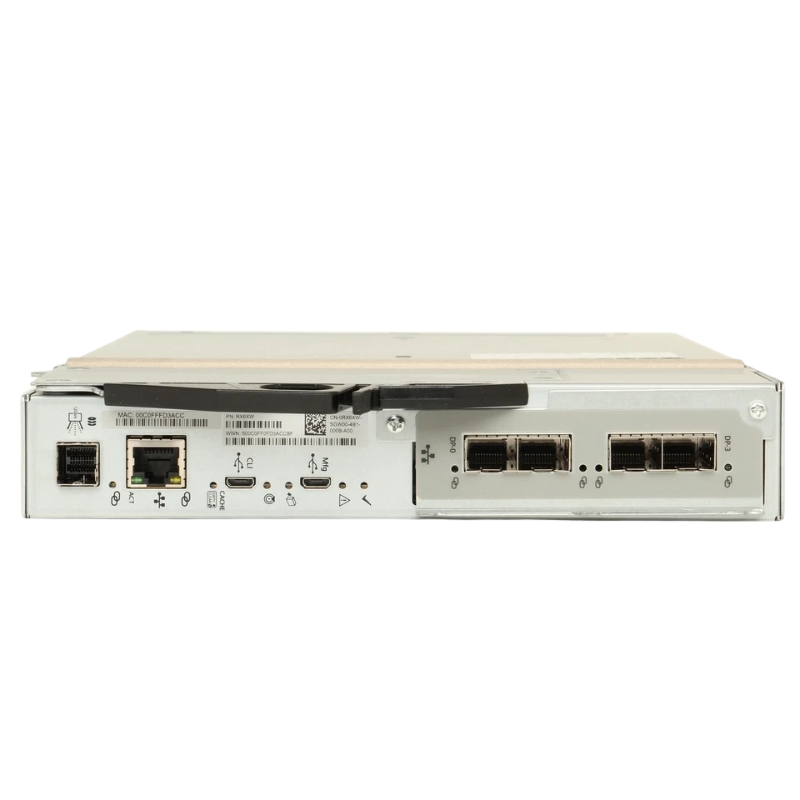


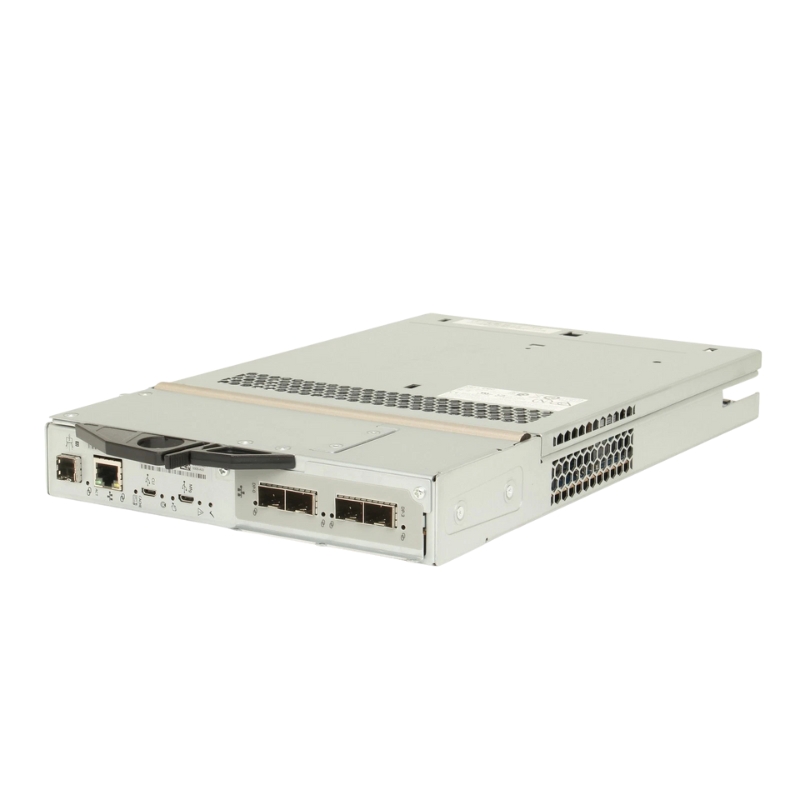
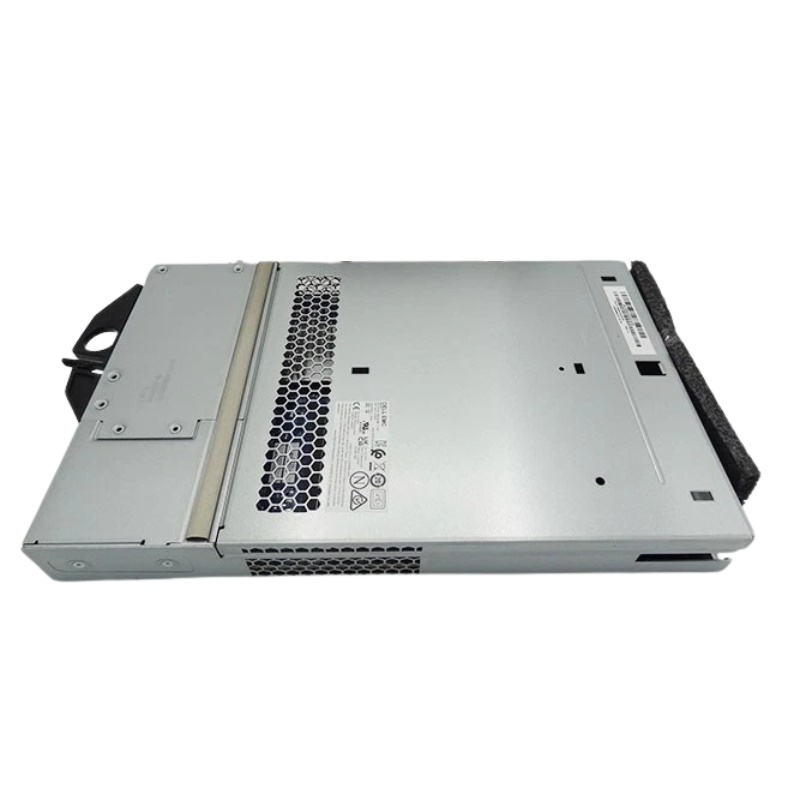
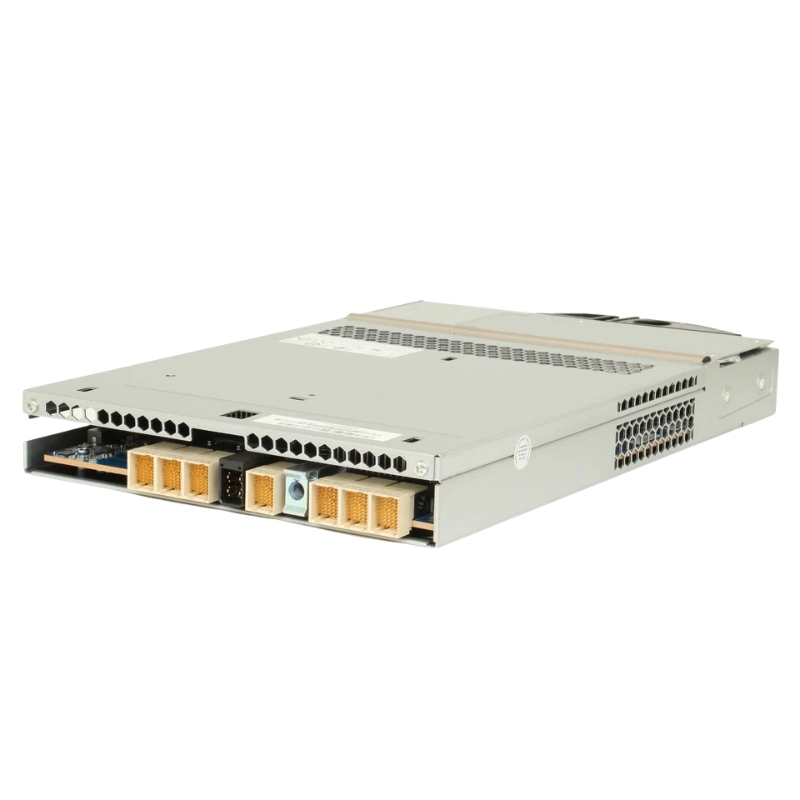
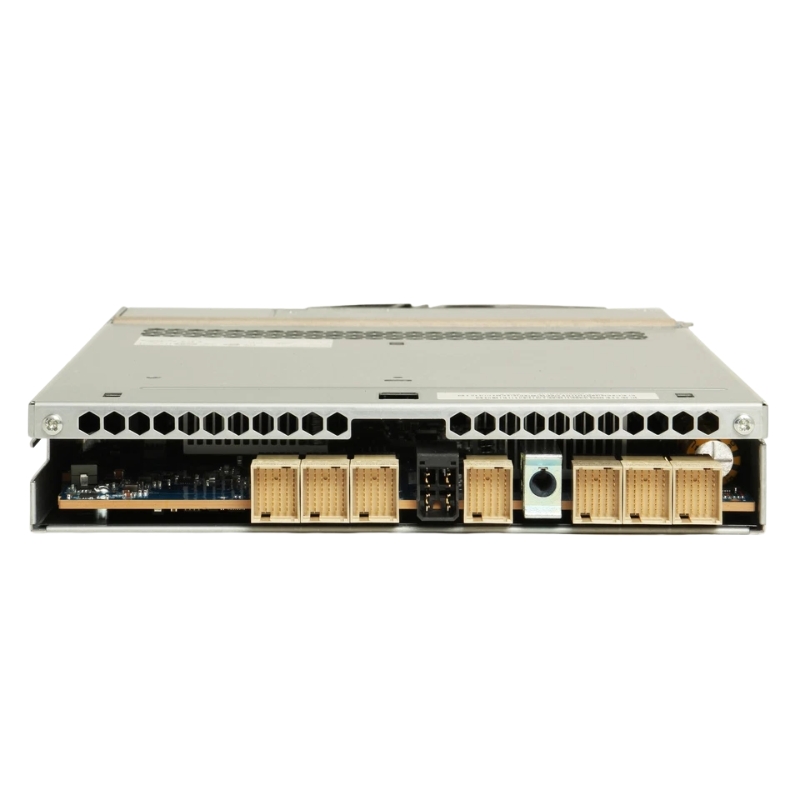
Dell JKJRR 25GB iSCSI 4 Ports Single Raid Controller. New Sealed in Box (NIB) with 1 Year Warranty
The Dell JKJRR 25GB iSCSI 4 Ports Single RAID Controller represents a specialized category of enterprise storage infrastructure components designed for high-performance data center environments. This product falls under the broader classification of host bus adapters and RAID controllers, specifically engineered for iSCSI protocol implementation with 25 gigabit Ethernet capabilities. These controllers serve as critical intermediaries between server systems and storage arrays, managing data flow, redundancy, and access protocols.
This controller category is optimized for medium to large-scale enterprise environments requiring reliable, high-throughput storage connectivity. Typical deployment scenarios include virtualized server infrastructures, database applications, and high-performance computing clusters where iSCSI storage area networks (SANs) form the backbone of data storage strategy. The four-port configuration enables multipath I/O and load balancing across multiple storage targets, ensuring continuous data availability and performance optimization.
The Dell JKJRR controller utilizes a PCI Express 3.0 x8 host interface, providing sufficient bandwidth for the aggregate 100Gbps potential of its four 25GbE ports. The card conforms to standard full-height, full-length (FHFL) profile dimensions, measuring approximately 167mm in length and 111mm in height.
Each of the four SFP28 ports supports 25GBASE-SR Ethernet connections using appropriate optical transceivers or direct attach copper cables. The interfaces are backward compatible with 10GBASE-SR and 1000BASE-SX standards, providing flexibility in infrastructure integration. The controller implements TCP/IP offload engine (TOE) technology, handling protocol processing at the hardware level to reduce host CPU utilization during iSCSI operations. This architecture significantly improves overall system efficiency when handling intensive storage workloads.
The Dell JKJRR controller delivers aggregate throughput capabilities approaching 200,000 IOPS (4K random read operations) under optimal conditions, with sequential transfer rates reaching the theoretical maximum of 25Gbps per port. Real-world performance varies based on factors including host system configuration, storage array capabilities, and workload characteristics. The controller implements advanced queue depth management supporting up to 1024 commands per port, enabling efficient handling of concurrent I/O operations in heavily virtualized environments.
Hardware-accelerated iSCSI processing minimizes protocol overhead, resulting in typical latency measurements below 100 microseconds for local network storage access. The controller employs interrupt coalescing and jumbo frame support (up to 9KB MTU) to reduce processing overhead and improve efficiency. Adaptive interrupt moderation dynamically adjusts to workload patterns, balancing responsiveness with CPU utilization based on current I/O demands.
As a single RAID controller, the Dell JKJRR provides hardware-assisted RAID functionality for directly attached storage devices while primarily functioning as an iSCSI HBA for network storage. For local storage, the controller supports RAID levels 0, 1, 5, 6, 10, 50, and 60, with battery-backed or flash-backed write cache options for protecting data during power loss scenarios. The integrated RAID processor handles parity calculations, stripe management, and rebuild operations independently from the host system.
The controller implements end-to-end data protection using T10 Protection Information (PI) standards, maintaining data integrity from application to storage medium. Advanced error recovery mechanisms include automatic path failover, transparent failback, and predictive failure analysis for connected drives. The controller's firmware includes background media scanning and patrol read capabilities to identify potential drive issues before they result in data loss.
The Dell JKJRR controller supports comprehensive iSCSI security features including CHAP (Challenge-Handshake Authentication Protocol) for initiator-target authentication, both unilateral and mutual CHAP variants. IPsec protocol support provides encryption for data in transit, protecting sensitive information as it traverses the network. The controller integrates with enterprise key management systems for centralized security policy administration across the storage infrastructure.
Full compliance with IETF RFC 7143 (iSCSI) and RFC 3720 (iSCSI core protocol) ensures interoperability with standards-compliant storage systems from multiple vendors. The implementation includes support for immediate data and unsolicited data options, enabling efficient small write operations. The controller's firmware maintains persistent bindings to iSCSI targets, automatically reestablishing connections after system reboots or network interruptions.
The four independent network ports enable sophisticated multipath I/O configurations, distributing storage traffic across multiple network paths to prevent bottlenecks. The controller supports both active-active and active-passive path configurations with automatic failover detection and recovery. Dynamic load balancing algorithms continuously monitor path performance, redirecting I/O to optimal paths based on current latency and throughput measurements.
For mission-critical applications, the controller supports teamed port configurations that present a single logical interface with aggregated bandwidth and automatic failover. Link aggregation control protocol (LACP) support enables integration with switched network environments for bandwidth expansion and redundancy. The controller's firmware includes connection state persistence, maintaining iSCSI session information across controller resets to minimize application disruption.
The JKJRR controller is qualified for use across Dell's PowerEdge server portfolio, including rack, tower, and modular infrastructure platforms. The controller undergoes extensive compatibility testing with Dell's lifecycle controller and iDRAC management systems, ensuring seamless integration into existing Dell infrastructure. Specific firmware versions are validated with corresponding server BIOS and iDRAC releases to guarantee interoperability.
While optimized for Dell environments, the controller maintains compatibility with industry-standard server platforms from other manufacturers, provided they offer appropriate PCIe slot configurations and mechanical clearance. The controller's UEFI BIOS support ensures compatibility with modern server firmware implementations, while legacy BIOS systems are supported through compatibility mode operation.
The controller incorporates a specialized storage processor with multiple cores dedicated to iSCSI protocol processing, TCP/IP offload, and RAID computations. The integrated memory subsystem includes DDR4 cache memory in configurations ranging from 2GB to 8GB, protected by error correction code (ECC) for data integrity. Cache protection options include supercapacitor-backed flash modules that preserve cache contents during power interruptions, ensuring data consistency.
Each of the four ports is driven by dedicated 25GbE controllers with integrated SerDes (Serializer/Deserializer) circuitry for direct attachment to SFP28 transceivers. The physical layer implementation supports both copper and fiber optic media through appropriate SFP28 transceivers, with auto-negotiation capabilities for speed and duplex settings. The controllers include sophisticated quality of service (QoS) features with multiple traffic classes and priority-based flow control.
Storage arrays should be configured with matching jumbo frame settings and queue depth parameters to maximize throughput. Recommended practices include creating multiple iSCSI targets with balanced LUN distributions across controller ports. For applications requiring maximum availability, storage arrays with dual controllers should be configured with asymmetric logical unit access (ALUA) to enable optimized path selection.


 Contact Us
 Information
 Catalog
 Solid State Drives (SSD)
 Network Switches
 Hard Disk Drives
 HBA & Controllers
 PC & Servers
 PC & Server Memory
 CPU & Processors
 Network Routers
 Power Supplies
 Tape Drives & Libraries
 Network Devices
 Computer & Network Cables