(7% discount is applied at checkout)
Cart is empty
Your go-to destination for cutting-edge server products
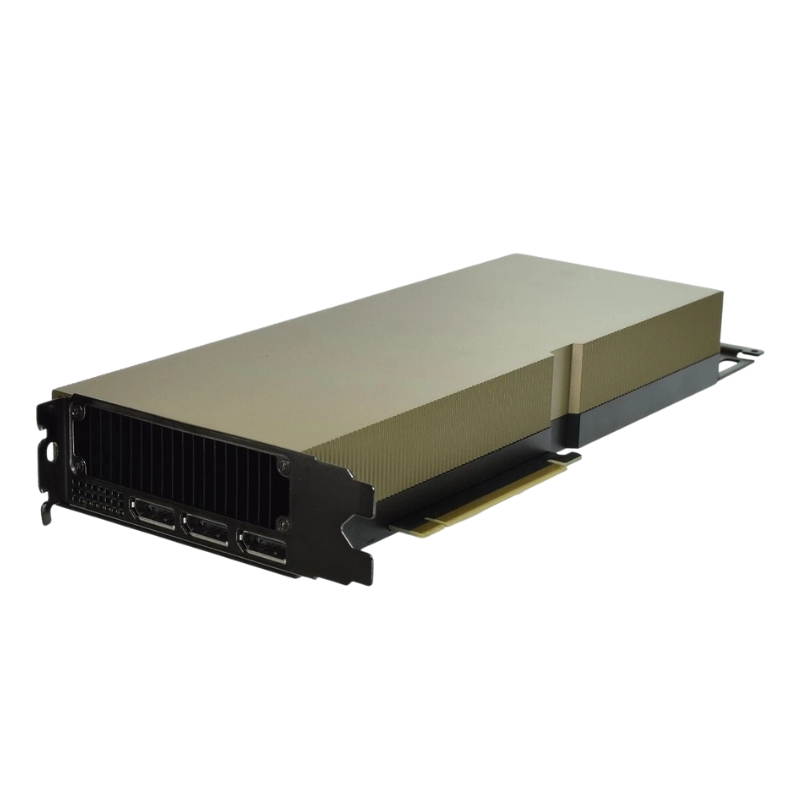


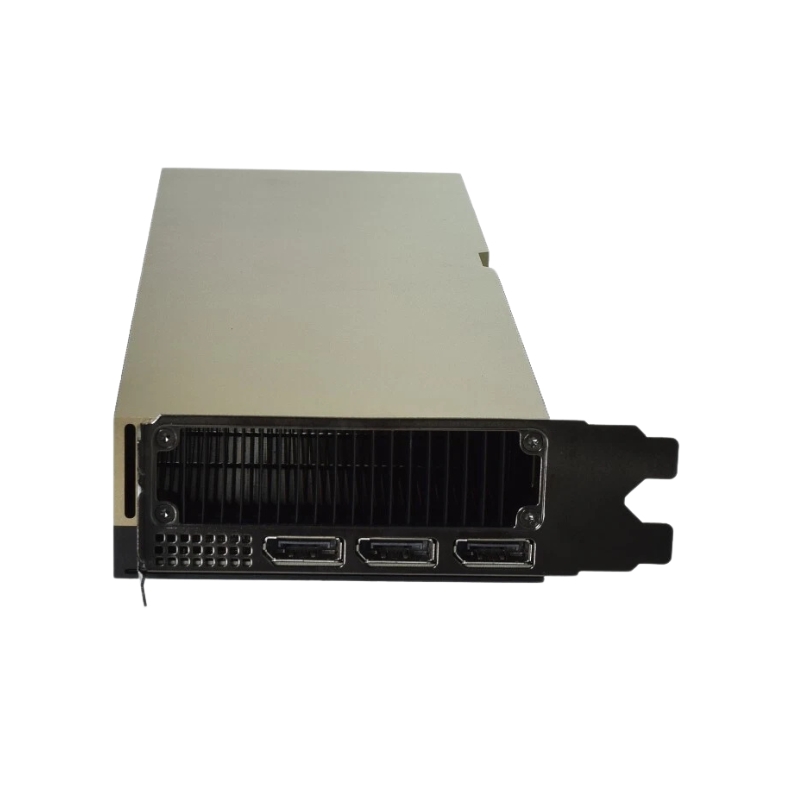
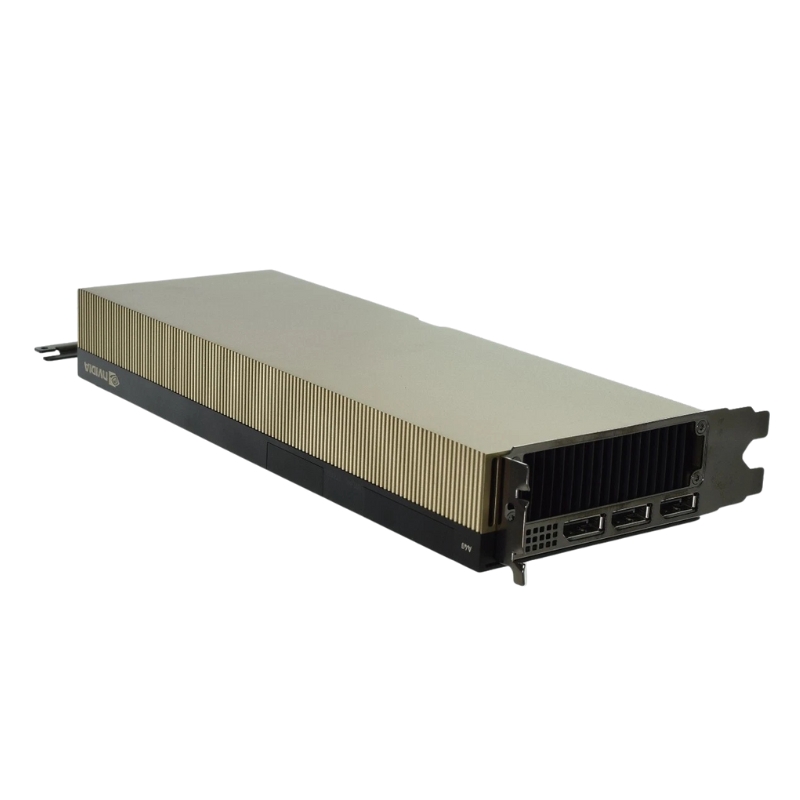
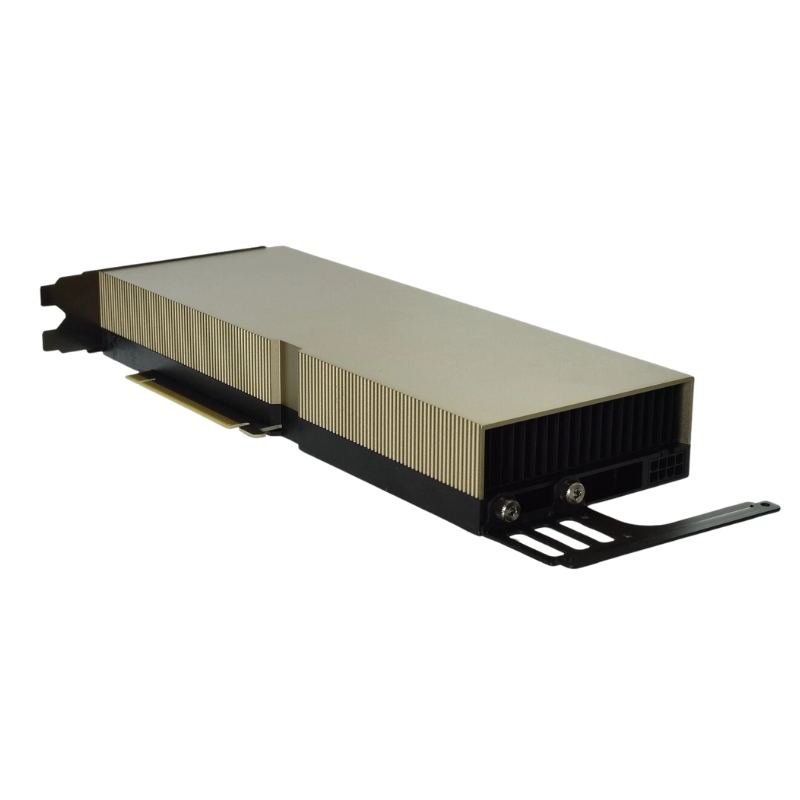
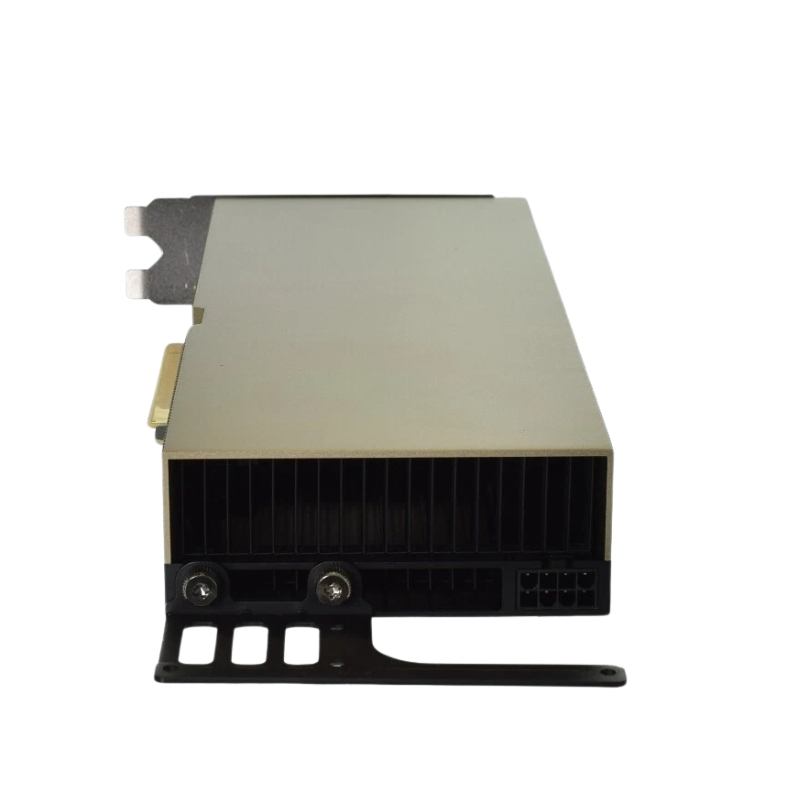
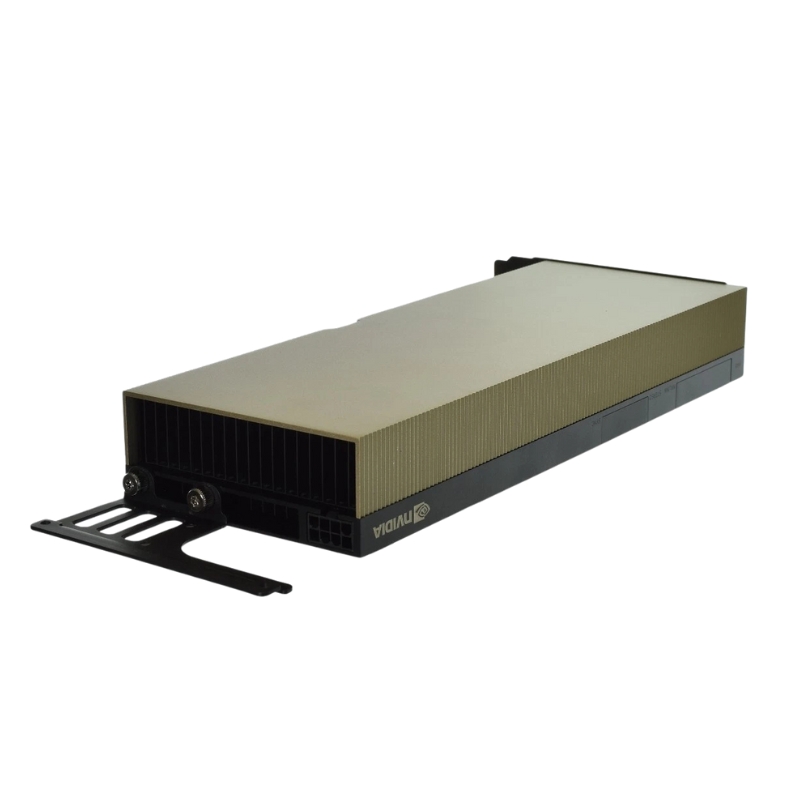
Dell M9WT5 Nvidia A40 Ampere 48GB GDDR6 300W Passive Graphics Processing Unit. Excellent Refurbished with 1-Year Replacement Warranty
The Dell M9WT5 Nvidia A40 Ampere 48GB GDDR6 is a high-performance passive graphics processing unit (GPU) designed for data centers, AI workloads, and professional visualization. With cutting-edge Nvidia Ampere architecture, it delivers exceptional power efficiency and performance for advanced computing environments.
The Dell M9WT5 Nvidia A40 Ampere 48GB GDDR6 Graphics Processing Unit represents a paradigm shift in computational power for modern data centers and professional visualization environments. Built upon NVIDIA's groundbreaking Ampere architecture, this 300W passive-cooled GPU is engineered to deliver exceptional performance across a diverse range of demanding workloads, from AI inference and virtual desktop infrastructure to high-end rendering and scientific computing.
At the heart of the Dell A40 lies Nvidia's second-generation RTX architecture, Ampere, which delivers significant performance improvements over previous generations through several key technological advancements.
The Dell M9WT5 A40 features specialized AI processors that accelerate deep learning training and inference operations. These cores support new precision formats including TF32 and BFloat16, which maintain model accuracy while dramatically speeding up AI workloads without requiring code changes.
Leveraging fine-grained structured sparsity, the A40's Tensor Cores can provide up to 2x throughput for inference operations on appropriately pruned neural networks, making AI deployments significantly more efficient.
Dedicated ray tracing hardware enables real-time photorealistic rendering for professional visualization applications. The A40's RT Cores deliver up to 2x the throughput of previous-generation RTX GPUs, accelerating ray-traced motion blur and dynamic denoising operations.
Unlike previous architectures, Ampere allows RT Cores to operate simultaneously with CUDA cores, enabling more efficient utilization of the GPU during complex rendering pipelines that combine traditional rasterization with ray tracing effects.
The Dell M9WT5 A40 is equipped with an expansive 48GB of GDDR6 memory, making it exceptionally well-suited for memory-intensive applications that demand large dataset handling.
For mission-critical deployments in scientific computing, financial modeling, and enterprise environments, the A40's ECC memory ensures data integrity by automatically detecting and correcting single-bit memory errors, preventing silent data corruption that could compromise results.
With 696 GB/s of memory bandwidth, the A40 can efficiently feed data to its processing cores, reducing bottlenecks when working with large textures, complex 3D models, or substantial datasets in AI and analytics workloads.
The 48GB memory capacity is presented as a unified address space, allowing applications to allocate large contiguous memory blocks for processing massive models that exceed the capacity of consumer-grade GPUs.
The Dell M9WT5 A40 is certified and optimized for a comprehensive range of professional applications across multiple industries and use cases.
For computer-aided design (CAD) and digital content creation (DCC) applications, the A40 delivers exceptional viewport performance and rendering capabilities.
Unlike consumer GeForce cards, the A40 utilizes Nvidia RTX Enterprise Drivers (formerly Quadro drivers), which are extensively tested and certified for compatibility with leading professional applications including Autodesk Maya, 3ds Max, SOLIDWORKS, CATIA, and Siemens NX.
With advanced shading techniques and optimized driver pathways, the A40 provides smooth interaction with complex assemblies and scenes containing millions of polygons, even when applying real-time visual effects and high-quality anti-aliasing.
The combination of CUDA cores, RT cores, and Tensor cores makes the A40 exceptionally capable for both offline and real-time rendering workflows.
Applications like Nvidia Omniverse, Blender Cycles, and Autodesk Arnold can leverage the A40's parallel processing power to significantly reduce render times compared to CPU-based rendering, while the large memory capacity enables handling of complex scenes with high-resolution textures and geometry.
For engineering simulations, the A40 accelerates solvers in applications like ANSYS Fluent and SIMULIA Abaqus, enabling faster iteration on design variations and reducing time-to-insight for complex physical simulations.
The Dell M9WT5 A40 brings substantial AI inference and training capabilities to enterprise environments, serving as a versatile accelerator for machine learning workloads.
With dedicated Tensor Cores and support for INT4 and INT8 precision modes, the A40 delivers high-throughput inference for deployed AI models, making it ideal for applications like intelligent video analytics, natural language processing, and recommendation systems.
A standout feature of the A40 is its ability to partition into multiple secure GPU instances, allowing a single physical GPU to be divided into as many as seven separate GPUs. Each MIG instance operates with isolated dedicated resources, including memory, cache, and compute cores, enabling optimal utilization and quality of service for multiple users or workloads.
While not primarily designed as a training card, the A40's 48GB memory capacity makes it suitable for training moderate-sized models or for development and prototyping of larger models that would typically require multiple GPUs.
The Dell M9WT5 A40 is specifically designed for virtualized environments, offering features that enhance user density and performance in VDI and application streaming scenarios.
When paired with Nvidia vGPU software, the A40 can be partitioned and shared across multiple virtual machines, with each VM receiving dedicated GPU resources. This enables high-performance virtual desktop infrastructure (VDI) for graphics-intensive workloads.
vGPU software supports multiple profile types, allowing administrators to balance user density with performance requirements. From 1GB profiles for task workers to 16GB+ profiles for power users running demanding visualization applications, the A40 can be configured to meet diverse organizational needs.
Beyond traditional vGPU, the A40's MIG capability provides hardware-level isolation between instances, ensuring predictable performance and enhanced security for multi-tenant environments.
The Dell M9WT5 A40 features a dual-slot, full-height design with a passive cooling solution specifically engineered for server and workstation chassis with adequate airflow.
By eliminating moving parts, the passive heatsink design increases reliability and reduces points of failure, making the A40 ideal for data center deployments where serviceability and uptime are critical considerations.
With a 300W TDP, proper system airflow is essential for maintaining optimal performance. Dell provides detailed thermal guidelines to ensure compatible chassis can maintain the A40 within its operating temperature range under full load.
The A40 features three DisplayPort 1.4 connectors, supporting up to 7680x4320 resolution at 60Hz with HDR, making it suitable for high-resolution multi-display professional visualization setups.
Utilizing visually lossless Display Stream Compression (DSC), the A40 can drive high-resolution, high-refresh-rate displays without compromising image quality, even over single cable connections.
The A40 incorporates hardware and software security features to protect sensitive data and intellectual property.
Through technologies like MIG and SR-IOV, the A40 provides hardware-enforced isolation between workloads, preventing data leakage between different users or applications sharing the same physical GPU.
vGPU implementations include security enhancements such as memory isolation between VMs and protection against DMA attacks, meeting enterprise security requirements for multi-tenant environments.
Understanding how the A40 compares to previous-generation professional GPUs and contemporary alternatives helps contextualize its position in the market.
The Dell M9WT5 A40 delivers substantial performance gains over the previous-generation Quadro RTX 8000, with approximately 1.5-2x improvement in traditional rendering workloads and even greater advantages in ray tracing and AI inference tasks.
Despite similar power envelopes, the Ampere architecture in the A40 delivers significantly more performance per watt compared to the Turing architecture in the RTX 8000, resulting in better computational density for data center deployments.
The Dell M9WT5 A40 occupies a strategic position between the data-center-focused A100 and the workstation-oriented A6000, combining features from both to serve mixed-workload environments.
While the A100 excels at high-performance computing and AI training with its tensor float (TF32) performance and larger memory options, the A40 offers better value for visualization workloads and provides display outputs that the A100 lacks.
The A6000 features active cooling suitable for workstations, while the A40 uses passive cooling optimized for servers. Both share the same GA102 GPU and 48GB memory configuration, but their thermal designs target different deployment scenarios.
The Dell M9WT5 A40's versatility makes it suitable for numerous deployment scenarios across different industries and applications.
For organizations implementing high-performance VDI for knowledge workers, the A40's combination of MIG technology and vGPU support enables cost-effective scaling while maintaining user experience for graphics-intensive applications.
Engineering, architecture, and media & entertainment companies can deploy remote workstations powered by A40 GPUs, allowing professionals to access high-performance graphics capabilities from anywhere while centralizing data and intellectual property.
Media and entertainment studios can deploy A40 GPUs as render nodes in on-premises or cloud render farms, accelerating both traditional and ray-traced rendering while handling complex scenes thanks to the 48GB memory capacity.
Research institutions can leverage the A40's double-precision floating-point performance (albeit limited compared to HPC-specific cards) and ECC memory for scientific simulations, data analysis, and visualization tasks where data integrity is paramount.
The Dell M9WT5 A40 is supported by Nvidia's comprehensive software ecosystem, providing developers and IT professionals with the tools needed to maximize productivity and performance.
Included with the A40 is access to NVIDIA's enterprise software stack, which provides enhanced capabilities for virtualization, management, and specific workload acceleration.
For 3D design collaboration and simulation, Omniverse Enterprise leverages the A40's ray tracing and AI capabilities to enable real-time collaboration across different design applications and geographically dispersed teams.
Developers can leverage the full capabilities of the A40 through Nvidia's CUDA platform, which provides direct access to the GPU's parallel compute engines for general-purpose processing.
Nvidia provides numerous optimized libraries for domains including linear algebra (cuBLAS), signal processing (cuFFT), and deep learning (cuDNN), allowing developers to accelerate applications without low-level GPU programming.


 Contact Us
 Information
 Catalog
 Solid State Drives (SSD)
 Network Switches
 Hard Disk Drives
 HBA & Controllers
 PC & Servers
 PC & Server Memory
 CPU & Processors
 Network Routers
 Power Supplies
 Tape Drives & Libraries
 Network Devices
 Computer & Network Cables