(7% discount is applied at checkout)
Cart is empty
Your go-to destination for cutting-edge server products
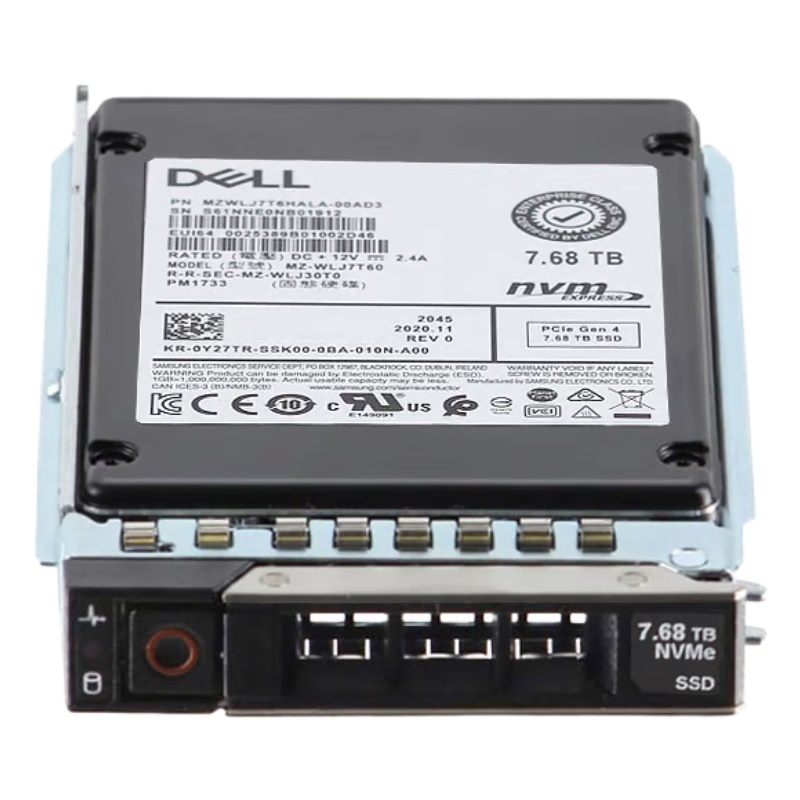


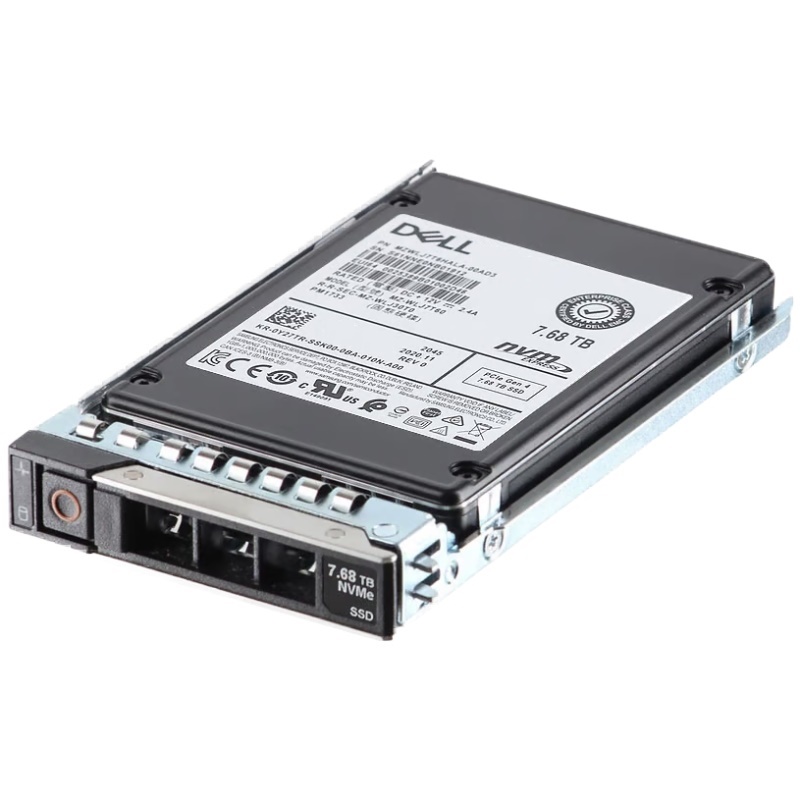
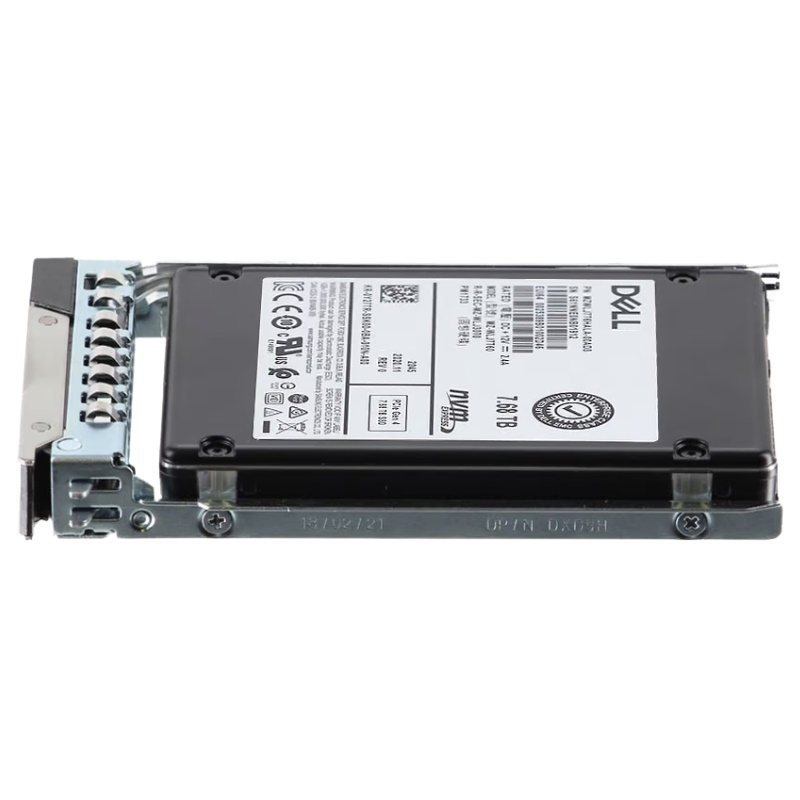
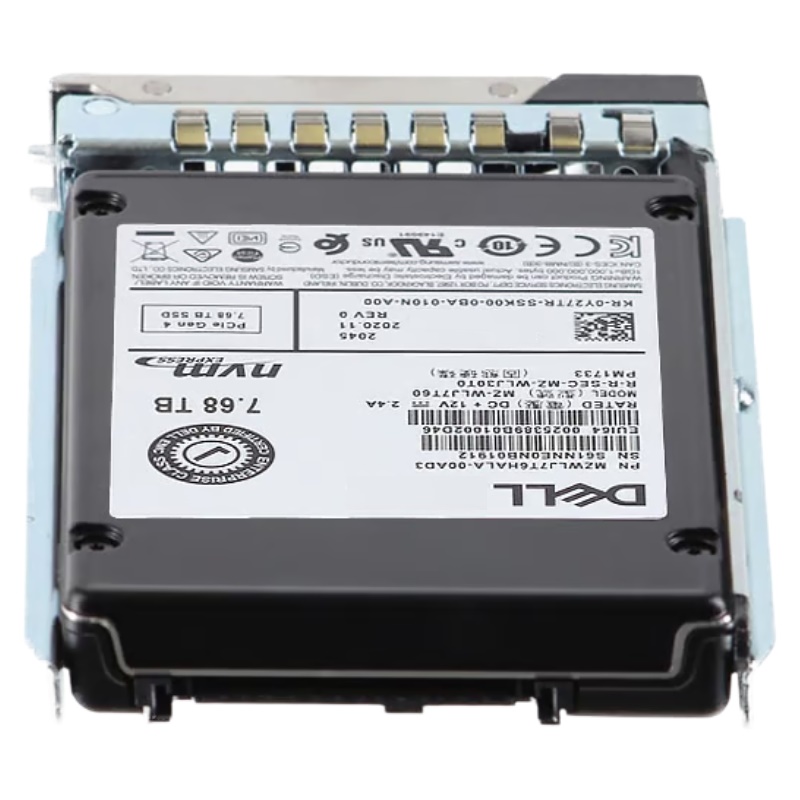
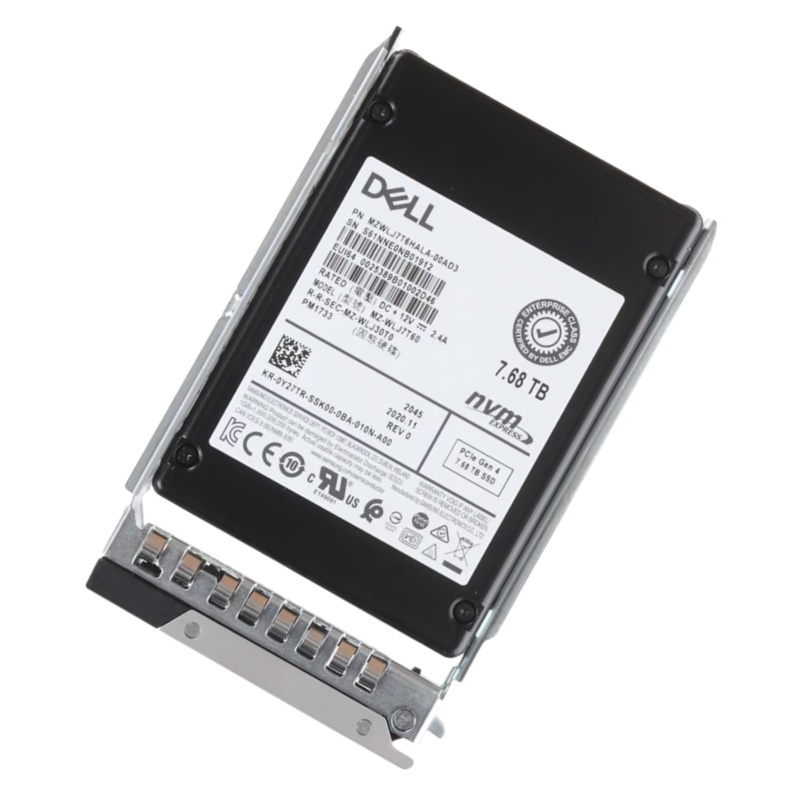
Dell MC2G9 7.68TB PCI-E Gen4 NVMe Read Intensive TLC U.3 SFF Internal Solid State Drive. Excellent Refurbished with 1 Year Replacement Warranty
The Dell MC2G9 7.68TB PCIe Gen4 NVMe U.3 2.5-inch Solid State Drive represents a pinnacle of storage technology, specifically engineered for Dell's 14th, 15th, 16th, and 17th generation PowerEdge servers. This high-capacity, read-intensive drive is designed to deliver exceptional performance for data-centric workloads, providing the speed, reliability, and seamless integration that enterprise and data center environments demand. Leveraging the PCIe 4.0 interface and the efficient TLC NAND architecture, the MC2G9 is a cornerstone component for accelerating applications, databases, and virtualized infrastructures.
The Dell MC2G9 7.68TB PCIe Gen4 NVMe Read-Intensive TLC U.3 2.5-inch Solid State Drive represents a pinnacle of storage engineering designed explicitly for the demanding environments of Dell PowerEdge servers. This drive is not merely a component; it is a strategic asset engineered to transform data center storage tiers, delivering unprecedented speed, reliability, and efficiency for read-centric workloads. As data becomes the lifeblood of enterprise operations, the need for storage that can keep pace with real-time analytics, vast databases, and content delivery is paramount. The MC2G9 SSD meets this challenge head-on, leveraging the full potential of the PCI Express 4.0 interface and the NVMe protocol to shatter storage bottlenecks and empower the latest generations of Dell PowerEdge infrastructure.
The following detailed specifications define the operational parameters of the Dell MC2G9 7.68TB SSD:
Formatted Capacity: 7.68 Terabytes (TB). Host Interface: PCI Express 4.0 x4, operating in NVMe 1.4 mode. Form Factor: 2.5-inch, U.3 (SFF-8639) connector.
Sequential Read Speed: Up to 6,800 MB/s. Sequential Write Speed: Up to 3,800 MB/s. Random Read IOPS (4KB): Up to 1,000,000. Random Write IOPS (4KB): Up to 130,000. Latency: Read latency typically under 100 microseconds.
NAND Type: 3D TLC (Triple-Level Cell). Endurance Rating: Read-Intensive, with a specific TBW/PBW value. MTBF: 2,000,000 hours. Power Loss Protection: Full capacitor-based PLP implemented. Operating Temperature: Specified for continuous data center operation (e.g., 0°C to 70°C).
Active Average Power: Varies with workload but designed for efficiency. Idle Power: Optimized for low power consumption during inactive periods, contributing to lower data center PUE (Power Usage Effectiveness).
At its core, the Dell MC2G9 is built upon a sophisticated architecture that harmonizes cutting-edge hardware with Dell's stringent validation processes. This synergy ensures seamless integration and optimal performance within the Dell ecosystem.
The adoption of the PCIe 4.0 interface doubles the available bandwidth compared to the previous PCIe 3.0 generation. With a x4 lane configuration, this drive offers a theoretical bandwidth of up to 64 Gb/s (8 GB/s) per direction. This immense pipeline allows the NVMe protocol—designed from the ground up for flash storage—to operate at its full potential. NVMe reduces command overhead and enables massively parallel data access via deep queues, resulting in significantly lower latency and higher Input/Output Operations Per Second (IOPS) than legacy SAS or SATA interfaces. For PowerEdge 14th generation (14G) and newer servers equipped with PCIe 4.0 slots, the MC2G9 unlocks this performance tier, ensuring that storage is never the limiting factor in application performance.
The drive utilizes the 2.5-inch U.3 form factor, a critical feature for modern data center flexibility. The U.3 backplane connector is a multi-protocol interface that supports NVMe, SAS, and SATA drives on the same chassis. This allows data center administrators to deploy the MC2G9 alongside existing drives in compatible PowerEdge servers, enabling a smooth, non-disruptive transition to all-flash or tiered storage architectures without requiring a complete infrastructure overhaul. The 2.5-inch size also ensures high density, allowing servers to host a large number of these high-capacity drives for petabyte-scale storage in a compact footprint.
This SSD employs Triple-Level Cell (TLC) NAND flash memory, which stores three bits of data per cell. Dell classifies this as a "Read-Intensive" drive, indicating its endurance rating is optimized for workloads where read operations vastly outnumber writes. This design choice strikes a perfect balance between cost-effectiveness, high capacity, and sufficient endurance for the vast majority of enterprise applications—such as web servers, virtual desktops (VDI), data analytics, and content repositories—where data is frequently accessed but not constantly overwritten. The controller and firmware implement advanced wear-leveling, bad block management, and over-provisioning to maximize the lifespan and reliability of the TLC NAND within its specified endurance parameters.
The theoretical advantages of PCIe Gen4 and NVMe are realized in the concrete performance metrics of the MC2G9 7.68TB drive. These figures translate directly to reduced application wait times, faster data processing, and improved user experiences.
This drive delivers exceptional sequential transfer speeds. Sequential read performance can reach up to 6,800 MB/s, allowing for the rapid movement of large files, such as video assets, scientific datasets, or database backups. Sequential write speeds are equally impressive, designed to handle large-scale data ingestion efficiently. This level of throughput ensures that tasks like loading a virtual machine image, performing a data warehouse ETL (Extract, Transform, Load) operation, or streaming high-resolution media are executed with minimal delay.
For transactional workloads typical of databases, email servers, and virtualization, random IOPS are the key metric. The MC2G9 excels in random read performance, capable of delivering up to 1,000,000 IOPS. This means it can handle an immense number of small, random data requests simultaneously, drastically reducing latency for queries and transactions. Random write performance is robust for its endurance class, ensuring that update operations are processed swiftly. The combination of high IOPS and low latency (often in the microsecond range) ensures that applications remain responsive even under heavy concurrent loads.
Enterprise environments demand absolute data integrity. The MC2G9 incorporates robust Power Loss Protection (PLP) circuits, typically using capacitors, which provide enough stored energy in the event of an unexpected power failure to complete in-flight writes and flush data from volatile caches to the persistent NAND flash. This prevents data corruption and ensures transactional consistency. Furthermore, the drive employs end-to-end data path protection, using advanced error correction codes (ECC) and parity checks to safeguard data as it moves between the host, the drive's DRAM, and the NAND media.
The "For DELL 14g, 15g, 16g and 17g PowerEdge Server" designation is a hallmark of deep integration. This drive is not just compatible; it is validated, tuned, and managed as an integral part of the PowerEdge system.
Dell engineers validate the MC2G9 SSD across multiple server generations to ensure flawless operation. This includes compatibility testing with the BIOS, Dell EMC iDRAC (Integrated Dell Remote Access Controller), and system management software. For 14th generation PowerEdge servers, this drive provides a massive performance leap from SATA or SAS-based storage. In 15th, 16th, and the latest 17th generation PowerEdge platforms, it serves as a high-performance, high-capacity building block for NVMe storage pools, fully leveraging the enhanced PCIe lanes and chipset improvements of each successive generation.
The 7.68TB capacity and read-intensive performance profile of the Dell MC2G9 make it an ideal solution for a wide array of modern data center applications.
In analytics platforms, speed is insight. The high sequential read speeds of the MC2G9 allow for rapid scanning of massive datasets in data warehouses like those built on SQL Server or Oracle. Its high random read IOPS accelerate query performance in in-memory databases or caching layers, enabling faster decision-making and real-time analytics.
For hyper-converged infrastructure (HCI) and large-scale virtualization (VMware vSphere, Microsoft Hyper-V), storage density and IOPS are critical. A few of these drives can host hundreds of virtual machines, with the low latency ensuring consistent performance for virtual desktops (VDI) and server workloads. The high capacity reduces the number of drives required, simplifying configuration and management.
In database architectures, read replicas are used to offload query traffic from the primary database server. These replicas are predominantly read-heavy, making the MC2G9 an excellent, cost-effective choice for scaling out database performance without the cost premium of write-intensive drives.


 Contact Us
 Information
 Catalog
 Solid State Drives (SSD)
 Network Switches
 Hard Disk Drives
 HBA & Controllers
 PC & Servers
 PC & Server Memory
 CPU & Processors
 Network Routers
 Power Supplies
 Tape Drives & Libraries
 Network Devices
 Computer & Network Cables