(7% discount is applied at checkout)
Cart is empty
Your go-to destination for cutting-edge server products
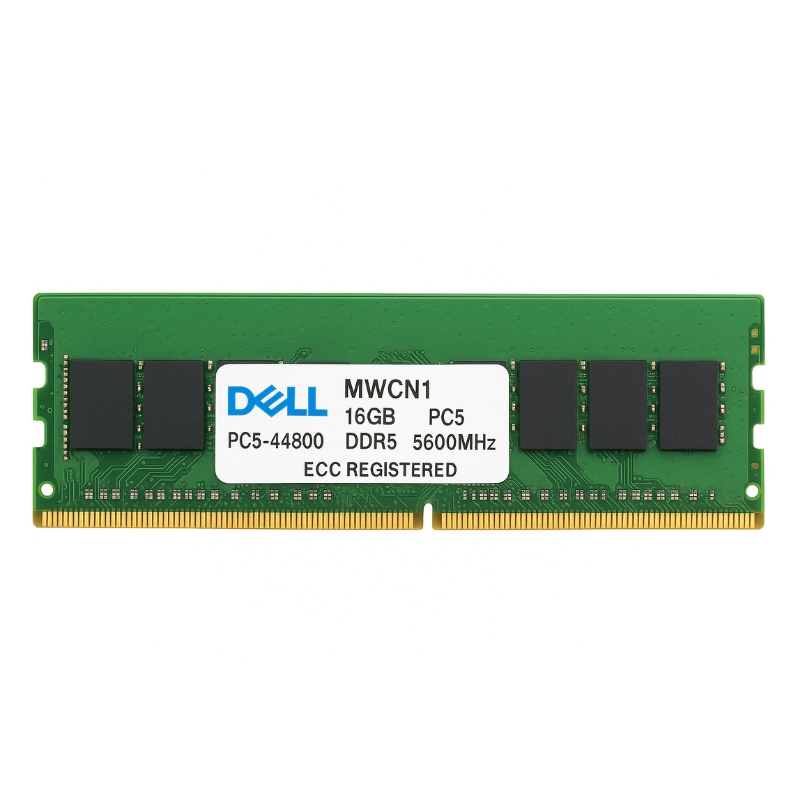


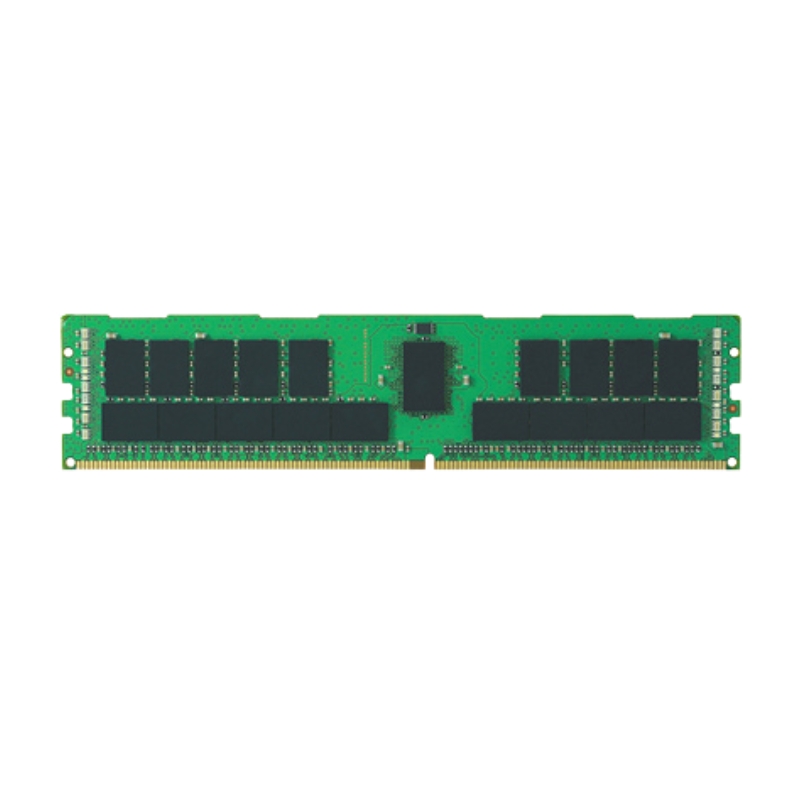
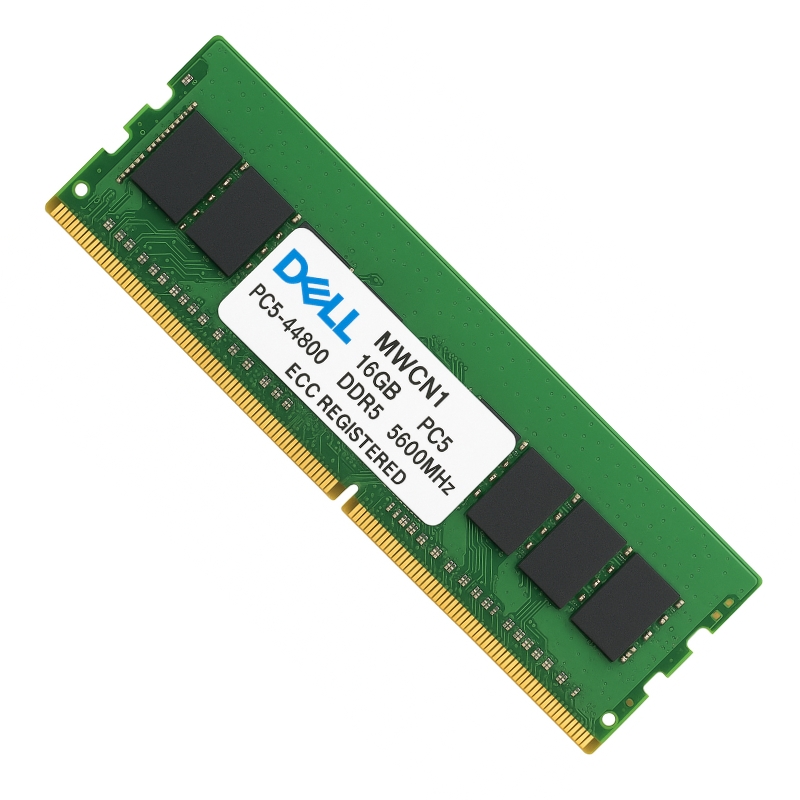
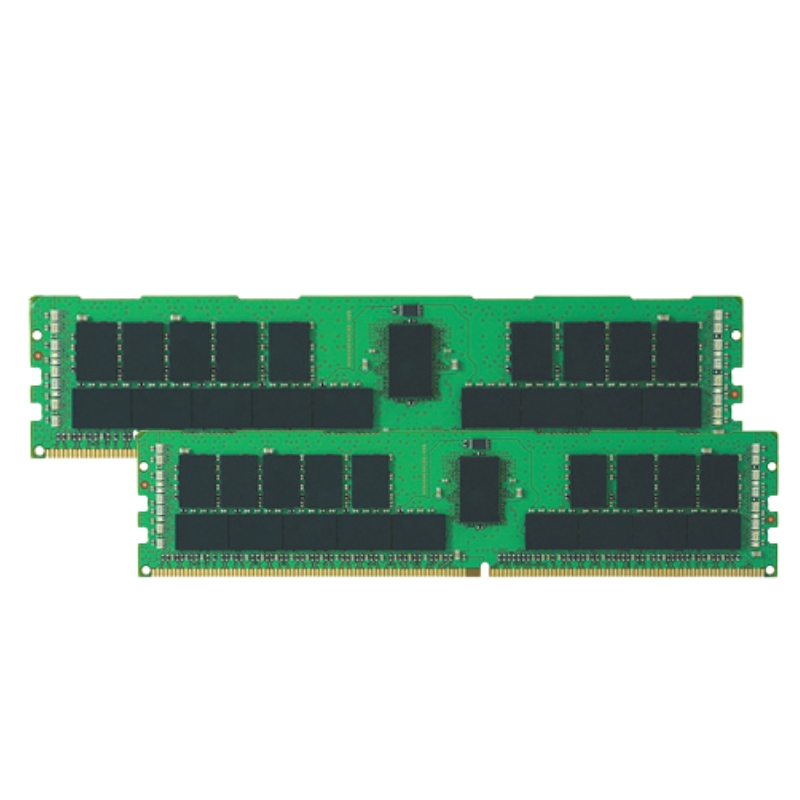
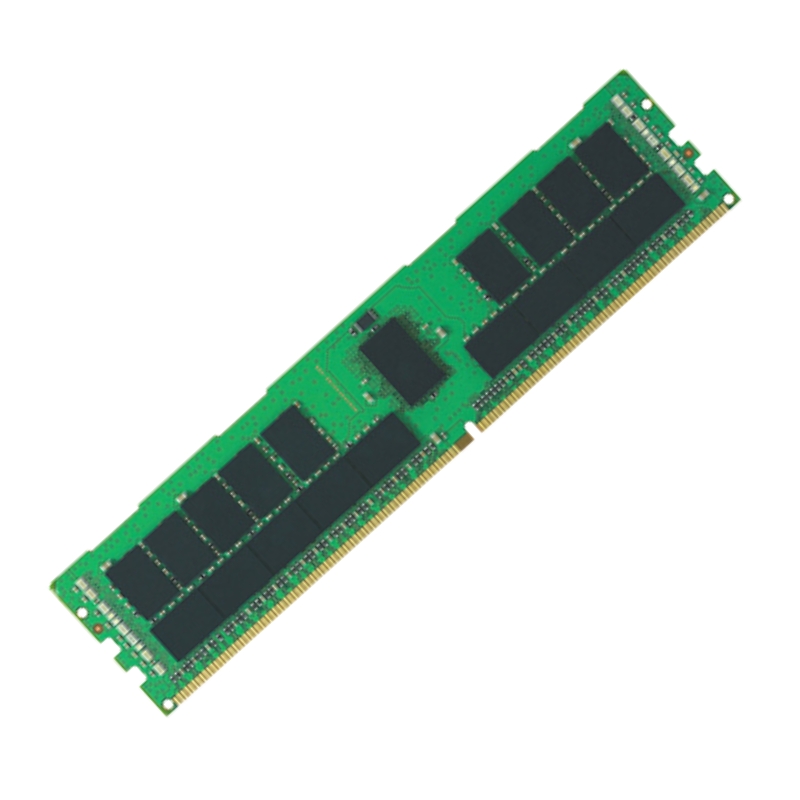
Dell MWCN1 16GB Pc5-44800 DDR5 5600mhz ECC Registered 288-pin RDIMM Memory Module for Server. New Sealed in Box (NIB) with 1 Year Warranty - Samsung Version
The Dell MWCN1 16GB (1x16GB) DDR5 5600MHz PC5-44800 RDIMM is a high-performance, error-correcting memory module engineered for enterprise-class servers. Built as an ECC registered DDR5 SDRAM stick, this module delivers robust data integrity, dependable stability, and low-voltage efficiency for critical workloads and multi-socket platforms.
The Dell MWCN1 16GB PC5-44800 DDR5 5600MHz ECC Registered 288-pin RDIMM memory module is a server-grade memory product designed for enterprise environments, data centers, and workstation-class systems that demand high throughput, low latency, and maximum reliability. This category covers the module itself as well as closely related subcategories — higher capacities (32GB, 64GB, 128GB), different speeds (DDR5-5200, DDR5-6000), and alternative form factors (LRDIMM vs RDIMM). The modules in this category are engineered for sustained heavy workloads: virtualization, in-memory databases, high-performance computing (HPC), and multi-socket server architectures.
These modules adhere to the 288-pin RDIMM specification for DDR5. The 288-pin edge connector and standardized mechanical design ensure physical compatibility with modern DDR5 server DIMM slots. RDIMM (Registered DIMM) modules include a buffer/registered component on the module that helps the memory controller manage large numbers of DIMMs across multi-channel, multi-socket platforms. The register improves signal integrity and stability under heavy loads and high memory populations.
The PC5-44800 designation corresponds to a theoretical peak bandwidth of 44,800 MB/s per module running at an effective data rate of 5600 MT/s (commonly referred to as 5600MHz). For server workloads that prioritize memory throughput — e.g., caching layers, real-time analytics, and large-scale virtualization — this higher DDR5 speed delivers measurable improvements in aggregate I/O and application responsiveness compared to DDR4 or lower-frequency DDR5 modules.
ECC (Error-Correcting Code) capability is essential for server memory. Dell MWCN1 modules implement ECC to automatically detect and correct single-bit memory errors and detect multi-bit errors, reducing the risk of silent data corruption. ECC combined with the RDIMM register makes this category ideal for mission-critical deployments where data integrity and uptime are top priorities.
It's useful to distinguish RDIMM from unbuffered UDIMM and LRDIMM options:
While the MWCN1 SKU is commonly associated with Dell-certified memory, buyers should always confirm platform compatibility with exact server make and model (PowerEdge model numbers, generation/year). The module is optimized for recent-generation Intel Xeon and AMD EPYC server platforms that support DDR5 RDIMMs. Compatibility depends on BIOS/UEFI firmware level and the server’s validated memory population rules.
Servers negotiate memory speed based on installed DIMMs, channel population, and CPU memory controller capabilities. Installing 5600MT/s modules on a platform that supports up to that frequency will allow the system to run at full speed, provided all DIMMs meet timing and voltage requirements. If mixed with lower-speed modules, the system may downclock memory to the slower speed — a key compatibility detail to highlight in category messaging.
Mixing RDIMMs of different sizes, speeds, or manufacturers can work but introduces the risk of suboptimal performance and instability. Best practice recommendations for product pages and category descriptions:
DDR5 introduces architectural changes (e.g., on-die ECC for consumer-type DIMMs, improved bank groups) that can influence both latency and sustained bandwidth. Higher-frequency modules like 5600MHz typically provide superior bandwidth (beneficial for throughput-heavy tasks), while latency improvements are incremental and depend heavily on memory timings and system configuration. For database and HPC workloads, bandwidth often correlates more strongly with real-world performance.
Use-cases that benefit from Dell MWCN1 16GB PC5-44800 modules include:
ECC corrects single-bit errors on the fly and flags multi-bit errors for administrative attention, while the register reduces electrical loading and improves signal timing in multi-DIMM configurations. These two features together reduce system crashes, data corruption, and the likelihood of silent errors — critical for servers running 24/7.
Modern servers often include predictive failure analysis in the BMC or iDRAC/ILO. ECC error counts, corrected error rates, and uncorrectable error events should trigger alerts and scheduled replacement to avoid downtime. Category content should encourage buyers to monitor these metrics and maintain spares for rapid on-site replacement.
Capacity planning depends on workload type:
When demand grows, operators decide between scaling up (adding capacity to existing servers via higher-capacity RDIMMs or additional populated slots) or scaling out (adding more servers). RDIMMs like the Dell MWCN1 are often used in both strategies: as replacements for larger RDIMMs in scale-up scenarios or as standardized spares across a rack for scale-out consistency.
Key comparison vectors:
When selecting modules, procurement teams frequently balance price-per-GB against performance and support. OEM-certified modules may carry a higher price but offer streamlined compatibility and warranty support. Third-party memory can be cost-effective but may necessitate additional validation effort and acceptance of potential compatibility risks.
In VMware ESXi, Microsoft Hyper-V, or KVM environments, memory density and bandwidth are decisive. The MWCN1 16GB modules allow administrators to tune host memory for aggressive VM consolidation while preserving ECC protection. Recommend policies such as memory reservations for business-critical VMs and transparent page sharing judiciously to exploit available memory without over-committing dangerously.
Databases like PostgreSQL, MySQL, Oracle, and in-memory stores like Redis directly benefit from larger buffer pools and higher throughput. For OLTP workloads, prioritize low-latency configurations and ensure the memory subsystem is balanced with CPU and storage I/O capabilities to avoid bottlenecks.
In HPC clusters, memory bandwidth is often as important as CPU core count. The PC5-44800 modules provide the bandwidth required for scientific workloads that regularly stream large datasets into working memory and then process them in parallel across cores.
OEM-certified modules like MWCN1 frequently include warranty coverage and Dell support options. Buyers should verify the warranty duration and replacement policies — especially for large deployments where spare parts logistics and RMA turnaround matter.
For large deployments:
DDR5 modules generally operate at a lower nominal voltage than legacy DDR4, but the absolute power draw depends on module density and operating frequency. Higher-speed modules can generate more heat under sustained loads; maintain recommended chassis airflow and server fan profiles to keep DIMM temperatures in the safe operating range.
Upgrade when application memory demands outgrow current capacity, when replacing aging hardware with newer platforms, or when upgrading CPU/server generations that support higher DDR5 speeds for improved overall performance. Plan upgrades in maintenance windows and stage a roll-out to validate firmware and BIOS interplay with new DIMMs.
For decommissioned DIMMs, follow responsible e-waste recycling and data sanitization policies. While DIMMs do not contain user data in the same way as storage devices, adhere to local regulations for electronic waste disposal.
Server memory modules typically comply with international standards for electromagnetic compatibility (EMC) and product safety. When listing product details, include relevant compliance certificates (CE, FCC, RoHS) to reassure enterprise procurement teams about environmental and regulatory adherence.
Buyers often overlook DIMM revision numbers, manufacturing dates, and lot identifiers which can matter for large rollouts. Include these details where available to support large-scale procurement, patching, and RMA processes.
Detail shipping lead times, return windows, and whether you offer pre-shipment testing or burn-in validation for bulk orders. Clear policies reduce friction for enterprise buyers and raise confidence for smaller customers integrating parts into production environments.


 Contact Us
 Information
 Catalog
 Solid State Drives (SSD)
 Network Switches
 Hard Disk Drives
 HBA & Controllers
 PC & Servers
 PC & Server Memory
 CPU & Processors
 Network Routers
 Power Supplies
 Tape Drives & Libraries
 Network Devices
 Computer & Network Cables