(7% discount is applied at checkout)
Cart is empty
Your go-to destination for cutting-edge server products
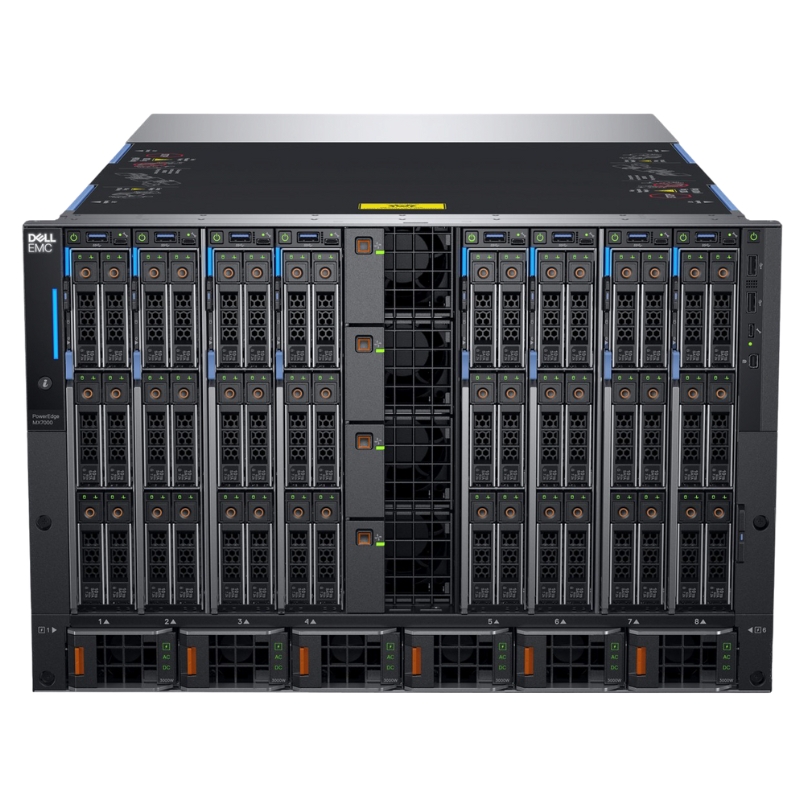


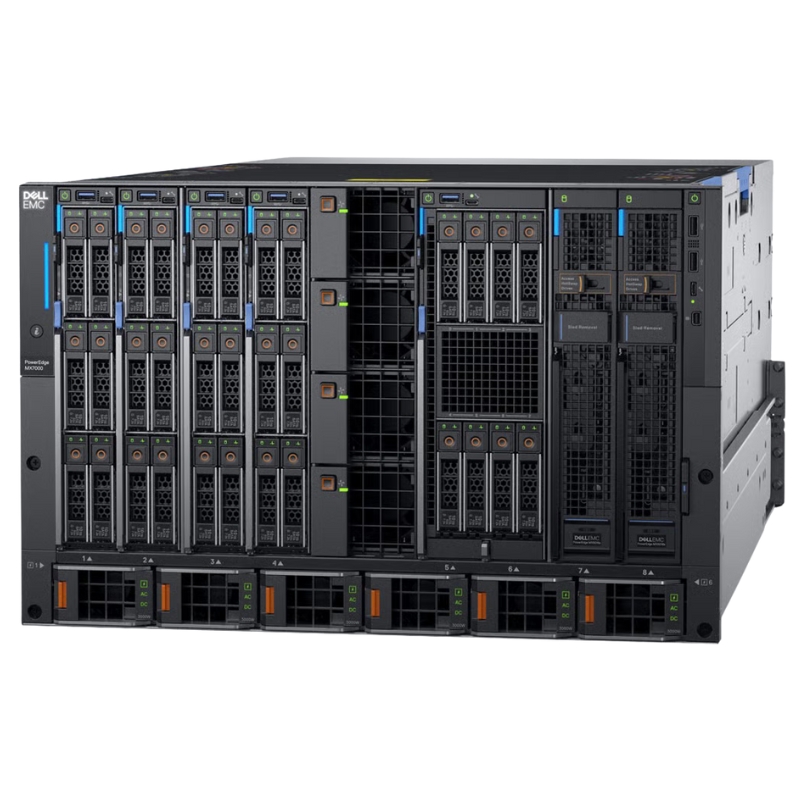
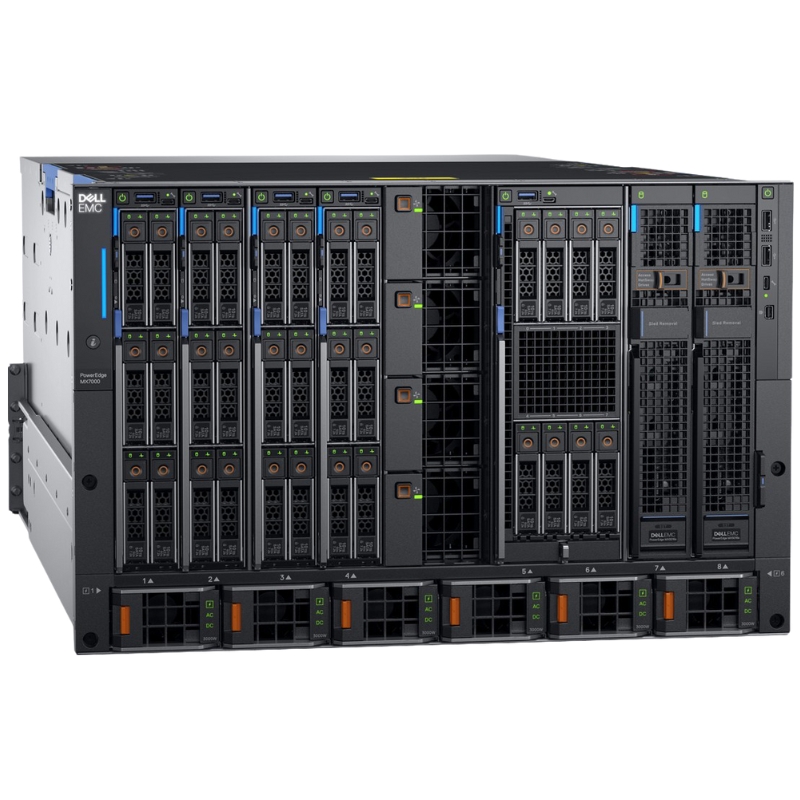
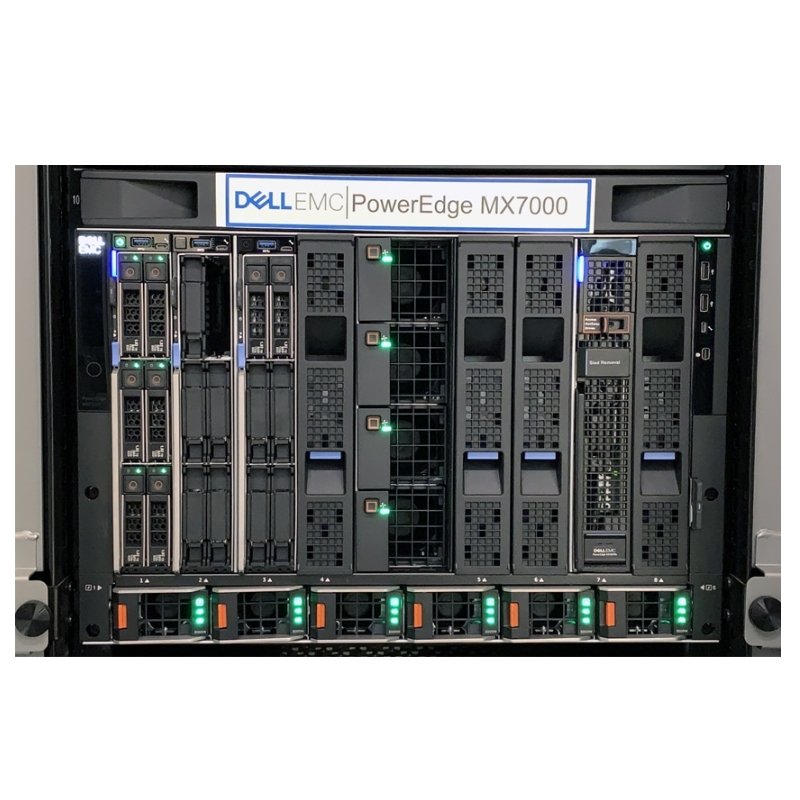
Dell MX7000 Power Edge CTO Blade 8 Slot 7U Rack-Based up to 6X 3000W PSU 2X MX9002M Chassis Modular. Excellent Refurbished with 1 year replacement warranty
The Dell MX7000 PowerEdge CTO Blade 8 Slot 7U rack-based modular solution — configured as a dual MX9002M chassis setup with support for up to six 3000W power supplies — is engineered for organizations that demand extreme density, flexible compute/network disaggregation, and enterprise-class manageability. This category centers on modular chassis and blade nodes optimized for hybrid workloads, consolidating compute, storage fabric and networking within a 7U envelope. The result: datacenter-grade consolidation without sacrificing serviceability, redundancy or thermal headroom. Use this category content to quickly evaluate chassis-level trade-offs, power and cooling planning, blade compatibility and deployment best practices.
The MX7000 family is built around a disaggregated building-block model: compute sleds (PowerEdge blades), networking modules and a shared backplane inside the MX9002M chassis. For an 8-slot 7U layout, that means high-density compute with a predictable service profile. Disaggregation enables independent lifecycle replacement of compute sleds and networking modules, and provides headroom for upgrades (CPU, memory and NVMe expansions) without complete chassis replacement.
The 8-slot configuration in a single 7U MX9002M chassis provides a compact footprint for rack-limited environments. Paired chassis (2x MX9002M) deliver a dense 16-slot compute aggregate within 14U of rack space — useful for enterprise virtualization clusters, VDI farms, telco edge sites and private cloud nodes where rack density and serviceability matter.
Power is a controllable resource in this category: modular chassis accept an array of high-capacity PSUs (up to six 3000W units depending on configuration) to enable N+1 or N+N redundancy models. This allows sites to design for peak CPU/GPU loads, PCIe expansions and higher memory power draw while maintaining redundancy for planned maintenance or PSU failure scenarios.
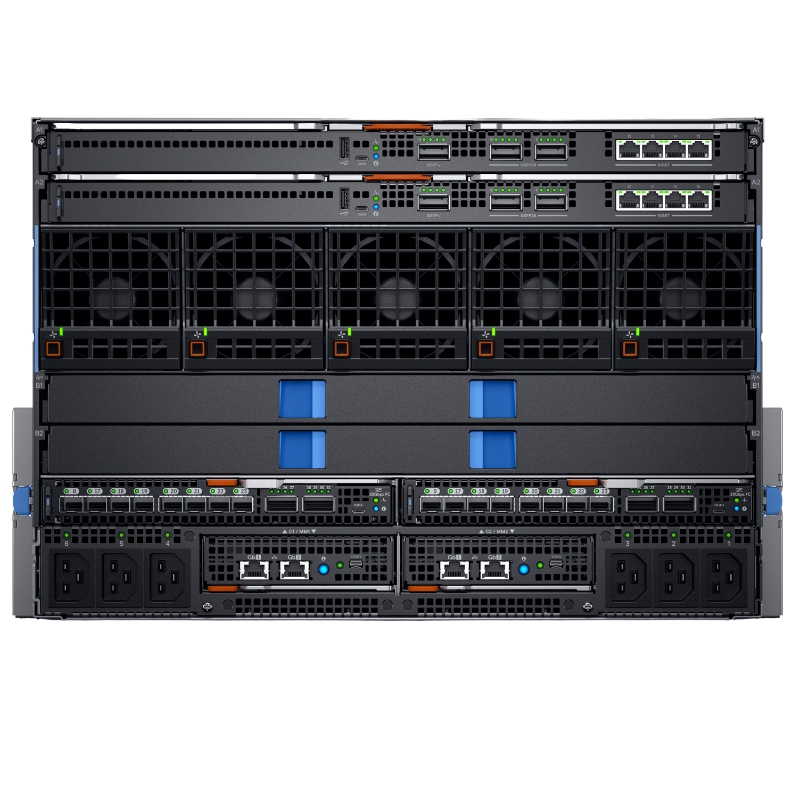
The 7U MX9002M chassis uses a horizontal sled insertion model, with front-access compute sleds and rear I/O and power modules. Tool-less or single-screw rails (depending on generation) allow quick insertion and extraction of blades for field service. Cable management is optimized around the rear I/O zones with clear labeling for network modules and power distribution feeds. Service hot-swapability for power supplies, fans and I/O modules is an explicit design point to minimize downtime during field servicing.
Each 8-slot chassis is engineered to house a mix of single-width and double-width sleds (check specific sled models for physical compatibility). Rack planning should account for the 7U chassis height, 19-inch rack mounting requirements, and recommended clearance above and below for airflow and cable routing. If you are pairing 2x MX9002M chassis, reserve contiguous rack U-space and plan cable trays for aggregated networking and redundant power feeds.
The category supports multiple PSU capacities up to 3000W per unit. Use combinations of PSUs to achieve required redundancy goals:
The MX ecosystem is compatible with multiple PowerEdge sleds tailored for general-purpose CPU compute, memory-optimized workloads, and GPU-accelerated tasks. CTO (Configure-To-Order) options commonly include choice of CPU generation, core counts, memory topology, drive types (NVMe/SAS/SATA) and optional accelerators. When selecting sleds for an 8-slot MX9002M chassis, match sled TDPs and airflow requirements to chassis cooling capacity to avoid thermal pinching.
Typical CTO choices include maximum DDR memory configurations with support for Intel or AMD server CPUs, NVMe drive support for low-latency storage, and various PCIe card options such as GPUs, FPGAs or network offload cards. For low-latency databases and AI inference workloads, prefer NVMe sled configurations; for high-memory analytics, choose memory-optimized sleds and plan for NUMA-aware placement.
The chassis accepts modular I/O uplink modules that provide top-of-chassis aggregation for networking and fabric connectivity. This includes 10GbE/25GbE/40GbE/100GbE options, as well as specialized fabrics for storage (e.g., Fibre Channel or converged Ethernet). The modular approach allows administrators to upgrade networking independent of compute sleds, enabling non-disruptive bandwidth upgrades as application needs grow.
Decide whether to rely on chassis-level aggregation for east-west traffic or use traditional top-of-rack switching. Chassis uplink modules reduce cabling complexity and provide fabric consolidation, but upstream switch architecture should align with your redundancy, latency and east-west traffic patterns.
The MX7000 8-slot chassis is well suited for virtualized server farms and private cloud nodes. Consolidation benefits include simplified network fabrics and centralized management; consider mixed-sled populations (compute-optimized and memory-optimized) for workload heterogeneity. Use affinity and anti-affinity scheduling to optimize NUMA and thermal distribution across sleds.
When configured with GPU or accelerator sleds, the MX7000 supports inference clusters and scaled-out training topologies. For GPU-heavy configurations, adjust PSU counts and cooling plans to reflect higher sustained power draw and thermal dissipation. Network fabrics should support RDMA or high-throughput links to minimize training communication bottlenecks.
The 7U form factor and modular redundancy make these chassis attractive for telco edge and micro-datacenter nodes. Compact footprint, remote management and chassis-level resiliency reduce on-site technical footprint and enable remote firmware and health operations.
Standardize cabling runs and PDU placement for paired chassis. Reserve contiguous U-space and leave room for airflow and cable bend radii. Use labeled, color-coded cabling for power and network separation. Ensure PDUs support the amperage required by multiple 3000W PSUs and have breakers sized for the combined inrush currents.
Install rack-level environmental sensors (temperature, humidity, airflow) and integrate with management telemetry to trigger alerts when thresholds are exceeded. This is critical for dense GPU or high-TDP CPU configurations where thermal excursions can trigger throttling or unexpected shutdowns.


 Contact Us
 Information
 Catalog
 Solid State Drives (SSD)
 Network Switches
 Hard Disk Drives
 HBA & Controllers
 PC & Servers
 PC & Server Memory
 CPU & Processors
 Network Routers
 Power Supplies
 Tape Drives & Libraries
 Network Devices
 Computer & Network Cables