(7% discount is applied at checkout)
Cart is empty
Your go-to destination for cutting-edge server products
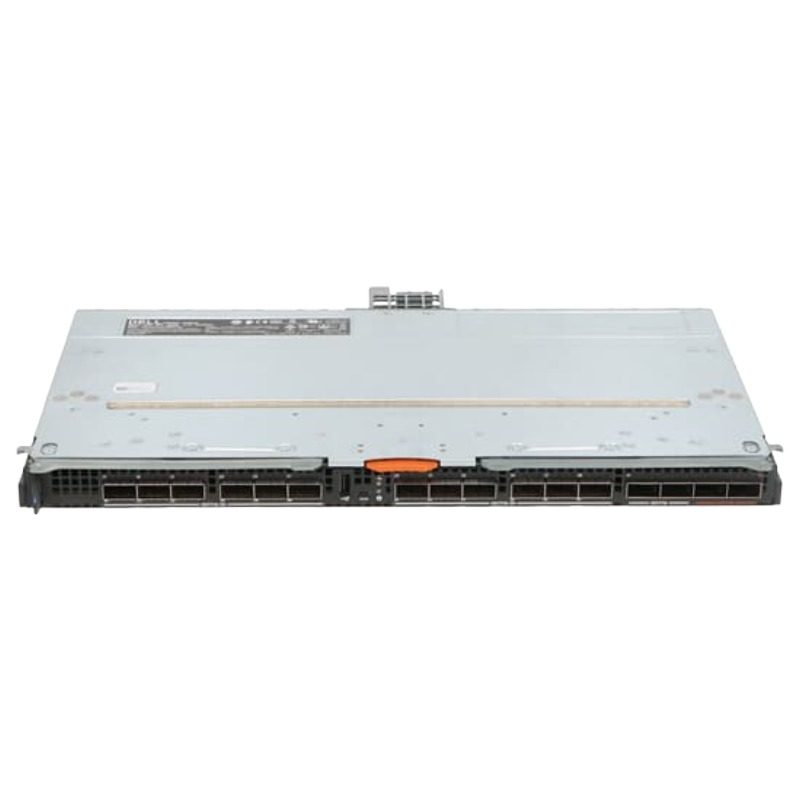


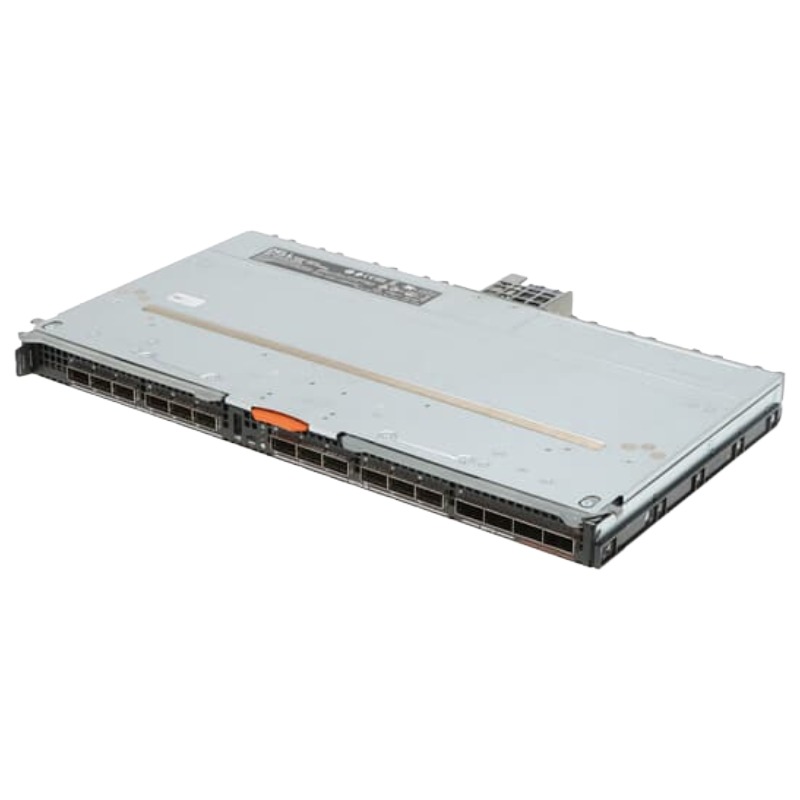
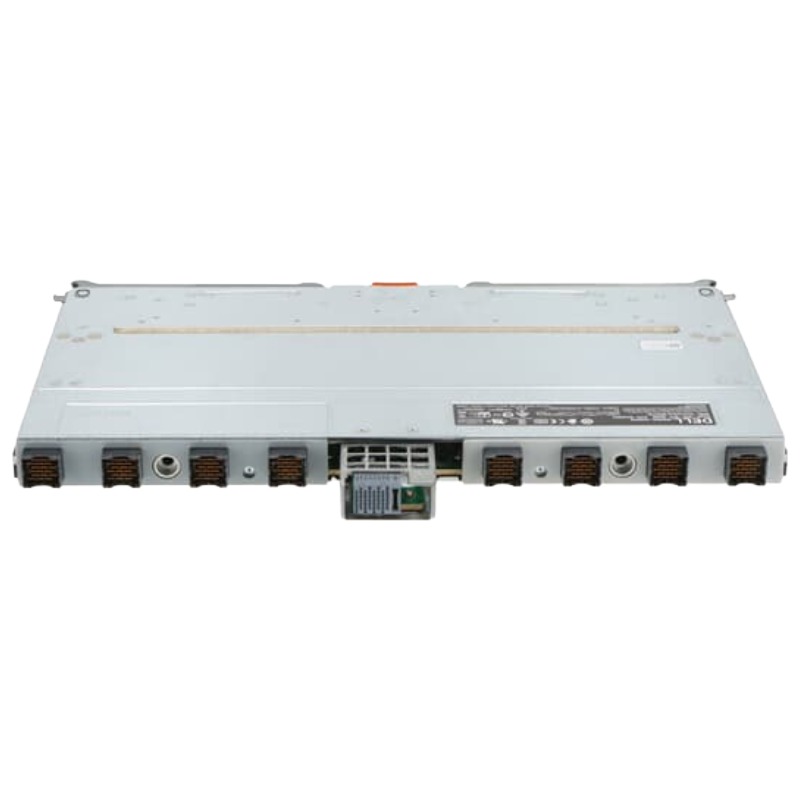
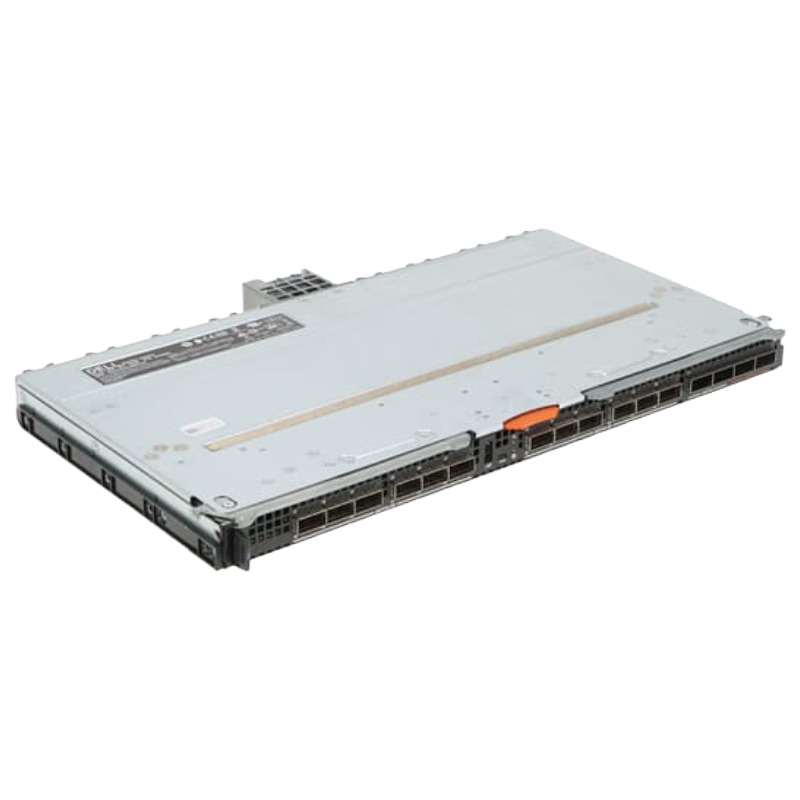
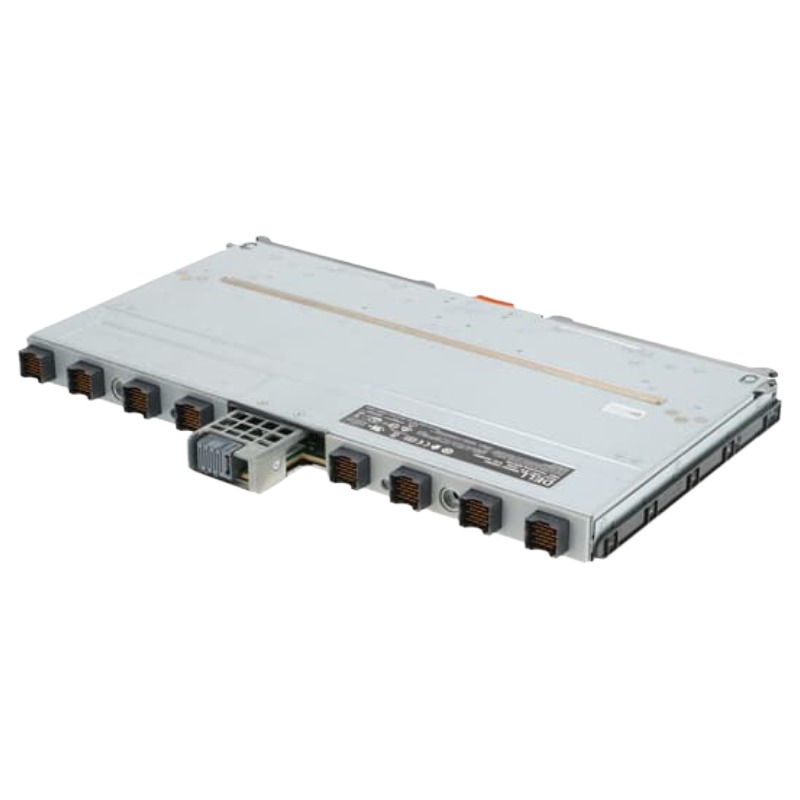
Dell MX9116N Ethernet Network Switch with 4X 100gbe Qsfp28+ and 12X Qsfp28 Fb Ports. Excellent Refurbished with 1 year replacement warranty
The Dell MX9116N Ethernet Network Switch is a high-performance networking solution designed for modern data centers and enterprise environments. Featuring 4x 100GbE QSFP28+ and 12x QSFP28 FB ports, this switch delivers ultra-fast connectivity, scalability, and flexibility to meet the demands of high-bandwidth applications.
The Dell MX9116N Ethernet Network Switch is a high-performance networking component engineered for modern modular infrastructure environments requiring exceptional bandwidth, scalability, and low-latency communication. Designed specifically for deployment within Dell PowerEdge MX platforms, this Ethernet fabric switching module provides advanced connectivity through a combination of 100GbE QSFP28 uplinks and QSFP28 fabric expansion ports. The architecture enables organizations to build highly efficient data center fabrics while simplifying cable management and network administration.
Featuring 4 x 100GbE QSFP28 uplink interfaces and 12 x QSFP28 fabric ports, the MX9116N serves as a central networking element capable of supporting extensive east-west and north-south traffic patterns. Its design allows data centers to leverage high-density switching without sacrificing throughput or reliability. The switch operates as a fabric-expanding solution that integrates seamlessly with modern software-defined infrastructures, virtualization environments, and cloud-ready architectures.
The MX9116N is specifically developed for the Dell PowerEdge MX ecosystem, allowing organizations to maximize the efficiency of composable infrastructure deployments. Rather than functioning as a standalone top-of-rack switch, it operates within the MX chassis architecture, providing integrated network services for compute and storage resources.
This embedded design minimizes external cabling requirements and streamlines deployment procedures. Administrators benefit from centralized management capabilities while reducing network complexity associated with traditional rack-scale networking solutions. The switch enables dynamic resource allocation and supports evolving workload requirements without extensive physical reconfiguration.
Modern applications generate significant volumes of traffic between servers, storage arrays, virtualization clusters, and cloud services. The MX9116N addresses these requirements through high-speed Ethernet connectivity capable of handling intensive data transfers with minimal latency. The 100GbE QSFP28 interfaces provide substantial throughput for aggregation, interconnect, and uplink functions.
Organizations operating virtualization platforms, database clusters, artificial intelligence workloads, analytics platforms, and software-defined storage infrastructures can leverage the switch's high-capacity architecture to ensure consistent network performance during peak utilization periods.
The presence of four dedicated 100GbE QSFP28 uplink ports significantly enhances the networking flexibility of the Dell MX9116N. These interfaces provide high-capacity connections to aggregation switches, spine switches, data center core networks, or high-performance computing fabrics.
Each QSFP28 uplink delivers substantial bandwidth capacity, enabling administrators to support bandwidth-intensive applications while maintaining efficient traffic flow across the network infrastructure. Multiple uplink connections also facilitate redundancy strategies that improve network availability and operational continuity.
In modern leaf-spine architectures, uplink interfaces play a critical role in connecting access-layer devices to aggregation or spine switches. The MX9116N's 100GbE uplinks support these architectures by providing high-speed pathways between modular compute resources and larger data center networking frameworks.
By utilizing 100GbE connectivity, organizations can reduce oversubscription ratios while ensuring predictable application performance. This approach is particularly valuable in virtualized environments where workloads frequently migrate between servers and generate substantial east-west traffic.
The switch accommodates a wide variety of network topologies including leaf-spine designs, software-defined networking deployments, hyper-converged infrastructures, and multi-tier enterprise architectures. Its flexible uplink configuration enables organizations to design networks that align with current requirements while preserving expansion opportunities for future growth.
Multiple uplink interfaces allow administrators to implement resilient network paths. Through link aggregation technologies and failover mechanisms, traffic can be distributed across multiple physical connections, reducing the impact of individual component failures and improving overall network availability.
The twelve QSFP28 fabric ports form a critical component of the MX9116N's architecture. These interfaces facilitate communication within the Dell PowerEdge MX fabric infrastructure and enable scalable networking configurations across multiple chassis and compute resources.
Fabric ports provide the foundation for integrated networking within composable environments. By supporting high-speed communication channels, they allow compute nodes to access network services efficiently while maintaining consistent performance levels across the infrastructure.
The fabric expansion capabilities of the MX9116N enable organizations to scale networking resources without introducing excessive complexity. As infrastructure demands increase, additional resources can be integrated into the fabric while preserving centralized management and operational consistency.
This scalability is essential for enterprises experiencing rapid growth, increasing virtualization density, or expanding cloud service offerings. The switch's architecture supports evolving workload requirements without necessitating major network redesign initiatives.
Large-scale deployments often require communication between multiple chassis and infrastructure domains. The QSFP28 fabric ports facilitate these interactions, enabling efficient resource sharing and coordinated operations across the environment.
This capability supports distributed applications, clustered databases, virtualization platforms, and software-defined storage systems that rely on low-latency communication between nodes.
Advanced traffic management mechanisms within the fabric architecture help ensure that data flows are distributed efficiently across available resources. This optimization reduces congestion, improves application responsiveness, and supports consistent user experiences across business-critical services.
100 Gigabit Ethernet has become a fundamental technology for modern enterprise and cloud infrastructures. The Dell MX9116N leverages this technology to provide exceptional network performance capable of supporting highly demanding applications and workloads.
Compared with lower-speed alternatives, 100GbE significantly increases throughput capacity while simplifying network design. Fewer physical connections are required to achieve equivalent bandwidth, reducing cabling complexity and improving operational efficiency.
High-capacity Ethernet links enable organizations to consolidate traffic streams and support larger numbers of users, applications, and services. The MX9116N provides sufficient bandwidth to accommodate virtualization clusters, storage networks, backup operations, and cloud connectivity requirements simultaneously.
This bandwidth efficiency contributes to improved infrastructure utilization and reduced network bottlenecks across data center environments.
Applications such as real-time analytics, financial processing systems, machine learning environments, and distributed databases depend on low-latency communication. The switch's high-performance forwarding architecture helps minimize delays and supports rapid data exchange between interconnected resources.
Organizations managing large-scale datasets require networking platforms capable of sustaining continuous high-throughput operations. The MX9116N's 100GbE architecture enables rapid movement of information between compute, storage, and application resources, supporting data-intensive workflows efficiently.
The Dell MX9116N is engineered to deliver enterprise-class packet forwarding performance. Its switching architecture supports efficient packet processing across all interfaces, ensuring that bandwidth resources are utilized effectively even under demanding operating conditions.
High-performance switching engines are essential for maintaining consistent application responsiveness in environments characterized by dense virtualization, cloud computing, and distributed application architectures.
The switch incorporates advanced mechanisms for managing data flows, prioritizing critical traffic, and maintaining service quality across the network. These capabilities help organizations achieve predictable performance while supporting multiple application classes simultaneously.
Enterprise networks frequently encounter fluctuating traffic patterns driven by virtualization events, storage synchronization activities, backup operations, and application demand spikes. The MX9116N is designed to sustain reliable throughput levels under these varying conditions.
Scalability represents a critical consideration for enterprise networking investments. The Dell MX9116N addresses this requirement through a flexible architecture capable of supporting incremental growth without compromising performance or manageability.
As organizations expand their compute and storage resources, the switch provides the networking foundation necessary to accommodate increasing traffic volumes and evolving application demands.
The combination of uplink interfaces and fabric expansion ports allows organizations to scale networking resources in alignment with business growth objectives. Additional compute nodes, storage resources, and application services can be integrated while maintaining architectural consistency.
This approach reduces the need for disruptive infrastructure redesign projects and supports long-term investment protection.
High-density switching capabilities enable organizations to consolidate networking functions within a smaller infrastructure footprint. Consolidation contributes to operational efficiency, reduced equipment complexity, and improved utilization of available data center resources.
The adoption of 100GbE technology positions organizations to support emerging workloads, increasing virtualization densities, and evolving application requirements. The MX9116N provides a networking platform capable of meeting current demands while accommodating future technological advancements.
The Dell MX9116N Ethernet Network Switch is engineered to support enterprise environments where availability and reliability are essential operational requirements. Its architecture incorporates design principles intended to minimize downtime and maintain service continuity.
High-performance networking infrastructures support business-critical applications that require uninterrupted access to data and services. The switch's robust design helps organizations achieve these objectives while supporting demanding operational workloads.
Multiple high-speed interfaces enable resilient network designs incorporating redundancy, load balancing, and failover capabilities. These features enhance network availability and reduce the impact of hardware or connectivity failures.
Organizations can implement fault-tolerant architectures that support continuous operation even during maintenance activities or unexpected infrastructure events.


 Contact Us
 Information
 Catalog
 Solid State Drives (SSD)
 Network Switches
 Hard Disk Drives
 HBA & Controllers
 PC & Servers
 PC & Server Memory
 CPU & Processors
 Network Routers
 Power Supplies
 Tape Drives & Libraries
 Network Devices
 Computer & Network Cables