(7% discount is applied at checkout)
Cart is empty
Your go-to destination for cutting-edge server products
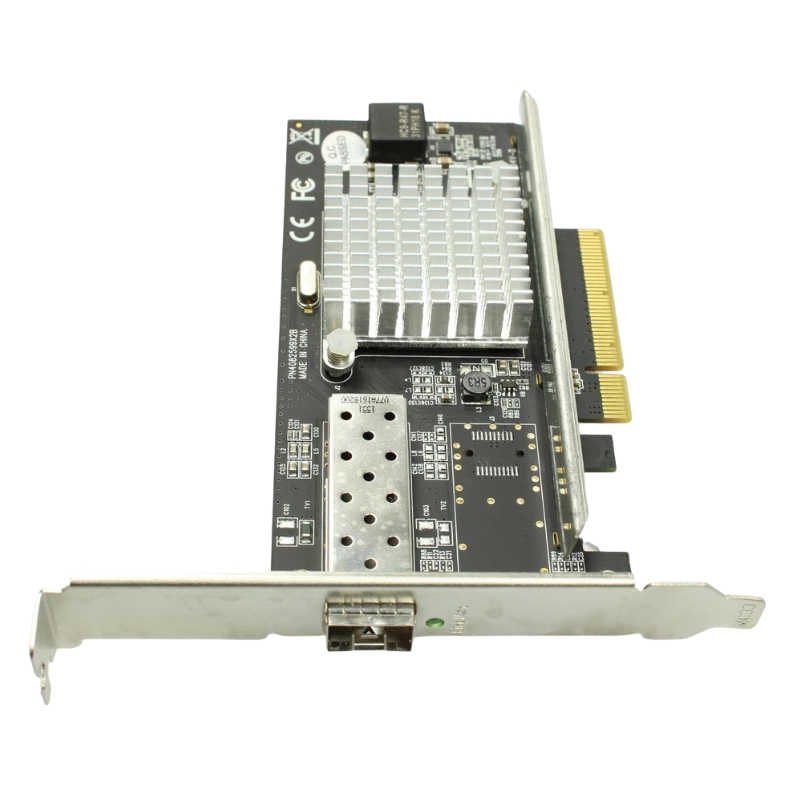


Dell 559XK Poweredge R430/R530 Expansion Card with Idrac Riser. Excellent Refurbished with 1 year replacement warranty
Overview of Dell 559XK Expansion Card
The Dell 559XK PowerEdge R430/R530 expansion card with iDRAC riser is a specialized hardware component engineered to enhance server scalability, connectivity, and remote management efficiency. Designed for enterprise-grade environments, this expansion module ensures seamless integration with Dell PowerEdge R430 and R530 systems, delivering improved system flexibility and optimized internal architecture for demanding workloads.
The Dell 559XK PowerEdge R430/R530 Expansion Card with iDRAC Riser is a specialized server hardware component engineered to enhance the expandability, management efficiency, and internal architecture flexibility of Dell PowerEdge rack servers, particularly the R430 and R530 series. This expansion card with integrated iDRAC riser functionality plays a critical role in enterprise IT environments where server scalability, remote management capabilities, and high-density computing infrastructure are essential. Designed for compatibility within Dell’s modular server ecosystem, it enables administrators to optimize hardware utilization while maintaining robust system stability and remote accessibility through integrated management pathways.
In modern data centers, server expansion capabilities are no longer optional but a necessity. The increasing demand for virtualization, cloud computing workloads, database processing, and high-availability applications requires server architectures that can adapt quickly. The Dell 559XK expansion card addresses these needs by providing additional connectivity pathways and supporting the iDRAC (Integrated Dell Remote Access Controller) interface through a dedicated riser configuration. This ensures seamless communication between management firmware and server hardware components, allowing administrators to maintain control even in remote or headless environments.
The Dell PowerEdge R430 and R530 servers are widely used in enterprise environments for their balance of performance, storage expandability, and cost efficiency. The Dell 559XK expansion card is purpose-built to integrate into these systems without requiring structural modifications or non-standard configurations. It aligns with Dell’s internal PCIe architecture, ensuring that installation does not interfere with airflow design, thermal efficiency, or power distribution within the chassis.
The compatibility layer between the expansion card and these servers ensures that system firmware, BIOS, and iDRAC interfaces function cohesively. This integration is essential for maintaining system health monitoring, hardware telemetry, and remote management operations. The riser design also ensures that additional expansion slots can be utilized effectively without compromising the physical limitations of the rack-mounted chassis environment.
Within the PowerEdge R430 and R530 systems, the architecture is designed to support modular expansion through risers and PCIe slots. The Dell 559XK component extends this architecture by introducing a structured pathway for additional connectivity and management interface bridging. This allows IT administrators to deploy network interface cards, storage controllers, or specialized acceleration hardware while maintaining a stable iDRAC communication channel.
The alignment of the expansion card with server architecture ensures that latency between hardware components remains minimal. It also ensures that firmware-level interactions between iDRAC and system sensors remain uninterrupted, which is critical for enterprise environments where uptime monitoring and predictive maintenance are required.
The iDRAC riser functionality integrated into the Dell 559XK expansion card is one of its most significant features. iDRAC serves as Dell’s embedded remote management system, allowing administrators to control servers independently of the operating system. This includes power cycling, BIOS configuration, system diagnostics, and remote console access.
By incorporating a riser dedicated to iDRAC communication, the expansion card ensures that management traffic remains stable and isolated from primary data pathways. This separation improves system reliability and reduces the risk of interference between operational workloads and administrative control functions. In environments where servers are deployed in remote data centers or colocation facilities, this capability becomes essential for maintaining operational continuity.
The integration of iDRAC via the riser allows continuous monitoring of system parameters such as CPU temperature, memory utilization, fan speed, and power consumption. These metrics are critical for ensuring optimal server performance and preventing hardware failures. The Dell 559XK expansion card supports this ecosystem by maintaining a consistent hardware interface between the server motherboard and management controller.
Remote diagnostics also enable IT teams to identify and resolve issues without requiring physical access to the server. This reduces downtime and operational costs while improving response times for critical incidents. The riser ensures that diagnostic data flows reliably even during high network traffic conditions or partial system failures.
One of the core advantages of the Dell 559XK expansion card is its ability to enhance PCIe slot utilization within constrained server environments. The PowerEdge R430 and R530 systems have limited physical expansion space, and efficient use of PCIe lanes is essential for maximizing hardware potential. The expansion card provides a structured pathway for additional hardware modules without compromising system balance or thermal design.
This capability is particularly valuable in virtualization environments where multiple network interface cards or storage controllers may be required. By enabling efficient lane distribution and maintaining stable electrical signaling, the expansion card ensures that performance remains consistent even under heavy computational workloads.
Maintaining signal integrity in high-density server environments is a critical engineering challenge. The Dell 559XK expansion card addresses this by ensuring that PCIe signal pathways remain clean and shielded from interference. This is essential for preventing data corruption and ensuring that high-speed communication between components remains stable.
Bandwidth optimization is achieved through careful routing of PCIe lanes, allowing multiple devices to operate simultaneously without significant degradation in performance. This makes the expansion card suitable for environments that require high-throughput networking, such as virtualization clusters, database servers, and cloud infrastructure nodes.
Thermal efficiency is a key consideration in rack-mounted server environments. The Dell 559XK expansion card is designed to align with the existing airflow architecture of the PowerEdge R430 and R530 systems. This ensures that heat generated by additional expansion components does not accumulate in critical areas of the server chassis.
The riser design also minimizes obstruction within the airflow path, allowing cooling systems to operate at optimal efficiency. This contributes to longer hardware lifespan, reduced risk of thermal throttling, and improved overall system reliability. In large-scale deployments, even minor improvements in thermal management can translate into significant energy savings and operational stability.
Energy efficiency is closely tied to thermal performance in enterprise server environments. By maintaining stable airflow and minimizing unnecessary power consumption from inefficient hardware routing, the expansion card contributes to reduced energy costs. This is particularly important in data centers where thousands of servers operate simultaneously, and small inefficiencies can scale into substantial operational expenses.
The Dell 559XK expansion card supports optimized power distribution across connected components, ensuring that no single pathway is overloaded. This balanced approach helps maintain system stability even under peak computational demand.
The installation of the Dell 559XK expansion card requires careful alignment with the server’s internal riser slots and PCIe connectors. Although the process is mechanically straightforward, it must be performed with attention to system configuration and hardware compatibility. Proper seating of the riser ensures that both data and management pathways function correctly.
Deployment in enterprise environments typically follows standardized server provisioning procedures, where hardware components are installed before system initialization. This ensures that firmware can recognize the expansion card during boot cycles and properly integrate it into the iDRAC management framework.
Once installed, the expansion card is detected by the system BIOS and iDRAC firmware. This allows administrators to configure hardware settings, assign resource priorities, and validate system health metrics. The seamless integration between hardware and firmware is a key advantage of using Dell-certified components within PowerEdge servers.
The Dell 559XK expansion card is widely used in enterprise IT infrastructures that require high availability, scalability, and remote management efficiency. Common deployment scenarios include virtualization clusters, cloud hosting environments, enterprise databases, and high-performance computing nodes.
In virtualization environments, the expansion card enables efficient distribution of network and storage resources, allowing multiple virtual machines to operate simultaneously without performance bottlenecks. In cloud infrastructure, it supports scalable architecture models where servers must be rapidly reconfigured to meet changing workload demands.
High availability systems rely on redundant hardware pathways to ensure continuous uptime. The Dell 559XK expansion card supports these configurations by maintaining stable communication between management controllers and server hardware. This ensures that failover systems can be activated quickly in the event of hardware malfunction or network disruption.
Redundancy is further enhanced by the card’s ability to maintain consistent iDRAC connectivity, even when primary system components experience partial failure. This ensures that administrators retain control over recovery processes without requiring physical intervention.
Long-term reliability is a defining characteristic of enterprise-grade server components. The Dell 559XK expansion card is engineered to withstand continuous operation in demanding data center environments. Its durable design and stable electrical architecture ensure that it can operate reliably over extended periods without degradation in performance.


 Contact Us
 Information
 Catalog
 Solid State Drives (SSD)
 Network Switches
 Hard Disk Drives
 HBA & Controllers
 PC & Servers
 PC & Server Memory
 CPU & Processors
 Network Routers
 Power Supplies
 Tape Drives & Libraries
 Network Devices
 Computer & Network Cables