(7% discount is applied at checkout)
Cart is empty
Your go-to destination for cutting-edge server products


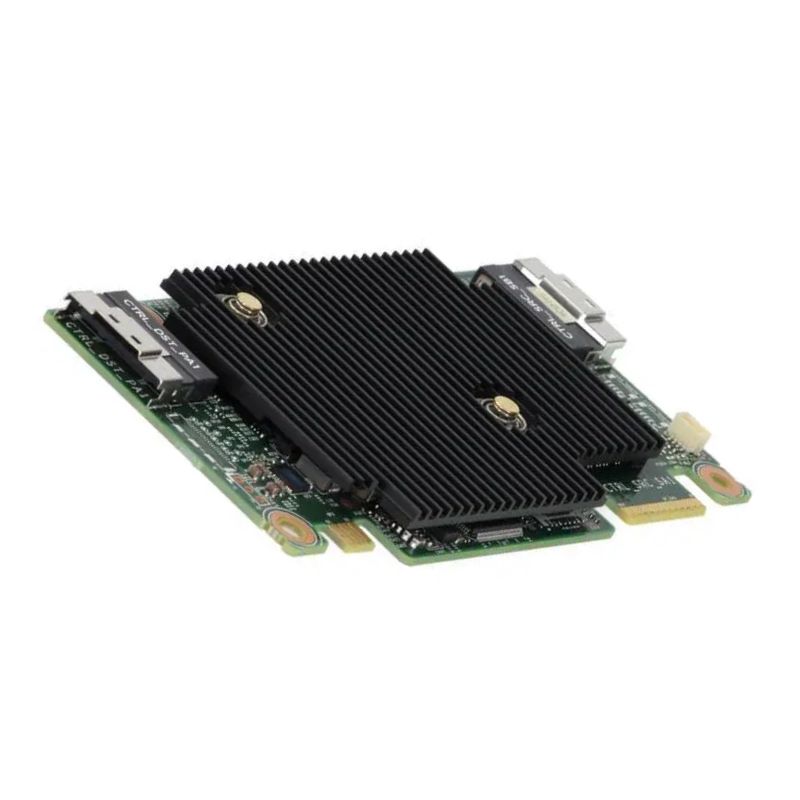
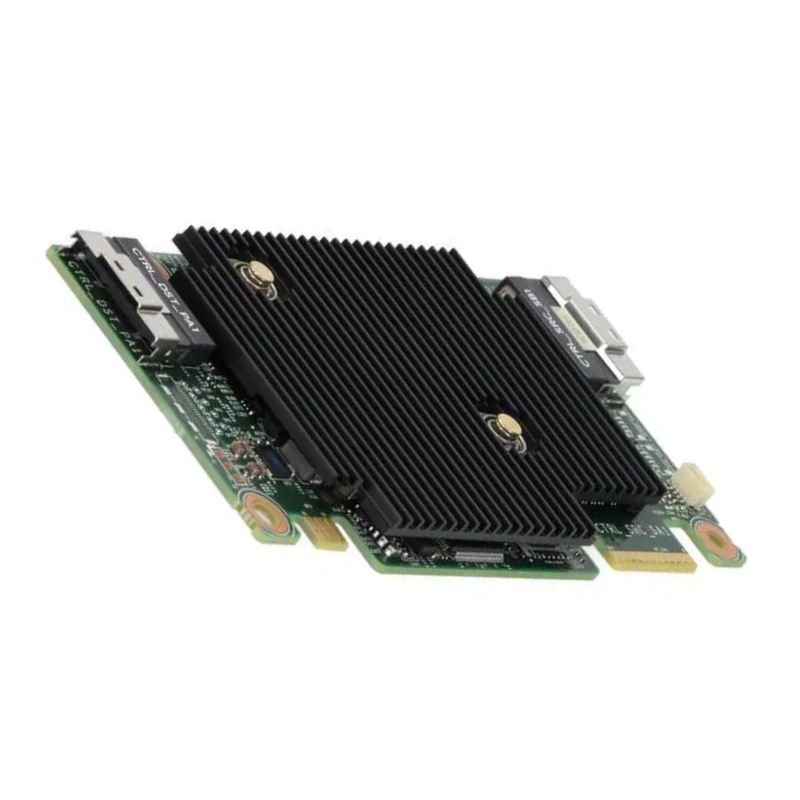
Dell PPWF9 HBA345 12GBPS 16 Ports PCIE 3 SAS Host Bus Adapter. New (System) Pull with 1 year replacement warranty
The category of enterprise-grade SAS Host Bus Adapters (HBAs) is designed to meet the demands of modern data centers, high-performance servers, and scalable storage infrastructures. Products in this category focus on delivering reliable, high-bandwidth connectivity between servers and storage devices, enabling organizations to handle large-scale data workloads, virtualization environments, and mission-critical applications with maximum efficiency and stability.
RAID & Data Protection:
Scalability & Reliability:
Within this category, SAS HBAs supporting PCIe 3.0 and 12Gbps throughput represent a mature yet powerful generation of connectivity solutions. They are widely used in rack servers, blade servers, storage arrays, and custom-built enterprise systems. These adapters provide direct connectivity to SAS and SATA drives, JBOD enclosures, and backplane systems, ensuring consistent performance, low latency, and compatibility across diverse hardware ecosystems.
SAS HBAs operating on the PCIe 3.0 interface are engineered to balance bandwidth, compatibility, and power efficiency. PCIe 3.0 offers substantial data throughput per lane, making it suitable for enterprise workloads that require simultaneous access to multiple storage devices. By leveraging multiple PCIe lanes, these adapters can handle aggregated data flows from numerous drives without creating bottlenecks.
The architecture of PCIe-based HBAs emphasizes low-latency communication between the CPU, memory subsystem, and storage devices. This design is critical for applications such as virtualization platforms, database servers, and distributed storage systems, where storage performance directly impacts overall system responsiveness.
The 12Gbps SAS protocol represents a significant advancement in serial-attached SCSI technology. It doubles the bandwidth of earlier SAS generations while maintaining backward compatibility with 6Gbps SAS and SATA devices. This ensures that organizations can upgrade their infrastructure without replacing existing storage hardware, preserving investments while gaining performance improvements.
In enterprise environments, the 12Gbps SAS protocol supports high queue depths, advanced error handling, and robust link management. These features contribute to reliable data transmission, reduced downtime, and enhanced resilience in storage architectures.
SAS HBAs with 16 ports are optimized for environments that require high-density storage connectivity. A multi-port design allows a single adapter to connect multiple drives or enclosures, reducing the need for additional hardware and simplifying system architecture. This approach lowers total cost of ownership while improving cable management and airflow within server chassis.
The 16-port configuration is particularly valuable in storage-intensive workloads such as big data analytics, media processing, backup systems, and enterprise resource planning platforms. By distributing data traffic across multiple ports, the adapter ensures balanced throughput and minimizes the risk of congestion.
Scalability is a defining characteristic of enterprise SAS HBAs. These adapters are designed to integrate seamlessly with expanding storage infrastructures, supporting additional drives, enclosures, and RAID controllers as organizational requirements grow. The ability to scale without significant architectural changes makes this category ideal for long-term deployment strategies.
In distributed storage environments, SAS HBAs serve as foundational components that enable modular expansion. Whether deployed in direct-attached storage (DAS) or external JBOD configurations, they provide a consistent interface for connecting and managing storage resources across multiple system nodes.
Enterprise SAS HBAs are engineered to integrate with a wide range of server platforms, including industry-standard rack servers and proprietary enterprise systems. Compatibility with leading server manufacturers ensures that these adapters can be deployed in heterogeneous environments without extensive customization.
The category emphasizes firmware stability, driver support, and certification with major operating systems such as Linux distributions, Windows Server editions, and virtualization hypervisors. This broad compatibility reduces deployment complexity and accelerates integration into existing IT infrastructures.
SAS HBAs in this category support both SAS and SATA devices, enabling flexible storage configurations. This interoperability allows organizations to combine high-performance SAS drives with cost-effective SATA drives within the same system, optimizing performance and budget allocation.
Additionally, support for enterprise-grade SSDs and HDDs ensures that these adapters can accommodate evolving storage technologies. As NVMe and hybrid storage solutions become more prevalent, SAS HBAs continue to play a critical role in bridging traditional storage systems with modern architectures.
Performance optimization is central to the design of enterprise SAS HBAs. By leveraging high-speed SAS links and PCIe bandwidth, these adapters deliver consistent throughput across multiple storage channels. This capability is essential for workloads that require rapid data access, such as transactional databases and real-time analytics.
Low latency is achieved through efficient protocol handling and optimized firmware. The ability to process I/O requests quickly ensures that storage operations do not become a bottleneck in high-performance computing environments.
Advanced queue management mechanisms enable SAS HBAs to handle large numbers of simultaneous I/O requests. This feature is particularly important in virtualized environments where multiple virtual machines share storage resources. By efficiently distributing I/O operations, the adapter maintains stable performance even under heavy workloads.
The category also supports features such as command queuing and load balancing across ports, further enhancing operational efficiency and reliability in complex storage systems.
Enterprise SAS HBAs are designed with robust error detection and correction mechanisms to ensure data integrity. These features include cyclic redundancy checks, link-level error recovery, and advanced diagnostic capabilities. Such mechanisms are critical for maintaining data accuracy in mission-critical applications.
In addition to hardware-level reliability, firmware updates and management tools provide ongoing improvements and security enhancements, ensuring long-term stability in enterprise deployments.
Fault tolerance is a key requirement in enterprise storage environments. SAS HBAs support redundant paths and multi-path I/O configurations, enabling systems to continue operating even if a link or component fails. This redundancy minimizes downtime and supports high availability architectures.
The category also integrates with storage management frameworks that monitor adapter health, link status, and performance metrics, allowing administrators to proactively address potential issues.
In data centers, SAS HBAs serve as foundational components for storage connectivity. They enable scalable and reliable storage architectures that support cloud computing platforms, containerized applications, and distributed databases. The ability to handle large volumes of data traffic makes these adapters indispensable in modern cloud environments.
Cloud service providers rely on SAS HBAs to maintain predictable performance across multi-tenant systems, ensuring consistent service quality for end users.
Enterprise organizations deploy SAS HBAs in servers supporting ERP systems, CRM platforms, financial applications, and business intelligence tools. These workloads demand high reliability and consistent performance, which are core attributes of this category.
By providing stable storage connectivity, SAS HBAs enable organizations to process large datasets, maintain transactional integrity, and support mission-critical operations without interruption.
High-performance computing environments, research institutions, and media production facilities require rapid access to large datasets. SAS HBAs facilitate high-bandwidth storage connectivity, enabling efficient processing of scientific simulations, video rendering, and large-scale analytics.
The category’s emphasis on throughput, scalability, and reliability makes it suitable for environments where performance and data integrity are paramount.
When designing server architectures, selecting the appropriate SAS HBA category is crucial for achieving optimal performance and scalability. Factors such as port count, bandwidth requirements, and compatibility with existing hardware must be carefully evaluated to ensure seamless integration.
System architects often consider future expansion when selecting SAS HBAs, choosing solutions that provide sufficient headroom for additional storage devices and increased workloads.
Proper cabling and backplane integration are essential for maximizing the performance of SAS HBAs. High-quality SAS cables and compatible backplanes ensure reliable signal transmission and minimize the risk of data errors. The category supports a variety of cabling standards, enabling flexible deployment in different server configurations.
Efficient cable management not only improves system reliability but also enhances airflow and thermal performance within server chassis, contributing to overall system stability.
Long-term value in the SAS HBA category is driven by consistent firmware updates and driver support. These updates address security vulnerabilities, improve compatibility with new operating systems, and enhance performance. Enterprises benefit from predictable lifecycle management, ensuring that their storage infrastructure remains secure and efficient over time.
Vendor-provided management tools simplify monitoring, configuration, and troubleshooting, reducing administrative overhead and improving operational efficiency.


 Contact Us
 Information
 Catalog
 Solid State Drives (SSD)
 Network Switches
 Hard Disk Drives
 HBA & Controllers
 PC & Servers
 PC & Server Memory
 CPU & Processors
 Network Routers
 Power Supplies
 Tape Drives & Libraries
 Network Devices
 Computer & Network Cables