(7% discount is applied at checkout)
Cart is empty
Your go-to destination for cutting-edge server products
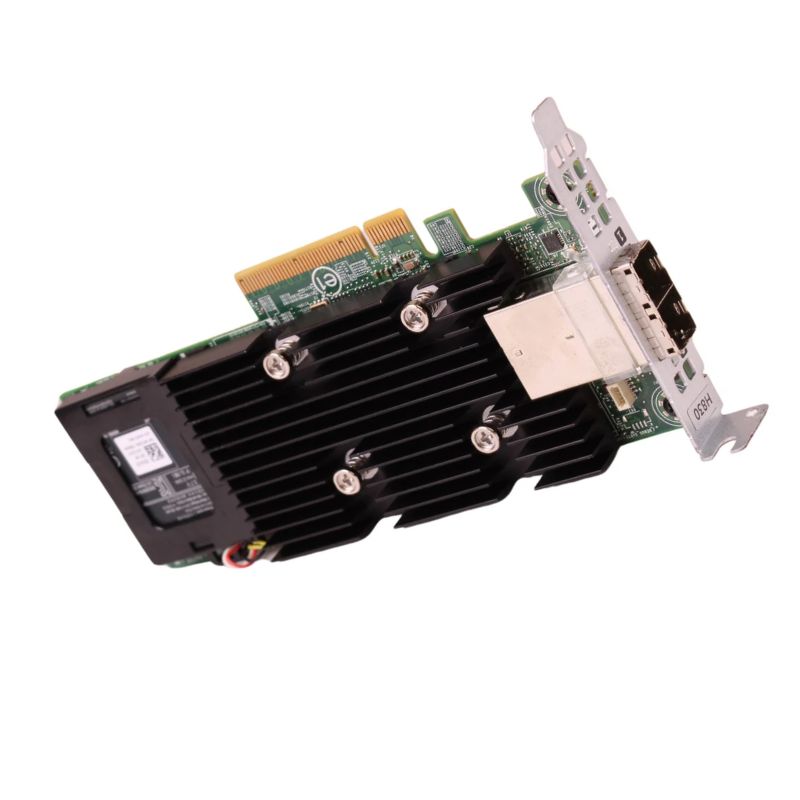


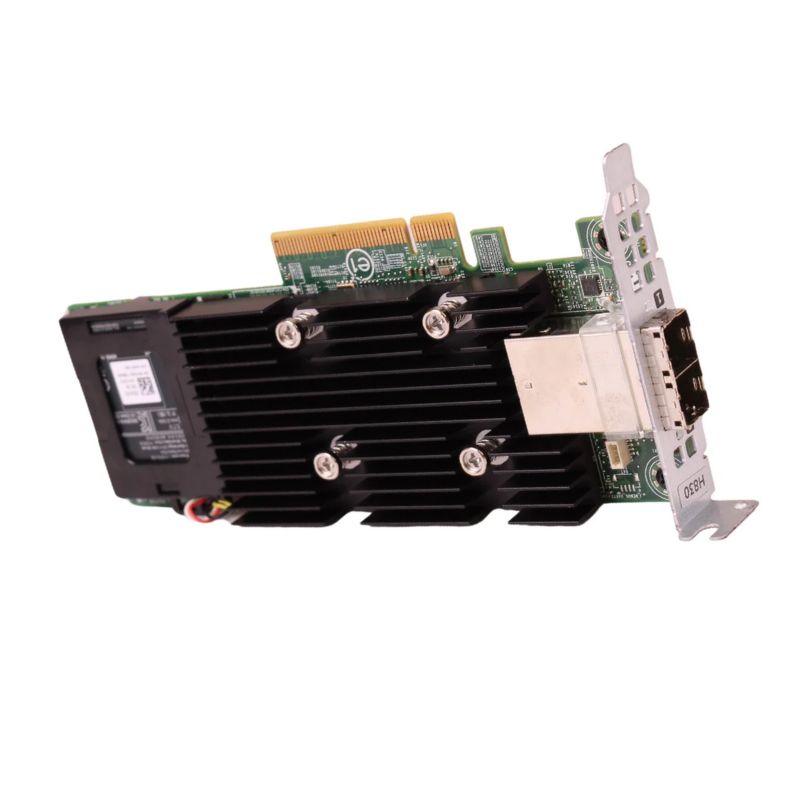
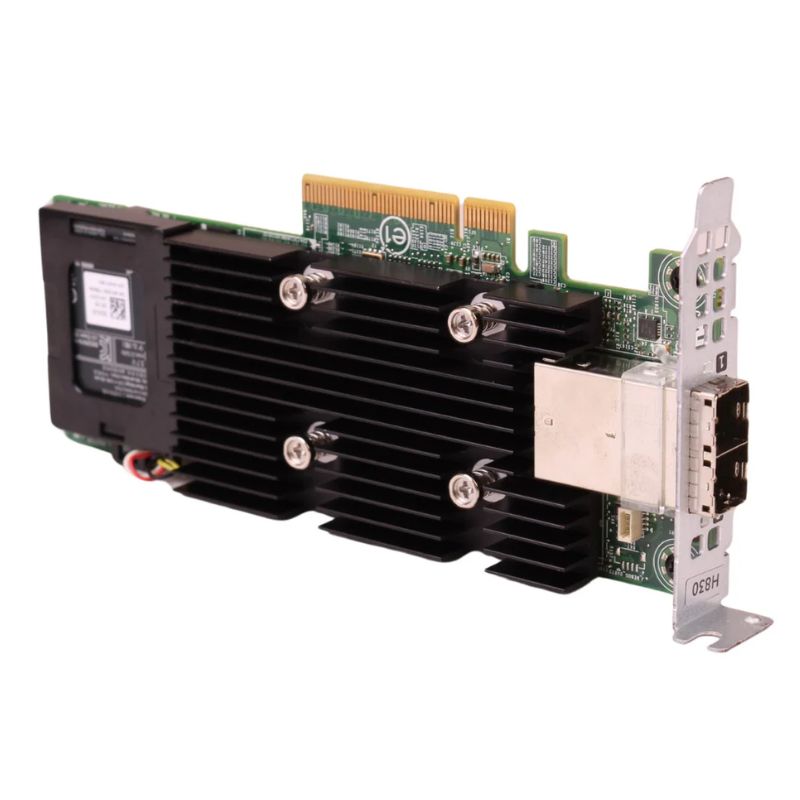
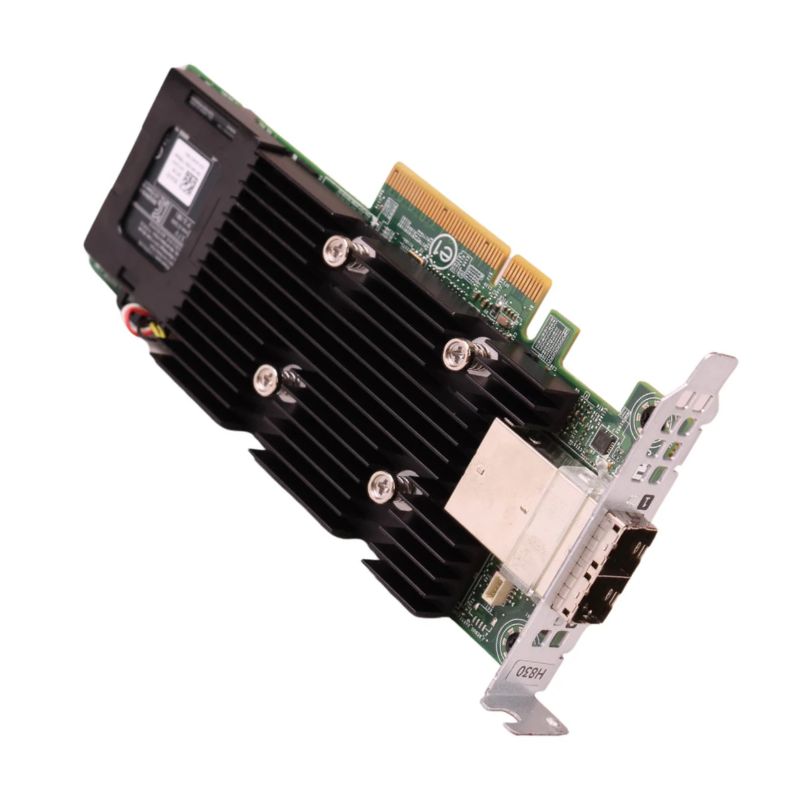
Dell RDH6Y Perc H840 PCI-Express 3.0 Sas Raid Controller Card with 4GB Cache. New (System) Pull with 1 year replacement warranty
The category of PCI-Express 3.0 SAS RAID controller cards represents a critical foundation of modern enterprise storage architecture. Products such as the RDH6Y Dell PERC H840 PCI-Express 3.0 SAS RAID Controller Card belong to a specialized class of hardware designed to manage, accelerate, secure, and optimize data storage across internal and external disk arrays. These controllers are engineered to handle high-throughput workloads, large-scale storage environments, and mission-critical applications where reliability, performance, and scalability are essential.
Within this category, RAID controllers serve as intelligent intermediaries between servers and storage devices. They offload complex storage tasks from the CPU, enabling advanced RAID levels, caching mechanisms, and error-handling capabilities that significantly enhance overall system efficiency. The PCI-Express 3.0 interface further elevates this category by providing high-bandwidth connectivity, low latency, and compatibility with contemporary server platforms. As enterprises increasingly depend on data-driven operations, virtualization, cloud computing, and big data analytics, the importance of high-performance SAS RAID controllers continues to expand.
Serial Attached SCSI (SAS) technology forms the backbone of enterprise-grade storage connectivity. Unlike consumer-oriented SATA interfaces, SAS is designed for continuous operation, higher reliability, and superior performance. RAID controllers in this category leverage SAS protocols to connect multiple drives in high-density configurations, enabling rapid data access, fault tolerance, and scalability.
The category encompasses controllers capable of managing both SAS and SATA drives, offering flexibility in storage design. This dual compatibility allows organizations to balance performance and cost by combining high-speed SAS drives with high-capacity SATA drives. The ability to support external disk enclosures further expands the application scope of this category, making it suitable for data centers, enterprise servers, and storage networks.
PCI-Express 3.0 is a defining characteristic of this category, delivering substantial improvements in bandwidth compared to previous generations. With increased lane throughput and enhanced signal integrity, PCIe 3.0 ensures that RAID controllers can handle the data demands of modern workloads without becoming a bottleneck.
RAID controllers operating on PCIe 3.0 benefit from faster data transfers between the controller and the host system, enabling smoother performance in high-I/O environments such as virtualization clusters, database servers, and high-performance computing platforms. This interface standard also ensures compatibility with a wide range of server architectures, making the category relevant across multiple hardware ecosystems.
RAID controllers in this category support a broad range of RAID levels, including RAID 0, 1, 5, 6, 10, 50, and 60. Each RAID level offers a unique balance between performance, redundancy, and storage efficiency. The availability of multiple RAID configurations allows organizations to tailor storage architectures to specific workload requirements.
Hardware-based RAID processing distinguishes this category from software-based solutions. Dedicated processors and firmware within the controller handle parity calculations, disk management, and data reconstruction tasks, reducing the computational burden on the host CPU. This approach results in improved performance and more predictable latency under heavy workloads.
Cache memory plays a central role in the performance profile of enterprise RAID controllers. Controllers in this category typically incorporate high-capacity DDR cache memory to accelerate read and write operations. Write-back caching, read-ahead algorithms, and intelligent data prefetching techniques contribute to faster data access and improved throughput.
Battery-backed or flash-backed cache modules are often associated with this category, ensuring that cached data is preserved during power interruptions. This capability enhances data integrity and reliability, making these controllers suitable for environments where data loss is unacceptable.
Scalability is a defining attribute of this category. RAID controllers such as the RDH6Y Dell PERC H840 are designed to support large numbers of drives and external enclosures, enabling organizations to expand storage capacity without redesigning their infrastructure. Multi-port SAS connectivity allows controllers to manage complex storage topologies with ease.
The ability to scale storage resources dynamically aligns with modern IT strategies focused on modular growth and flexible deployment. As data volumes increase, organizations can extend their storage environments while maintaining consistent performance and reliability.
Enterprise RAID controllers incorporate sophisticated error detection and correction mechanisms to ensure data accuracy. Features such as cyclic redundancy checks, parity validation, and disk health monitoring are integral to this category. These capabilities help identify potential hardware issues before they result in data loss or system downtime.
Predictive failure analysis and SMART monitoring enable proactive maintenance, allowing administrators to replace failing drives before catastrophic failures occur. This proactive approach enhances overall system availability and reduces operational risks.
Fault tolerance is a core requirement in enterprise storage environments. RAID controllers in this category are designed to maintain data accessibility even in the event of disk failures. Redundant data storage, hot-swappable drive support, and automatic rebuild processes ensure that systems remain operational during hardware failures.
Many controllers also support multipath I/O configurations, enabling redundant data paths between servers and storage devices. This redundancy further enhances availability and resilience, making the category suitable for mission-critical applications.
PCIe-based SAS RAID controllers are engineered to integrate seamlessly with enterprise server platforms. Compatibility with major server architectures ensures that controllers can be deployed across diverse IT environments. Firmware optimization and driver support for multiple operating systems further enhance integration capabilities.
This category is particularly relevant for rack servers, blade servers, and tower servers used in enterprise data centers. The ability to integrate with virtualization platforms and hypervisors makes these controllers indispensable in modern IT infrastructures..
Data centers represent one of the primary application domains for SAS RAID controllers. High-density storage arrays, virtualization clusters, and cloud platforms rely on these controllers to deliver consistent performance and reliability. The ability to handle large-scale workloads makes this category essential for cloud service providers and enterprise IT departments.
In cloud environments, RAID controllers contribute to storage performance optimization, ensuring that virtual machines and applications experience minimal latency. The scalability of this category aligns with the elastic nature of cloud computing.
Database servers and analytics platforms demand high I/O performance and low latency. RAID controllers in this category are optimized to handle random and sequential workloads associated with transactional databases, data warehouses, and analytics pipelines. Advanced caching and parallel processing capabilities contribute to faster query execution and improved system responsiveness.
The ability to support high-capacity storage arrays also makes these controllers suitable for big data applications, where massive datasets must be stored and processed efficiently.
Virtualized environments place unique demands on storage infrastructure. Multiple virtual machines sharing the same storage resources require consistent performance and isolation. RAID controllers in this category provide the throughput and reliability necessary to support virtualization platforms, ensuring smooth operation of enterprise applications.
The category also supports containerized workloads and microservices architectures, where rapid data access and scalability are essential. As enterprises adopt hybrid and multi-cloud strategies, the relevance of high-performance RAID controllers continues to grow.
Designing an optimal storage architecture requires careful consideration of performance and capacity requirements. RAID controllers in this category enable administrators to configure storage arrays that balance speed, redundancy, and storage efficiency. The flexibility to mix drive types and RAID levels allows for customized solutions tailored to specific workloads.
Performance optimization techniques such as striping, caching, and queue management play a critical role in maximizing the capabilities of RAID controllers. Understanding these techniques is essential for leveraging the full potential of this category.
Enterprise storage environments must address thermal and power efficiency concerns. RAID controllers in this category are designed to operate within stringent thermal and power constraints while delivering high performance. Efficient chipsets, optimized firmware, and intelligent power management features contribute to reduced energy consumption and improved system stability.
These characteristics are particularly important in large-scale data centers, where power efficiency directly impacts operational costs and environmental sustainability.
The evolution of storage technology is driving the integration of SAS RAID controllers with NVMe and hybrid storage architectures. While SAS remains a cornerstone of enterprise storage, NVMe-based solutions are increasingly used for ultra-low-latency workloads. RAID controllers in this category are evolving to coexist with and complement these emerging technologies.
Hybrid storage architectures that combine SAS, SATA, and NVMe drives require intelligent controllers capable of managing diverse storage media. The adaptability of this category ensures its continued relevance in evolving IT landscapes.
Automation and artificial intelligence are shaping the future of storage management. RAID controllers are increasingly integrated with intelligent software platforms that automate configuration, monitoring, and optimization tasks. Predictive analytics and machine learning techniques enable proactive performance tuning and failure prevention.
These advancements enhance the strategic value of RAID controllers, transforming them from hardware components into integral elements of intelligent storage ecosystems.
The category of PCI-Express 3.0 SAS RAID controller cards occupies a strategic position within enterprise IT infrastructure. These controllers bridge the gap between raw storage hardware and application-level data access, enabling organizations to achieve high levels of performance, reliability, and scalability. As data continues to grow in volume and complexity, the role of advanced RAID controllers becomes increasingly critical.
By combining robust hardware architecture, sophisticated firmware, and comprehensive management capabilities, this category supports a wide range of enterprise use cases. From data centers and cloud platforms to database servers and virtualization environments, SAS RAID controllers provide the foundation for secure, efficient, and scalable storage solutions.


 Contact Us
 Information
 Catalog
 Solid State Drives (SSD)
 Network Switches
 Hard Disk Drives
 HBA & Controllers
 PC & Servers
 PC & Server Memory
 CPU & Processors
 Network Routers
 Power Supplies
 Tape Drives & Libraries
 Network Devices
 Computer & Network Cables