(7% discount is applied at checkout)
Cart is empty
Your go-to destination for cutting-edge server products
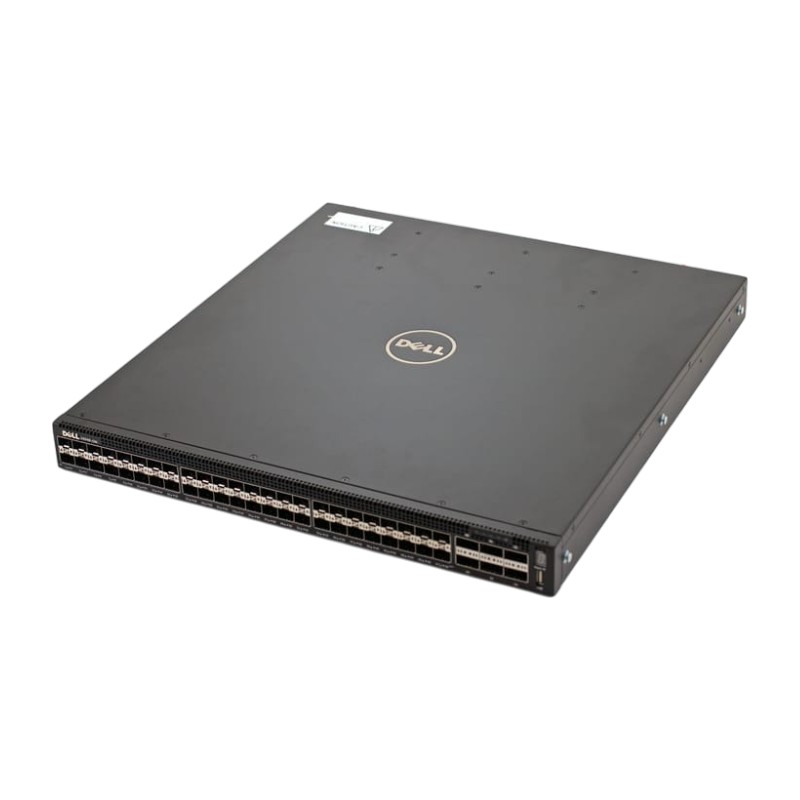


Dell S4148U-ON EMC Managed L3 48 10-gigabit Sfp+ Ports & 4 100 Gigabit Qsfp28 Ports & 2 40 gigabit Switch. Excellent Refurbished with 1 year Replacement Warranty. Call
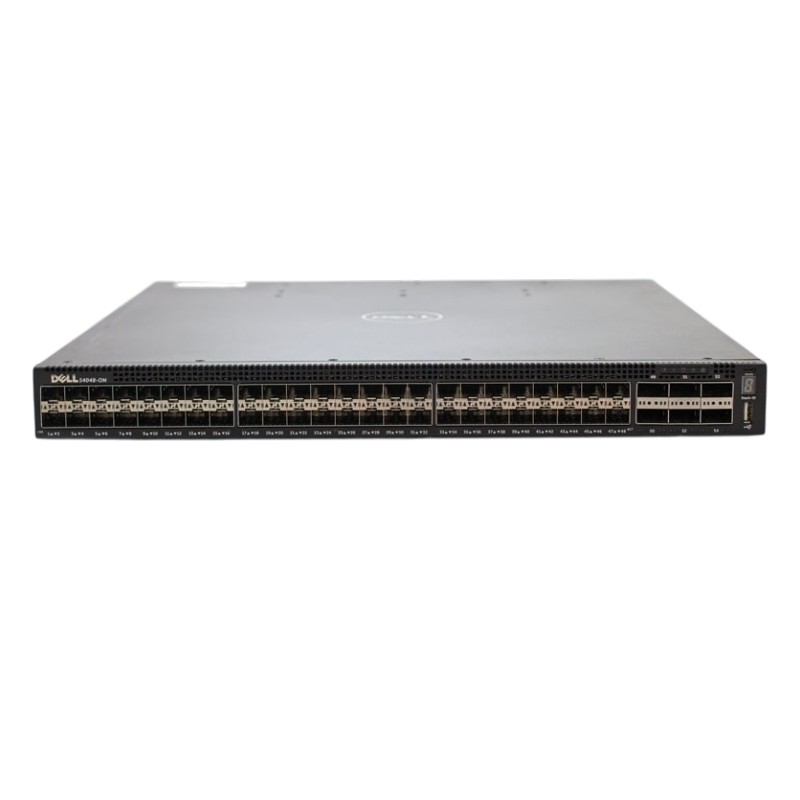
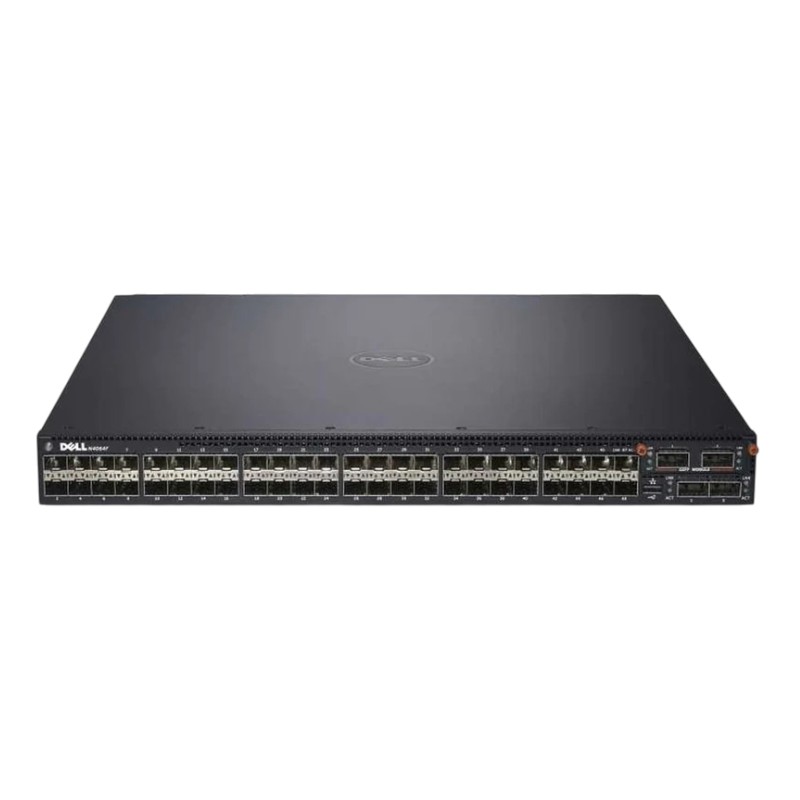
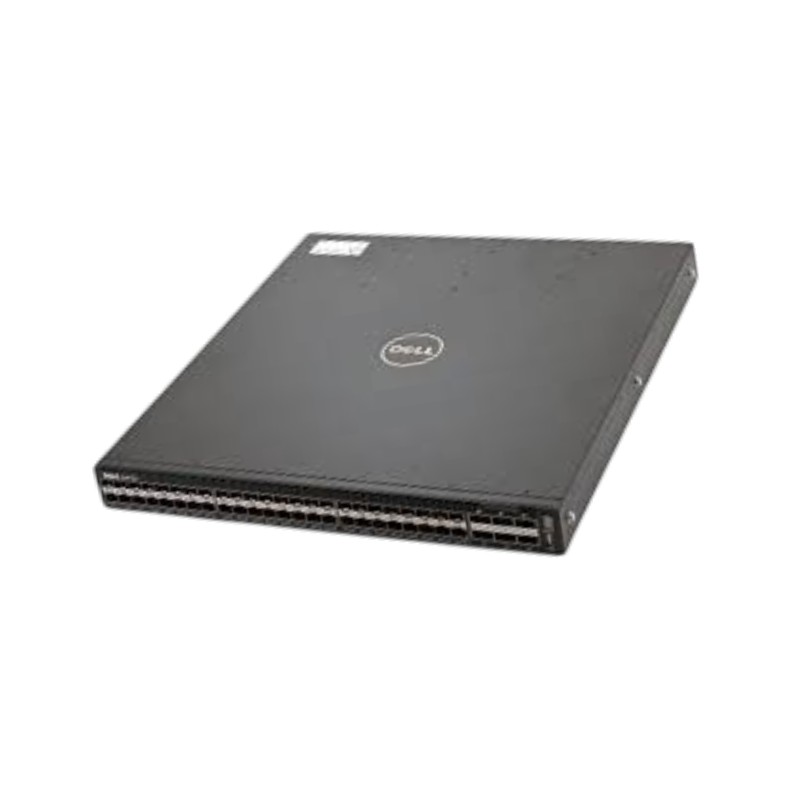
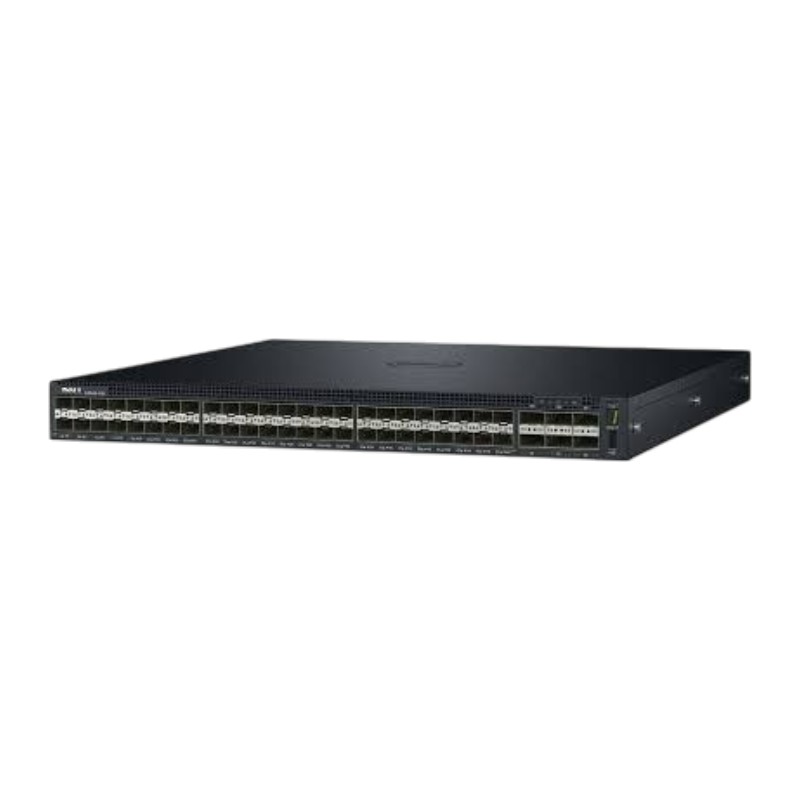
The Dell S4148U-ON EMC Managed L3 switch is a high-performance, rack-mountable 1U networking solution designed for modern data centers and enterprise environments. With 48 x 10‑Gigabit SFP+ ports, 4 x 100‑Gigabit QSFP28 ports, and 2 x 40‑Gigabit QSFP+ interfaces, it delivers exceptional bandwidth, scalability, and flexibility for demanding workloads.
The Dell S4148U-ON EMC Managed L3 switch represents a high-performance, data-center-class networking solution designed for modern enterprise infrastructures requiring ultra-low latency, high bandwidth density, and flexible scalability. Built to support demanding workloads such as cloud computing, virtualization clusters, storage networks, and high-frequency data exchange environments, this switch integrates advanced Layer 3 routing capabilities with a dense port configuration that enables seamless aggregation and spine-leaf deployment models. Its architecture is optimized to deliver predictable performance while maintaining energy efficiency and operational simplicity in complex networking ecosystems.
The physical layout of the Dell S4148U-ON EMC switch is engineered for maximum port density within a compact 1U rack-mount form factor. It includes forty-eight 10-gigabit SFP+ ports that provide flexible connectivity for servers, storage devices, and aggregation switches. These ports are designed for both fiber and compatible transceiver modules, ensuring interoperability across enterprise environments. In addition, the switch features four 100-gigabit QSFP28 uplink ports that enable high-capacity backbone connectivity between core and spine layers. Two additional 40-gigabit QSFP ports further enhance redundancy and interconnect options, supporting hybrid deployment strategies where varying bandwidth tiers coexist.
The design emphasizes airflow efficiency, front-to-back cooling, and modular power supply placement to maintain optimal thermal performance even under full port utilization. This physical architecture ensures stable operation in high-density data center racks where thermal constraints and cable management complexity are critical considerations.
In enterprise deployments, the combination of 10G access ports and high-speed uplinks allows network architects to design flexible hierarchical structures. The SFP+ ports are commonly used for server connectivity in virtualization clusters, while the QSFP28 interfaces handle spine-level aggregation traffic. The inclusion of 40G QSFP ports provides backward compatibility and transitional upgrade paths for legacy infrastructures still operating mixed-speed environments. This hybrid port model ensures that organizations can scale gradually without requiring full infrastructure replacement.
The Dell S4148U-ON EMC switch operates as a fully managed Layer 3 device, enabling advanced routing protocols that extend beyond traditional Layer 2 switching. It supports dynamic routing protocols that allow efficient path selection, load balancing, and redundancy across large-scale networks. These capabilities are essential for data centers that require segmentation of traffic across multiple virtual networks and distributed workloads.
The integration of Layer 3 intelligence allows the switch to perform routing decisions at wire speed. This ensures minimal latency even under heavy traffic conditions. Traffic optimization features enable efficient handling of east-west data flows commonly found in distributed application architectures. By reducing bottlenecks and enabling direct server-to-server communication paths, the switch enhances overall application performance and network responsiveness.
The device is designed to support modern spine-leaf architectures, which are widely used in hyperscale and cloud data centers. In such topologies, the S4148U-ON acts as a leaf switch, connecting directly to servers while aggregating traffic toward higher-layer spine switches. This design eliminates traditional hierarchical bottlenecks and ensures consistent bandwidth availability across all connected nodes.
The multi-speed interface design of the Dell S4148U-ON EMC switch allows seamless integration into heterogeneous network environments. The 10-gigabit SFP+ ports provide cost-effective connectivity for compute nodes, while the 40-gigabit QSFP ports serve as intermediate aggregation links. The 100-gigabit QSFP28 uplinks represent the highest throughput layer, enabling ultra-fast data transfer between core switches and external network fabrics.
The 100G QSFP28 interfaces are critical for handling large-scale data flows, especially in environments that support artificial intelligence workloads, big data analytics, and high-performance computing clusters. These uplinks ensure that traffic aggregation does not become a bottleneck, allowing continuous high-speed communication between different segments of the data center infrastructure.
The inclusion of 40-gigabit QSFP ports provides backward compatibility for enterprises transitioning from older network infrastructures. These ports support flexible interconnect configurations, enabling hybrid topologies where legacy systems coexist with modern high-speed deployments. This flexibility reduces upgrade costs and extends the lifecycle of existing network investments.
The Dell S4148U-ON EMC switch is engineered for high throughput performance, supporting line-rate switching across all ports simultaneously. Its internal switching fabric is optimized to minimize packet loss and reduce latency, ensuring consistent performance even during peak traffic conditions. This makes it suitable for mission-critical applications where network reliability is essential.
The non-blocking architecture ensures that each port can operate at full capacity without interference from other active connections. This is particularly important in virtualization environments where multiple virtual machines generate simultaneous network traffic. The switch maintains stable throughput across all interfaces, preventing congestion and ensuring predictable performance.
Low latency is a key performance characteristic of the Dell S4148U-ON EMC switch. The internal hardware design reduces processing overhead, enabling rapid packet forwarding. This is essential for applications such as financial trading systems, real-time analytics platforms, and distributed computing environments where microsecond-level delays can impact performance outcomes.
This switch incorporates a wide range of data center networking features designed to support modern IT infrastructure requirements. These include support for virtualization overlays, network segmentation, and automated traffic engineering. These capabilities allow administrators to build highly efficient and secure network environments that can adapt dynamically to workload changes.
The switch supports overlay network technologies that enable virtual networks to operate independently of physical infrastructure. This is particularly useful in cloud environments where multiple tenants require isolated network segments. Overlay support ensures scalability and flexibility without requiring physical reconfiguration of network hardware.
The Dell S4148U-ON EMC switch is designed with automation in mind, supporting programmable interfaces that allow integration with orchestration platforms. This enables automated provisioning, configuration management, and network monitoring. Such capabilities significantly reduce operational overhead and improve consistency across large-scale deployments.
Security is a fundamental aspect of the Dell S4148U-ON EMC managed switch design. It includes multiple layers of access control and traffic filtering to ensure that only authorized devices and users can interact with the network infrastructure. These features are essential for protecting sensitive data and maintaining compliance with enterprise security policies.
The switch supports advanced segmentation techniques that allow administrators to isolate traffic between different departments, applications, or tenants. Policy enforcement mechanisms ensure that traffic flows adhere to predefined security rules, reducing the risk of unauthorized access or data leakage.
Administrative access to the switch is protected through secure authentication protocols and encrypted management channels. This ensures that configuration changes and monitoring activities are safeguarded against unauthorized access attempts. Secure management practices are essential in enterprise environments where network integrity is critical.
The Dell S4148U-ON EMC switch is built with scalability in mind, allowing organizations to expand their network infrastructure without significant redesign. Its modular port configuration and high-speed uplink capabilities ensure that it can adapt to increasing bandwidth demands over time.
In hyperscale environments, network demand grows rapidly as new applications and services are deployed. The switch’s architecture supports horizontal scaling, enabling additional nodes and switches to be integrated seamlessly into existing fabric designs. This ensures long-term viability in evolving IT landscapes.
By supporting multiple interface speeds and modular expansion paths, the Dell S4148U-ON EMC switch provides strong investment protection. Organizations can upgrade specific components of their infrastructure without replacing entire systems, reducing capital expenditure and improving return on investment.
The management framework of the Dell S4148U-ON EMC switch is designed to simplify network operations while maintaining full control over configuration and monitoring. Administrators can manage the switch through centralized interfaces that provide visibility into network performance, traffic patterns, and system health.
Centralized monitoring tools allow administrators to track performance metrics across all connected devices. This visibility helps in identifying potential issues before they impact network operations. Real-time analytics provide insights into bandwidth utilization and traffic distribution.
The switch supports streamlined deployment processes that reduce setup time and complexity. Configuration templates and automation tools enable rapid provisioning of new network segments, making it easier to scale infrastructure efficiently.
The versatility of the Dell S4148U-ON EMC managed L3 switch makes it suitable for a wide range of applications, including enterprise data centers, cloud service providers, virtualization clusters, and storage networks. Its high-density port configuration and advanced routing capabilities ensure optimal performance across diverse workloads.
In virtualized environments, the switch provides high-speed connectivity between hypervisors and storage systems, ensuring efficient resource utilization and minimal latency. This is essential for maintaining performance consistency across virtual machines.
For high-performance computing applications, the switch delivers the bandwidth required for large-scale parallel processing tasks. Its ability to handle massive data flows makes it ideal for scientific computing, machine learning, and real-time analytics platforms.
The switch also plays a critical role in storage networking environments, where fast and reliable data replication is required. Its high-speed interfaces ensure that storage systems can synchronize data efficiently across distributed locations, improving data availability and resilience.


 Contact Us
 Information
 Catalog
 Solid State Drives (SSD)
 Network Switches
 Hard Disk Drives
 HBA & Controllers
 PC & Servers
 PC & Server Memory
 CPU & Processors
 Network Routers
 Power Supplies
 Tape Drives & Libraries
 Network Devices
 Computer & Network Cables