(7% discount is applied at checkout)
Cart is empty
Your go-to destination for cutting-edge server products
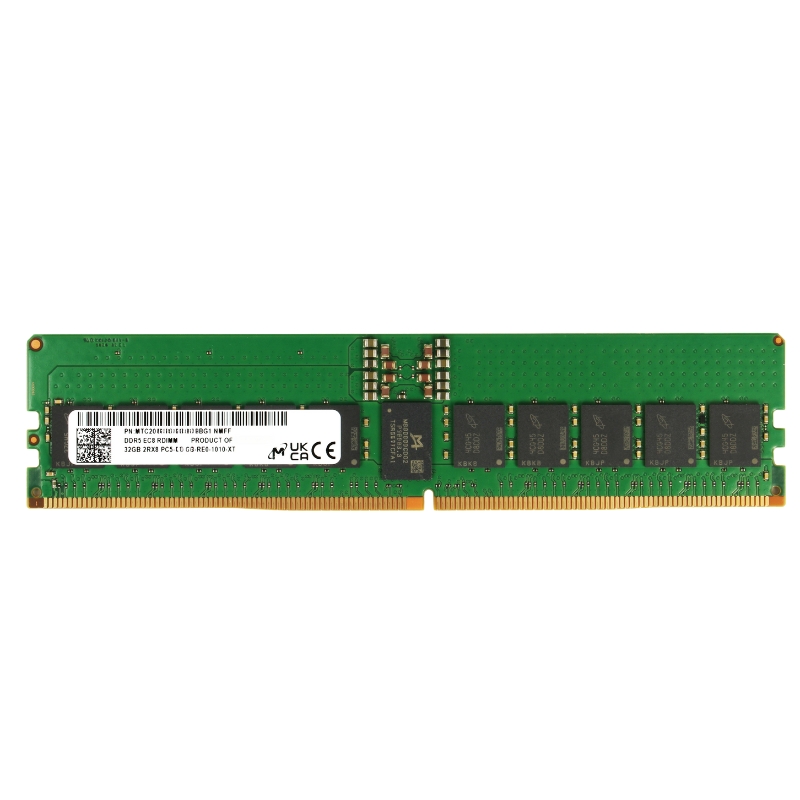


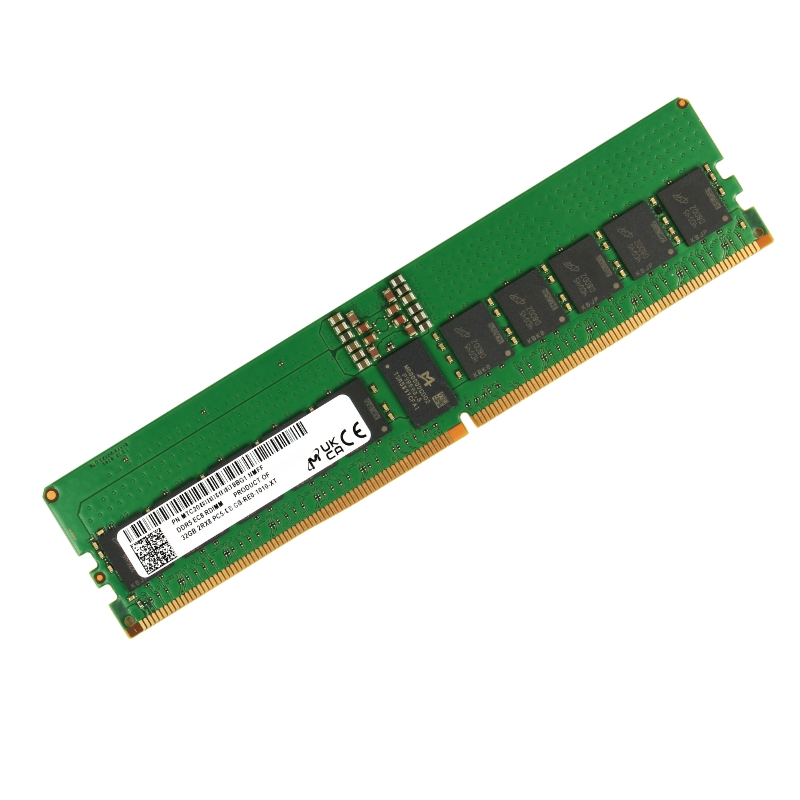
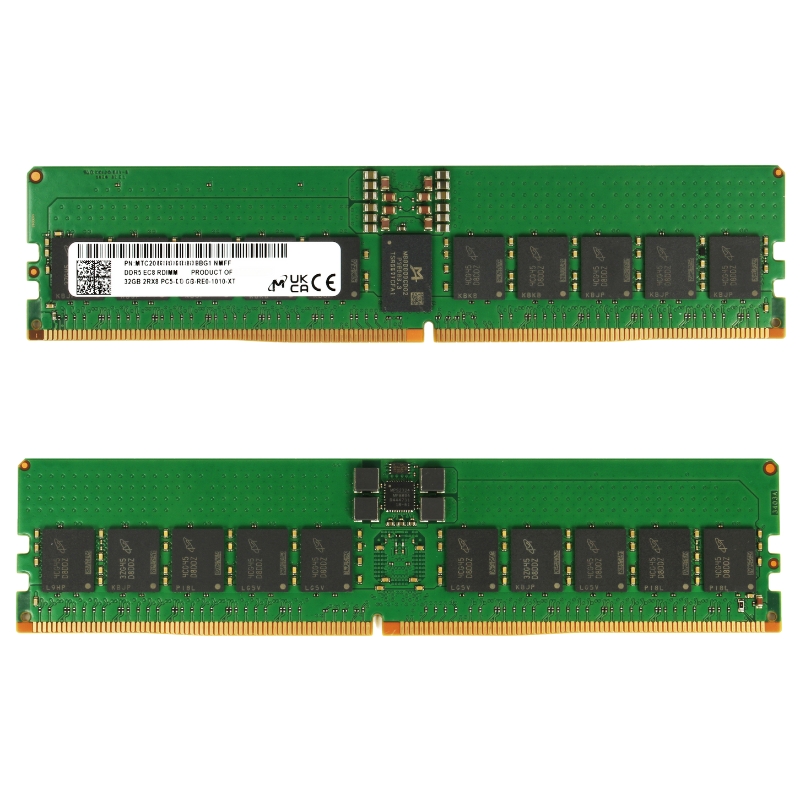
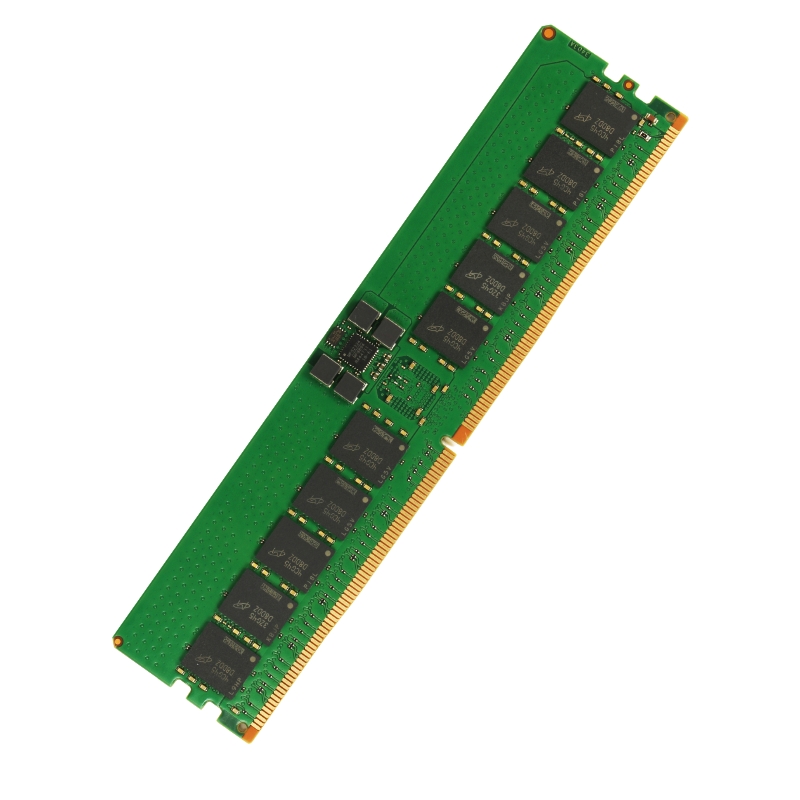
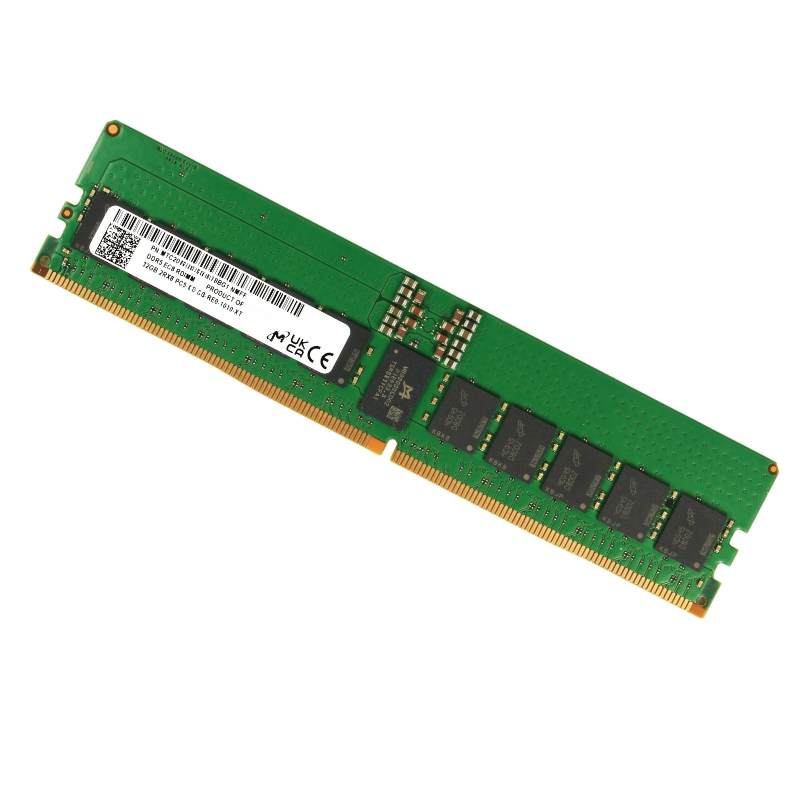
Dell SNP1MGT9C/32G 32GB DDR5 5600MT/S PC5-44800 Cl46 2RX8 SDRAM Non-ECC Unbuffered 288-Pin Memory Module. New Sealed in Box (NIB)
| SKU/MPN | Warranty | Price | Condition | You save |
|---|---|---|---|---|
| SNP1MGT9C/32G | 1 Year Warranty | $1,140.00 | New (System) Pull | You save: $399.00 (26%) |
| SNP1MGT9C/32G | 1 Year Warranty | $1,248.00 | New Sealed in Box (NIB) | You save: $436.80 (26%) |
Elevate your system's performance with this high-capacity RAM component, engineered for seamless data processing and enhanced multitasking capabilities.
Produced by the renowned technology firm DELL, this component is a genuine OEM part ensuring full compatibility and reliability.
Technical Summary
Designed to industry-standard specifications for straightforward installation and a secure fit.
This memory is built to handle intensive workloads with exceptional data transfer rates.
Optimized for stability and efficiency in demanding computing environments.
The Dell SNP1MGT9C/32G 32GB DDR5 5600MT/s PC5-44800 CL46 2Rx8 SDRAM Non-ECC Unbuffered 288-Pin memory module represents a modern, high-performance memory option for systems that require fast data throughput, improved multitasking, and reliable behavior under consumer and prosumer workloads. This category focuses on DDR5 UDIMM modules designed for contemporary platforms that accept 288-pin DDR5 DIMMs, offering an attractive balance of capacity, bandwidth, and latency for desktop workstations, content creation rigs, gaming builds, and light server/prosumer machines.
These modules follow the 288-pin dual inline memory module physical standard for DDR5 desktop memory. The 288-pin arrangement ensures mechanical compatibility with DDR5 memory slots on supported motherboards and system boards. The physical design includes the new notch placement and pin mapping specific to DDR5 generations to prevent cross-generation installation errors.
Each module offers 32GB of onboard DRAM organized as a dual-rank (2Rx8) configuration. Dual-rank organization can influence memory channel utilization and, in many platforms, can deliver slightly different performance characteristics compared with single-rank modules. For systems that support dual-rank DIMMs, 2Rx8 modules provide a good compromise between high capacity and effective rank interleaving.
Rated at 5600MT/s (also marketed as DDR5-5600), this module belongs to the PC5-44800 bandwidth class, delivering up to 44.8GB/s of theoretical per-module peak throughput on a 64-bit data bus. The module’s CAS latency is CL46 — an expected latency for higher frequency DDR5 parts — which balances raw transfer rate with access latency. When optimizing system memory performance, consider the tradeoff between MT/s and CAS latency in application workloads.
This Dell memory is Non-ECC and Unbuffered (UDIMM). That means it does not provide error-correcting code and is not registered/buffered for enterprise memory controllers. It is optimized for consumer and prosumer systems where higher bandwidth and lower cost outweigh the formal error correction found in ECC RDIMMs. For mission-critical servers or environments requiring ECC protection, look for ECC Registered or ECC UDIMM DDR5 modules in this vendor’s server lineup.
Compatibility depends on motherboard and CPU memory controller support for DDR5 memory and the target frequency. Before purchasing, verify that your motherboard explicitly lists DDR5 support and, ideally, references compatibility with 5600MT/s or similar profiles. Many modern consumer motherboards and chipsets launched for DDR5 include automatic SPD profiles and XMP/EXPO support for enabling rated speeds; however, platform BIOS support and firmware updates can influence stability at higher gear.
The module uses standard SPD (Serial Presence Detect) metadata to advertise JEDEC default timings and may include XMP/EXPO compatible profiles for enabling the 5600MT/s operating point on motherboards that support it. If your motherboard includes a manual memory frequency or memory profile toggle, enabling the provided profile can result in immediate operation at rated speed; if stability issues arise, fall back to JEDEC default speeds or consult motherboard firmware updates and vendor memory QVL lists.
Mixing different capacities, speeds, or vendors can work when the system negotiates to the lower common denominators for speed and timings, but this may lead to non-optimal performance or instability. For best results, populate matched modules (same SKU, capacity, rank, and speed) in recommended bank placements to preserve dual-channel or quad-channel performance. Using two identical 32GB modules yields a symmetric dual-channel configuration beneficial for many desktop workloads.
A 32GB DDR5 module enables large memory footprints for productivity applications — including extensive browser tab use, virtual machines, large spreadsheets, and multimedia editing timelines — without frequent page-file or swap usage. DDR5’s higher bandwidth at 5600MT/s helps feed data-hungry CPUs and integrated graphics solutions, reducing stalls and improving responsiveness in memory-bound scenarios.
High frequency DDR5 memory can improve frame times and reduce stuttering in games that are memory-sensitive, especially at higher resolutions or in CPU-bound scenes. While CL46 represents a higher numeric latency than lower-frequency DDR4 parts, the increased MT/s compensates with greater overall throughput. For gamers, pairing DDR5-5600 with a compatible high-performance CPU and GPU yields the best practical gaming results.
Power down the system, unplug, ground yourself against static, and consult your motherboard manual for the correct slot population order. Align the module’s notch with the slot key and apply even pressure until the latches click into place. For multi-module installs, follow the recommended channel pairing (usually color-coded slots) to enable dual-channel interleaving.
After installation, enter BIOS/UEFI to confirm detection of the full 32GB capacity and the operating frequency. If the module supports memory profiles, enable them if desired; otherwise, let the system default to JEDEC settings. Run memory stress tests — such as MemTest86, Prime95 memory tests, or industry-standard stress utilities — to validate stability under load. Watch for system crashes, memory errors, or POST irregularities which may indicate incompatibility, incorrect seating, or the need for BIOS updates.
DDR5 modules include on-DIMM power management features that shift certain power regulation duties onto the module. While many modules include low-profile heat spreaders, ensure adequate airflow in the case to avoid elevated temperatures under sustained load. Overclocking or prolonged high-bandwidth workloads can increase power draw and heat generation; monitor system thermals and consult motherboard VRM cooling recommendations.
When building or upgrading, consider workload needs: prioritize capacity for heavy multitasking and large datasets, and prioritize frequency for latency-sensitive, bandwidth-limited workloads. A 32GB DDR5-5600 module is positioned as a balance—providing ample capacity while offering modern DDR5 speeds for bandwidth-hungry tasks.
CAS latency (CL) is one metric for raw access delay, but real-world performance depends on the combination of CAS latency and operating frequency. Effective memory latency can be approximated by (CL / frequency) and should be compared in context: a higher MT/s memory with a larger CL can still provide lower effective latency than a lower MT/s module with smaller CL.
Single-rank modules typically present slightly lower access times per rank, while dual-rank modules can increase memory controller throughput in certain scenarios via rank interleaving. Desktop users should check motherboard QVLs and experiment with configurations to identify the optimal rank balance for their CPU and board.
DDR5 introduces higher maximum frequencies, improved power management, and architectural changes that increase peak bandwidth over DDR4. DDR4 may still offer lower latency and broad compatibility for older platforms; however, DDR5 is the forward-looking choice for new builds and platforms that mandate DDR5 support.
Non-ECC unbuffered modules like the SNP1MGT9C/32G are suited to mainstream consumer and creative workloads. ECC memory provides single-bit error correction for higher reliability in server and mission-critical contexts. Selecting between them depends on whether data integrity guarantees or raw cost/performance are the priority.
Newer memory technologies may require BIOS updates for optimal stability and profile support. Look for firmware releases that mention memory compatibility or improved DDR5 support.
For best performance, buy modules in matched kits (e.g., two identical 32GB modules) rather than mixing a new module with older modules. Matched kits reduce the chance of timing mismatches and stability issues.
DDR5 modules incorporate on-DIMM PMICs (Power Management Integrated Circuits) that shift certain power regulation tasks to the module. This can improve voltage stability and allow more scalable power designs on motherboards. Note that on-module power management changes the power distribution topology compared with DDR4.
Operate memory within the manufacturer’s specified temperature ranges. Ensure adequate case ventilation and avoid obstructing airflow to DIMM slots. Sustained high ambient temperatures can shorten component life or increase the risk of transient errors under load.
If 32GB per module is not sufficient, look for 64GB DDR5 modules and kits where motherboard and CPU memory controllers support higher capacities. Note that higher density modules may use different die configurations and may be more expensive.
For server workloads, consider ECC RDIMM or ECC LRDIMM DDR5 modules that provide error correction and buffering for higher reliability and capacity scaling. These modules often require server chipsets and validated BIOS support.
Gamers seeking upgraded frame pacing and smooth multitasking with streaming and background services will appreciate the bandwidth uplift provided by DDR5-5600 paired with a modern CPU.
Video editors, photographers, and 3D artists gain from large memory capacity and high throughput enabling larger caches, faster scrubbing and render staging, and better handling of large asset libraries.
Enthusiasts rebuilding or upgrading to a DDR5 platform can choose this Dell SKU for a balance of capacity and speed without stepping into expensive server ECC territory, making it ideal for personal workstations and powerful desktop machines.


 Contact Us
 Information
 Catalog
 Solid State Drives (SSD)
 Network Switches
 Hard Disk Drives
 HBA & Controllers
 PC & Servers
 PC & Server Memory
 CPU & Processors
 Network Routers
 Power Supplies
 Tape Drives & Libraries
 Network Devices
 Computer & Network Cables