(7% discount is applied at checkout)
Cart is empty
Your go-to destination for cutting-edge server products
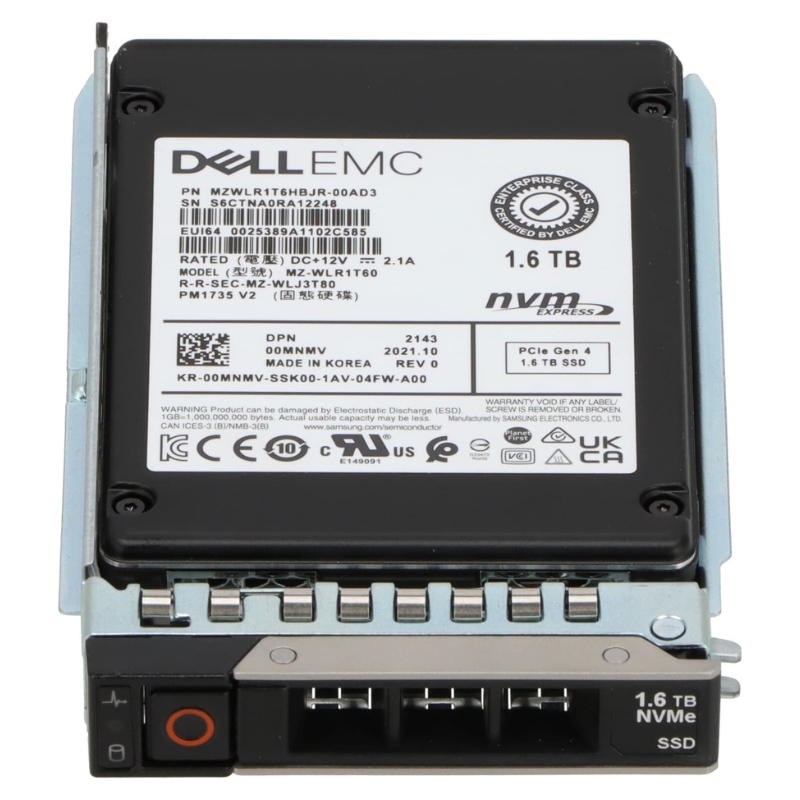


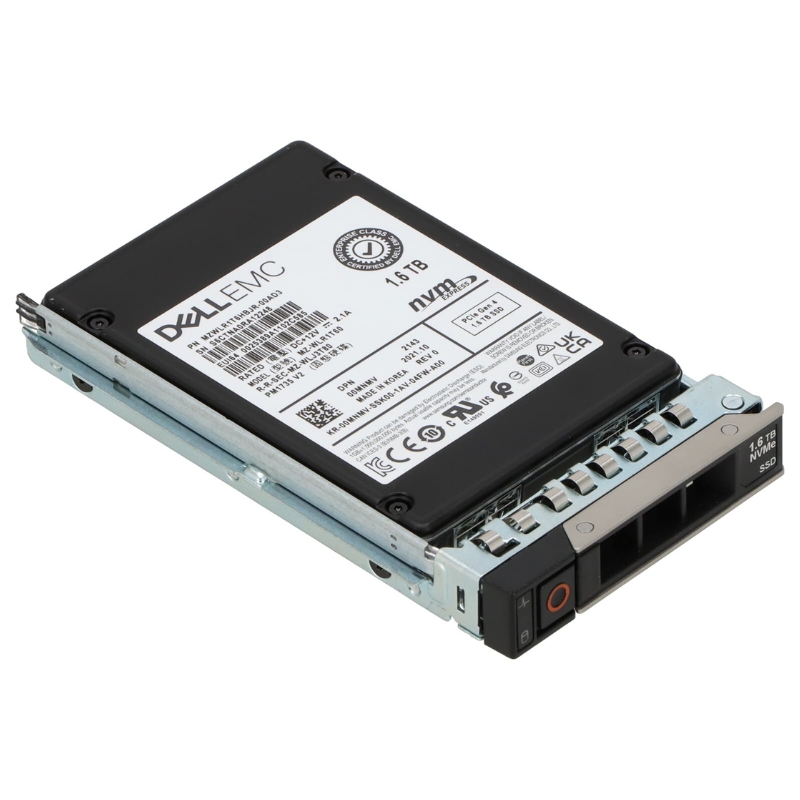
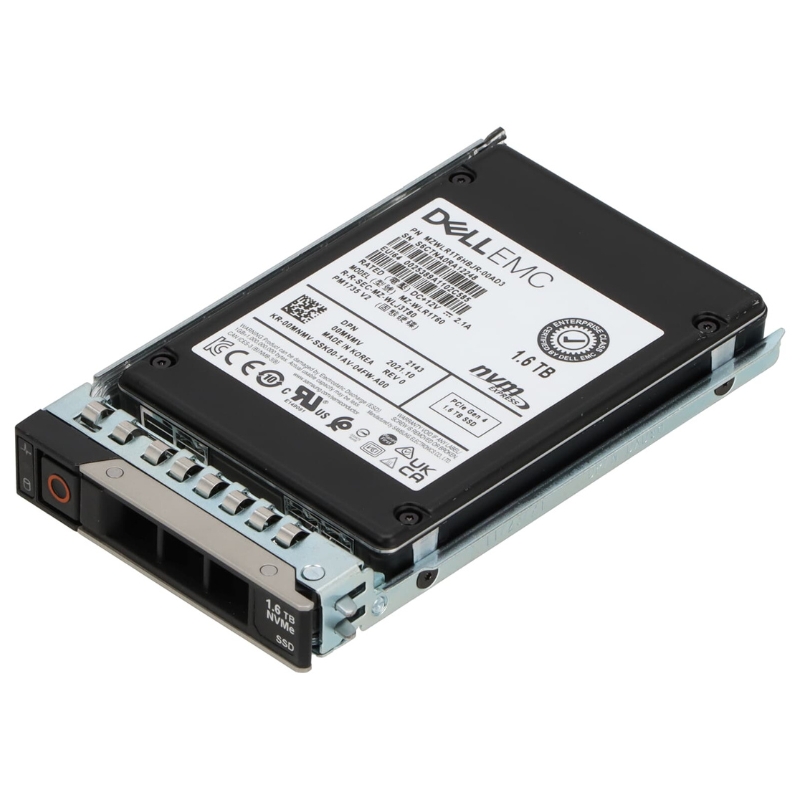
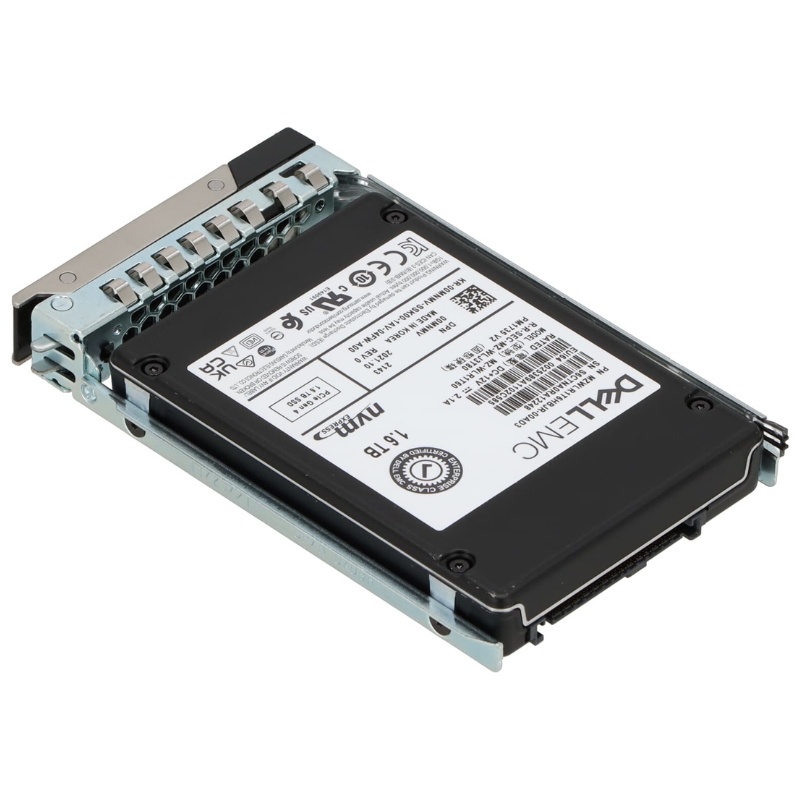
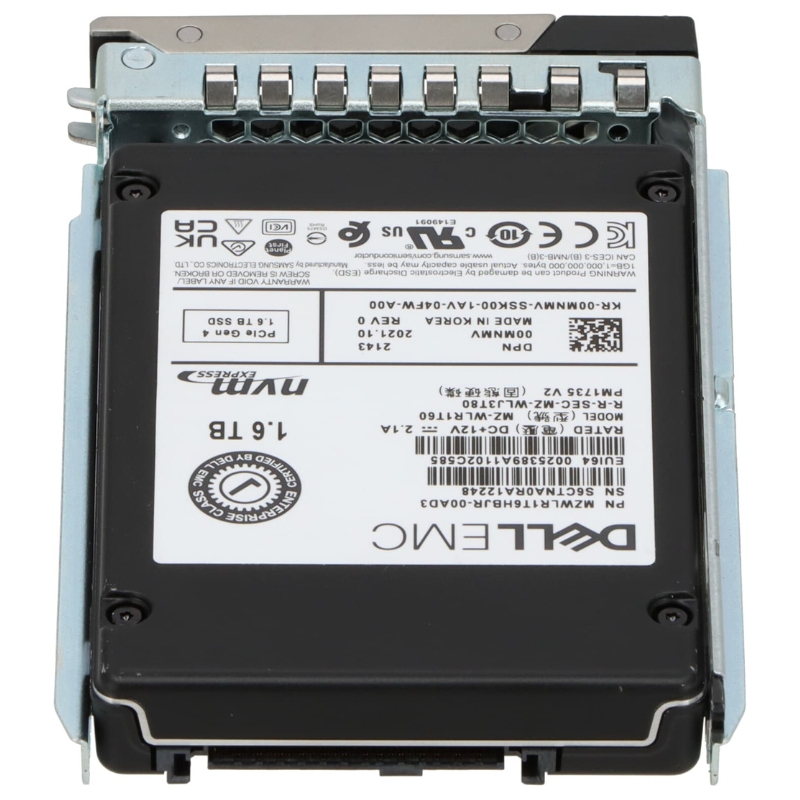
Dell TGYF5 1.92TB PCIe 4.0 X4 NVMe Read Intensive TLC 1 Dwpd U.2 2.5 Inch With Tray SSD. Excellent Refurbished with 1 year replacement warranty
The Dell TGYF5 1.92TB PCI-E 4.0 x4 NVMe Read-Intensive SSD stands out as a high-performance, enterprise-grade solid-state drive designed for read-centric workloads. Built with advanced TLC NAND flash and optimized for read-intensive applications, this SSD delivers a seamless combination of reliability, efficiency, and blazing-fast data access. With its U.2 2.5-inch form factor and hot-plug tray compatibility, it easily integrates into existing enterprise server and storage infrastructures, especially those designed for NVMe technology.
The Dell TGYF5 1.92TB PCI-E 4.0 x4 NVMe Read Intensive TLC 1 DWPD U.2 SFF Solid State Drive with tray for PowerEdge Server represents a purpose-built enterprise storage option designed for read-heavy data center workloads. This category focuses on high throughput, low latency NVMe storage devices in the U.2 small form factor that integrate seamlessly into Dell PowerEdge platforms.
This family of drives is optimized for read-intensive workloads where sustained sequential and random read performance matter more than maximum write endurance. Typical use cases include content delivery, VDI read caches, large scale analytics that perform many reads against relatively static datasets, database read replicas, and boot or OS volume duties for large server clusters. The Dell TGYF5 1.92TB PCI-E 4.0 x4 NVMe Read Intensive TLC 1 DWPD U.2 SFF Solid State Drive with tray for PowerEdge Server is commonly deployed as the front-end storage for read caching tiers in multi-tiered storage architectures, or as part of NVMe-over-Fabrics backends where read latency is critical to overall application responsiveness.
PCI-Express 4.0 doubles the per-lane bandwidth available to NVMe devices compared to PCI-Express 3.0, giving the Dell TGYF5 1.92TB PCI-E 4.0 x4 NVMe Read Intensive TLC 1 DWPD U.2 SFF Solid State Drive with tray for PowerEdge Server the headroom to deliver higher throughput for parallel I/O patterns. Modern PowerEdge servers with NVMe backplanes and U.2 connectors can expose multiple NVMe lanes directly to the CPU for minimized software stacks between the application and media. This configuration reduces protocol overhead and yields predictable, low latency I/O. For architects, planning should account for PCIe lane topology, CPU affinity, and host firmware versions to ensure the device reaches its performance potential. Firmware updates from Dell may include controller microcode and performance optimizations; therefore coordination with platform firmware is important for escalated throughput scenarios.
The U.2 SFF mechanical design used by the Dell TGYF5 1.92TB PCI-E 4.0 x4 NVMe Read Intensive TLC 1 DWPD U.2 SFF Solid State Drive with tray for PowerEdge Server provides enterprise hot-swap capability and compatibility with standard server drive sleds and trays. The included drive tray simplifies insertion and removal in dense 1U or 2U server chassis and aligns with PowerEdge drive cage pinouts. Because the drive is designed for server racks and continuous operation, attention to cooling is essential. Proper airflow through the server, unobstructed drive sled alignment, and the use of Dell-recommended drive blanks in empty bays will ensure the ambient temperature around the drive remains within rated thresholds. System builders should account for the drive's thermal profile when populating high densities of NVMe devices in chassis designed for legacy SATA drives.
The Dell TGYF5 1.92TB PCI-E 4.0 x4 NVMe Read Intensive TLC 1 DWPD U.2 SFF Solid State Drive with tray for PowerEdge Server is engineered to prioritize read I/O performance. Read-intensive drives typically use TLC NAND programmed and mapped in ways that favor read latency and bandwidth while keeping a moderate write endurance rating such as the 1 DWPD classification. In practice, this means that random read IOPS and sequential read throughput are tuned to provide consistent responsiveness under mixed read workloads, which is critical for serving large numbers of concurrent reads or for reducing query latency in database front ends. Administrators should evaluate workload I/O characteristics — read/write ratio, queue depth, and I/O size distribution — to match the Dell TGYF5 drive to the right storage tier.
Data integrity features are commonly included in enterprise NVMe SSDs to protect stored data and maintain reliability under load. The Dell TGYF5 1.92TB PCI-E 4.0 x4 NVMe Read Intensive TLC 1 DWPD U.2 SFF Solid State Drive with tray for PowerEdge Server typically supports end-to-end data path protections, power loss prevention mechanisms, and robust error correction algorithms designed to preserve data integrity across sudden power events and heavy I/O bursts. These mechanisms are particularly valuable when the drive serves as a critical system volume or is part of a RAID array.
When integrating Dell TGYF5 drives into enterprise storage arrays or local server RAID configurations, decisions around RAID level, hot sparing strategy, and rebuild impact should be informed by the read-centric design. RAID levels that provide read performance benefits while preserving capacity efficiency, such as RAID 10 for mixed read/write workloads or erasure coding schemes for distributed storage systems, can work well with these drives. However, rebuild time and the potential for write amplification during parity recalculation are important considerations. Because the drive is tuned for reads, heavy write storms during rebuild operations may stress the drive's write buffer and affect overall system performance. Operators often mitigate rebuild impact by throttling rebuild processes or scheduling maintenance during low utilization windows.
Devices in this category are validated for use in a range of Dell PowerEdge server models that include U.2 drive cages or NVMe backplane support. Compatibility includes mechanical fit, chassis sled alignment, and power delivery via the server's backplane. System integrators should consult the server's hardware compatibility list and firmware revision notes to confirm full interoperability. In addition to physical fit, ensuring that the server's BIOS/UEFI and controller firmware are current will reduce the chance of drive feature incompatibilities and will maximize reliability. Dell often publishes compatibility matrices and recommended firmware bundles for PowerEdge platforms using enterprise NVMe drives; following those guidelines simplifies large scale deployments and supportability over the life of the deployment.
High performance NVMe drives dissipate more heat than equivalent SATA devices, and the Dell TGYF5 1.92TB PCI-E 4.0 x4 NVMe Read Intensive TLC 1 DWPD U.2 SFF Solid State Drive with tray for PowerEdge Server is no exception. Efficient cooling and airflow design within the server chassis are essential for sustained performance. End users should avoid blocking drive bays, ensure that fans are configured as recommended by the server manufacturer, and utilize drive sleds and trays that facilitate heat transfer.
Software-defined storage layers and orchestration platforms commonly leverage NVMe devices for high performance tiers. The Dell TGYF5 1.92TB PCI-E 4.0 x4 NVMe Read Intensive TLC 1 DWPD U.2 SFF Solid State Drive with tray for PowerEdge Server is suitable as the high-performance tier in caching layers or as local persistent volumes for container orchestration platforms that require low latency. When configuring persistent storage for containers or virtual machines, consider aligning the drive's endurance and capacity profile with workload characteristics. Automation frameworks can include health checks and capacity thresholds to perform intelligent device reassignment or rebalancing when drives approach end-of-life indicators, thereby reducing unexpected downtime.
Enterprise SSDs can be broadly categorized into read-intensive, mixed-use, and write-intensive classes. The Dell TGYF5 1.92TB PCI-E 4.0 x4 NVMe Read Intensive TLC 1 DWPD U.2 SFF Solid State Drive with tray for PowerEdge Server falls into the read-intensive class and is therefore differentiated by cost per capacity, read performance tuning, and moderate write endurance. Compared with mixed-use drives, read-intensive drives typically cost less per terabyte and offer similar read latency but lower tolerances for heavy write workloads. When architects weigh options, the key differentiators are workload I/O ratios, expected data retention and scrubbing routines, and how the drives integrate with higher level availability strategies such as replication and distributed redundancy.


 Contact Us
 Information
 Catalog
 Solid State Drives (SSD)
 Network Switches
 Hard Disk Drives
 HBA & Controllers
 PC & Servers
 PC & Server Memory
 CPU & Processors
 Network Routers
 Power Supplies
 Tape Drives & Libraries
 Network Devices
 Computer & Network Cables