(7% discount is applied at checkout)
Cart is empty
Your go-to destination for cutting-edge server products
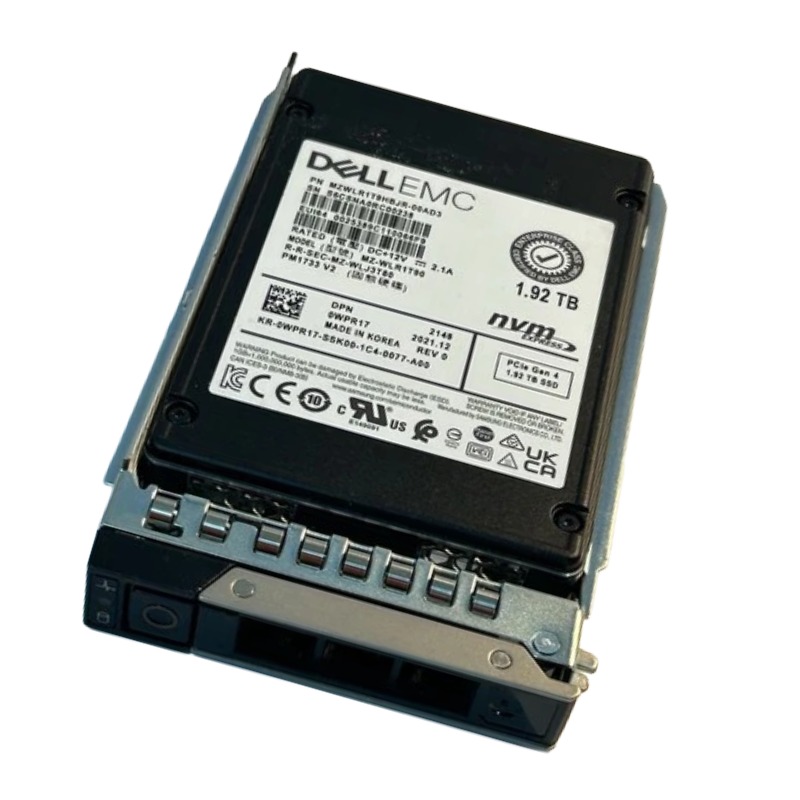


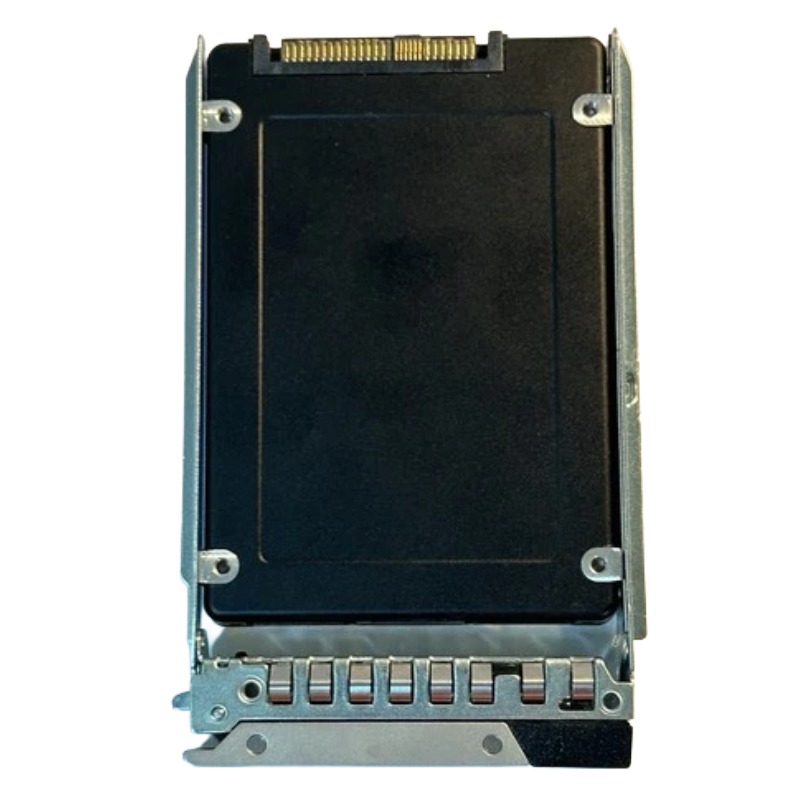
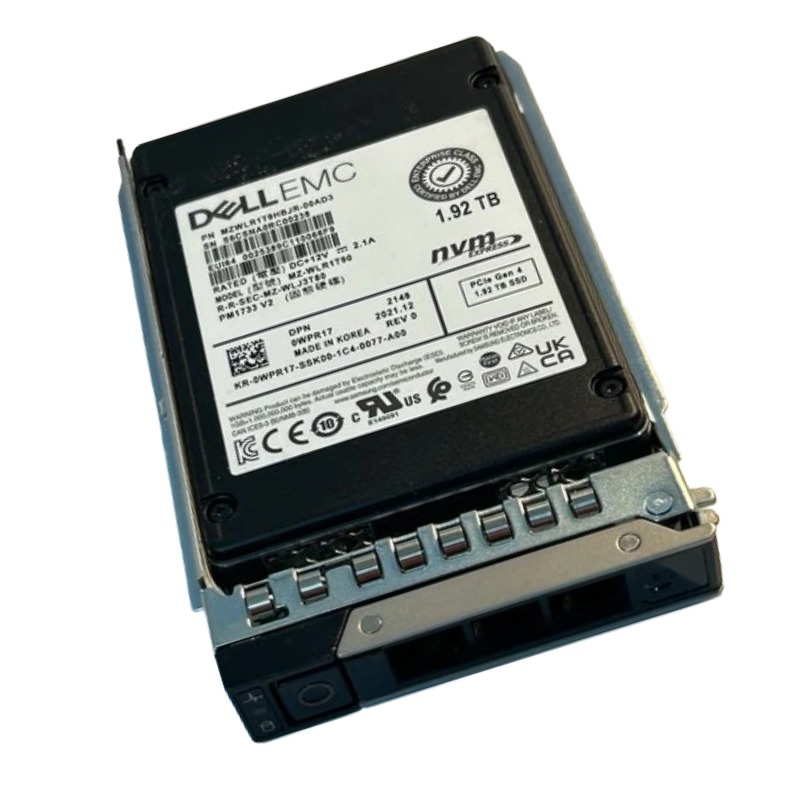
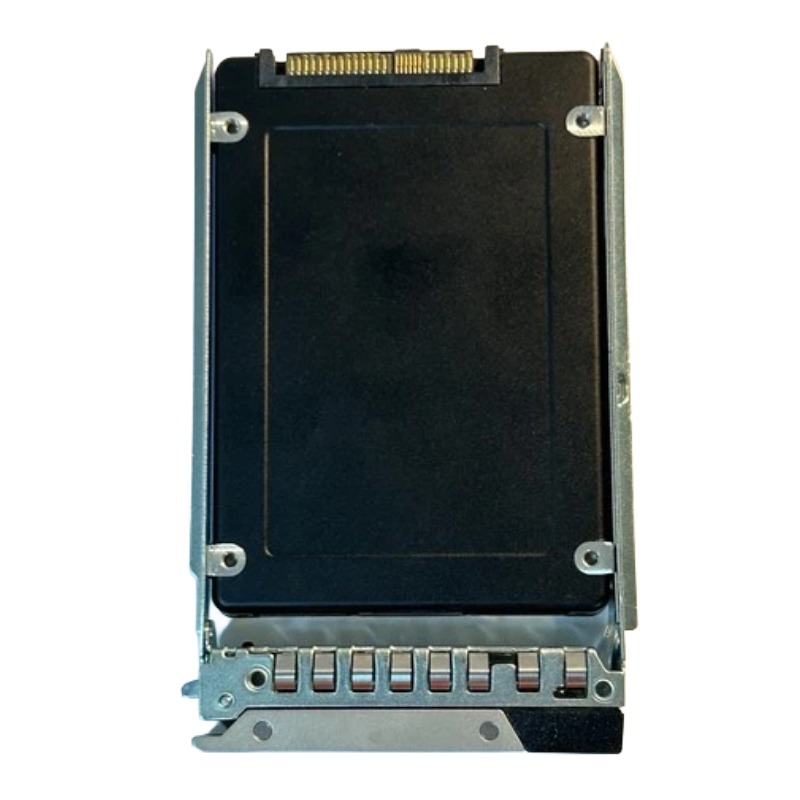
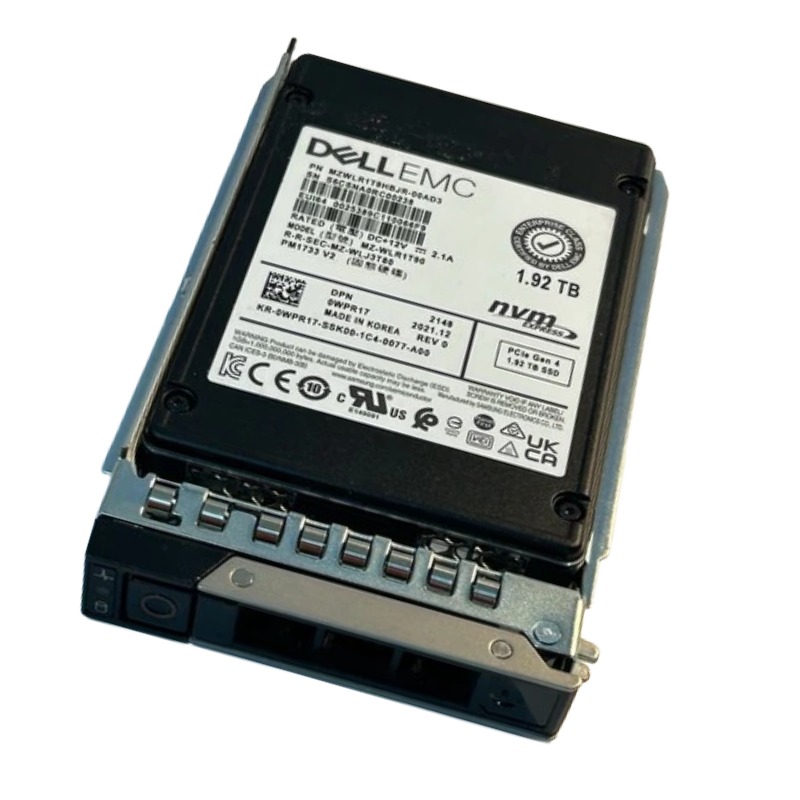
Dell TXP72 1.92TB SED PCIe Gen4 NVMe U.2 2.5Inch RI SSD. Excellent Refurbished with 1 year Replacement Warranty
The TXP72 Dell 1.92TB SED PCIe Gen4 NVMe U.2 2.5-inch Read Intensive Solid State Drive belongs to the high-performance enterprise NVMe SSD category designed for modern data center workloads. This category focuses on leveraging the PCI Express Gen4 interface combined with the NVMe protocol to deliver significantly lower latency, higher throughput, and improved scalability compared to legacy SATA and SAS-based storage solutions. Enterprise NVMe SSDs are purpose-built to handle demanding applications such as virtualization platforms, cloud computing infrastructures, high-frequency transactional databases, analytics engines, and software-defined storage environments.
Within this category, U.2 2.5-inch form factor drives play a critical role by offering a balance between high performance and operational flexibility. The U.2 interface allows hot-swappable installation in standard enterprise server drive bays, enabling easier maintenance and upgrades without system downtime. This makes the category particularly appealing for organizations prioritizing uptime, service continuity, and simplified infrastructure management. PCIe Gen4 further enhances the category by doubling the available bandwidth over PCIe Gen3, allowing enterprise storage subsystems to eliminate bottlenecks that previously limited data throughput.
Another defining characteristic of this category is the emphasis on Read Intensive (RI) usage profiles. Drives in this subcategory are optimized for workloads where read operations significantly outnumber writes, such as content delivery networks, data warehousing, search indexing, and virtual desktop infrastructure. By tailoring endurance ratings, firmware behavior, and flash memory utilization to read-heavy patterns, manufacturers can deliver cost-effective storage solutions that maintain high performance while meeting enterprise reliability standards.
Security is also a foundational element of this category, with Self-Encrypting Drive (SED) capabilities becoming a standard expectation. Hardware-based encryption ensures that data at rest is protected without imposing performance penalties typically associated with software encryption. This aligns the category with regulatory compliance requirements across industries such as healthcare, finance, government, and enterprise IT, where data protection and secure decommissioning are mandatory.
Overall, the enterprise PCIe Gen4 NVMe U.2 SSD category represents a convergence of speed, reliability, security, and operational efficiency. Products like the TXP72 Dell 1.92TB SED NVMe SSD exemplify how this category addresses the evolving demands of data-intensive environments while maintaining compatibility with established enterprise server architectures.
The PCIe Gen4 NVMe architecture defines a major technological leap within the enterprise solid state drive category. By offering up to 16 gigatransfers per second per lane, PCIe Gen4 effectively doubles the bandwidth available in PCIe Gen3 configurations. When combined with the NVMe protocol, which is specifically designed to minimize command latency and maximize parallelism, this architecture enables enterprise SSDs to achieve exceptional levels of throughput and responsiveness.
In practical terms, this category delivers significantly higher sequential read and write speeds, as well as vastly improved random IOPS performance. These capabilities are critical for enterprise workloads that rely on rapid data access, such as real-time analytics, machine learning pipelines, and large-scale virtualization environments. NVMe’s ability to support thousands of parallel queues, each with deep command depths, ensures that multi-core processors can access storage resources without contention, resulting in better CPU utilization and overall system efficiency.
Latency reduction is another defining feature of this category. Traditional storage protocols introduce multiple layers of abstraction that increase access times. NVMe streamlines communication between the operating system and the storage device, reducing overhead and enabling microsecond-level latency. For transactional databases and latency-sensitive applications, this improvement translates directly into faster query responses and improved user experiences.
Thermal and power efficiency considerations are also integral to the PCIe Gen4 NVMe category. Advanced controllers and firmware algorithms dynamically manage power states and thermal output to maintain consistent performance under sustained workloads. This is particularly important in dense data center environments, where airflow and power budgets are tightly managed. The category emphasizes stable performance over long operational cycles, avoiding throttling behaviors that could disrupt mission-critical applications.
Scalability is another advantage inherent to this architecture. As enterprises expand their storage infrastructure, PCIe Gen4 NVMe SSDs can be deployed across a wide range of server platforms, from single-socket systems to large multi-node clusters. This scalability ensures that investments in this category remain viable as performance demands continue to grow, making it a future-ready choice for enterprise IT strategies.
The U.2 2.5-inch form factor is a key subcategory within enterprise NVMe storage, offering a unique combination of performance, serviceability, and compatibility. Unlike add-in cards or proprietary form factors, U.2 drives are designed to fit into standard 2.5-inch drive bays commonly found in enterprise servers. This allows organizations to adopt NVMe technology without redesigning their physical infrastructure.
Hot-swap capability is one of the most significant benefits of the U.2 form factor. In enterprise environments where uptime is critical, the ability to replace or upgrade drives without shutting down systems is invaluable. This feature supports continuous operation in data centers, reducing maintenance windows and minimizing the risk of service interruptions. The category is particularly well-suited for environments with high availability requirements, such as cloud service providers and enterprise hosting platforms.
From a connectivity perspective, U.2 interfaces support full PCIe lane allocation, ensuring that the drive can fully leverage the bandwidth offered by PCIe Gen4. This distinguishes the category from earlier form factors that were limited by shared bandwidth or legacy protocols. The robust connector design also enhances signal integrity and reliability, which are essential for sustained high-speed data transfers.
Thermal management is another area where the U.2 2.5-inch category excels. The larger physical size compared to compact M.2 drives allows for better heat dissipation, enabling consistent performance under heavy workloads. This makes U.2 drives more suitable for continuous enterprise use, where sustained performance is often more important than peak benchmark numbers.
Compatibility with a wide range of enterprise servers and storage platforms further strengthens the appeal of this category. Major server vendors design their systems with U.2 NVMe support in mind, ensuring seamless integration, firmware compatibility, and vendor-backed support. This reduces deployment complexity and simplifies lifecycle management for IT teams.
The Read Intensive (RI) SSD subcategory is specifically engineered to support workloads where read operations dominate overall data access patterns. This optimization allows manufacturers to balance performance, endurance, and cost in a way that aligns with real-world enterprise usage scenarios. The TXP72 Dell 1.92TB SED NVMe SSD exemplifies this approach by delivering high read throughput while maintaining sufficient write endurance for typical enterprise applications.
Read-intensive drives are commonly deployed in use cases such as virtual desktop infrastructure, web hosting, content distribution, and data analytics. In these environments, data is frequently accessed but infrequently modified, making RI SSDs an ideal choice. By focusing on read performance, this category ensures fast data retrieval and low latency, which are critical for user-facing applications and large-scale data processing tasks.
Endurance ratings in this subcategory are carefully calibrated to match expected write volumes. Rather than over-provisioning for write-heavy workloads, RI SSDs allocate resources to maximize usable capacity and reduce overall cost per gigabyte. This makes the category particularly attractive for organizations seeking to optimize storage budgets without compromising performance or reliability.
Firmware optimization plays a crucial role in differentiating this subcategory. Advanced wear-leveling algorithms, intelligent caching strategies, and error correction mechanisms are tuned to support read-dominant access patterns. These features help maintain consistent performance over the drive’s lifespan while protecting data integrity under enterprise operating conditions.
The RI SSD category also aligns well with modern software-defined storage architectures, where data placement and replication strategies can further reduce write amplification. By pairing read-intensive NVMe SSDs with intelligent storage software, enterprises can achieve highly efficient and scalable storage solutions tailored to their specific workload profiles.
Self-Encrypting Drive technology is a critical component of the enterprise NVMe SSD category, addressing the growing need for robust data security and regulatory compliance. SEDs incorporate dedicated hardware-based encryption engines that automatically encrypt all data written to the drive and decrypt data upon access. This process occurs transparently, without requiring user intervention or impacting performance.
Hardware-based encryption offers significant advantages over software-based alternatives. Because encryption and decryption are handled directly by the drive controller, there is minimal impact on system resources. This allows enterprise applications to maintain high performance levels while ensuring that sensitive data remains protected at rest. The category is particularly relevant for industries subject to strict data protection regulations, such as GDPR, HIPAA, and PCI-DSS.
Key management is another important aspect of SED technology. Encryption keys are securely stored within the drive and can be managed through standardized protocols supported by enterprise systems. In the event of drive decommissioning or repurposing, cryptographic erasure can be performed instantly by deleting the encryption key, rendering all stored data inaccessible. This capability simplifies compliance with data disposal requirements and reduces the risk of data breaches.
The integration of SED features within the enterprise NVMe SSD category reflects a broader trend toward security-by-design in hardware components. As data volumes continue to grow and cyber threats become more sophisticated, built-in security mechanisms are no longer optional. Drives like the TXP72 Dell 1.92TB NVMe SSD demonstrate how performance, capacity, and security can coexist within a single enterprise-grade storage solution.
By combining PCIe Gen4 NVMe performance, U.2 enterprise compatibility, read-intensive optimization, and self-encrypting drive technology, this category delivers a comprehensive storage solution tailored to the needs of modern data centers and enterprise IT environments.


 Contact Us
 Information
 Catalog
 Solid State Drives (SSD)
 Network Switches
 Hard Disk Drives
 HBA & Controllers
 PC & Servers
 PC & Server Memory
 CPU & Processors
 Network Routers
 Power Supplies
 Tape Drives & Libraries
 Network Devices
 Computer & Network Cables