(7% discount is applied at checkout)
Cart is empty
Your go-to destination for cutting-edge server products
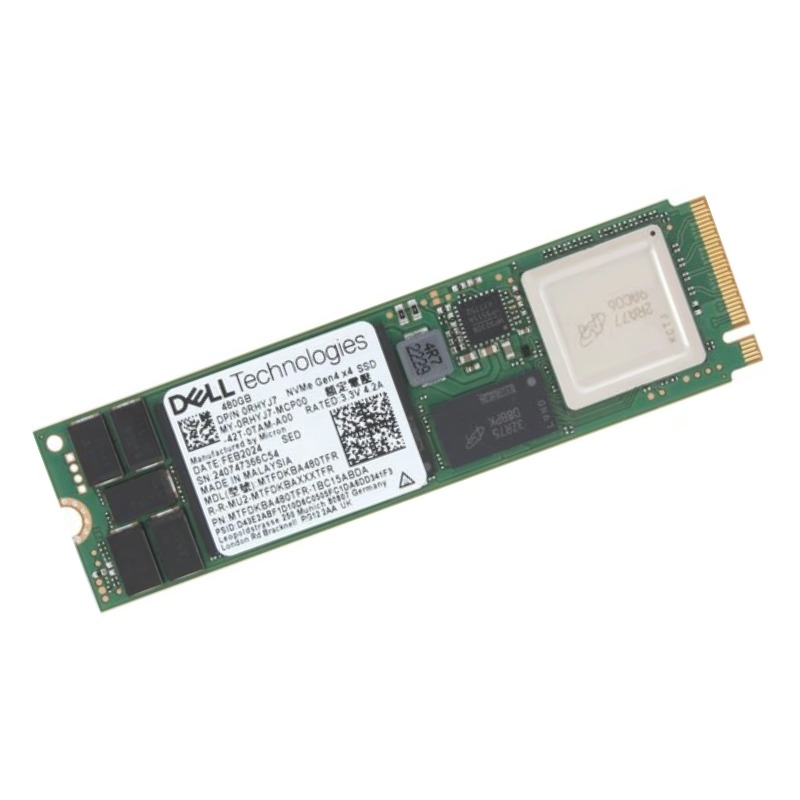


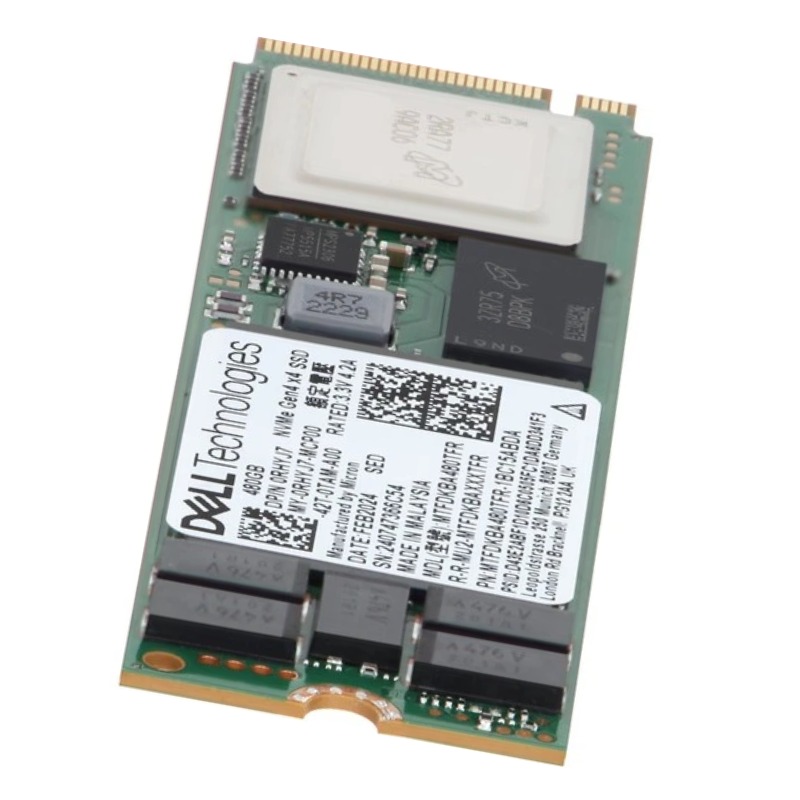
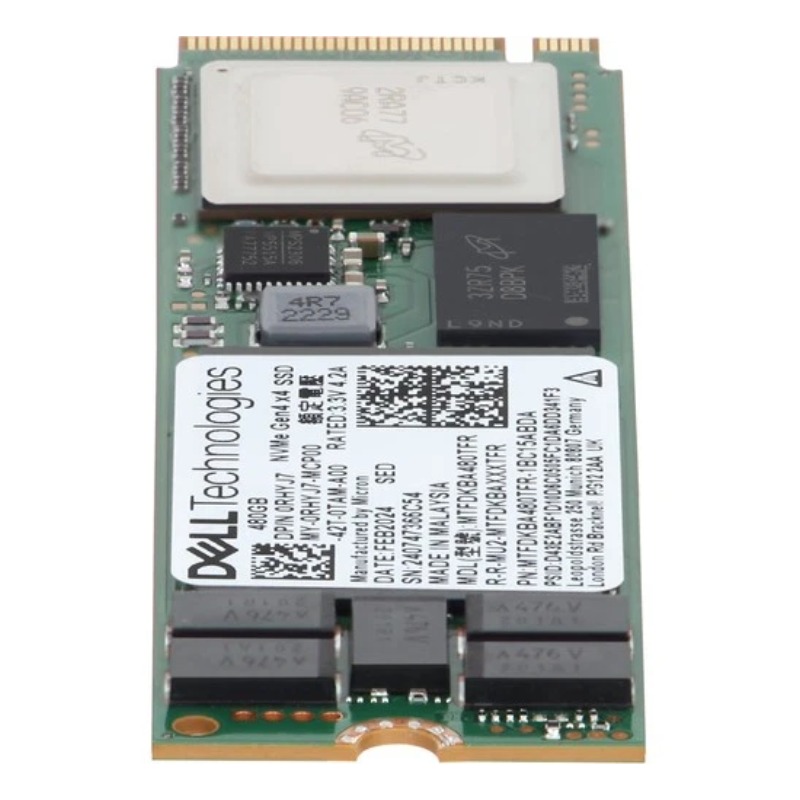
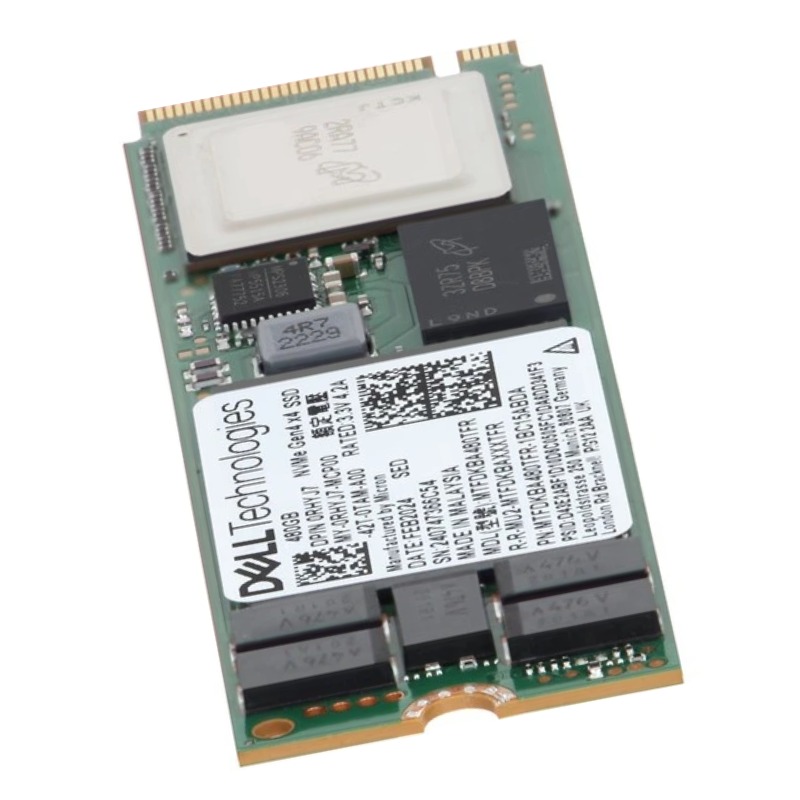
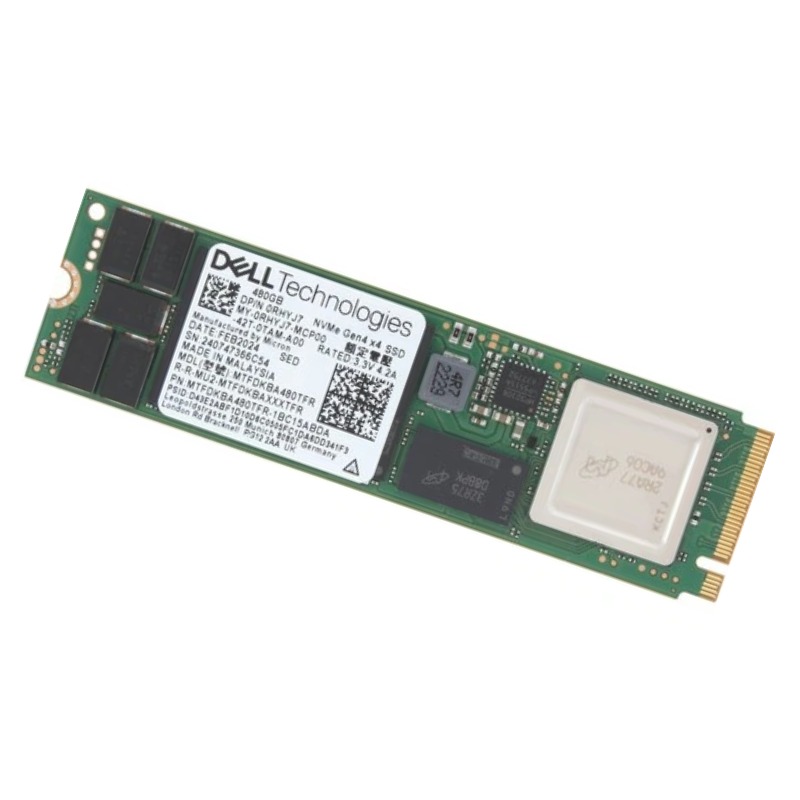
Dell V77MF 480GB PCIe Gen4 NVMe Read Intensive TLC SED 2280 M.2 SSD. Excellent Refurbished with 1 year Replacement Warranty
The Dell V77MF 480GB PCIe Gen4 NVMe Read Intensive TLC SED 2280 M.2 Solid State Drive belongs to a specialized category of enterprise-grade NVMe storage solutions designed to deliver high-speed data access, low latency, and dependable endurance for read-dominant workloads. This category focuses on performance-optimized solid state drives that leverage the PCIe Gen4 interface and NVMe protocol to maximize throughput while maintaining enterprise-level reliability, security, and compatibility with modern Dell server and infrastructure platforms.
Read-intensive NVMe SSDs are engineered for scenarios where data is accessed frequently but written comparatively less often. Typical environments include virtualization hosts, content delivery systems, database acceleration layers, boot and cache volumes, analytics platforms, and cloud infrastructure nodes. Within this category, capacity, consistency, and data protection features are balanced to ensure predictable performance over sustained operational lifecycles.
PCIe Gen4 represents a significant advancement in storage interconnect technology, doubling the bandwidth available per lane compared to PCIe Gen3. NVMe SSDs in this category, including the Dell V77MF 480GB model, utilize this expanded bandwidth to deliver faster sequential and random read speeds, reduced queue latency, and improved parallelism across multiple cores and applications.
NVMe over PCIe Gen4 enables direct communication between the SSD and the CPU, bypassing legacy storage controllers that introduce bottlenecks. This architecture allows read-intensive SSDs to excel in environments requiring rapid access to large datasets, such as real-time analytics, media streaming, and virtual desktop infrastructure.
Read-intensive drives are tuned at the firmware level to prioritize read latency and throughput consistency. Advanced caching algorithms, optimized NAND management, and intelligent wear leveling ensure that performance remains stable even as the drive approaches higher utilization levels.
NVMe supports thousands of parallel queues, each with deep command depths. This feature allows enterprise SSDs in this category to handle simultaneous read requests efficiently, making them ideal for multi-tenant environments and heavily virtualized systems.
The 480GB capacity segment occupies a strategic position within enterprise storage architectures. It provides sufficient space for operating systems, frequently accessed datasets, application binaries, and caching layers while maintaining a compact footprint and predictable performance characteristics.
In clustered environments, multiple 480GB NVMe SSDs can be deployed in parallel to scale performance and redundancy. This capacity class is particularly effective for boot drives in servers, hypervisor installations, and application-specific storage pools where fast access is prioritized over raw capacity.
Drives in the 480GB range strike a balance between NAND density and performance optimization. With fewer NAND packages compared to higher-capacity models, these SSDs can maintain lower latency and more consistent read speeds under sustained workloads.
From a total cost of ownership perspective, deploying multiple mid-capacity NVMe SSDs allows organizations to scale performance incrementally. This modular approach aligns well with evolving workload requirements and infrastructure growth strategies.
Read-intensive SSDs are categorized based on their endurance profile, typically expressed in drive writes per day (DWPD). These drives are designed for environments where read operations significantly outweigh write operations, allowing manufacturers to optimize NAND usage and firmware behavior accordingly.
By focusing on read-heavy workloads, these SSDs achieve an optimal balance between endurance and cost. Advanced error correction, wear leveling, and over-provisioning techniques ensure reliable operation throughout the drive’s service life.
Triple-Level Cell (TLC) NAND flash stores three bits per cell, offering higher density compared to SLC and MLC technologies. In enterprise read-intensive SSDs, TLC NAND is paired with sophisticated controllers and firmware to deliver reliable performance suitable for data center environments.
Enterprise-grade TLC SSDs incorporate features such as dynamic SLC caching, advanced error correction codes (ECC), and intelligent garbage collection. These enhancements mitigate the inherent latency and endurance challenges of TLC NAND while preserving its cost and density advantages.
Efficient power management is critical in dense server environments. TLC-based NVMe SSDs in this category are designed to operate within strict thermal envelopes, ensuring stable performance without excessive cooling requirements.
Security is a foundational requirement for enterprise storage. The Dell V77MF 480GB NVMe SSD category includes self-encrypting drive functionality, providing hardware-based encryption that protects data at rest without impacting performance.
SEDs perform encryption and decryption operations directly on the drive controller, ensuring that all stored data is automatically protected. This approach eliminates the performance overhead associated with software-based encryption methods.
Self-encrypting NVMe SSDs support compliance with data protection standards and regulations by enabling secure data disposal, rapid cryptographic erasure, and controlled access through authentication mechanisms.
Encryption keys are generated and stored internally within the drive, reducing exposure to external threats. This design enhances overall system security and simplifies deployment in regulated environments.
The M.2 2280 form factor is widely adopted in modern servers and enterprise platforms due to its compact size and direct PCIe connectivity. This form factor enables high-density storage configurations while maintaining ease of installation and serviceability.
Measuring 22mm by 80mm, the M.2 2280 SSD fits seamlessly into dedicated slots on server motherboards and carrier cards. This design reduces cabling complexity and improves airflow within the chassis.
M.2 NVMe SSDs connect directly to PCIe lanes, minimizing latency and maximizing throughput. This direct connection is particularly beneficial for read-intensive workloads that demand fast response times.
This category of SSDs is optimized for compatibility with Dell PowerEdge servers and enterprise infrastructure. Firmware validation, thermal profiling, and power management tuning ensure seamless integration and predictable behavior in supported systems.
Enterprise NVMe SSDs benefit from coordinated firmware updates and lifecycle management tools. These features enable administrators to monitor drive health, apply updates, and maintain consistent performance across large deployments.
Extensive validation processes ensure that drives in this category meet stringent reliability and compatibility standards. This reduces the risk of unexpected behavior and enhances overall system stability.
In enterprise environments, predictable performance is as important as peak throughput. Read-intensive NVMe SSDs are engineered to deliver consistent quality of service, even under mixed or sustained workloads.
Low and stable latency ensures responsive applications and smooth user experiences. NVMe SSDs in this category maintain tight latency distributions, reducing performance variability across workloads.
Virtualized and containerized environments often involve multiple applications sharing the same storage resources. Read-intensive NVMe SSDs are designed to handle concurrent access patterns without performance degradation.
The versatility of PCIe Gen4 NVMe read-intensive SSDs makes them suitable for a wide range of deployment scenarios, from centralized data centers to edge computing locations.
Fast boot times, rapid VM provisioning, and responsive application performance are critical in virtualized environments. NVMe read-intensive SSDs provide the necessary speed and reliability to support these requirements.
Media streaming, content caching, and transcoding workflows benefit from high read throughput and low latency. This category of SSDs ensures smooth delivery of high-resolution content to end users.
Analytics workloads often involve scanning large datasets repeatedly. Read-intensive NVMe SSDs accelerate query execution and improve overall system responsiveness.
As data volumes and performance demands continue to grow, storage solutions must scale accordingly. PCIe Gen4 NVMe SSDs provide a forward-looking foundation that supports evolving workloads and next-generation server architectures.
NVMe and PCIe technologies continue to evolve, and enterprise SSDs in this category are designed to remain compatible with future platform advancements, ensuring long-term value.
Whether deployed as standalone boot drives, part of a high-performance storage tier, or within distributed systems, these SSDs offer flexibility to adapt to changing infrastructure needs.
Optimized power consumption reduces operational costs and supports sustainability initiatives. Efficient thermal behavior also minimizes cooling requirements in dense server environments.
High reliability and robust firmware management reduce the frequency of drive replacements and unplanned downtime, contributing to lower total cost of ownership over the lifecycle of the storage solution.


 Contact Us
 Information
 Catalog
 Solid State Drives (SSD)
 Network Switches
 Hard Disk Drives
 HBA & Controllers
 PC & Servers
 PC & Server Memory
 CPU & Processors
 Network Routers
 Power Supplies
 Tape Drives & Libraries
 Network Devices
 Computer & Network Cables