(7% discount is applied at checkout)
Cart is empty
Your go-to destination for cutting-edge server products
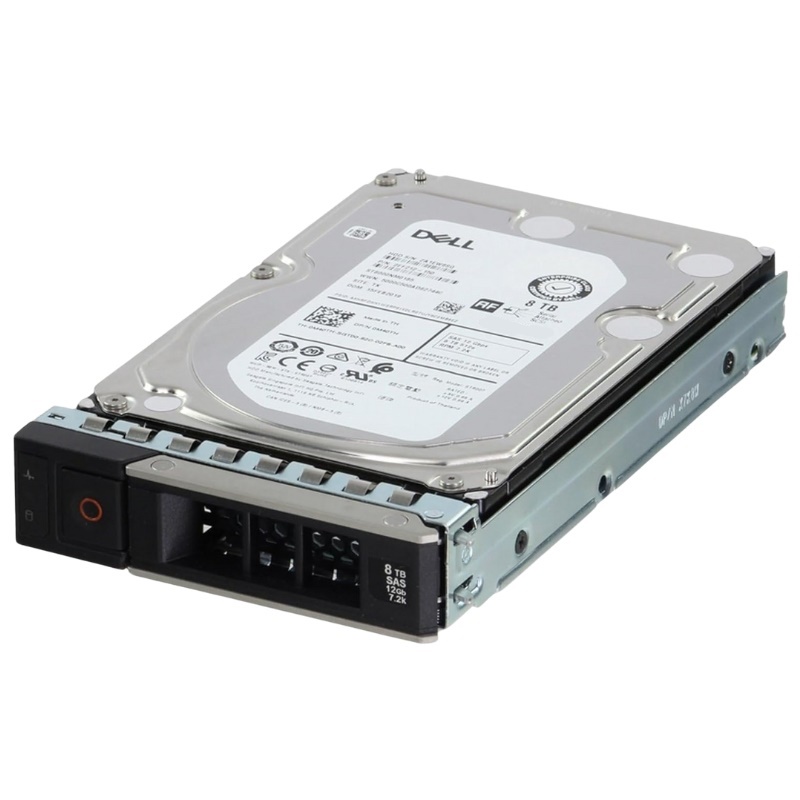


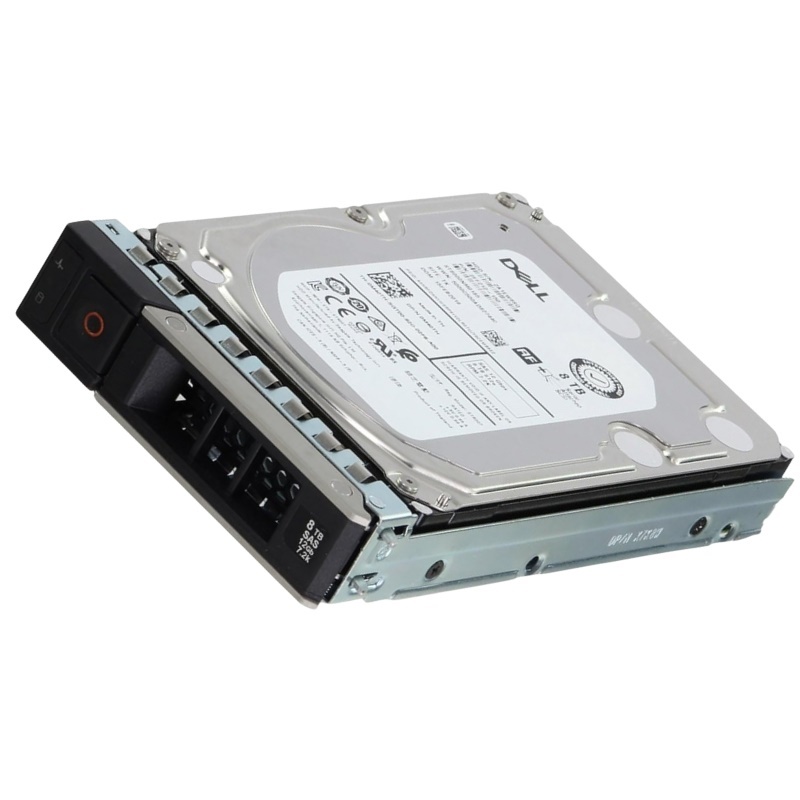
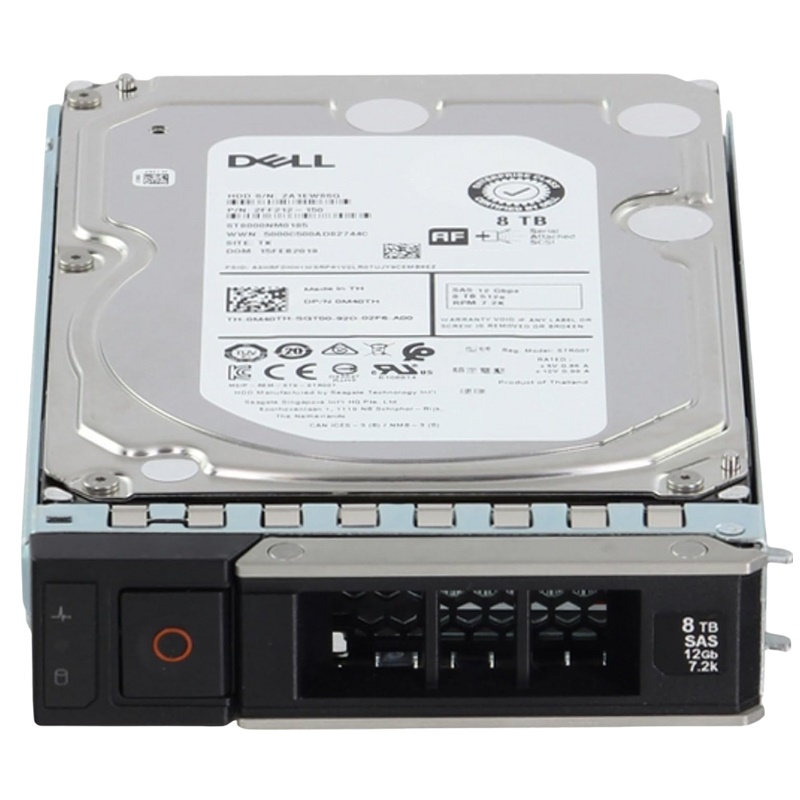
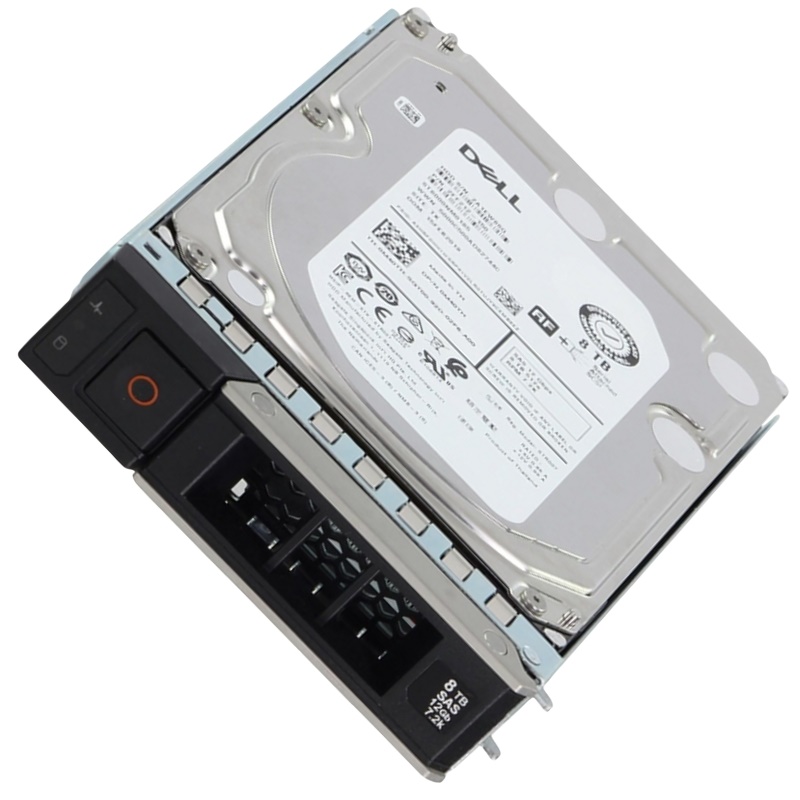
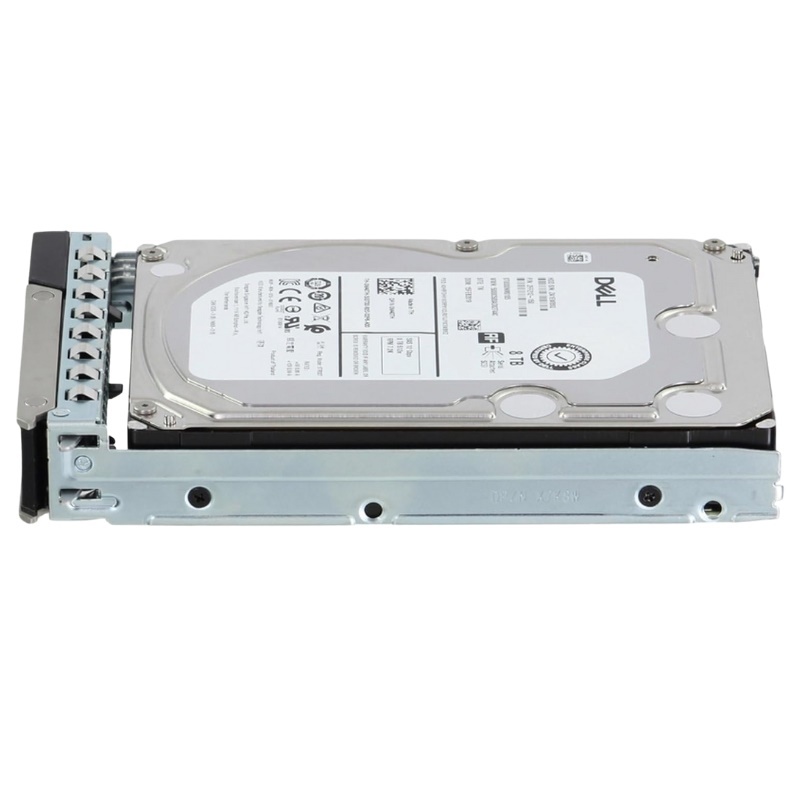
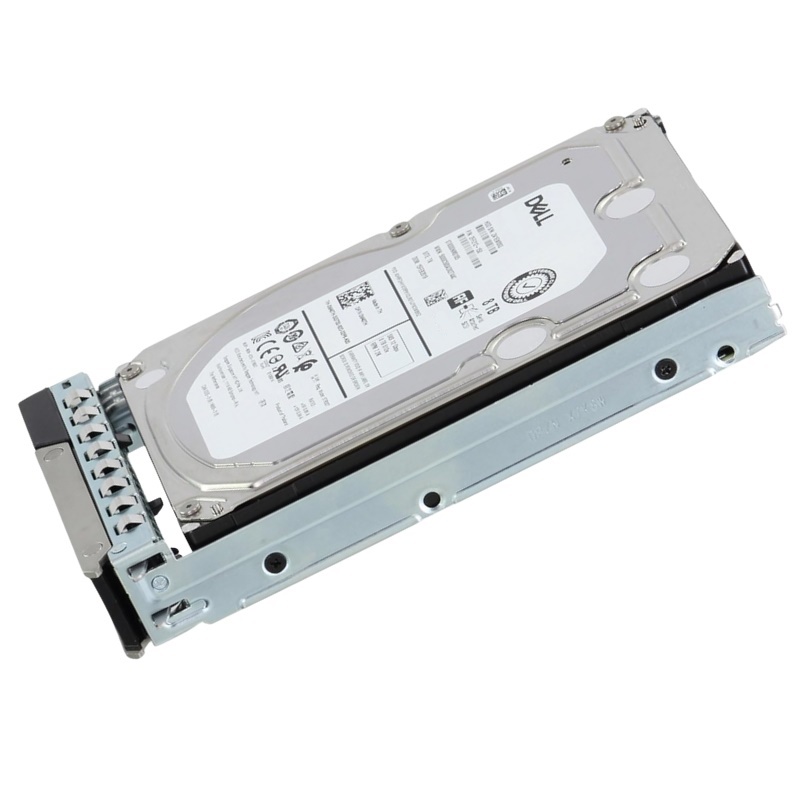
Dell VJDMM 8TB 7.2K RPM Near-line SAS-12GBPS 512e LFF Form Factor Hot-Plug with tray for 14G Poweredge Server Hard Drive Disk. New Sealed in Box (NIB) with 1-Year Replacement Warranty
The Dell VJDMM 8TB hard disk drive is engineered for robust server environments, offering dependable performance and seamless integration with 14th-generation PowerEdge systems.
The Dell VJDMM 8TB 7.2K RPM Near-line SAS-12GBPS 512e LFF Form Factor Hot-Plug with tray for 14G Poweredge Server Hard Drive Disk category represents a dedicated family of enterprise-class storage devices engineered for high-capacity, reliable archive and cold-/warm-tier data storage inside Dell PowerEdge 14G servers. These drives pair a large 8TB near-line platter design with a 7,200 RPM spindle speed and 12Gb/s SAS interface to deliver a balance of capacity, predictable throughput, and proven data integrity features tailored to business storage environments such as backup repositories, object stores, and bulk file systems.
The 12Gb/s SAS interface provides a dual advantage: higher sustained sequential throughput compared with older 6Gb/s interconnects, and enterprise-level command integrity and link robustness. For large-block sequential reads/writes — typical of backup windows and large object transfers — SAS-12Gbps minimizes bottlenecks at the drive interface, enabling higher effective throughput on parallel arrays and RAID groups.
A 7.2K RPM spindle is optimized for near-line workloads where large capacity and sensible energy use are priorities. Paired with 512e (512-byte emulation) sector format, these drives maintain broad OS and hypervisor compatibility while offering the benefits of modern advanced-format recording algorithms. The result: reliable sequential performance and predictable latency for bulk data tasks.
The LFF (3.5") physical profile makes these drives an economical option for maximizing terabytes per chassis in DL and R-series PowerEdge variants that accept 3.5" bays. Hot-plug capability with tray included enables quick field swaps and minimizes downtime during maintenance, which is critical in enterprise environments operating 24/7.
Enterprise hard drives in this category are engineered with multiple reliability features: robust error-correction algorithms, rotational vibration tolerance for dense multi-drive enclosures, thermal sensing, and firmware optimized for sustained sequential loads. These features reduce the probability of unplanned drive failures and help maintain RAID resiliency and rebuild predictability.
These drives are sold and certified to work with Dell PowerEdge 14G server families. That means firmware and hardware compatibility with Dell controllers and backplanes is a design priority; using validated drives helps ensure features like predictive failure analysis, SMART telemetry, and integrated RAID controller reporting work seamlessly. When deploying, confirm that the server BIOS, RAID controller firmware, and HBA firmware are updated to versions recommended by Dell for best interoperability and performance.
Common controller pairings include Dell PERC series hardware RAID controllers and SAS HBAs that expose the drive directly to software-defined storage layers. Typical RAID configurations for 8TB near-line SAS drives include RAID6 for high-capacity arrays with strong redundancy, RAID10 for workloads requiring better random I/O performance at the expense of usable capacity, and larger erasure-coded object stores in software-defined deployments. Always size rebuild windows into your capacity and performance planning and consider spare drive provisioning to accelerate recovery after failures.
Each unit in this category ships with a tray designed for Dell 14G front-loading bays, ensuring tool-less insertion and correct backplane alignment. Follow Dell's hot-swap best practices: confirm the server's RAID controller is in a stable state, offload critical writes, use controller utilities to mark drives as failed or replaceable if required, and monitor rebuild progress via iDRAC or controller management software.
The primary use case for this drive category is backup and archive: secondary copies, deduplicated backup repositories, tape-replacement solutions, and cold storage volumes. When used in deduplicating backup appliances or object archives, these drives enable long retention windows with a reasonable TCO while maintaining acceptable restore throughput for large-data restores.
Media production houses, content distribution systems, and other environments that manage large video, image, or large-file datasets benefit from the large sequential throughput and high capacity. Pair these drives with NAS controllers or software-defined file systems that handle the metadata and file sharing layers.
At web-scale, 8TB near-line drives are often deployed as storage nodes in object clusters where erasure coding provides durability. Because erasure coding spreads data across many drives and nodes, the focus shifts from single-drive speed to network bandwidth and internal disk capacity. These drives minimize the number of server nodes required to reach target capacity goals.
10K and 15K RPM SAS drives offer substantially higher IOPS and lower latency for transactional workloads such as databases and high-performance virtualization. However, they provide less capacity per bay and higher power usage. Use 10K/15K drives where random I/O dominates and choose 8TB near-line SAS drives when capacity efficiency and cost-per-terabyte are the priority.
Enterprise NVMe and SAS SSDs deliver dramatically higher IOPS and far lower latency than spinning media, making them ideal for hot tiers and caching layers. SSDs are substantially more expensive per TB, however — a hybrid approach that pairs SSDs for metadata and hot datasets with 8TB near-line drives for bulk storage often yields the best balance of performance and cost.
Public cloud storage offers infinite elasticity and managed durability but recurring costs and egress charges can make it expensive for long-term, high-volume archives. On-premises 8TB near-line arrays provide predictable one-time capital expenditure and full control over data locality; many organizations adopt a hybrid strategy using on-prem near-line capacity for primary archives and cloud for offsite redundancy or bursting.


 Contact Us
 Information
 Catalog
 Solid State Drives (SSD)
 Network Switches
 Hard Disk Drives
 HBA & Controllers
 PC & Servers
 PC & Server Memory
 CPU & Processors
 Network Routers
 Power Supplies
 Tape Drives & Libraries
 Network Devices
 Computer & Network Cables