
(7% discount is applied at checkout)
Cart is empty
Your go-to destination for cutting-edge server products
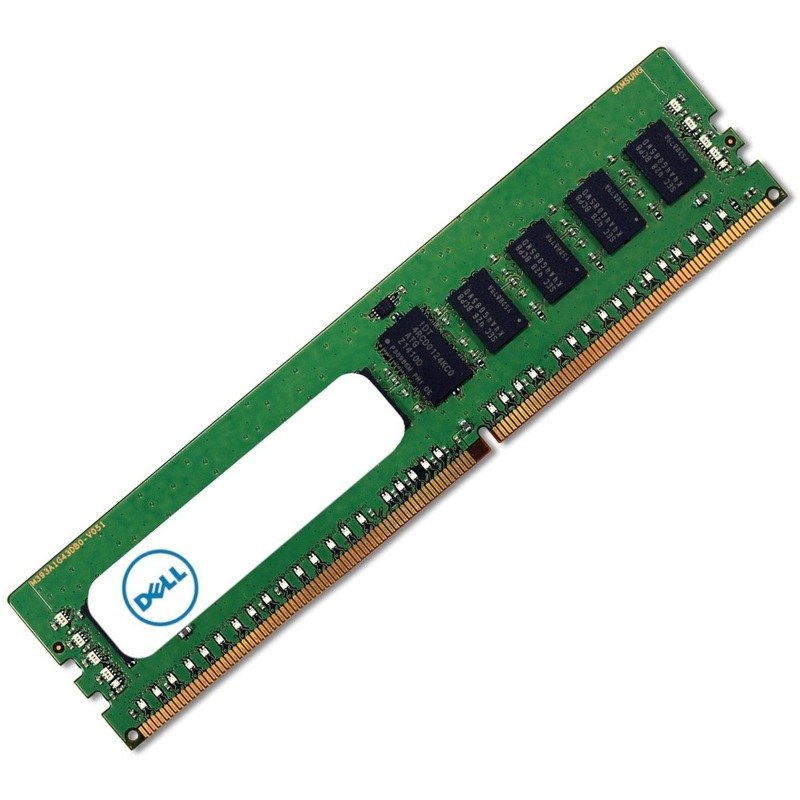
Dell W986F 8GB 667Mhz PC2-5300 240-pin DDR2 ECC Reg SDRAM Ram. New (System) Pull with 1 year replacement warranty
The Dell W986F 8GB DDR2 ECC Registered SDRAM module is a reliable memory upgrade designed for enterprise servers and professional workstations. Built with stability and data integrity in mind, this RAM module ensures consistent performance in mission-critical computing environments.
The Dell W986F 8GB 667MHz PC2-5300 DDR2 ECC Registered SDRAM memory module represents a highly specialized class of enterprise-grade server memory designed for stability, data integrity, and long-term operational consistency. Built for legacy server infrastructures, this module supports environments where reliability is more critical than raw performance gains, particularly in enterprise systems that continue to depend on DDR2 architecture. Its ECC (Error-Correcting Code) capability and registered buffering ensure that data processing remains accurate even under heavy workloads or extended uptime conditions.
This memory module is engineered specifically for compatibility with older Dell PowerEdge server platforms and similar enterprise hardware that requires DDR2 240-pin RDIMM configurations. The Dell W986F 8GB module plays a vital role in maintaining system stability in mission-critical applications, where even minor memory errors can lead to system downtime or data corruption.
DDR2 SDRAM, or Double Data Rate 2 Synchronous Dynamic Random Access Memory, is a second-generation memory technology that improved upon DDR by offering higher clock speeds and improved bus efficiency. The Dell W986F module operates at 667MHz effective frequency, categorized under PC2-5300 standards, delivering balanced throughput for legacy server applications.
The 240-pin configuration ensures compatibility with DDR2 registered server memory slots, while the dual-rank structure enhances memory density and access efficiency. The physical and electrical design is optimized for server environments where multiple memory modules operate simultaneously under sustained workloads.
One of the key design aspects of this module is its registered (buffered) architecture. Registered memory inserts a buffer between the DRAM modules and the system memory controller, reducing electrical load and improving signal integrity. This allows servers to support larger memory capacities without compromising stability.
In enterprise systems, especially those running virtualization or database workloads, registered memory is essential for scaling memory beyond unbuffered limitations. The Dell W986F module leverages this design to maintain reliable operation even in high-density configurations.
Operating at 667MHz, the Dell W986F memory module delivers a theoretical peak bandwidth aligned with the PC2-5300 specification, approximately 5.3 GB/s per channel. While this may appear modest compared to modern DDR4 or DDR5 modules, it remains highly effective for legacy servers optimized around DDR2 architecture.
The performance of this memory module is not solely defined by speed but by consistency and predictability. In enterprise workloads such as file serving, application hosting, and database management, stable throughput is more valuable than peak burst performance.
DDR2 memory typically operates with higher latency compared to newer memory standards. However, in systems designed for DDR2, the memory controller and chipset are optimized to handle these latencies efficiently. The Dell W986F module ensures balanced timing parameters that align with server chipset expectations, reducing bottlenecks in multi-threaded workloads.
Latency stability is particularly important in environments where multiple virtual machines or services access memory concurrently. The registered design further helps reduce electrical instability, indirectly contributing to consistent latency behavior.
ECC memory is a critical feature in server-grade modules like the Dell W986F. It is designed to detect and correct single-bit memory errors automatically, ensuring that data corruption does not propagate through system processes. In enterprise environments, even minor memory errors can result in system crashes, corrupted databases, or failed transactions.
The ECC mechanism continuously monitors data integrity during read and write operations. When an error is detected, it is corrected in real-time without interrupting system performance. This makes ECC memory essential for financial systems, cloud infrastructure, and enterprise databases.
The Dell W986F module’s ECC capability ensures that servers maintain uptime even under heavy computational stress. This is especially valuable in environments where redundancy and fault tolerance are key design principles. By preventing silent data corruption, ECC memory significantly enhances system trustworthiness.
In long-running server deployments, ECC memory reduces the likelihood of system-level failures caused by memory degradation or electrical interference, which can become more common in aging hardware environments.
Registered DIMMs like the Dell W986F are specifically designed to support higher memory scalability in server motherboards. The register chip on the module helps manage command and address signals, reducing the electrical load on the memory controller.
This enables servers to install larger quantities of RAM without exceeding electrical limitations, making RDIMM modules essential for systems requiring expanded memory capacity.
By isolating memory chips from the memory controller, registered memory reduces signal interference and improves stability. This is particularly beneficial in environments running virtualization platforms, ERP systems, or large-scale data processing applications.
The Dell W986F module ensures that multiple memory modules can coexist within the same system without causing signal degradation, which is a common limitation in unbuffered memory configurations.
The Dell W986F 8GB DDR2 module is primarily intended for use in Dell PowerEdge servers and other enterprise-grade systems that support DDR2 ECC registered memory. These systems are often deployed in legacy enterprise environments where hardware upgrades are performed incrementally rather than through full system replacement.
Compatibility is a key factor when selecting server memory. The W986F module ensures seamless integration with supported chipsets, BIOS configurations, and memory controllers designed for DDR2 RDIMM architecture.
Many enterprise servers utilize multi-channel memory architectures to increase throughput. The Dell W986F module is optimized to function within these architectures, ensuring balanced memory distribution across channels and maintaining system efficiency.
Proper memory population strategies in supported servers ensure maximum performance and stability, especially when combining multiple 8GB modules in symmetrical configurations.
The Dell W986F module follows the standard 240-pin DDR2 DIMM layout, ensuring compatibility with server motherboards designed for this generation of memory. It operates at a standard voltage of 1.8V, which is typical for DDR2 SDRAM technology.
The physical layout is engineered to ensure efficient heat distribution and stable electrical contact between the memory module and motherboard slot. The gold-plated connectors provide reliable conductivity and long-term durability.
Although DDR2 modules consume more power compared to modern memory standards, their thermal output remains manageable in properly ventilated server environments. The Dell W986F module is designed to operate continuously under sustained loads without thermal throttling.
Server chassis airflow systems play a significant role in maintaining optimal memory temperatures, ensuring consistent performance over extended periods of uptime.
The Dell W986F memory module is widely used in legacy data centers that continue to operate DDR2-based servers. These environments often support critical applications that have not yet migrated to newer hardware platforms due to compatibility or cost considerations.
Maintaining such infrastructure requires reliable replacement components, and DDR2 ECC RDIMM modules like the W986F are essential for sustaining operational continuity.
Despite being a legacy technology, DDR2-based servers can still support lightweight virtualization workloads. The Dell W986F module provides sufficient memory capacity for hosting multiple virtual machines in controlled environments.
Application hosting systems that rely on stable memory performance rather than high-speed throughput benefit significantly from ECC and registered memory features.
While modern computing has largely transitioned to DDR4 and DDR5 technologies, DDR2 ECC registered memory continues to hold value in specialized environments. The Dell W986F module represents a critical bridge technology for sustaining older infrastructure.
Its value lies not in raw speed but in compatibility, stability, and system continuity, making it indispensable for maintaining legacy enterprise operations.
Organizations often choose to extend the life of existing servers rather than invest in full infrastructure replacement. The Dell W986F module enables cost-effective upgrades, allowing systems to remain functional without major capital expenditure.
This approach is particularly common in industries where system migration requires extensive testing and certification processes.


 Contact Us
 Information
 Catalog
 Solid State Drives (SSD)
 Network Switches
 Hard Disk Drives
 HBA & Controllers
 PC & Servers
 PC & Server Memory
 CPU & Processors
 Network Routers
 Power Supplies
 Tape Drives & Libraries
 Network Devices
 Computer & Network Cables