(7% discount is applied at checkout)
Cart is empty
Your go-to destination for cutting-edge server products


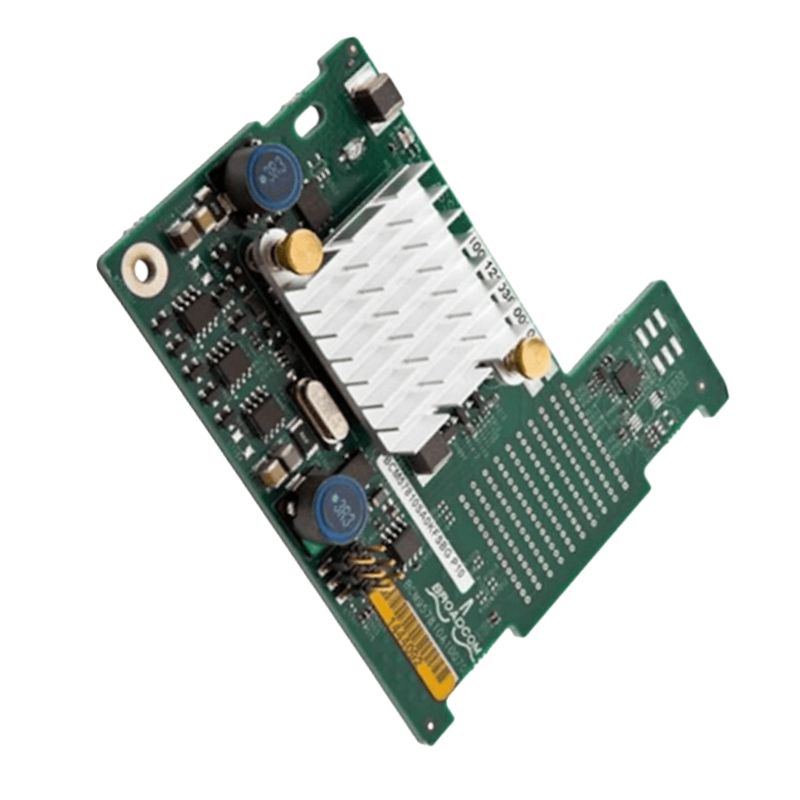
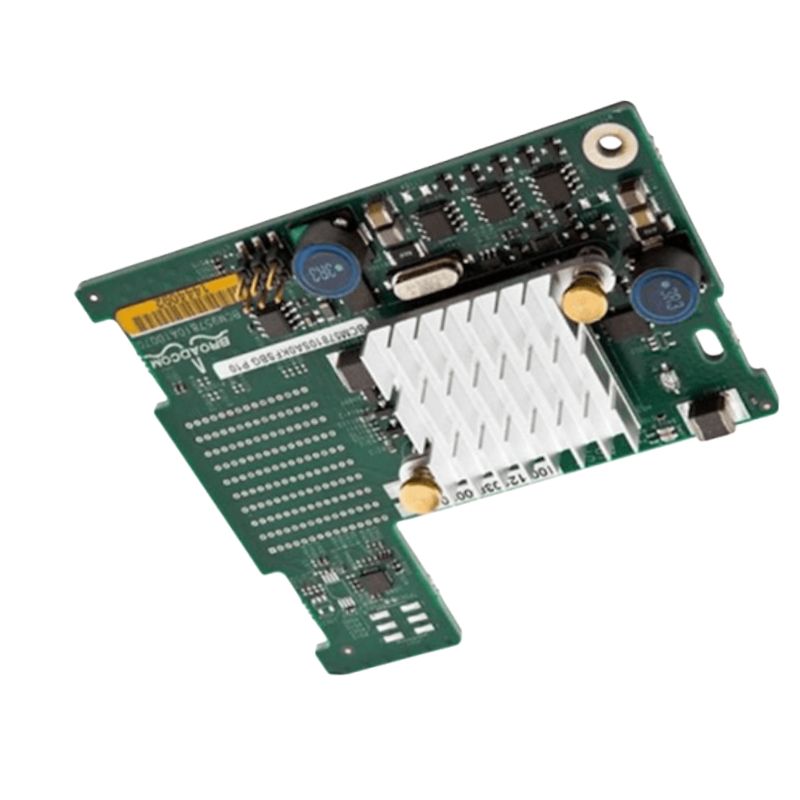
Dell C2VP4 X520-KR2 10GB Ethernet X 2 Network Adapters. Excellent Refurbished with 1 year replacement warranty
The C2VP4 Dell X520-KR2 10GB Ethernet X 2 Network Adapters category represents a high-performance class of dual-port 10 Gigabit Ethernet networking solutions designed for enterprise-grade computing environments. These adapters are engineered to support modern data center workloads, virtualization infrastructures, high-throughput server communication, and low-latency networking requirements. Built on Intel’s trusted Ethernet controller architecture and optimized by Dell for compatibility and stability, the X520-KR2 dual-port configuration enables scalable, resilient, and efficient network performance across a wide range of server deployments.
Storage & Virtualization Offloads
Certified Server Chassis Compatibility
As organizations continue to expand cloud computing, virtualization, and high-speed data processing workloads, demand for reliable 10GbE network adapters like the C2VP4 Dell X520-KR2 continues to grow. These adapters are widely used in enterprise servers, storage systems, and blade architectures where consistent bandwidth, low latency, and redundancy are critical. With dual SFP+ ports, this category supports flexible optical or direct-attach copper connectivity, making it suitable for both short-range and long-distance network topologies.
The C2VP4 Dell X520-KR2 network adapters are built around a dual-port Intel 82599 controller, a widely adopted chipset known for stability, virtualization support, and advanced networking features. Each port supports 10 Gigabit Ethernet throughput, enabling aggregate bandwidth scaling up to 20Gbps per adapter. This dual-port configuration is particularly valuable in environments where traffic segmentation, redundancy, or link aggregation is required.
Designed for PCI Express (PCIe) architecture, these adapters typically operate on PCIe 2.0 or higher interfaces, ensuring compatibility with modern server motherboards. The architecture supports high packet processing rates, reduced CPU overhead, and efficient offloading capabilities. This makes the adapter ideal for virtualized environments where multiple virtual machines require simultaneous network access without performance degradation.
One of the defining characteristics of the C2VP4 Dell X520-KR2 10GB Ethernet X 2 Network Adapters is its ability to deliver consistent high-speed data transfer under heavy workloads. The dual 10GbE ports allow for link aggregation (LACP), which combines both ports into a single logical connection for increased throughput and redundancy. This ensures that mission-critical applications continue operating smoothly even during partial network failures.
Performance optimization features include support for jumbo frames, checksum offloading, segmentation offloading, and interrupt moderation. These features significantly reduce CPU utilization while improving packet processing efficiency. In high-density virtualization environments such as VMware ESXi, Microsoft Hyper-V, or KVM-based infrastructures, these capabilities allow servers to maintain high VM density without network congestion.
Low latency is a key requirement in modern data centers, especially for financial trading systems, real-time analytics, and cloud-based applications. The X520-KR2 architecture minimizes latency through optimized firmware processing, hardware offloading, and efficient PCIe communication. This ensures that data packets are transmitted and received with minimal delay, supporting time-sensitive workloads.
The dual-port 10GbE configuration enables simultaneous data streams, which is critical for applications such as distributed storage systems, backup operations, and large-scale database synchronization. By leveraging both ports, organizations can maximize bandwidth utilization and reduce network bottlenecks across server clusters.
The C2VP4 Dell X520-KR2 adapters are widely adopted in virtualization environments due to their robust support for virtual machine networking features. Technologies such as SR-IOV (Single Root Input/Output Virtualization) enable the physical network interface to be partitioned into multiple virtual functions, each of which can be assigned to different virtual machines. This dramatically improves network efficiency in virtualized infrastructures.
Cloud computing environments benefit significantly from these adapters, particularly in private cloud and hybrid cloud architectures. The ability to handle multiple concurrent connections with consistent performance makes them ideal for scalable workloads. Whether deployed in OpenStack environments or enterprise VMware clusters, these adapters ensure predictable network behavior.
SR-IOV support allows administrators to bypass traditional hypervisor networking stacks, reducing overhead and increasing throughput. Each virtual function operates independently, ensuring that network traffic is isolated and secure between virtual machines. This enhances both performance and security in multi-tenant environments.
The Dell X520-KR2 series is compatible with major hypervisors including VMware ESXi, Microsoft Hyper-V, and various Linux-based KVM distributions. This broad compatibility ensures seamless integration into existing data center infrastructures without requiring significant reconfiguration or additional drivers in many cases.
The C2VP4 Dell X520-KR2 10GB Ethernet X 2 Network Adapters category is designed for a wide range of enterprise networking applications. These include data center interconnects, storage area networks (SAN), high-performance computing clusters, and virtualization host connectivity. The flexibility of dual SFP+ ports allows IT administrators to configure redundant or load-balanced network paths depending on operational requirements.
In storage-heavy environments, such as those using iSCSI or NFS protocols, these adapters ensure stable and high-speed communication between storage arrays and compute nodes. This is particularly important for enterprises managing large datasets, virtual machine images, or real-time analytics pipelines.
In modern data centers, scalability and redundancy are critical. The X520-KR2 adapters provide both by allowing multiple network configurations such as active-active or active-passive failover setups. This ensures uninterrupted service delivery even in the event of hardware or link failure.
High-performance computing environments require extremely fast and reliable inter-node communication. These adapters support such workloads by providing consistent low-latency data exchange between compute nodes, making them suitable for scientific simulations, AI model training, and large-scale computational tasks.
Dell’s implementation of the X520-KR2 dual-port 10GbE adapter ensures high durability and long-term operational stability. Built for rack-mounted servers and enterprise chassis, these adapters are designed to operate continuously under high thermal and network loads. The physical design includes efficient heat dissipation mechanisms to maintain optimal performance even in dense server environments.
The SFP+ interface provides flexibility in selecting transceivers based on deployment needs. Users can choose between fiber optic modules for long-distance communication or direct attach copper (DAC) cables for short-range, cost-effective connectivity within data centers.
Network administrators benefit from extensive configuration options available with the C2VP4 Dell X520-KR2 adapters. These include VLAN tagging, link aggregation control protocol (LACP), QoS prioritization, and advanced traffic filtering. These features enable precise control over network traffic flow and prioritization across enterprise systems.
VLAN support allows organizations to segment network traffic logically without requiring separate physical infrastructure. This improves security and efficiency by isolating sensitive workloads from general traffic while maintaining high-speed connectivity.
Load balancing across dual ports ensures optimal distribution of network traffic, reducing congestion and improving response times. In failover configurations, if one port fails, the secondary port automatically takes over, ensuring uninterrupted connectivity.
Despite its high-performance capabilities, the Dell X520-KR2 adapter is designed with energy efficiency in mind. Advanced power management features help reduce energy consumption during low traffic periods without compromising performance when demand increases. This balance is crucial for large-scale data centers where power efficiency directly impacts operational costs.
Thermal efficiency is also a key consideration. The adapter is engineered to operate within strict temperature thresholds, ensuring stability in dense server environments where airflow may be limited. This enhances hardware longevity and reduces maintenance requirements over time.
The C2VP4 Dell X520-KR2 10GB Ethernet X 2 Network Adapters category offers exceptional deployment flexibility. Whether used in entry-level enterprise servers or high-end data center clusters, these adapters scale easily with increasing network demands. Organizations can deploy multiple adapters per server to further increase bandwidth capacity and redundancy.
Scalability is further enhanced through compatibility with modern networking architectures such as software-defined networking (SDN). This allows centralized management of network resources, improving agility and reducing administrative overhead.
As data centers evolve toward automation and orchestration-driven environments, these adapters remain fully compatible with SDN controllers and automated provisioning systems. This ensures seamless integration into next-generation IT infrastructures.


 Contact Us
 Information
 Catalog
 Solid State Drives (SSD)
 Network Switches
 Hard Disk Drives
 HBA & Controllers
 PC & Servers
 PC & Server Memory
 CPU & Processors
 Network Routers
 Power Supplies
 Tape Drives & Libraries
 Network Devices
 Computer & Network Cables