(7% discount is applied at checkout)
Cart is empty
Your go-to destination for cutting-edge server products


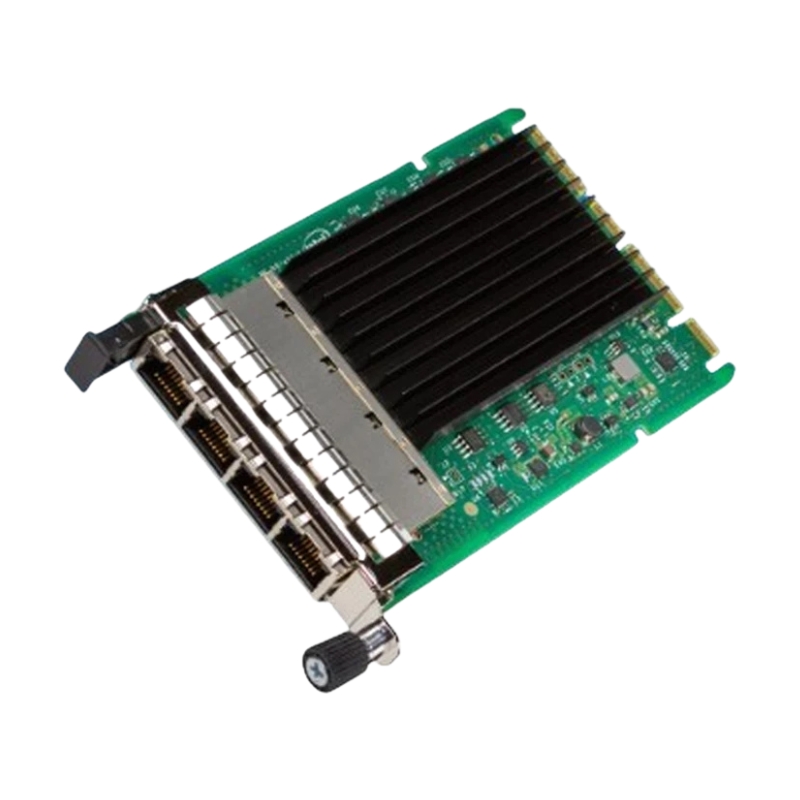
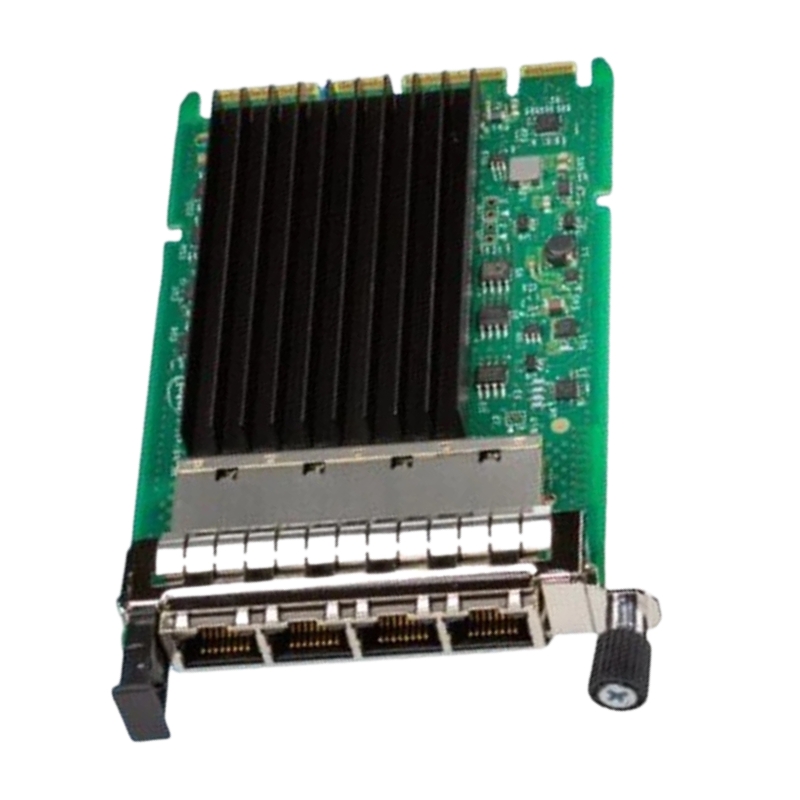
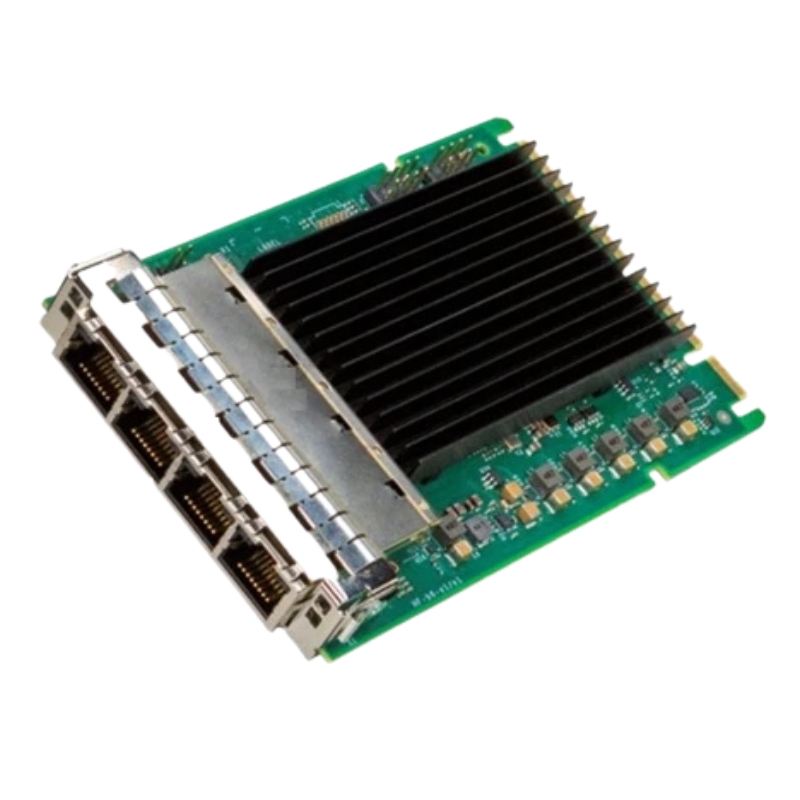
Dell 540-BFCC Intel X710T4LOCPV3 Ethernet X710-T4L OCP PCI-E 4 Ports Network Adapters. New Sealed in Box (NIB) with 1-Year Replacement Warranty
The Dell 540-BFCC Intel X710-T4L OCP network adapter is a high-performance enterprise networking solution designed to deliver flexible multi-speed Ethernet connectivity for modern data centers. Built on Intel X710 architecture, this 4-port PCIe network interface card provides scalable, efficient, and reliable connectivity for virtualization, cloud computing, storage networking, and enterprise workloads.
The Dell 540-BFCC Intel X710-T4LOCPV3 Ethernet adapter represents a high-performance, enterprise-grade networking solution designed for modern data center environments requiring scalable bandwidth, advanced virtualization support, and reliable multi-port connectivity. Built on the Intel X710-T4L controller architecture and designed in an OCP (Open Compute Project) form factor, this network adapter delivers four independent 10 Gigabit Ethernet ports, enabling dense network consolidation, improved throughput efficiency, and reduced latency across enterprise workloads. It is engineered for Dell PowerEdge server ecosystems and optimized for cloud computing, virtualization clusters, and storage-heavy applications.
The Dell 540-BFCC Intel X710-T4LOCPV3 adapter is built on a robust architectural foundation that prioritizes scalability and performance stability. At its core, the Intel X710 chipset integrates advanced packet processing capabilities that support high-density traffic management and intelligent offloading features. This ensures that server CPUs are not overburdened by networking tasks, allowing compute resources to focus on application workloads rather than packet handling overhead.
The Intel X710 controller is widely recognized in enterprise networking environments for its efficiency and versatility. It supports multiple virtualization technologies, including SR-IOV (Single Root Input/Output Virtualization), which enables the creation of multiple virtual network interfaces from a single physical port. This capability significantly improves workload isolation and performance in virtualized infrastructures.
The controller also supports advanced offload features such as TCP segmentation offload, large receive offload, and checksum offloading, which collectively reduce CPU utilization and enhance data throughput consistency under heavy traffic conditions.
Performance optimization in the Dell 540-BFCC Intel X710-T4LOCPV3 is achieved through intelligent hardware acceleration mechanisms. These include packet classification engines, flow director technology, and adaptive interrupt moderation, all of which contribute to a highly efficient networking environment capable of handling mixed workloads with minimal latency variation.
The Open Compute Project (OCP) mezzanine form factor used in the Dell 540-BFCC adapter is specifically designed for hyperscale data center architectures. Unlike traditional PCIe add-in cards, OCP NICs are designed for optimized airflow, reduced cabling complexity, and simplified serviceability within dense server chassis.
The OCP design allows the Dell 540-BFCC adapter to be installed in compatible Dell PowerEdge servers without occupying standard PCIe slot space. This enables more flexible system configurations where multiple high-speed networking adapters can be deployed without compromising internal expansion capabilities.
In environments where rack density and thermal efficiency are critical, the OCP form factor contributes significantly to reducing system bottlenecks and improving airflow management within server enclosures.
Thermal efficiency is a key consideration in high-performance networking hardware. The Dell 540-BFCC Intel X710-T4LOCPV3 is engineered to maintain optimal operating temperatures even under sustained network loads. The reduced physical footprint and optimized airflow paths of the OCP design help minimize thermal accumulation, which in turn enhances long-term hardware reliability and performance stability.
One of the defining features of the Dell 540-BFCC Intel X710-T4LOCPV3 adapter is its four independent 10 Gigabit Ethernet ports. These ports provide aggregated bandwidth capabilities that support high-throughput data transfer environments such as virtualization clusters, distributed storage systems, and high-performance computing workloads.
Redundancy is a critical component in enterprise networking design. The Dell 540-BFCC adapter supports failover configurations that allow uninterrupted network connectivity in the event of a port or link failure. This ensures high availability for mission-critical applications and minimizes downtime risks in production environments.
Modern data centers increasingly rely on virtualization technologies to maximize resource utilization. The Dell 540-BFCC Intel X710-T4LOCPV3 Ethernet adapter is specifically optimized for virtualized environments, supporting hypervisors such as VMware ESXi, Microsoft Hyper-V, and Linux KVM.
SR-IOV technology enables the creation of multiple virtual functions from a single physical network interface. This allows virtual machines to access dedicated network resources with near-native performance, significantly reducing latency and improving throughput consistency.
Network isolation is essential in multi-tenant environments. By leveraging virtual functions, administrators can ensure that each virtual machine operates within its own dedicated network channel, reducing interference and improving security boundaries across shared infrastructure.
The Dell 540-BFCC Intel X710-T4LOCPV3 adapter incorporates multiple hardware-based offloading technologies designed to reduce CPU overhead. These offloads include checksum processing, segmentation tasks, and packet classification operations that are handled directly by the network adapter rather than the host CPU.
By offloading repetitive networking tasks to dedicated hardware, the adapter reduces system latency and improves response times for network-intensive applications. This is particularly beneficial in environments such as financial trading platforms, cloud computing services, and real-time analytics systems.
The Dell 540-BFCC Intel X710-T4LOCPV3 Ethernet adapter is widely deployed across various enterprise and hyperscale environments. Its flexible architecture makes it suitable for cloud service providers, enterprise virtualization clusters, storage area networks, and high-performance computing infrastructures.
In cloud environments, the need for scalable and reliable network interfaces is critical. This adapter supports dynamic workload scaling and efficient traffic segmentation, making it ideal for cloud service providers managing multi-tenant infrastructures.
The adapter supports high-speed connectivity required for storage networking protocols such as iSCSI and NAS-based deployments. This ensures fast and reliable data transfer between compute nodes and storage arrays, improving overall system efficiency.
High-performance computing systems require extremely low latency and high throughput networking capabilities. The Dell 540-BFCC adapter meets these requirements through its multi-port architecture and advanced packet processing capabilities, ensuring stable performance under computationally intensive workloads.
Security is an essential aspect of enterprise networking, and the Dell 540-BFCC Intel X710-T4LOCPV3 incorporates several hardware and software-based security features. These include packet filtering capabilities, secure boot support in compatible systems, and VLAN segmentation for traffic isolation.
Virtual LAN (VLAN) support enables administrators to logically segment network traffic within a physical infrastructure. This enhances security, improves traffic management, and reduces congestion in shared environments.
Advanced traffic monitoring capabilities allow administrators to analyze network performance in real time. This helps in identifying bottlenecks, optimizing bandwidth allocation, and maintaining consistent service quality across all connected systems.
The Dell 540-BFCC Intel X710-T4LOCPV3 Ethernet adapter is specifically engineered for integration with Dell PowerEdge servers that support OCP NIC configurations. This ensures seamless compatibility, simplified deployment, and optimized driver support within enterprise environments.
Dell provides optimized firmware and driver packages that ensure maximum performance and stability when using this adapter in supported server platforms. These optimizations enhance compatibility with enterprise operating systems and virtualization platforms.
As enterprise networking demands continue to evolve, scalability becomes a critical factor in hardware selection. The Dell 540-BFCC Intel X710-T4LOCPV3 Ethernet adapter is designed with future-ready capabilities that support evolving network standards and increasing bandwidth requirements.
With four independent 10GbE ports, this adapter provides the flexibility needed for network expansion in high-density environments. Organizations can scale their infrastructure without requiring extensive hardware redesigns.
Modern workloads such as containerized applications, microservices architectures, and distributed computing frameworks require highly adaptable networking solutions. This adapter provides the performance consistency and flexibility required to support these evolving technologies.


 Contact Us
 Information
 Catalog
 Solid State Drives (SSD)
 Network Switches
 Hard Disk Drives
 HBA & Controllers
 PC & Servers
 PC & Server Memory
 CPU & Processors
 Network Routers
 Power Supplies
 Tape Drives & Libraries
 Network Devices
 Computer & Network Cables