(7% discount is applied at checkout)
Cart is empty
Your go-to destination for cutting-edge server products


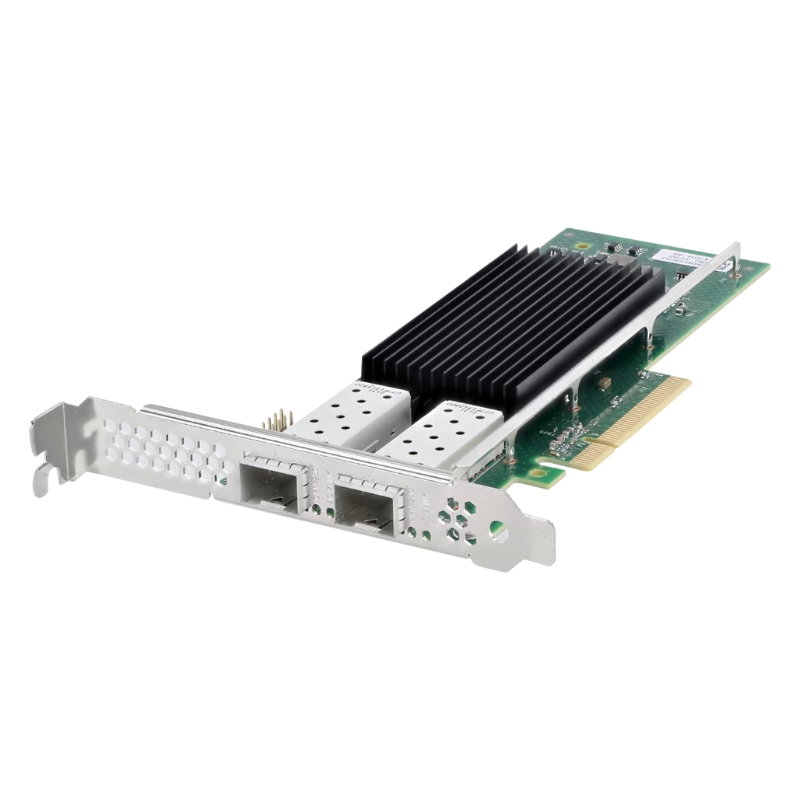
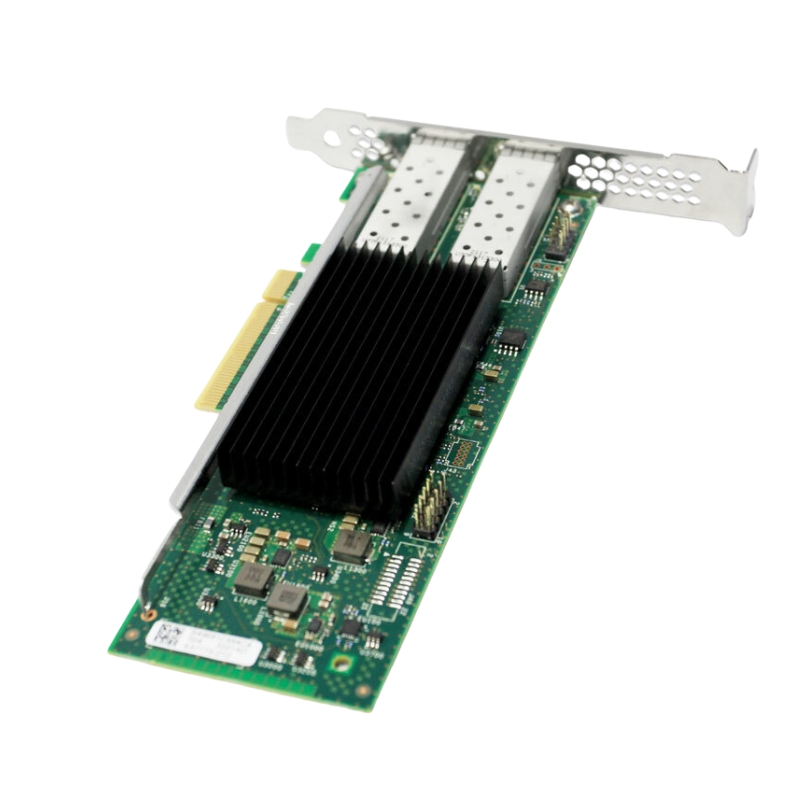
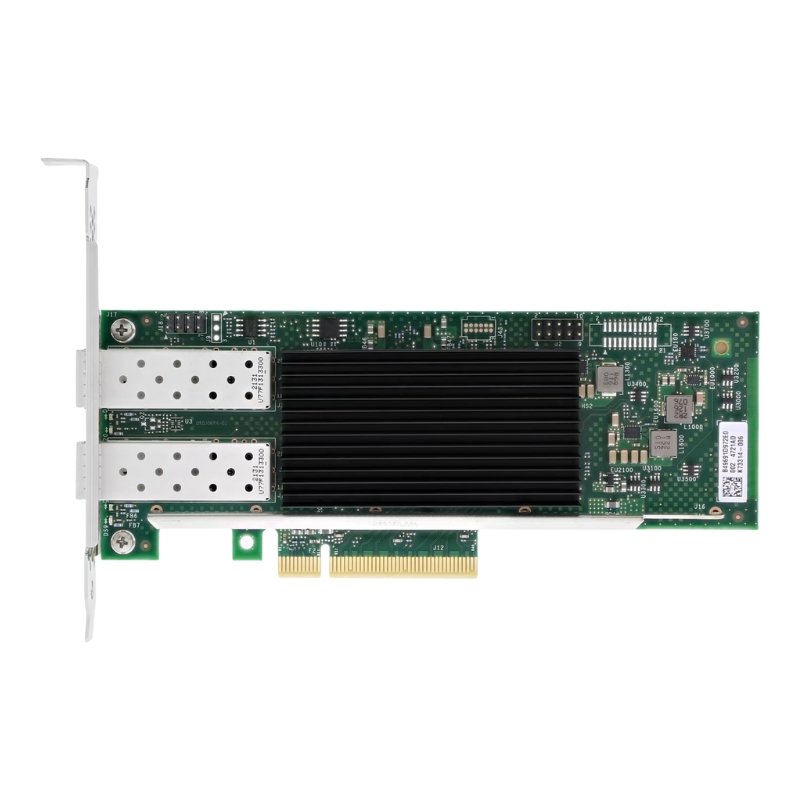
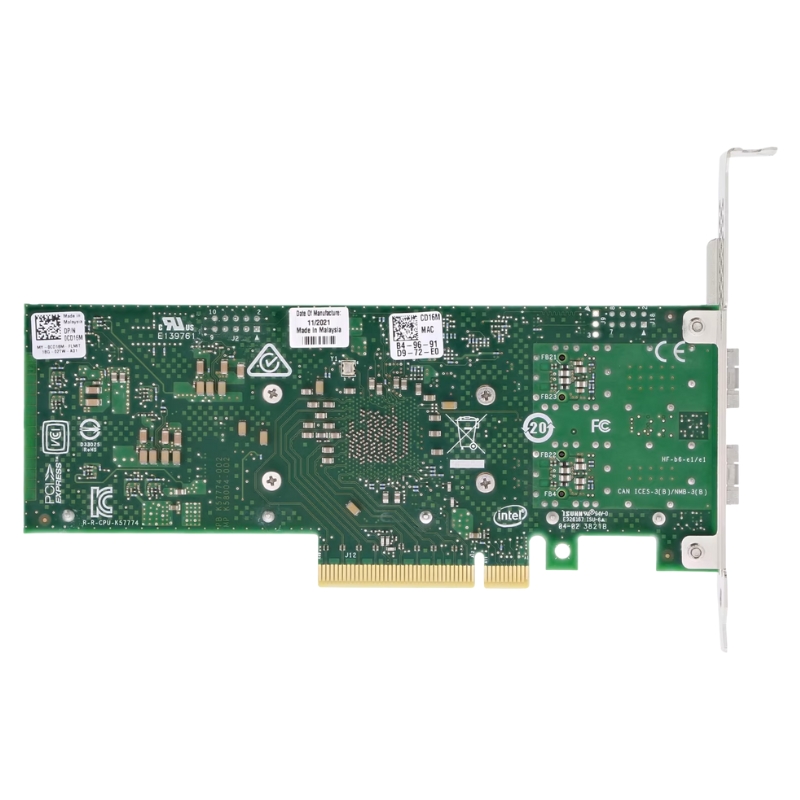
Dell XN7J8 Intel E810-CQDA2T Without GNSS PCIe 3.0 X16 PCIe 4.0 X16 QSFP28 2 Ports Ethernet Network Adapter. Excellent Refurbished with 1 Year Replacement Warranty
The Dell XN7J8 Intel E810-CQDA2T Converged Network Adapter is a high-performance enterprise solution designed for modern data centers. Featuring dual QSFP28 ports and PCIe 4.0 x16 compatibility, this adapter delivers ultra-fast throughput, advanced offloading, and precise timing synchronization for mission-critical workloads.
The Dell XN7J8 Intel E810-CQDA2T Without GNSS PCIe network adapter represents a premium-class Ethernet connectivity solution engineered for next-generation data centers, cloud infrastructures, and high-performance computing environments. Built on the Intel Ethernet 800 Series architecture, this dual-port QSFP28 network interface card delivers scalable bandwidth, ultra-low latency communication, and advanced hardware acceleration capabilities designed to meet the increasing demands of modern enterprise workloads. As organizations transition toward distributed computing, virtualization-heavy environments, and AI-driven analytics, the need for robust and adaptable network adapters becomes critical, and this category of PCIe-based Ethernet adapters fulfills that requirement with precision and reliability.
Positioned within enterprise-grade server networking solutions, this adapter supports both PCIe 3.0 x16 and PCIe 4.0 x16 interfaces, enabling flexible deployment across legacy and modern server platforms. The design ensures compatibility across a wide range of Dell PowerEdge servers while maintaining optimal throughput performance when integrated into high-density computing clusters. Its QSFP28 interface enables high-speed 100GbE connectivity, making it suitable for backbone networking, aggregation layers, and high-throughput storage access networks.
At the core of the Dell XN7J8 adapter lies the Intel E810-CQDA2T controller, a part of the Intel Ethernet 800 Series, which is designed to deliver high-performance packet processing with advanced offloading capabilities. The architecture is optimized for multi-core processor systems, ensuring efficient distribution of network processing tasks across CPU resources. This reduces bottlenecks in virtualized environments and improves overall system responsiveness in data-intensive applications.
The adapter integrates an advanced packet processing engine capable of handling large-scale data flows with minimal CPU intervention. It supports intelligent load balancing, flow steering, and hardware-based packet classification, ensuring that network traffic is distributed efficiently across compute resources. This architecture is particularly beneficial for environments running containerized workloads and microservices-based applications where consistent packet delivery and low jitter are essential.
Hardware acceleration is a defining feature of this category of network adapters. The Dell XN7J8 supports offloading functions such as TCP segmentation offload, checksum offload, and RDMA over Converged Ethernet (RoCE). These features significantly reduce CPU overhead and enhance throughput consistency. The result is improved application performance in latency-sensitive workloads such as financial trading platforms, real-time analytics systems, and distributed database clusters.
The dual QSFP28 ports integrated into the Dell XN7J8 adapter provide a combined bandwidth capacity capable of supporting up to 200GbE aggregate throughput under optimal configurations. Each QSFP28 port supports 100GbE connectivity, allowing for flexible network design strategies including link aggregation, redundancy configurations, and segmented traffic routing. This dual-port architecture ensures that enterprise systems can maintain continuous network availability even in the event of a single link failure.
QSFP28 interfaces are designed to support both optical fiber transceivers and direct attach copper (DAC) cables, providing deployment flexibility across different data center topologies. This adaptability allows network administrators to design cost-efficient or high-performance connectivity solutions depending on operational requirements. Fiber-based connections are typically used for long-distance interconnects between racks or data center halls, while DAC cables are preferred for short-range, low-latency server-to-switch connections.
The dual-port design also enables advanced link aggregation techniques that enhance bandwidth utilization and provide failover protection. In enterprise environments where uptime is critical, redundancy ensures uninterrupted service delivery. The adapter’s architecture supports dynamic failover mechanisms that automatically reroute traffic in case of link degradation or hardware faults.
One of the key advantages of the Dell XN7J8 Intel E810-CQDA2T adapter is its support for both PCIe 3.0 x16 and PCIe 4.0 x16 interfaces. This dual compatibility ensures seamless deployment across a wide range of server generations, from legacy infrastructure to the latest high-throughput compute platforms. PCIe 4.0 provides significantly higher bandwidth compared to PCIe 3.0, allowing the network adapter to fully utilize its 100GbE capabilities without bottlenecks.
The PCIe 4.0 x16 interface effectively doubles the per-lane throughput compared to PCIe 3.0, which is essential for maintaining full-duplex 100GbE performance on dual ports. This ensures that network-intensive applications such as large-scale virtualization clusters, cloud storage systems, and AI training workloads can operate without data transfer limitations imposed by the bus interface.
Despite its advanced capabilities, the adapter maintains backward compatibility with PCIe 3.0 x16 slots, allowing organizations to upgrade network performance without replacing entire server infrastructures. This flexibility reduces total cost of ownership while enabling gradual infrastructure modernization. It is particularly valuable in hybrid environments where legacy systems coexist with modern compute nodes.
In cloud computing environments, the Dell XN7J8 adapter plays a critical role in ensuring high-speed data transfer between virtual machines, storage clusters, and distributed application nodes. Its low-latency architecture enhances the performance of cloud-native applications that rely heavily on east-west traffic within data centers. The ability to handle massive concurrent connections makes it suitable for multi-tenant cloud platforms where resource isolation and efficiency are essential.
High-performance computing environments require deterministic network performance with minimal jitter and maximum throughput. The Intel E810-CQDA2T-based adapter provides RDMA support and hardware offloading features that significantly improve inter-node communication speeds. This is essential for scientific simulations, AI model training, and large-scale computational modeling tasks where data exchange speed directly impacts processing efficiency.
Modern storage architectures such as NVMe over Fabrics (NVMe-oF) require extremely high bandwidth and low latency network paths. The Dell XN7J8 adapter ensures stable connectivity for storage replication, backup operations, and distributed file system synchronization. Its ability to handle sustained high-throughput traffic makes it suitable for enterprise storage fabrics where data integrity and speed are equally important.
The adapter supports Single Root Input/Output Virtualization (SR-IOV), enabling multiple virtual machines to share a single physical network interface while maintaining near-native performance. This capability is essential in virtualized environments where resource efficiency and isolation are key priorities. Each virtual function can be assigned dedicated bandwidth and queue resources, ensuring predictable network performance across workloads.
Software-defined networking environments benefit significantly from the programmable features of the Intel E810-CQDA2T controller. It supports dynamic traffic management, policy-based routing, and integration with modern SDN controllers. This allows administrators to automate network configuration and optimize traffic flow based on application requirements rather than static hardware configurations.
Security is a core component of enterprise network adapters, and this category includes advanced features such as secure boot, firmware authentication, and encrypted traffic offloading. These features help protect against unauthorized firmware modifications and ensure secure data transmission across enterprise networks. The hardware-based approach reduces reliance on CPU-based encryption, improving overall system performance.
The adapter is designed with advanced error detection and correction mechanisms that ensure reliable packet delivery even under high network load conditions. It includes features for link monitoring, error reporting, and automatic recovery, which are essential for maintaining uptime in mission-critical environments.
Despite its high-performance capabilities, the Dell XN7J8 adapter is engineered with power efficiency in mind. Intelligent power management techniques dynamically adjust power usage based on network load, reducing energy consumption during low-traffic periods. This contributes to lower operational costs in large-scale data center deployments.
Efficient thermal design ensures stable operation even under sustained heavy workloads. The adapter is built to operate within enterprise server thermal envelopes, ensuring compatibility with high-density rack configurations. Proper airflow and heat dissipation mechanisms allow consistent performance without thermal throttling.
The Dell XN7J8 adapter is widely deployed in rack-mounted server systems where high-speed interconnectivity is essential. Its compact PCIe form factor ensures compatibility with dense server configurations while delivering enterprise-grade performance. It integrates seamlessly with top-of-rack and spine-leaf network architectures.
In hybrid cloud environments, the adapter enables efficient data movement between on-premises infrastructure and cloud platforms. In edge computing scenarios, it provides reliable high-speed connectivity for localized processing nodes that require fast synchronization with central systems.


 Contact Us
 Information
 Catalog
 Solid State Drives (SSD)
 Network Switches
 Hard Disk Drives
 HBA & Controllers
 PC & Servers
 PC & Server Memory
 CPU & Processors
 Network Routers
 Power Supplies
 Tape Drives & Libraries
 Network Devices
 Computer & Network Cables