(7% discount is applied at checkout)
Cart is empty
Your go-to destination for cutting-edge server products
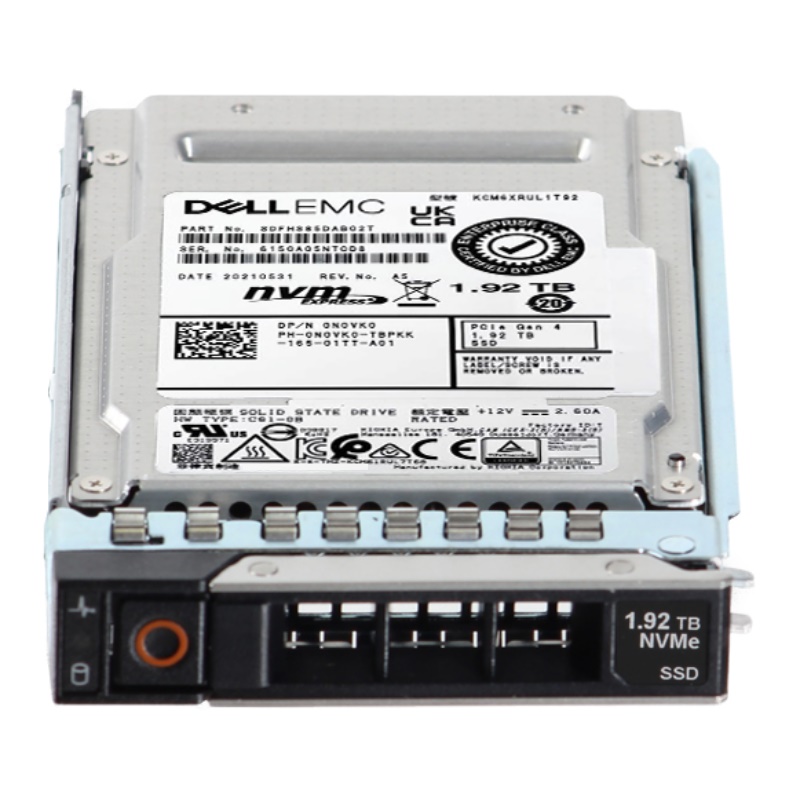


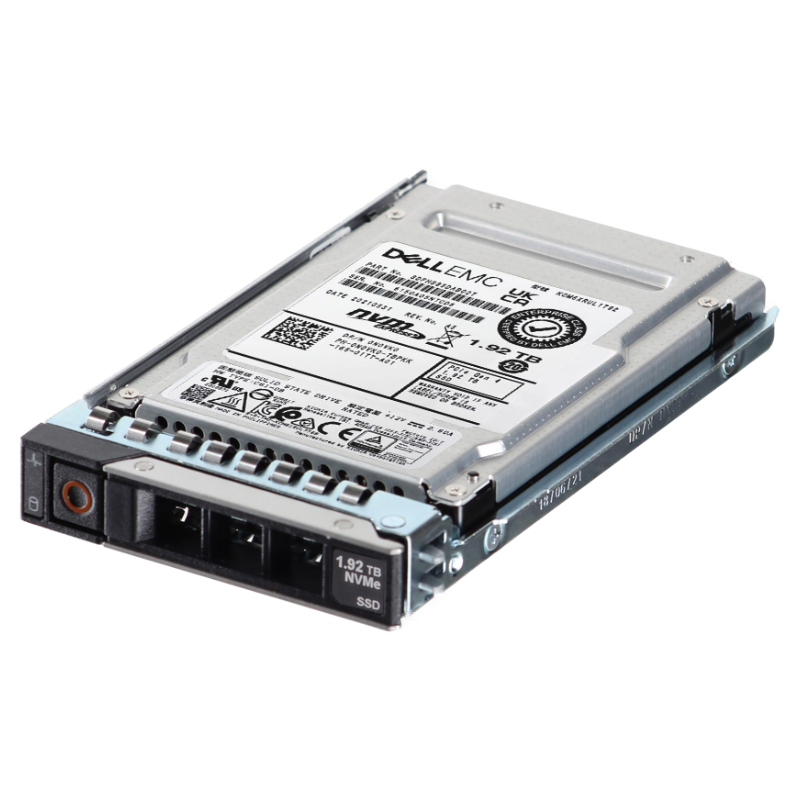
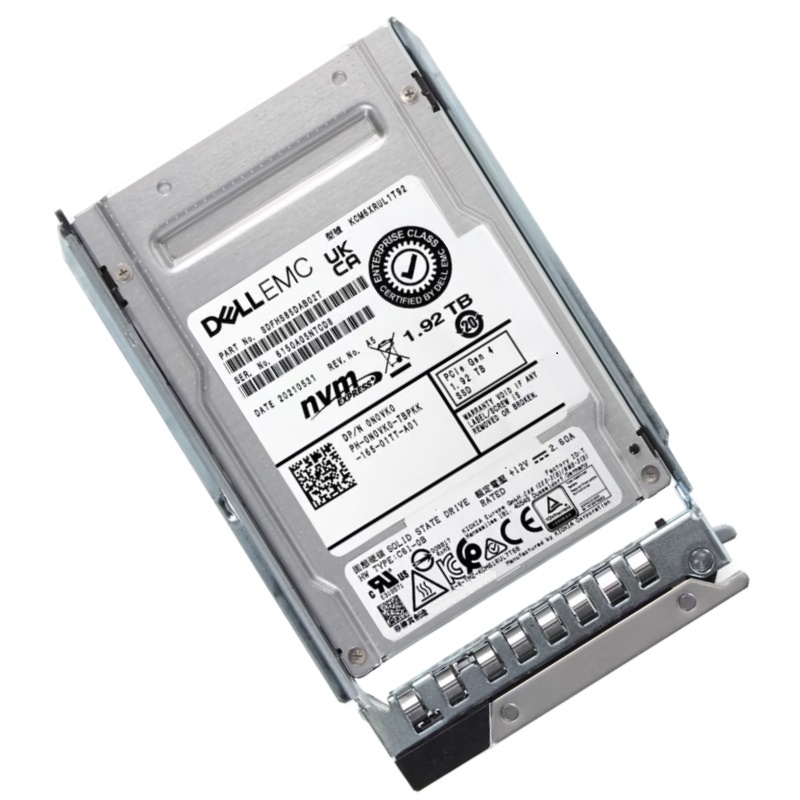
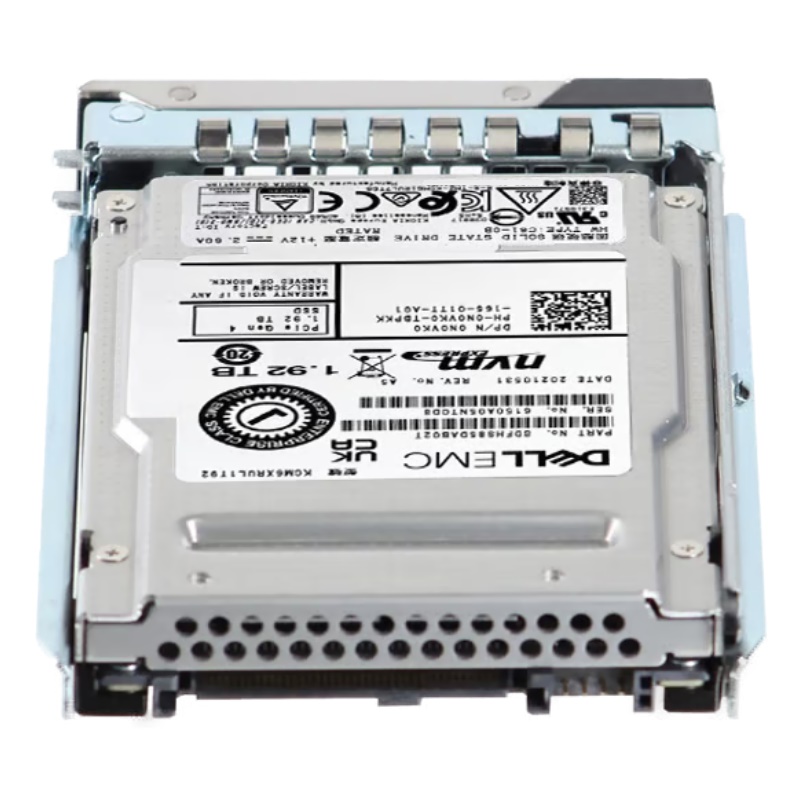
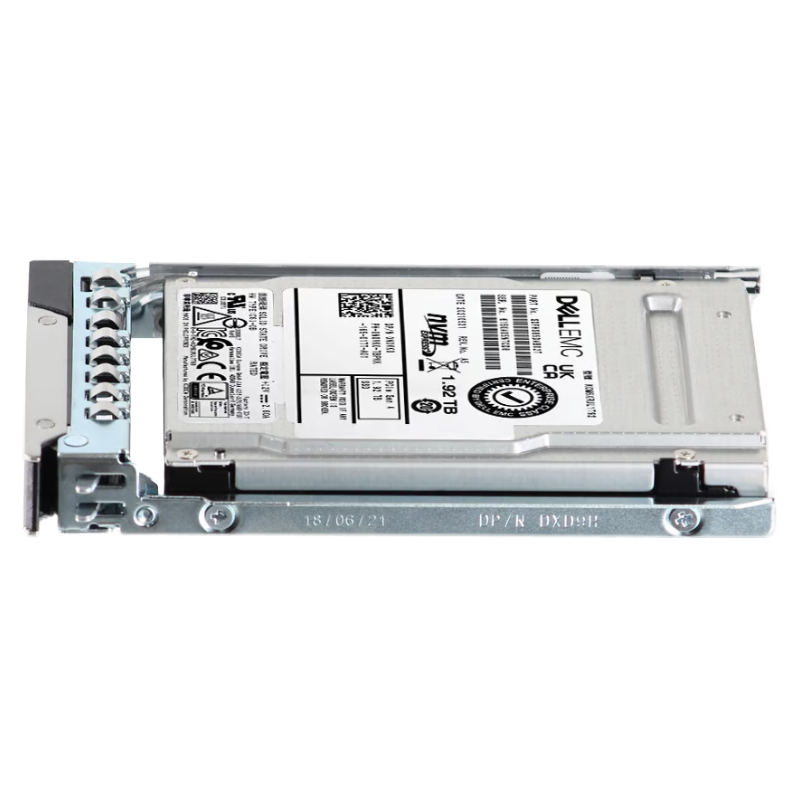
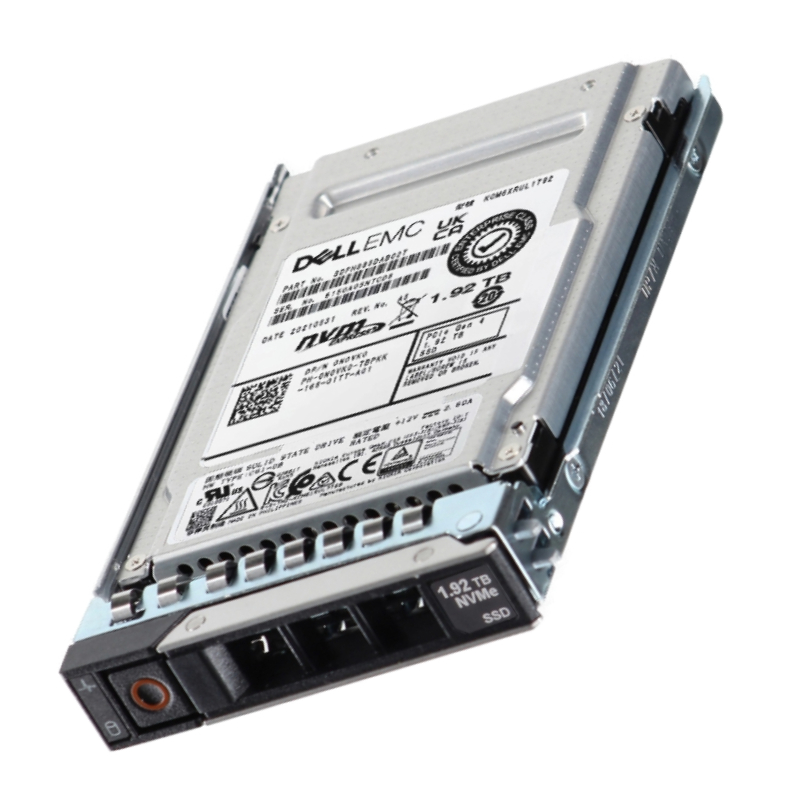
Dell Y73XV EMC 1.92TB PCI Express 4.0 x4 NVMe Read Intensive U.2 2.5-inch Internal Solid State Drive. Excellent Refurbished with 1 year replacement warranty
High-performance enterprise SSD optimized for read-intensive workloads. The Dell Y73XV (Dell P/N: 400-bkfn) is a 1.92TB PCI Express 4.0 x4 NVMe drive in a U.2 2.5-inch, 15mm form factor designed for data center and server environments requiring fast, reliable storage.
Engineered and validated for compatibility with a range of Dell PowerEdge servers:
The Dell Y73XV EMC 1.92TB PCI Express 4.0 x4 NVMe Read Intensive Solid State Drive represents a significant advancement in enterprise storage technology, specifically engineered for data-intensive environments where consistent read performance and reliability are paramount. This U.2 form factor drive leverages the full potential of PCIe 4.0 interface technology to deliver unprecedented data transfer speeds while maintaining the power efficiency and thermal characteristics required for modern data center deployments.
The implementation of PCI Express 4.0 x4 interface in the Dell Y73XV EMC SSD doubles the available bandwidth compared to previous generation PCIe 3.0 solutions, providing up to 64 Gbps of total bandwidth. This enhanced interface enables the drive to achieve sequential read speeds of up to 6,800 MB/s and sequential write speeds reaching 2,500 MB/s, making it ideally suited for read-centric workloads that demand rapid data access and retrieval.
Enterprise environments running database applications, web serving platforms, and content delivery networks benefit significantly from the increased bandwidth of PCIe 4.0. The Dell Y73XV EMC SSD ensures that storage I/O never becomes a bottleneck, even when multiple virtual machines or containers are accessing storage simultaneously. The reduced latency provided by this interface, typically under 150 microseconds for read operations, translates to faster application response times and improved overall system efficiency.
Specifically designed for read-intensive applications, the Dell Y73XV EMC 1.92TB SSD is engineered to excel in environments where read operations typically constitute 70-80% of total I/O operations. This specialization allows Dell to optimize the drive's architecture, NAND flash management algorithms, and wear-leveling techniques to maximize performance and endurance for these specific use cases.
With a rated endurance of 1.3 Drive Writes Per Day (DWPD) over its 5-year warranty period, the Dell Y73XV EMC SSD provides sufficient write endurance for most read-centric workloads while maintaining consistent performance. The 1.92TB capacity point represents an optimal balance between storage density, performance characteristics, and cost-effectiveness for enterprise deployments. The drive's Mean Time Between Failures (MTBF) rating of 2 million hours underscores its reliability in 24/7 operational environments.
The drive incorporates sophisticated error correction technologies including LDPC (Low-Density Parity Check) codes that ensure data integrity even as NAND flash cells approach their endurance limits. End-to-end data path protection, power-loss protection circuits, and advanced bad block management work in concert to prevent data corruption and maintain data accessibility throughout the drive's operational lifespan.
The 2.5-inch U.2 form factor adopted by the Dell Y73XV EMC SSD provides significant advantages for enterprise storage deployments. This standardized form factor ensures compatibility with existing server chassis and storage enclosures while providing the thermal headroom necessary for sustained high-performance operation. The U.2 interface delivers full PCIe 4.0 x4 lane connectivity along with SATA compatibility, offering deployment flexibility across heterogeneous infrastructure environments.
Enterprise SSDs operating at PCIe 4.0 speeds generate considerable heat during intensive I/O operations. The Dell Y73XV EMC SSD incorporates advanced thermal monitoring and throttling mechanisms that maintain optimal operating temperatures without compromising performance. The drive's firmware includes temperature-aware garbage collection and wear-leveling algorithms that minimize heat generation during background maintenance operations.
The U.2 form factor supports hot-swap capability, enabling system administrators to replace failed drives or upgrade storage capacity without powering down entire systems. This feature is critical for maintaining high availability in enterprise environments where downtime directly impacts business operations and service level agreements.
The Dell Y73XV EMC SSD fully leverages the NVMe (Non-Volatile Memory Express) protocol, which was specifically designed to capitalize on the performance characteristics of flash-based storage. Unlike legacy storage protocols that were adapted from mechanical hard drive interfaces, NVMe provides a streamlined command set and queueing mechanism that dramatically reduces I/O overhead and latency.
NVMe supports up to 64,000 commands per queue with a maximum of 64,000 queues, enabling massive parallel I/O processing that fully utilizes the capabilities of multi-core server processors. This parallel architecture allows the Dell Y73XV EMC SSD to maintain consistent performance even under heavy random I/O loads, making it ideal for virtualization environments and database applications that generate numerous simultaneous I/O requests.
While primarily designed for direct-attached storage configurations, the Dell Y73XV EMC SSD's NVMe implementation provides the foundation for future NVMe-over-Fabrics deployments. This emerging technology enables the creation of high-performance, low-latency storage networks that preserve the efficiency of the NVMe protocol across network interconnects, extending the benefits of local NVMe storage to shared storage architectures.
Full hardware-based encryption using 256-bit AES algorithm is implemented directly in the drive's controller, providing transparent data-at-rest protection without performance degradation. The drive supports TCG Opal 2.0 and IEEE 1667 security standards for comprehensive management of encryption keys and access control. Sanitize commands, including cryptographic erase and block erase, enable secure data disposal when drives are retired or repurposed.
Enterprise environments require protection against data loss during unexpected power interruptions. The Dell Y73XV EMC SSD incorporates robust power-loss protection circuits that include both tantalum capacitors and advanced firmware algorithms. This protection ensures that in-flight data in the drive's volatile cache is committed to non-volatile NAND flash in the event of power failure, maintaining data integrity across unexpected shutdown scenarios.
Beyond peak performance metrics, enterprise storage demands consistent performance under varying workload conditions. The Dell Y73XV EMC SSD is engineered to deliver predictable latency and throughput even during background maintenance operations such as garbage collection, wear leveling, and media scanning.
The drive's architecture ensures that quality of service (QoS) targets are maintained, with 99.9% of I/O operations completing within specified latency thresholds. This performance predictability is essential for meeting service level agreements in multi-tenant environments and ensuring consistent application response times for end users.
Sophisticated NAND flash management algorithms, including dynamic and static wear leveling, bad block management, and read disturb mitigation, work continuously in the background to maintain optimal performance and extend the drive's usable lifespan. These algorithms are specifically tuned for read-intensive workload patterns, prioritizing read latency consistency while efficiently managing write amplification.
The Dell Y73XV EMC 1.92TB PCIe 4.0 NVMe SSD is designed for seamless integration into Dell PowerEdge servers and Dell EMC storage solutions, with firmware and drivers optimized for these platforms. However, its standards-based implementation ensures broad compatibility with third-party servers and storage systems that support U.2 NVMe drives.
In virtualized environments, the drive's high IOPS capabilities and low latency enable higher virtual machine density and improved application performance. Hypervisors can leverage the drive's performance for host caching, virtual machine storage, and shared storage repositories. Cloud service providers benefit from the drive's consistent performance and endurance in multi-tenant scenarios.
Database management systems, both relational and NoSQL, achieve significant performance improvements when deployed on the Dell Y73XV EMC SSD. The drive's low latency reduces query response times, while its high sequential read performance accelerates data warehouse operations and analytics processing. Database log files, indices, and frequently accessed tables benefit from the drive's read-optimized architecture.


 Contact Us
 Information
 Catalog
 Solid State Drives (SSD)
 Network Switches
 Hard Disk Drives
 HBA & Controllers
 PC & Servers
 PC & Server Memory
 CPU & Processors
 Network Routers
 Power Supplies
 Tape Drives & Libraries
 Network Devices
 Computer & Network Cables