(7% discount is applied at checkout)
Cart is empty
Your go-to destination for cutting-edge server products
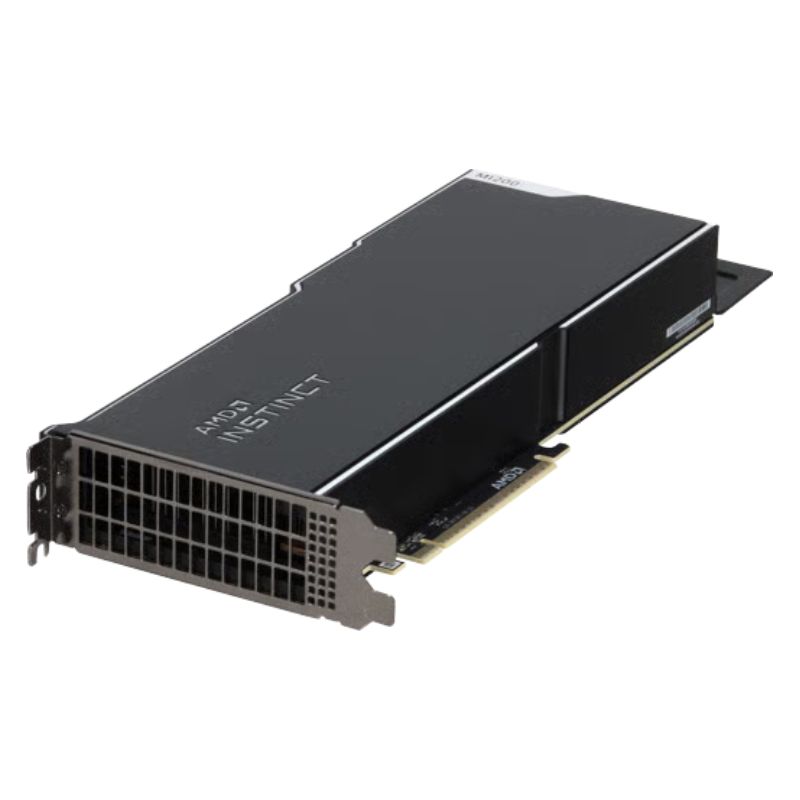


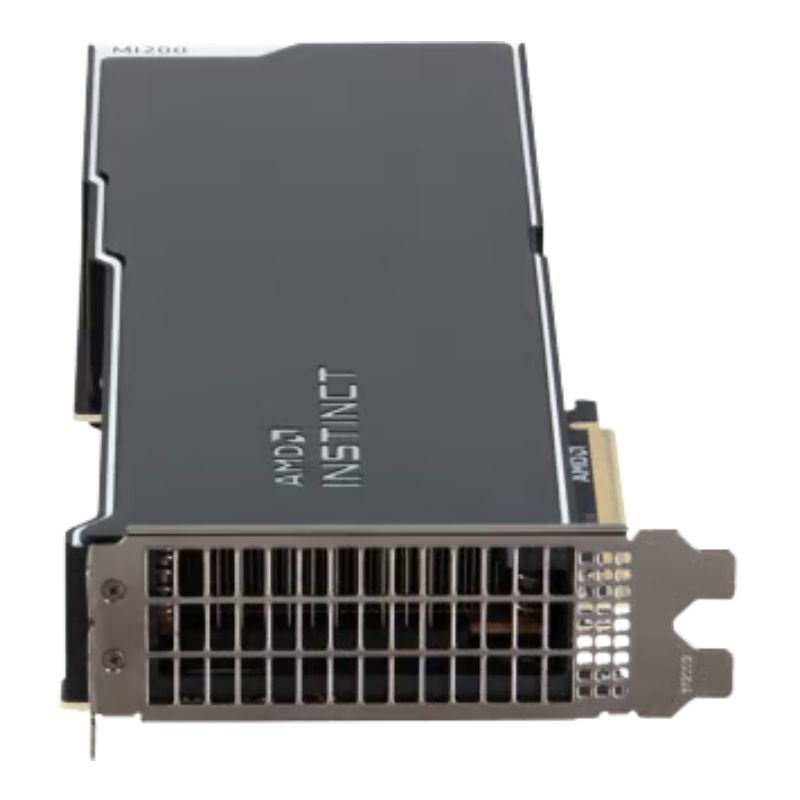
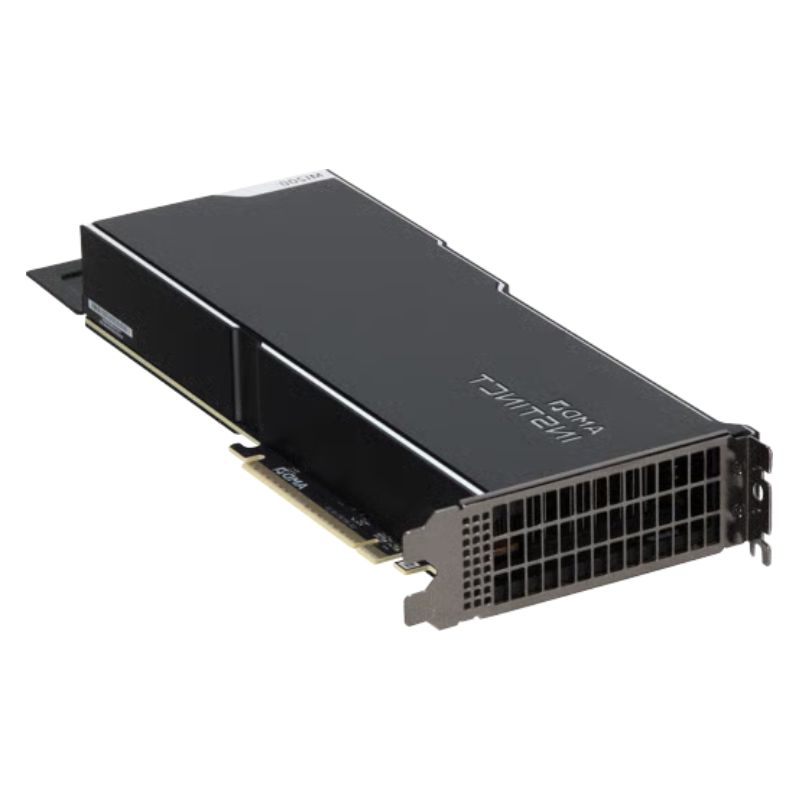
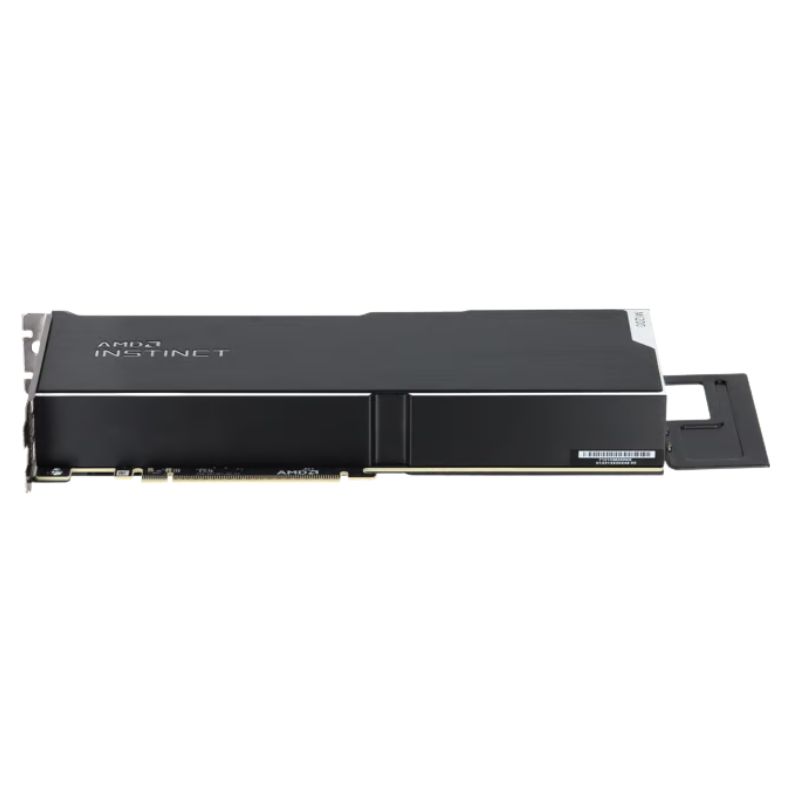
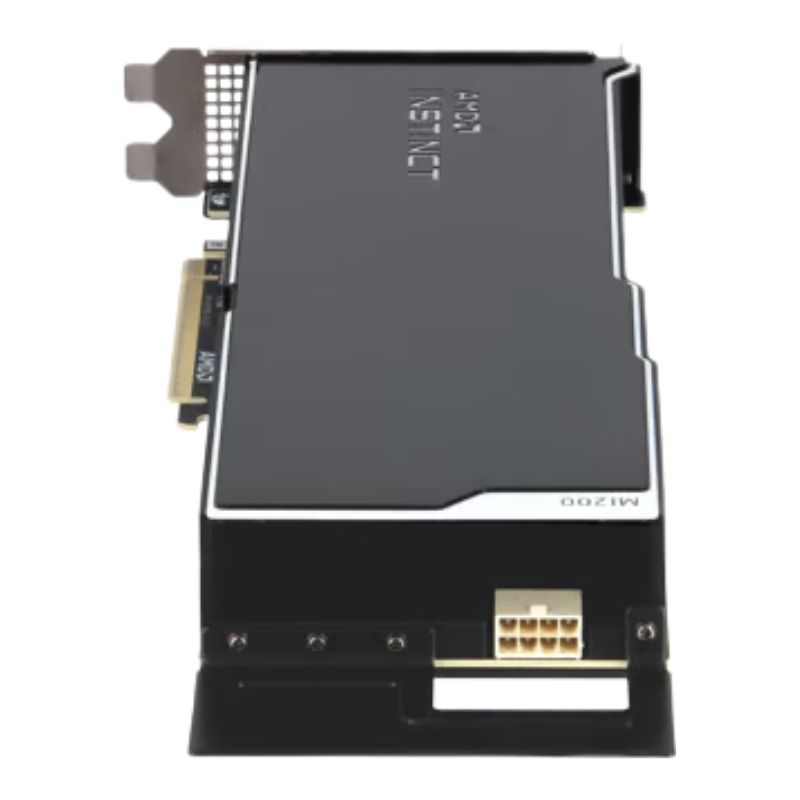
Dell YJFV0 AMD MI210 300W PCI-E 64GB HBM2E Passive Double Wide Full Height GPU. Excellent Refurbished with 1-Year Replacement Warranty.
The Dell YJFV0 AMD MI210 GPU is a high-performance graphics card designed for data-intensive applications, AI workloads, and professional computing environments. Featuring a 64GB HBM2E memory configuration and 300W PCI-E power, this unit ensures exceptional speed and reliability under demanding tasks.
Built to deliver robust computing power, the Dell YJFV0 GPU supports modern AI algorithms, machine learning models, and complex rendering tasks. The HBM2E memory architecture offers fast data transfer rates, allowing smoother multitasking and quicker computation for large-scale data processing.
The integration of 64GB HBM2E high-bandwidth memory enhances throughput and minimizes latency. This allows the GPU to handle resource-heavy workloads efficiently, making it ideal for deep learning, analytics, and virtual environments.
The passive double-wide cooling design ensures consistent thermal performance while maintaining energy efficiency. Its full-height form factor allows easy installation in compatible Dell PowerEdge servers.
The Dell YJFV0 AMD MI210 GPU is fully tested and validated to operate seamlessly with multiple Dell PowerEdge systems, offering scalability and dependability for enterprise-grade setups.
The Dell YJFV0 AMD MI210 300W PCI-E 64GB HBM2E Passive Double Wide Full Height GPU represents a class of high-density accelerator designed for modern data center workloads that demand high memory bandwidth, efficient FP performance, and optimized power delivery in rack servers and specialized appliances. Engineered around AMD's MI210 architecture, this accelerator packs 64GB of HBM2E on a double wide PCB while maintaining a passive, server-friendly cooling profile intended for airflow-optimized chassis. The PCI-E interface ensures broad compatibility with contemporary server platforms, while the full height form factor and 300W power envelope make it a clear choice for compute clusters focused on AI training, inference at scale, high-performance computing (HPC), and real-time rendering tasks. As a category, Dell YJFV0 AMD MI210 GPUs combine raw memory bandwidth with passive cooling and enterprise-grade integration, positioning them for deployments where reliability, density, and thermal integration are prioritized over active on-card cooling.
The AMD MI210 architecture underpins the YJFV0 accelerator with a compute fabric tuned for mixed precision workloads, matrix compute, and high throughput memory operations. This architecture focuses on maximizing FLOPS per watt for tensor and matrix multiplications while offering robust support for FP32, FP16, BF16 and integer compute modes often used in machine learning and inferencing pipelines. The MI210 design emphasizes parallelism, featuring many compute engines that can be orchestrated by modern software stacks for scalable performance across distributed training and inference scenarios.
Central to the Dell YJFV0 category is the 64GB HBM2E memory subsystem. HBM2E delivers exceptionally high memory bandwidth and lower latency compared to traditional GDDR memory, enabling large models to be held on-board and minimizing data movement between host memory and the accelerator. For data-intensive workloads such as large language model fine-tuning, graph analytics, and scientific simulations, the HBM2E configuration reduces memory bottlenecks and permits sustained throughput for long training runs. The 64GB capacity is particularly valuable in multi-GPU servers where per-accelerator memory determines the largest batch size and model shard each GPU can handle without offloading to slow host memory or NVMe swap.
The passive, double wide design of the Dell YJFV0 AMD MI210 positions the card for use in dense, airflow-optimized server chassis. Unlike active-cooled GPUs with on-board fans, passive cards rely on the server's front-to-back (or rear-to-front) airflow and chassis heat sinks to extract heat. This approach simplifies maintenance and reduces moving parts on the accelerator itself, while enabling higher compute density in multi-GPU node configurations. Deployers must ensure compatibility with their server’s thermal design power (TDP) headroom, rack airflow strategy, and power delivery subsystems to safely and reliably sustain the 300W maximum power draw under heavy loads.
When evaluating the Dell YJFV0 AMD MI210 class of GPUs, sustained throughput and memory bandwidth are core metrics. HBM2E's multi-stacked memory channels allow the MI210 architecture to feed the compute engines continuously, which translates to stable performance on memory-bound kernels common in deep learning and HPC. In real-world benchmarks, look for sustained bandwidth figures under long-running workloads rather than short bursts, since thermal and power headroom in passive systems can influence performance over extended time frames.
Modern accelerator architectures often derive much of their practical edge from mixed precision support, and the MI210 is no exception. When optimizing for training or inference, leveraging FP16, BF16, or INT8 modes can multiply effective throughput while reducing memory footprint. Benchmark comparisons should therefore include both FP32 baselines and mixed precision runs to reflect the real value of the 64GB HBM2E memory, which enables larger micro-batches and model parallelism without swapping to host memory.
Because the Dell YJFV0 is passive and rated at a 300W TDP, sustained performance testing should pay special attention to chassis airflow and ambient inlet temperature. Thermal throttling can occur in poorly ventilated configurations, leading to degraded throughput for long experiments. Benchmark protocols for this category should include long-duration stress tests that replicate operational conditions, measuring not only peak GFLOPS but also the consistency of performance over hours of continuous load, as well as the server’s inlet and exhaust temperature delta.
With 64GB of HBM2E and high memory bandwidth, the Dell YJFV0 AMD MI210 GPU is well suited to training medium to large-scale deep learning models, especially for workflows that need large context windows or considerable parameter counts. The on-card memory reduces host-GPU data transfers and enables larger batch sizes or model partitions to be processed per step. For AI research clusters and enterprise model fine-tuning setups, the MI210's mix of memory and compute provides a balance between capacity and throughput, making it a compelling option for teams that need to iterate quickly with sizable architectures.
Inference workloads that demand low latency and high throughput benefit from the MI210’s memory capacity and passive integration. The card can host sizable models for real-time serving or batch inference with minimized offload. For multi-tenant serving, memory capacity per GPU simplifies concurrency, enabling multiple model instances or multiple concurrent requests without frequent data movement. Passive cooling helps when consolidating inference accelerators into dedicated appliance servers, where the lower noise and absence of on-card fans reduce maintenance complexity.
In HPC domains such as computational fluid dynamics, molecular modeling, and finite element analysis, the MI210’s high bandwidth memory and robust compute fabric accelerate memory-bound kernels and matrix operations. Scientific workloads that require large working sets or multi-GPU scaling can leverage the Dell YJFV0 to reduce time-to-solution while fitting into enterprise rack architectures that prioritize server density and passive thermal designs.
Deployment begins with verifying server compatibility. The Dell YJFV0 is a PCI-E card and requires a compatible slot and lane configuration to achieve full bandwidth. Ensure the host server supports the power delivery required for a 300W card and that the PCI-E lane mapping is not shared in a way that cripples throughput. Some server motherboards will throttle lane allocation when multiple high-bandwidth devices are installed; check vendor documentation for recommended slot population when deploying multiple MI210 cards in a single node.
Because the YJFV0 peaks at 300W, robust server power cabling and power supply units (PSUs) with appropriate headroom are critical. Confirm that the server chassis provides the required auxiliary power connectors and that the PSU has capacity for sustained loads across all installed components. It is common to provision 20–30% extra PSU capacity to prevent brownouts during peak utilization, and redundant PSUs should be sized accordingly for high-availability deployments.
Passive accelerators depend heavily on chassis airflow for heat dissipation. Before deploying, validate the chassis airflow path, fan curves, and server inlet temperatures under load. Servers designed for passive accelerators typically have dedicated baffles and ducting to channel cool air across the GPU heat spreader area. Collect baseline thermal readings at idle and under typical workload conditions to ensure that the 300W TDP can be sustained without thermal throttling. If necessary, adjust fan curves or install higher CFM fans per chassis specifications to maintain thermal stability.
Successful deployment of the Dell YJFV0 AMD MI210 family relies on up-to-date vendor drivers and software stacks. Dell provides validated firmware and integration notes for their server SKUs, while AMD supplies the low-level drivers and libraries that expose accelerators to the operating system and user space. For AI and HPC workloads, use optimized libraries for linear algebra, FFTs, and tensor operations that leverage the MI210’s capabilities. Maintain a driver validation plan that includes firmware, OS kernel compatibility, and HPC/ML library versions to avoid regressions when updating system software.
Containerization is common in modern deployments. Ensure your container runtime exposes the MI210 to containers with the required device bindings and that orchestration platforms (like Kubernetes) have the appropriate device plugins and scheduling policies for PCI-E accelerators. For multi-tenant clusters, implement resource isolation to prevent noisy neighbor effects and supply GPU metrics to the scheduler to enable informed placement decisions. Container images should be built with the correct driver stack or use an operator pattern that mounts drivers at runtime to reduce image churn.
Optimization includes both software and systems approaches. Use mixed precision where appropriate to increase throughput and reduce memory pressure. Employ model parallelism and data parallelism judiciously to map large models across multiple MI210s while keeping communication overhead minimal. For latency-sensitive serving, consider model quantization and pruning to reduce compute per inference. Ensure networking and host I/O are tuned so that data feeding the accelerator does not become the new bottleneck.
When deploying multiple Dell YJFV0 AMD MI210 cards in a single node, review the server’s interconnect topology. PCI-E fabric, NVLink-like interconnects (if present in the platform), and host memory bandwidth play roles in effective scaling. For tightly coupled training, prefer servers and topologies that minimize inter-GPU communication latency and maximize bandwidth. For loosely coupled tasks, such as independent inference jobs, multi-GPU scaling may be constrained primarily by thermal and power budgets rather than interconnect bandwidth.
Verify OS kernel versions and server firmware compatibility with the MI210 driver releases. Firmware updates to the server’s BMC, BIOS, and platform management can influence card enumeration, power capping features, and thermal management behaviors. Create a testing matrix for new firmware or OS updates to ensure that driver stacks continue to function and that performance regressions are detected early.
Because the YJFV0 is rated at 300W, consider implementing power capping policies to protect the server power delivery and ensure predictable performance under shared power budgets. Many data center management solutions allow per-card power limits or server-level caps that can shape performance. Dynamic power management mechanisms that balance clock frequencies and voltage according to workload intensity can extend uptime and avoid thermal overloads while providing smoother performance curves for mixed workloads.
Enterprise deployments require continuous monitoring of card health metrics including temperature, power draw, error rates, and ECC corrections. Integrate these telemetry points with your monitoring stack and alerting policies. Dell servers paired with MI210 accelerators typically expose telemetry through Redfish or vendor tools; leverage those interfaces for automated remediation, such as live migration of workloads when a GPU approaches unsafe operating conditions. Serviceability planning should also consider physical access for replacement and procedures for safe hot-swap where supported by the chassis.


 Contact Us
 Information
 Catalog
 Solid State Drives (SSD)
 Network Switches
 Hard Disk Drives
 HBA & Controllers
 PC & Servers
 PC & Server Memory
 CPU & Processors
 Network Routers
 Power Supplies
 Tape Drives & Libraries
 Network Devices
 Computer & Network Cables