(7% discount is applied at checkout)
Cart is empty
Your go-to destination for cutting-edge server products
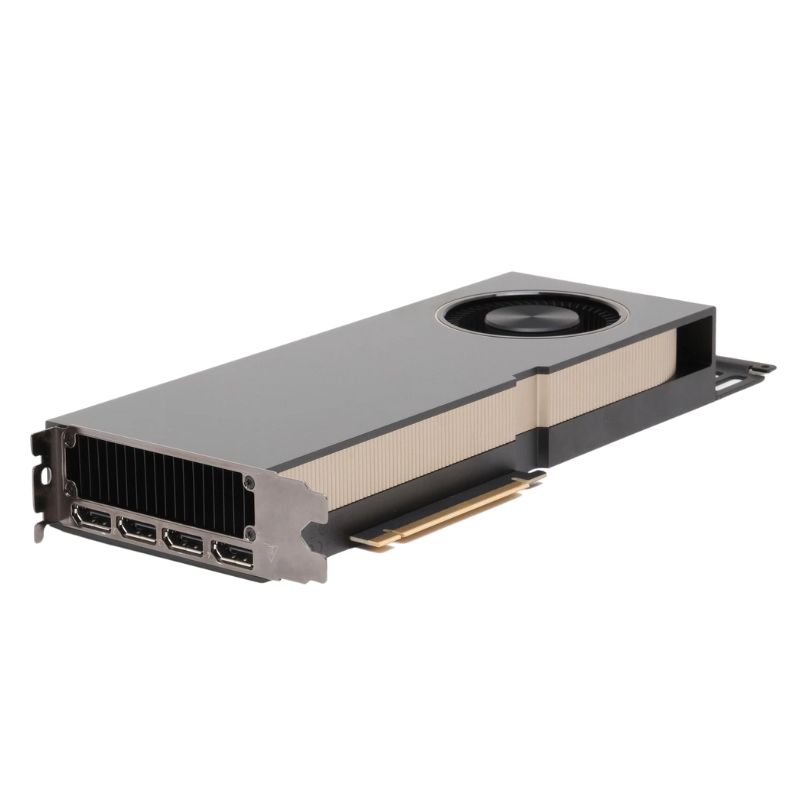


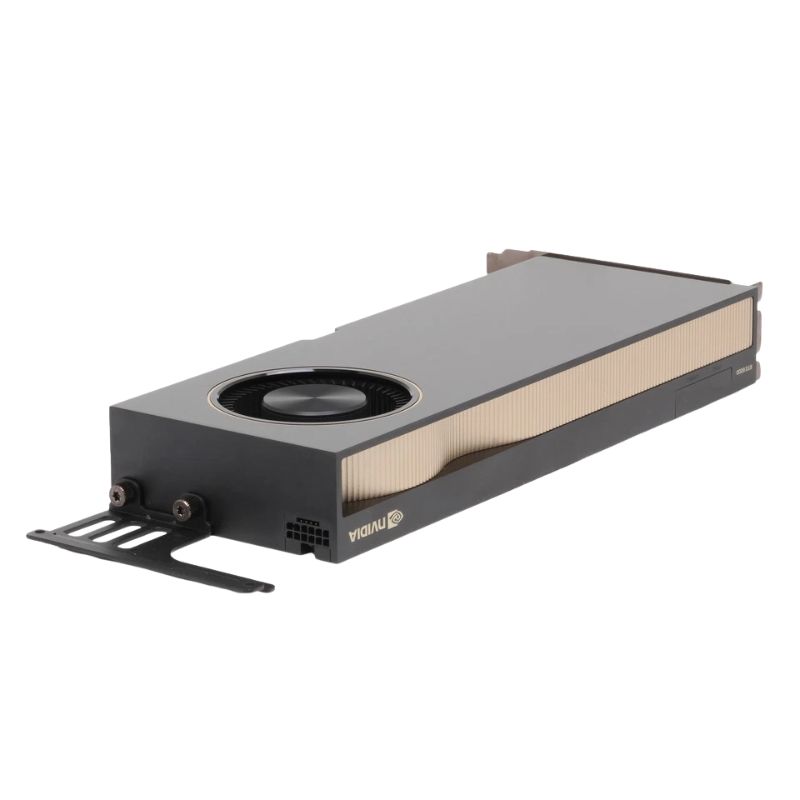
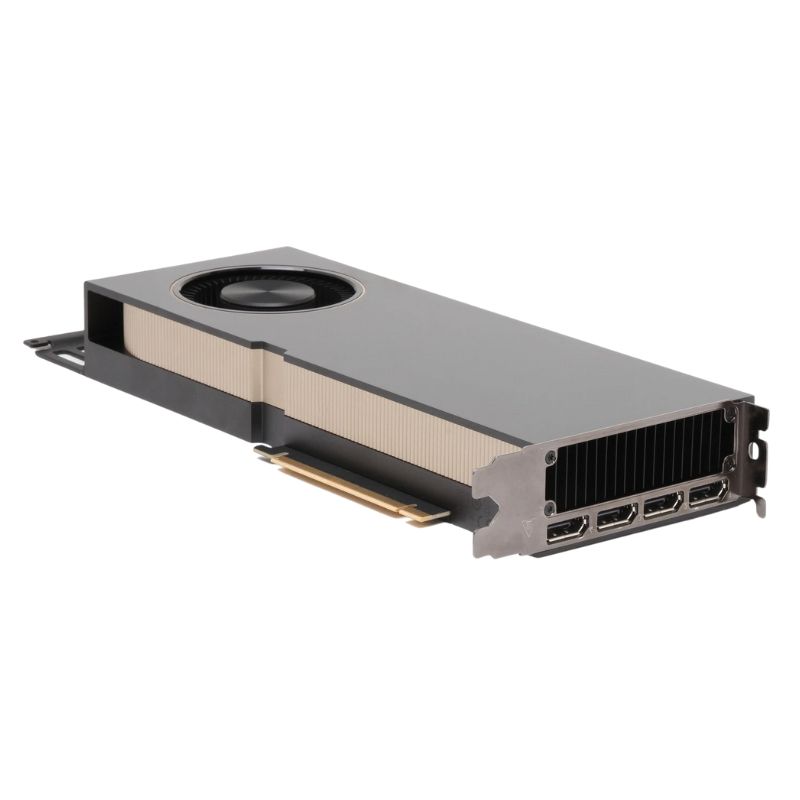
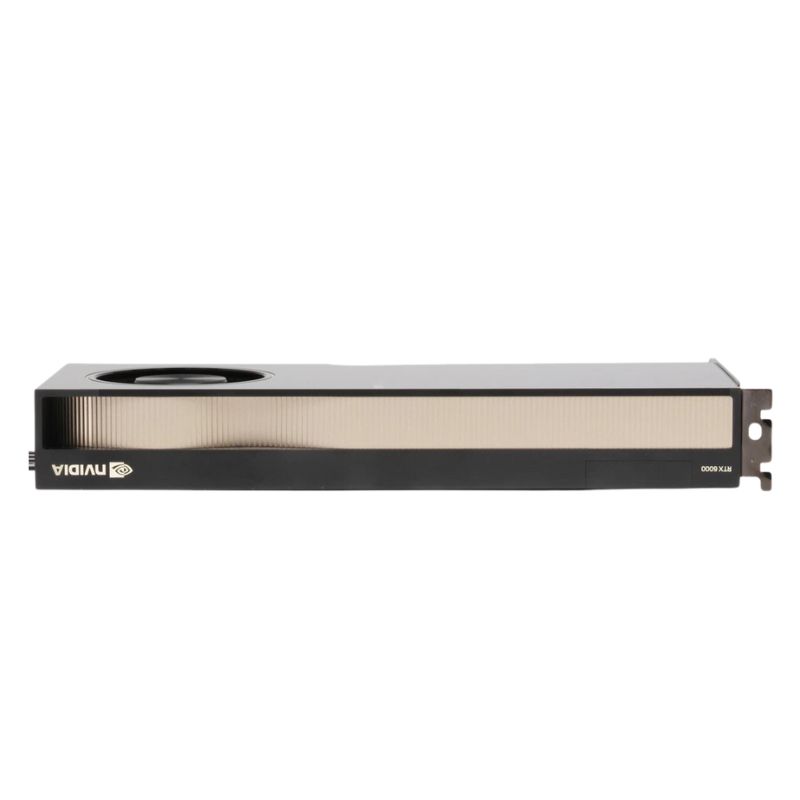
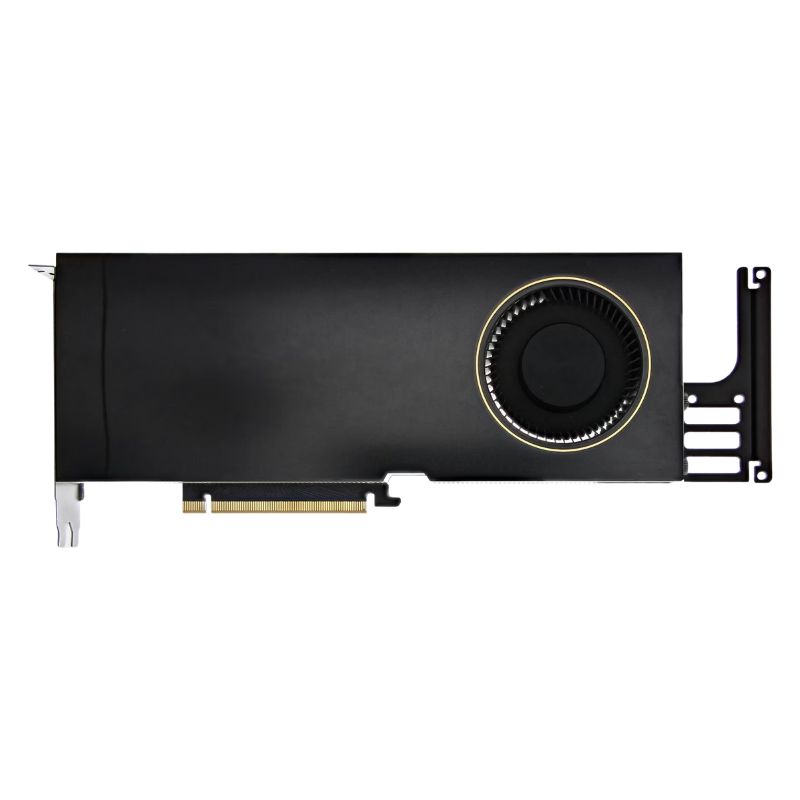
Dell YMD9W Nvidia Rtx 6000 Ada GPU 48GB 18176 Cuda Cores Memory 384 Bit GDDR6 PCI-E Graphics Card. Excellent Refurbished with 6-Month Replacement Warranty
The Dell YMD9W Nvidia RTX 6000 Ada stands out as a high-end professional graphics solution, purpose-built for demanding creative workflows, AI development, and complex 3D rendering tasks. Designed with precision engineering, this GPU offers unparalleled computing speed, stability, and visual performance.
Powered by NVIDIA’s Ada Lovelace architecture, this GPU delivers advanced acceleration for graphics rendering, real-time simulation, and deep learning applications. The Dell YMD9W offers superior efficiency and optimized ray-tracing capabilities, ensuring smoother workflows for engineering, content creation, and AI workloads.
The Dell YMD9W NVIDIA RTX 6000 Ada graphics card redefines what professionals expect from a single-slot (or dual-slot depending on OEM configuration) workstation GPU by combining massive compute density with a large 48GB framebuffer, extensive CUDA parallelism, and a wide 384-bit GDDR6 memory bus engineered to deliver up to 960 GB/s of effective memory bandwidth. This category entry focuses on the YMD9W model as a purpose-built solution for architects, VFX artists, data scientists, engineers, and simulation specialists who need predictable, sustained throughput for complex scenes, large datasets, and mixed workloads where accuracy, driver stability, and certified ISV support matter. The description that follows dives into technical capabilities, architecture advantages, memory and bandwidth tradeoffs, thermal and form-factor considerations, real-world use cases, software and driver ecosystem, deployment and integration guidance, comparative positioning, and procurement considerations that help site visitors understand why the Dell YMD9W NVIDIA RTX 6000 Ada should be their choice for mission-critical professional graphics and compute.
The RTX 6000 Ada platform in the Dell YMD9W leverages NVIDIA’s Ada Lovelace architecture to deliver a blend of raster, ray tracing, AI, and compute acceleration. With an impressive 18,176 CUDA cores, the GPU offers exceptional parallel throughput for CUDA-accelerated workflows and GPU-accelerated libraries. The Ada architecture brings algorithmic and hardware-level improvements that benefit denoising, real-time ray tracing, and AI inference/acceleration. For users migrating from previous generations, Ada’s optimizations result in higher single-card performance on modern rendering engines, AI training loops at small to medium scale, and interactive performance in large scene 3D modeling and CAD assemblies.
CUDA cores remain the workhorse for general-purpose GPU computations, while dedicated RT cores accelerate ray traversal and intersection calculations to produce physically accurate lighting and reflections. The YMD9W’s large CUDA core count combined with Ada-optimized RT and Tensor cores allows software that exploits both ray tracing and CUDA compute—such as path tracers, denoisers, and hybrid renderers—to scale efficiently. The RTX hardware’s Tensor cores also accelerate mixed-precision matrix math for AI denoising, upscaling, and neural rendering features commonly found in modern DCC and renderer toolchains.
Professional tasks often require a mix of precision: single precision for graphics and mixed precision for AI acceleration. The RTX 6000 Ada supports flexible precision modes and optimized Tensor operations that balance throughput with numerical stability. For workflows that require deterministic results, such as scientific visualization or finite element post-processing, the card’s architecture provides the necessary compute pathways while maintaining the high memory capacity required to hold large problem sets entirely on the GPU.
One of the defining characteristics of the Dell YMD9W is its 48GB of GDDR6 memory with a 384-bit interface—an arrangement designed to keep very large datasets resident on the GPU. A 48GB framebuffer reduces the need for dataset partitioning or out-of-core techniques for many professional applications, which in turn simplifies pipeline complexity and reduces I/O stalls. The quoted memory bandwidth of 960 GB/s enables faster scene traversal, texture streaming, high-resolution shading, and large matrix operations without becoming the bottleneck for typical workstation loads.
Memory bandwidth defines how quickly the GPU can move data between memory and compute units. A 384-bit interface working with high-rate GDDR6 devices to achieve up to 960 GB/s ensures that heavy workloads — high sample-rate path tracing, large neural network activations, and complex GPGPU kernels — operate without starving compute units. In practice, users will notice smoother progressive renders, faster convergence in denoising passes, and better sustained render throughput for long sequences compared to narrower bus architectures with smaller memory subsystems.
Dell’s implementation of the YMD9W model balances thermal performance and chassis compatibility. Depending on the server or workstation configuration, the card can be supplied with passive or active cooling solutions optimized for airflow in Dell workstations and rack units. Power delivery and PCI-Express interconnect are engineered to match typical workstation power budgets while leaving headroom for sustained heavy loads. Dell’s certified integration helps ensure that thermal throttling is minimized and that noise profiles meet professional workstation expectations.
Sustained reliability under render farms, simulation batches, or continuous AI inference workloads depends on robust thermal engineering. The YMD9W typically leverages multi-phase power management and a heatsink design that channels heat away from the GPU die and memory modules to avoid thermal accumulation. When paired with Dell’s optimized chassis airflow and power supplies, the result is longer periods of peak performance with fewer thermal throttling events compared to generic, non-validated cards in unoptimized enclosures.
Professional deployments must pay attention to total system power. While the YMD9W prioritizes workstation efficiency, its high compute density implies substantial power draw under full load. System integrators and IT administrators should verify PSU capacity, available PCIe connectors, and rack-level power planning before procuring multiple cards. Dell’s platform documentation and validated configurations provide recommended power profiles to maintain predictable cycling and to reduce the risk of under-voltage conditions.
The Dell YMD9W NVIDIA RTX 6000 Ada is tailored to a broad set of pro workflows where single-GPU strength and large memory capacity are critical. Below are exemplar use cases and the practical benefits the card unlocks in each domain.
Design engineers and product teams working with assemblies that contain tens of millions of polygons will find the 48GB framebuffer especially valuable. The ability to keep complex geometry, high-res textures, and multiple shading layers in GPU memory reduces stutter and accelerates viewport interactions. Large CAD assemblies benefit from fewer data swaps and faster occlusion culling, enabling engineers to iterate faster on design reviews and detect interferences in near real time.
Render artists and compositors working on high-fidelity feature work or complex scenes can use the RTX 6000 Ada for accelerated path tracing, denoising, and GPU-accelerated rendering passes. Large texture sets, volumetric caches, and multi-layer EXR compositing layers fit comfortably within the 48GB memory, enabling artists to render frames at higher sample counts without partitioning scenes across multiple nodes. For studios seeking a balance of interactivity and render throughput on local workstations, the YMD9W offers a compelling single-GPU option.
Data scientists who require GPU memory to host larger models or to process sizable batches for inference will find the 48GB capacity particularly useful. While training very large models at a cluster scale still benefits from multi-GPU or DGX-class systems, the YMD9W is excellent for development, fine-tuning, and inference workloads where memory residency reduces host-device communication overhead. Mixed-precision training and Tensor-core accelerated inference deliver faster iterations during experimentation phases.
High-resolution volumetric datasets used in computational fluid dynamics, medical imaging, and seismic interpretation demand both large memory and predictable floating-point performance. The Dell YMD9W supports large volume datasets and complex transfer functions in GPU memory, resulting in smooth slice navigation, high-quality rendering of 3D reconstructions, and accurate visualization for exploratory analysis and presentation.
Workstation-class GPUs are differentiated by their software support and long-term driver stability. Dell’s YMD9W ships with NVIDIA’s professional drivers and benefits from Dell’s validation with independent software vendor (ISV) applications. This matters for enterprises and creative shops that require certified compatibility with tools like Autodesk, Dassault Systèmes, Siemens NX, Adobe, Chaos V-Ray, and other professional applications. Certified drivers reduce the risk of regressions and provide a predictable platform for production deployments.
NVIDIA’s workstation driver program and the RTX Enterprise certification emphasize stability, security fixes, and long-term support. IT teams often prefer enterprise driver channels because they combine performance optimizations with tested reliability across major professional applications. Dell complements this with firmware and BIOS-level testing specific to their systems, producing a validated stack for enterprise procurement and support.
Developers benefit from the mature CUDA ecosystem, cuDNN, TensorRT, and NVIDIA’s software libraries that accelerate development of GPU applications. The Ada architecture’s improvements are supported by updated SDKs and toolchains that make it straightforward to port or optimize existing CUDA code. With the YMD9W, teams can prototype AI features, accelerate ray tracing pipelines, and run GPU-accelerated analytics using the same hardware they rely on for final production rendering or visualization tasks.
The Dell YMD9W interfaces with modern systems through PCI-Express x16 slots and conforms to standard workstation hardware profiles. While the card’s cooling and power requirements are tuned for Dell workstations, integration into third-party systems is feasible provided that the host has the necessary electrical and mechanical provisions. IT teams should consult chassis clearance, slot availability, and thermal design of the chosen workstation or rack server before deployment.
PCI-Express remains the primary interconnect for workstation GPUs; when high host-device bandwidth is required, ensure the card is installed in a slot that provides full x16 lanes. For multi-GPU configurations, check platform lane allocation to avoid split bandwidth bottlenecks. For workflows that span multiple GPUs or require accelerated NVMe-to-GPU streaming, pay attention to motherboard topology and CPU-to-PCIe root complex arrangements to maximize throughput and minimize latency.
While single-GPU capability is the principal value proposition for many workloads, certain render farms and compute clusters choose multi-GPU nodes to scale workloads horizontally. The YMD9W can be integrated into such environments when system thermal and power provisions allow. For distributed rendering or SPMD-style compute tasks, careful orchestration, and memory partitioning strategies are needed because large single-node framebuffers do not automatically aggregate across cards without specialized software support.


 Contact Us
 Information
 Catalog
 Solid State Drives (SSD)
 Network Switches
 Hard Disk Drives
 HBA & Controllers
 PC & Servers
 PC & Server Memory
 CPU & Processors
 Network Routers
 Power Supplies
 Tape Drives & Libraries
 Network Devices
 Computer & Network Cables