(7% discount is applied at checkout)
Cart is empty
Your go-to destination for cutting-edge server products
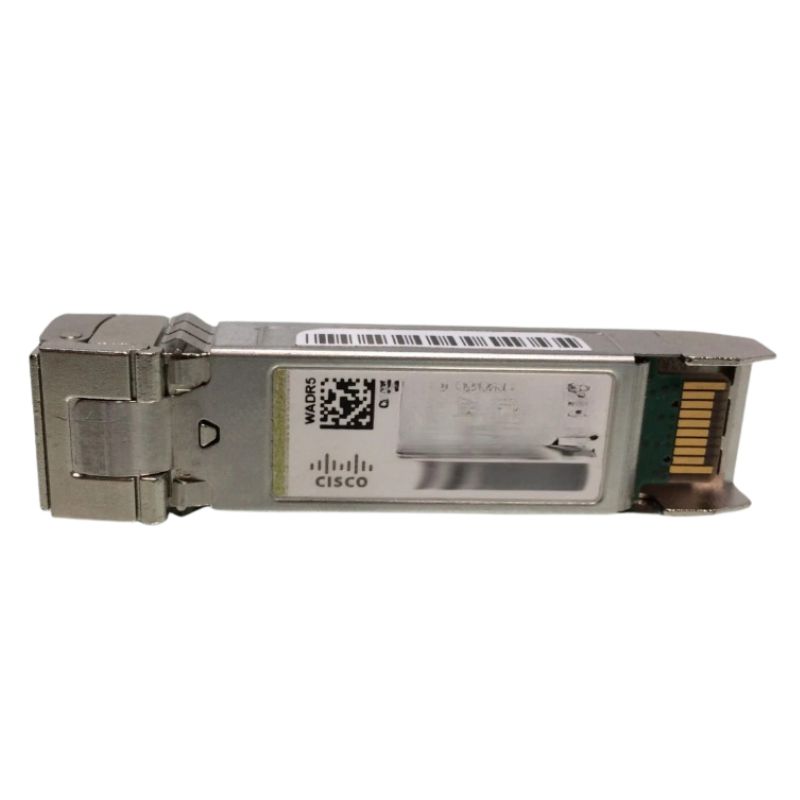


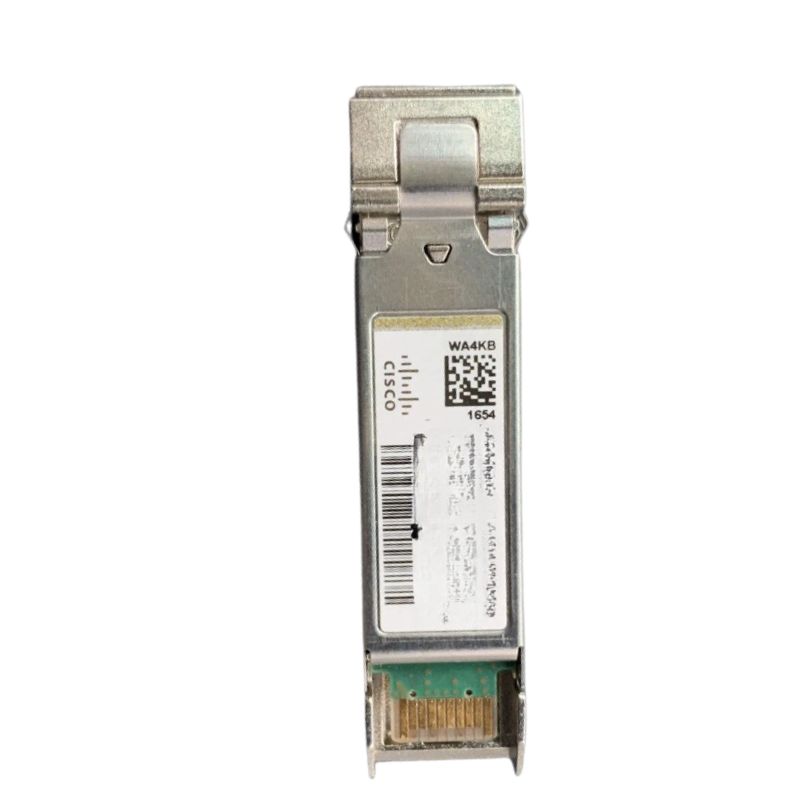
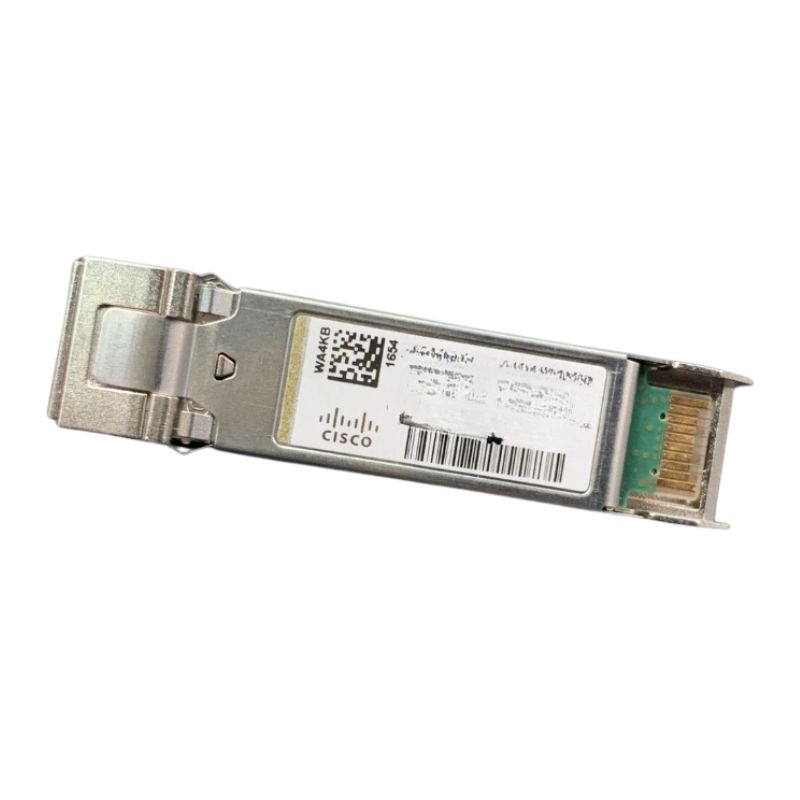
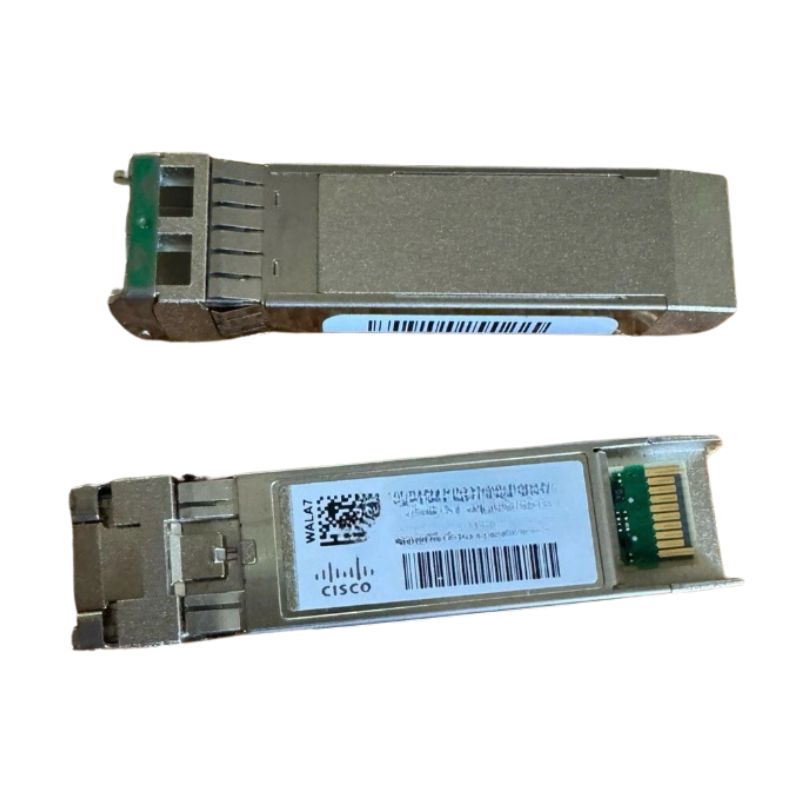
Cisco DWDM-SFP-6141 SFP Fibre Channel 1000Base Transceiver Module. Excellent Refurbished with 1 year replacement warranty
The DWDM-SFP-6141 Cisco SFP Fibre Channel 1000Base Transceiver Module is an advanced, high-performance transceiver designed for long-distance optical communication. Ideal for Dense Wavelength Division Multiplexing (DWDM) applications, this Small Form-Factor Pluggable (SFP) module provides a reliable and cost-effective solution for enterprise and service provider networks.
The Cisco DWDM-SFP-6141 represents a pinnacle of engineering in the realm of fiber optic networking, specifically designed for long-haul and metropolitan area network (MAN) applications. This Small Form-Factor Pluggable (SFP) transceiver module is a crucial component for network administrators seeking to maximize the capacity of their existing fiber infrastructure through Dense Wavelength Division Multiplexing (DWDM). By operating at a specific wavelength of 1561.42 nm and supporting data rates of 1Gbps, this module ensures reliable, high-speed data transmission over distances up to 80 kilometers. The following comprehensive analysis delves into the technical specifications, operational principles, and deployment scenarios of the Cisco DWDM-SFP-6141, providing an exhaustive resource for professionals evaluating this hardware for their network upgrades.
The Cisco DWDM-SFP-6141 is engineered to meet the rigorous demands of modern optical networks. Its architecture integrates a high-performance 1561.42 nm distributed feedback (DFB) laser, a sensitive avalanche photodiode (APD) receiver, and sophisticated control circuitry, all housed within a compact, hot-swappable SFP footprint. The module adheres to the Multi-Source Agreement (MSA) standards, ensuring interoperability with a wide array of Cisco switches, routers, and optical transport platforms. Its primary function is to convert electrical serial data from a host device into optical signals for transmission over single-mode fiber (SMF) and conversely, to convert received optical signals back into electrical data.
At the heart of this transceiver is its precise 1561.42 nm laser, which falls within the C-band (Conventional Band) of the DWDM spectrum, specifically channel 61 according to the International Telecommunication Union (ITU) grid with a 100 GHz channel spacing. This specific wavelength is critical for DWDM systems, as it allows multiple channels of different wavelengths to be combined and transmitted over a single fiber pair. The narrow spectral width of the laser, typically less than 1 nm, minimizes chromatic dispersion and ensures that the signal remains distinct from adjacent DWDM channels, preventing crosstalk and signal degradation. This precision is essential for maintaining high signal integrity over extended distances, enabling the 80 km reach specification without the immediate need for optical amplification in many environments.
The Cisco DWDM-SFP-6141 is rated for a maximum transmission distance of 80 kilometers over standard G.652 single-mode fiber. This reach is achieved through a combination of high optical output power and excellent receiver sensitivity. The module typically features an average launched power range of 0 to 5 dBm, providing a strong optical signal capable of overcoming the attenuation losses inherent in long fiber spans. On the receiving end, the APD-based receiver offers a sensitivity of approximately -23 dBm, allowing the module to accurately detect low-power optical signals that have been attenuated over the 80 km link. The optical link budget, calculated as the difference between the transmitter power and receiver sensitivity, provides a substantial margin to account for connector losses, splice losses, and aging of the fiber plant, ensuring reliable operation over the module's lifecycle.
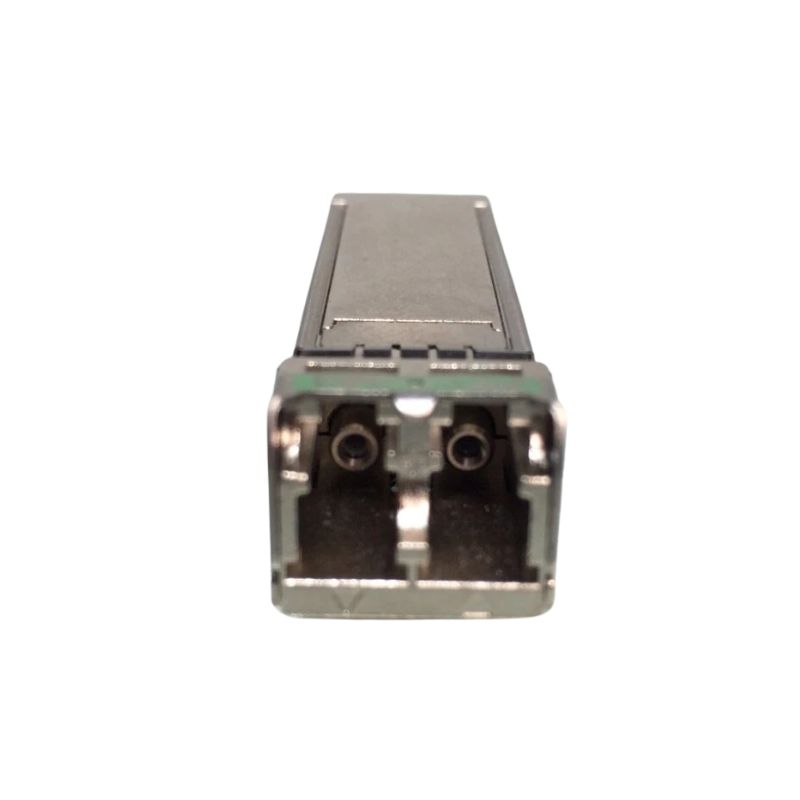
The module utilizes a standard Duplex LC connector, which is the industry-preferred interface for high-density optical connections in networking equipment. This connector type offers a small footprint, secure latching mechanism, and low insertion loss, typically less than 0.5 dB per connection. The duplex configuration is essential for full-duplex communication, utilizing two separate fibers—one for transmitting (TX) and one for receiving (RX)—simultaneously, which is the foundational requirement for Gigabit Ethernet and other networking protocols. The use of the LC interface ensures compatibility with a vast ecosystem of patch panels, optical distribution frames, and fiber optic cabling, simplifying integration into existing data center and enterprise network infrastructures.
The Cisco DWDM-SFP-6141 is not merely a physical layer device; it is a fully compliant transceiver that supports a range of protocols critical for robust network operations. Its primary function is to support the 1000BASE-DWDM standard, which defines the physical layer specifications for Gigabit Ethernet transmission over DWDM systems. Beyond Ethernet, the module is designed to be protocol-agnostic at the data link layer, making it suitable for transporting Fiber Channel, SONET/SDH (at OC-3/STM-1 or OC-12/STM-4 rates), and other 1Gbps serial data streams, provided the host equipment supports the SFP form factor and the necessary electrical interfaces.
Maintaining signal integrity over an 80 km link presents significant challenges, including attenuation, chromatic dispersion, and polarization mode dispersion (PMD). The Cisco DWDM-SFP-6141 addresses these challenges through various integrated features. While the module operates at the physical layer and does not perform forward error correction (FEC) itself, its design ensures that the optical signal quality is high enough to work seamlessly with host equipment's built-in FEC and error-detection mechanisms, such as those used in Gigabit Ethernet (8B/10B encoding) or SONET/SDH (BIP-8 parity).
The Cisco DWDM-SFP-6141 is purpose-built for specific networking environments where distance, bandwidth, and fiber infrastructure utilization are primary concerns. Its primary application lies in expanding the capacity of existing dark fiber or lit fiber networks without the need to lay additional cable. This is achieved by incorporating the module into a DWDM system, where a multiplexer (MUX) combines multiple wavelengths—including 1561.42 nm—onto a single fiber pair.
In metropolitan area networks, enterprises and service providers often have fiber connections spanning distances of 20 to 80 kilometers between data centers, central offices, or campus buildings. The Cisco DWDM-SFP-6141 is ideal for connecting these geographically dispersed locations, providing a reliable, high-speed Gigabit Ethernet link. For example, a financial institution with a primary data center in one city and a disaster recovery site in a suburban area 60 kilometers away can use this transceiver to ensure business continuity. By using DWDM, multiple services—such as data, voice, and video traffic—can be aggregated onto a single fiber strand using different wavelengths, significantly reducing the cost and complexity associated with leasing multiple dark fibers or deploying new ones.
Telecommunications service providers leverage the Cisco DWDM-SFP-6141 in their core and access networks to deliver high-bandwidth services to customers. In a typical scenario, a provider might use this module at a customer premises or a remote aggregation site to connect back to a central hub over an existing DWDM ring. The 1561.42 nm wavelength can be assigned to a specific customer or service, allowing for secure, dedicated bandwidth channels. Furthermore, the module's long reach makes it suitable for connecting remote base stations in mobile backhaul applications, ensuring seamless connectivity for 3G, 4G, and emerging 5G networks where fiber infrastructure is available.
In the data center environment, the demand for high-speed, low-latency connections between facilities is ever-increasing. The Cisco DWDM-SFP-6141 offers a cost-effective solution for Data Center Interconnect (DCI) over moderate distances. For storage applications, such as connecting a primary storage array to a backup site, the module's support for Fibre Channel protocols (1G/2G FC) makes it a versatile component. Its ability to plug into existing SFP slots on Cisco MDS switches or other storage directors allows for a seamless upgrade path to DWDM without replacing the entire switching fabric. This capability is crucial for implementing disaster recovery and business continuity strategies that rely on synchronous or asynchronous data replication over distance.
Power efficiency and environmental resilience are paramount in high-density network deployments. The Cisco DWDM-SFP-6141 is designed to operate with a typical power consumption of under 1 watt, generating minimal heat. This low power draw is critical for high-port-count line cards where thermal management is a significant concern. The module supports a wide operating temperature range, typically from 0°C to 70°C, making it suitable for deployment in controlled data center environments and in temperature-uncontrolled outdoor cabinets, provided the necessary thermal mitigation measures are in place.
On the receiving side, the incoming optical signal from the fiber is directed to the APD. This photodetector is biased with a high voltage to create an internal avalanche multiplication effect, providing significant gain and enabling the detection of very low-power optical signals. The APD converts the received optical power into a small electrical current. This current is then fed into a transimpedance amplifier (TIA), which converts the current into a differential voltage signal and provides the first stage of amplification. The signal is then passed through a limiting amplifier to produce a clean, constant-amplitude electrical data stream that is sent to the host device's SerDes (Serializer/Deserializer). The entire receive chain is optimized for high sensitivity and low noise, crucial for achieving the specified 80 km reach.
An essential component within the Cisco DWDM-SFP-6141 is the Clock and Data Recovery (CDR) circuit, often integrated into the limiting amplifier or as a separate IC. The CDR extracts the clock information from the incoming data stream and retimes the data, effectively cleaning up any jitter or timing anomalies that may have been introduced during transmission through the fiber. This retiming ensures that the data signal presented to the host device meets the stringent jitter and timing specifications required by Gigabit Ethernet and other protocols. The CDR function is particularly important for long-distance links where dispersion and other nonlinear effects can degrade the signal, ensuring a clean data recovery at the end of the link.
The Cisco DWDM-SFP-6141 operates at a specific channel on the ITU grid. In a DWDM system, channel management is crucial. Adjacent channels in the same fiber must be separated by the grid spacing (100 GHz for this module's wavelength). The 1561.42 nm wavelength corresponds to a frequency of approximately 191.90 THz. When deploying this transceiver alongside other DWDM modules, administrators must ensure that their wavelengths are spaced at least 100 GHz apart to avoid significant crosstalk and inter-channel interference. The use of optical filters (MUX/DEMUX) with appropriate channel passbands ensures that only the intended wavelength passes through to the receiver, suppressing adjacent channel leakage.
To appreciate the specific value proposition of the Cisco DWDM-SFP-6141, it is useful to compare it with other types of optical transceivers in the SFP form factor. Standard 1000BASE-SX and 1000BASE-LX/LH modules, for instance, operate at 850 nm and 1310 nm wavelengths, respectively. While they are cost-effective for shorter distances (up to 550 m or 10 km), they cannot compete with the 80 km reach of the DWDM-SFP-6141. Furthermore, these standard modules are not DWDM-tunable and operate on a single wavelength, meaning they cannot be used to increase fiber capacity through wavelength multiplexing.
Coarse Wavelength Division Multiplexing (CWDM) modules, such as the Cisco CWDM-SFP-xxxx series, offer a less dense grid with wider channel spacing (typically 20 nm). They are often more affordable and can reach distances up to 80 km or more depending on the wavelength. However, CWDM has a limited number of channels (typically 8 to 18). The Cisco DWDM-SFP-6141, on the other hand, offers a much denser channel plan with the full C-band capacity of up to 40 channels at 100 GHz spacing or 80 channels at 50 GHz spacing. This makes DWDM the clear choice for networks requiring high scalability and future-proofing, where numerous services need to be aggregated over a single fiber pair.
Within the DWDM category, there is a distinction between fixed-wavelength SFPs, like the DWDM-SFP-6141, and tunable DWDM SFPs. Tunable modules allow operators to remotely select from a range of DWDM wavelengths, offering greater flexibility for sparing and wavelength management. However, tunable optics are significantly more expensive. The Cisco DWDM-SFP-6141, being a fixed-wavelength module, provides a cost-effective solution for networks where the wavelength assignment is static or infrequently changed, such as in a well-planned point-to-point or ring topology. Its fixed nature simplifies inventory management and reduces the initial capital expenditure, making it a high-value option for specific, dedicated links.


 Contact Us
 Information
 Catalog
 Solid State Drives (SSD)
 Network Switches
 Hard Disk Drives
 HBA & Controllers
 PC & Servers
 PC & Server Memory
 CPU & Processors
 Network Routers
 Power Supplies
 Tape Drives & Libraries
 Network Devices
 Computer & Network Cables