(7% discount is applied at checkout)
Cart is empty
Your go-to destination for cutting-edge server products
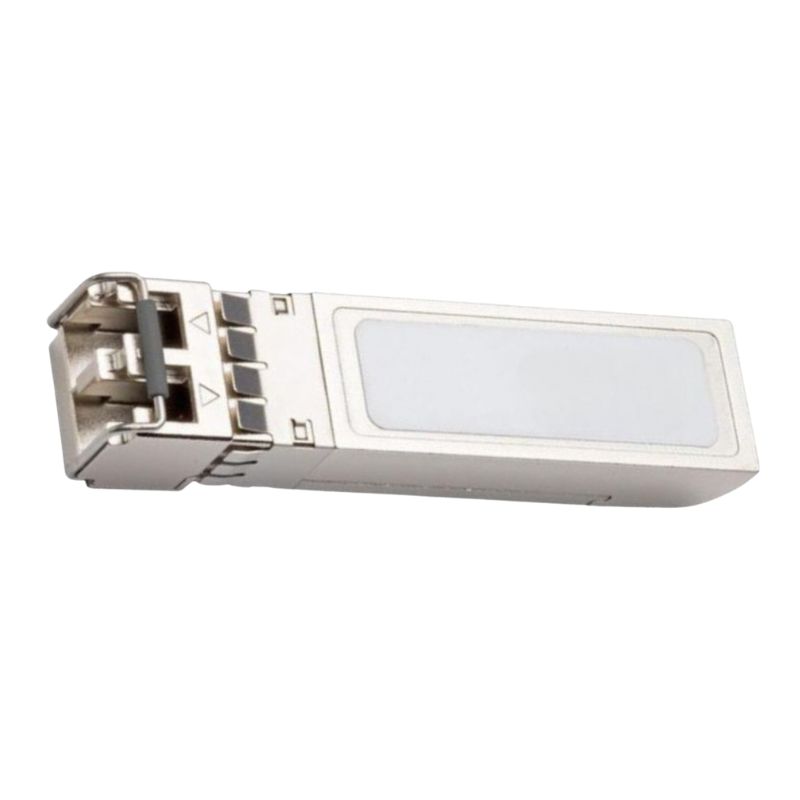


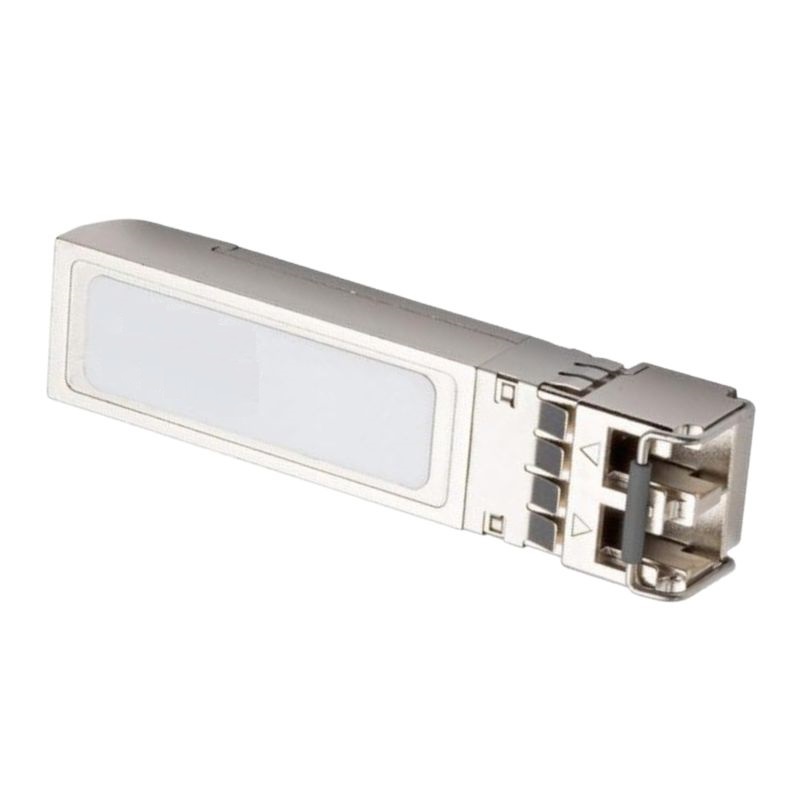
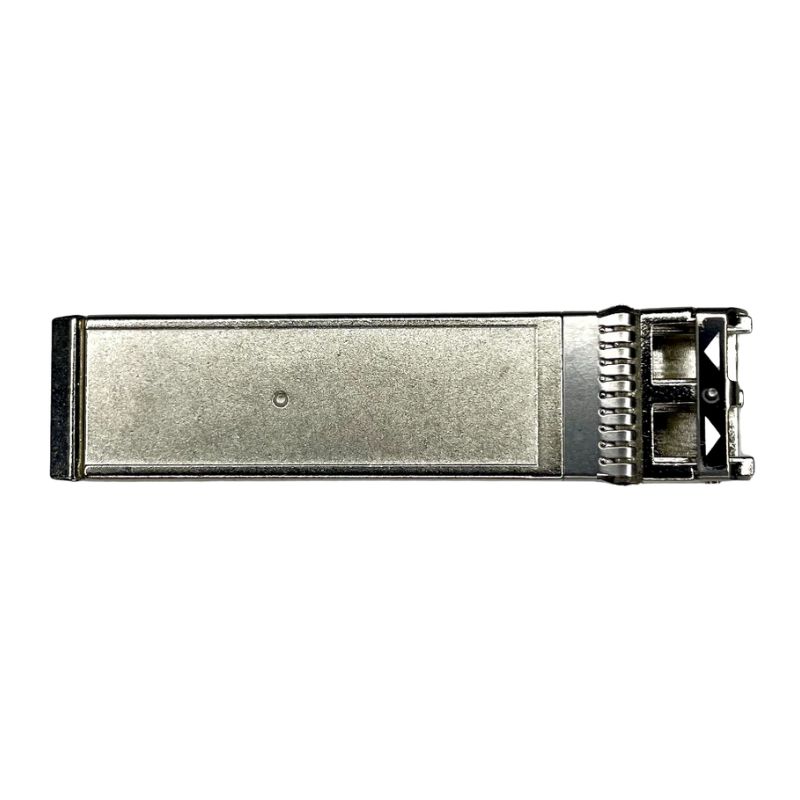
Cisco DWDM-SFP10G-52.52SFP+ 10 GigE Transceiver Module. Excellent Refurbished with 1 year replacement warranty
The Cisco DWDM-SFP10G-52.52 10 Gigabit Ethernet SFP+ transceiver module is engineered for advanced optical networking environments that demand high-capacity, long-distance, and wavelength-specific data transmission. Designed for Dense Wavelength Division Multiplexing (DWDM) architectures, this hot-swappable optical interface enables seamless integration into carrier-grade networks, enterprise backbone infrastructures, and metropolitan area networks (MANs). As part of the broader Cisco optical transceiver ecosystem under this module delivers precision-tuned optical performance with minimal signal degradation across extended fiber spans.
The Cisco DWDM-SFP10G-52.52 SFP+ 10 GigE Transceiver Module belongs to a highly specialized class of optical networking components engineered for dense wavelength division multiplexing environments where bandwidth aggregation, spectral efficiency, and long-distance optical transport are critical. This category of transceivers is designed to support 10 Gigabit Ethernet connectivity across fiber infrastructure that leverages precise wavelength allocation to maximize the number of simultaneous optical channels carried over a single pair of fibers. In modern service provider backbones, enterprise metro interconnects, and large-scale data center ecosystems, these modules serve as foundational building blocks that allow scalable, high-density optical transmission without requiring additional fiber deployment.
DWDM-based SFP+ modules such as the Cisco DWDM-SFP10G-52.52 are specifically tuned to a defined ITU-T grid wavelength, enabling interoperability within tightly controlled optical multiplexing systems. This precision allows network operators to significantly expand transport capacity while maintaining signal integrity across extended distances, often spanning metropolitan or regional networks.
Dense Wavelength Division Multiplexing is a fiber-optic transmission technology that increases the bandwidth capacity of optical fiber by transmitting multiple signals simultaneously on different wavelengths of light. Each wavelength operates as an independent communication channel, effectively multiplying the throughput of a single fiber pair. The Cisco DWDM-SFP10G-52.52 module is aligned with this principle by operating on a precise wavelength slot within the DWDM spectrum, specifically designed for channel 52.52 in the ITU grid.
DWDM systems rely on extremely tight wavelength spacing, often measured in fractions of a nanometer, allowing dozens of channels to coexist without interference. This spectral density is what makes DWDM essential for backbone infrastructure where fiber availability is limited or costly to expand.
The ITU-T G.694.1 standard defines a fixed grid of wavelengths used in DWDM systems. Each channel corresponds to a specific frequency or wavelength slot, ensuring compatibility between equipment from different vendors. The Cisco DWDM-SFP10G-52.52 module is tuned to a precise wavelength that corresponds to the 52.52 channel designation within this standardized grid.
This precise tuning ensures that optical multiplexers and demultiplexers can accurately combine and separate multiple optical signals without cross-channel interference. The stability of this wavelength alignment is crucial for maintaining signal integrity in high-speed 10 Gigabit Ethernet transmission environments.
The Small Form-Factor Pluggable Plus (SFP+) interface is a widely adopted industry standard for high-speed optical and electrical transceivers. The Cisco DWDM-SFP10G-52.52 module leverages this compact architecture to enable high port density in networking equipment such as switches, routers, and optical transport platforms. The reduced physical footprint of SFP+ modules allows network designers to maximize interface density while minimizing chassis space consumption.
This compact design is particularly valuable in data center environments where rack space optimization and thermal efficiency are key operational concerns. High-density SFP+ deployments enable scalable architectures that can support rapid growth in bandwidth demand.
The module supports 10 GigE transmission rates, aligning with enterprise and carrier-grade requirements for high-speed data transport. At this data rate, the transceiver facilitates low-latency communication suitable for cloud computing, virtualization platforms, and large-scale distributed applications. The integration of DWDM technology with 10 Gigabit Ethernet ensures that both capacity and performance requirements are met simultaneously.
The Cisco DWDM-SFP10G-52.52 module ensures stable modulation and signal conversion between electrical and optical domains, maintaining high fidelity across long fiber spans.
DWDM optical transmission introduces challenges such as chromatic dispersion, signal attenuation, and nonlinear fiber effects. The Cisco DWDM-SFP10G-52.52 module is designed to operate within carefully calculated optical budgets that account for these impairments. Dispersion management techniques ensure that the signal maintains integrity over long distances, while compatible optical amplifiers can be deployed to extend reach.
The module’s optical characteristics are optimized to maintain bit error rate (BER) performance within acceptable thresholds for carrier-grade networking. This ensures reliable communication even in complex multi-span optical networks.
DWDM SFP+ modules are commonly deployed in metro optical networks where distances exceed typical data center interconnect ranges. The Cisco DWDM-SFP10G-52.52 module can be integrated into systems that span tens to hundreds of kilometers depending on optical amplification and fiber quality. These deployments often include erbium-doped fiber amplifiers (EDFAs) and optical add-drop multiplexers (OADMs) to extend reach and manage channel routing.
Such configurations are widely used in service provider infrastructure, linking central offices, aggregation points, and regional data hubs.
Service providers rely heavily on DWDM SFP+ modules to support backbone transport networks that handle massive volumes of internet traffic, enterprise connectivity, and multimedia services. The Cisco DWDM-SFP10G-52.52 module enables scalable wavelength provisioning, allowing operators to activate additional 10 GigE channels without deploying new fiber strands.
This scalability is essential in environments where demand for bandwidth grows continuously due to cloud adoption, video streaming, and distributed computing workloads.
DWDM-based networks often use ring or mesh topologies to ensure redundancy and fault tolerance. The Cisco DWDM-SFP10G-52.52 module integrates seamlessly into such architectures, enabling automatic rerouting of traffic in case of fiber cuts or node failures. This contributes to high availability service delivery, which is critical for mission-critical enterprise and carrier environments.
The Cisco DWDM-SFP10G-52.52 module is designed for compatibility with Cisco’s broad range of optical networking equipment, including carrier-grade routers, aggregation switches, and optical transport systems. This interoperability ensures that organizations deploying Cisco infrastructure can maintain consistency across their optical and packet-based layers.
The module's standardized SFP+ interface allows it to be inserted into hot-swappable ports, enabling rapid deployment and replacement without network downtime.
In DWDM ecosystems, transceivers must function in coordination with multiplexers, demultiplexers, and optical amplification devices. The Cisco DWDM-SFP10G-52.52 module is engineered to align with these systems, ensuring proper wavelength mapping and signal amplification across long distances. This integration supports both point-to-point and multi-node optical transport configurations.
Modern DWDM SFP+ modules include digital diagnostic monitoring (DDM) capabilities that provide real-time insight into optical performance metrics. These metrics typically include transmitted and received power levels, temperature, laser bias current, and voltage conditions. The Cisco DWDM-SFP10G-52.52 module leverages these diagnostics to enable proactive network monitoring.
Network operators can use this data to identify degradation trends before they result in service disruption, improving operational efficiency and reducing downtime.
The availability of telemetry data allows for predictive maintenance strategies within optical networks. By analyzing performance trends, operators can anticipate potential failures and replace components before they impact service. This enhances the reliability of DWDM infrastructure and supports long-term operational stability.
The Cisco DWDM-SFP10G-52.52 module supports hot-swappable functionality, allowing it to be inserted or removed from compatible ports without powering down network equipment. This capability is essential in environments where uptime is critical and maintenance windows are limited.
Hot-swappability also simplifies inventory management and reduces operational complexity when scaling or upgrading optical networks.
In high-density networking environments such as data centers and carrier hotels, rapid deployment and replacement of optical modules is essential. The SFP+ form factor combined with DWDM precision tuning allows network engineers to quickly expand capacity while maintaining strict wavelength allocation standards.
One of the most significant advantages of DWDM technology is the ability to scale bandwidth without installing new fiber optic cables. The Cisco DWDM-SFP10G-52.52 module contributes to this scalability by enabling additional 10 GigE channels to be introduced into existing fiber infrastructure.
This capability reduces capital expenditure while maximizing the utilization of existing physical infrastructure.
By consolidating multiple high-speed channels onto a single fiber pair, DWDM systems reduce the need for additional physical transport equipment. The Cisco DWDM-SFP10G-52.52 module supports energy-efficient networking strategies by minimizing hardware duplication and optimizing optical transport density.
Effective deployment of DWDM SFP+ modules requires careful planning of optical link budgets, including fiber attenuation, connector losses, and amplifier placement. The Cisco DWDM-SFP10G-52.52 module is typically deployed within engineered systems where these parameters are precisely calculated to ensure stable performance.
High-quality fiber infrastructure is essential to maintaining signal integrity across long-distance DWDM links.
Optical transceivers operate within specific temperature ranges to maintain wavelength stability and signal quality. The Cisco DWDM-SFP10G-52.52 module is designed for stable performance in controlled networking environments, where thermal management systems ensure consistent operating conditions.
Proper airflow, chassis design, and environmental monitoring contribute to the long-term reliability of DWDM deployments.
DWDM SFP+ modules are frequently used in data center interconnect applications where high-capacity links are required between geographically separated facilities. The Cisco DWDM-SFP10G-52.52 module supports these use cases by enabling deterministic, high-bandwidth optical channels between data center locations.
This supports cloud redundancy, disaster recovery, and distributed computing workloads.
Hyperscale cloud environments rely on dense optical transport systems to interconnect compute, storage, and networking resources across vast infrastructures. The Cisco DWDM-SFP10G-52.52 module contributes to these environments by providing predictable, scalable wavelength-based transport that supports massive data movement requirements.


 Contact Us
 Information
 Catalog
 Solid State Drives (SSD)
 Network Switches
 Hard Disk Drives
 HBA & Controllers
 PC & Servers
 PC & Server Memory
 CPU & Processors
 Network Routers
 Power Supplies
 Tape Drives & Libraries
 Network Devices
 Computer & Network Cables