(7% discount is applied at checkout)
Cart is empty
Your go-to destination for cutting-edge server products
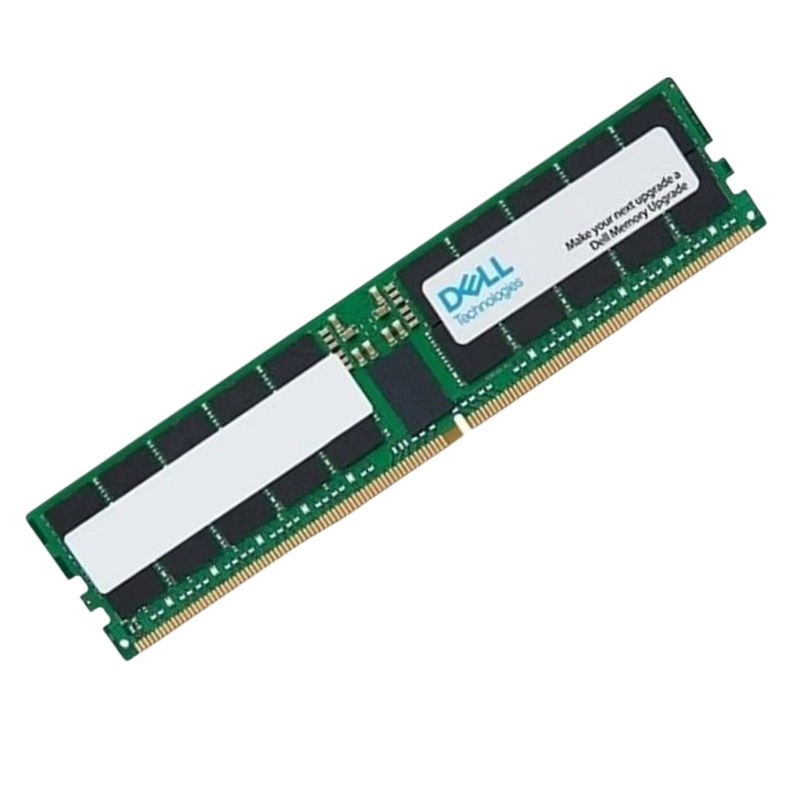


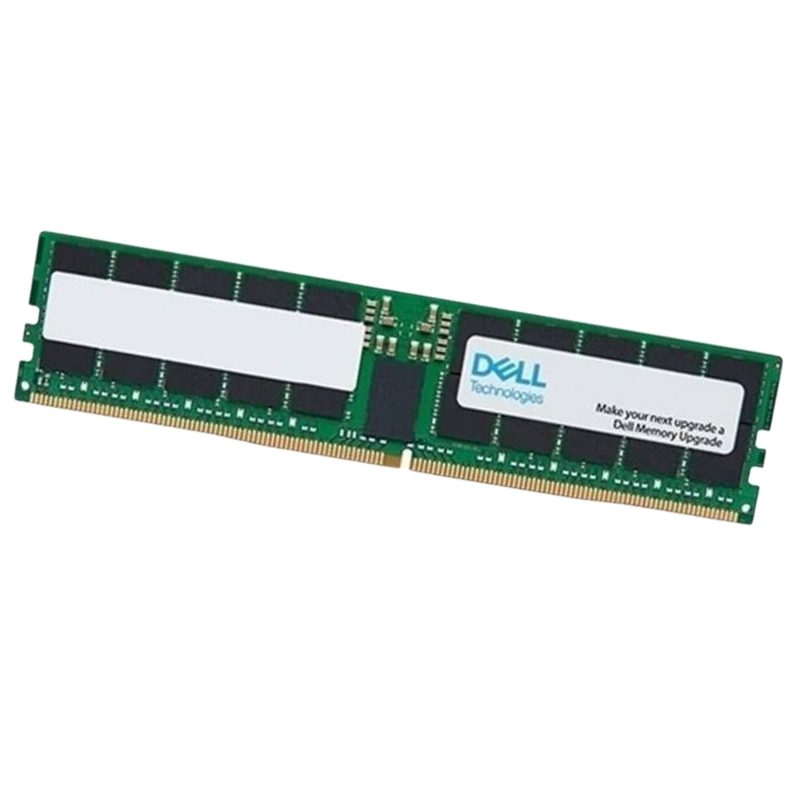
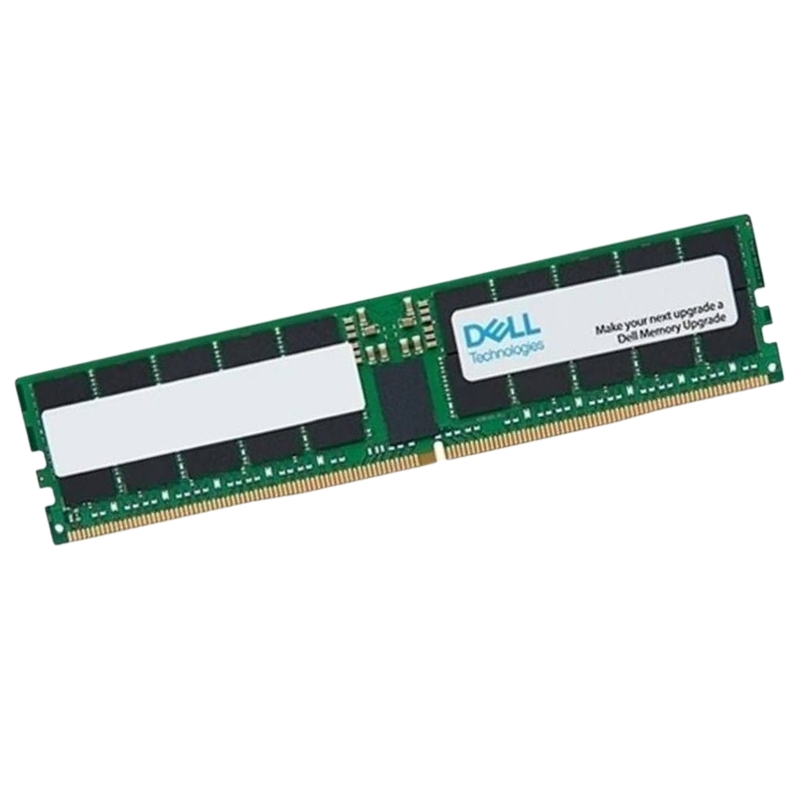
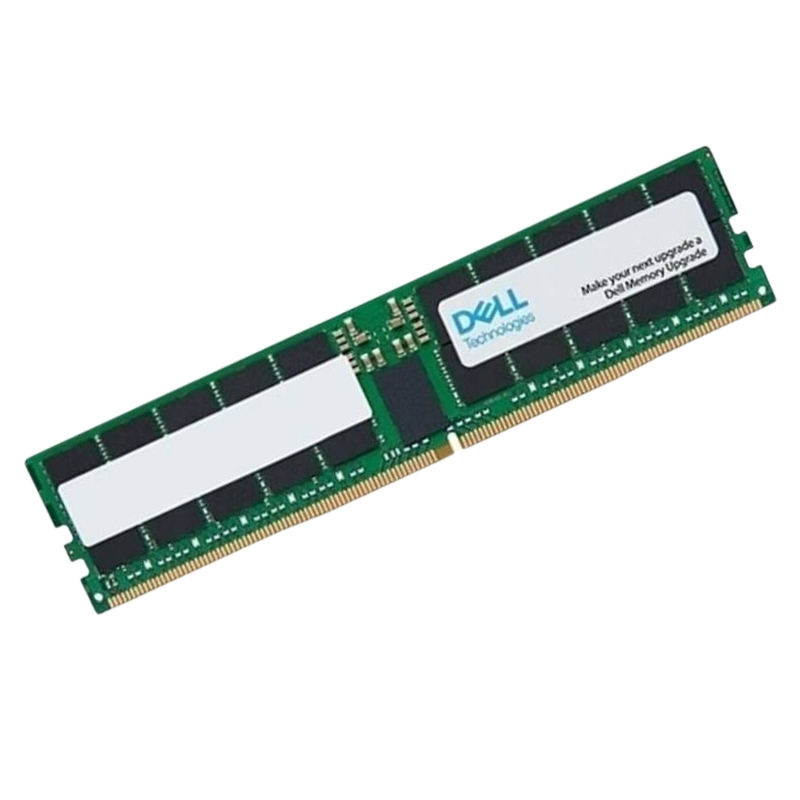
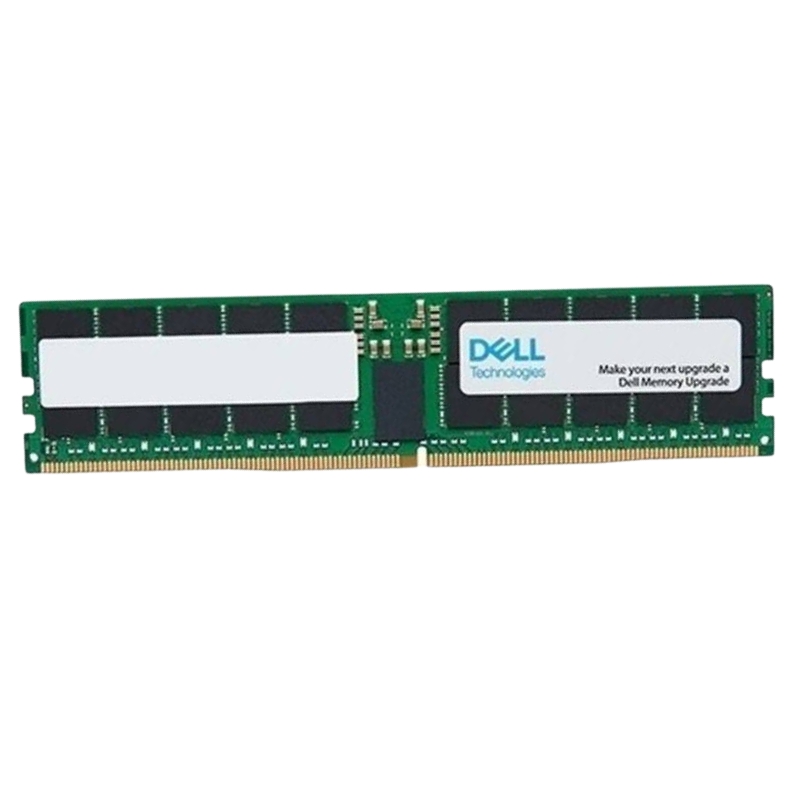
DXMWH Dell 16GB DDR5 6400MHz PC5-51200 1rx8 Ecc Registered 1.1v Cl46 SDRAM 288-pin RDIMM Memory Module For R770 R670 Server. New Sealed in Box (NIB) with 1 year replacement warranty - Samsung Version
The DELL DXMWH 16GB DDR5 RDIMM Memory Module is designed for advanced performance, improved data integrity, and reliable multitasking. Built with cutting-edge DDR5 SDRAM technology, this registered ECC memory module ensures smooth data handling for enterprise-level systems.
This DDR5 RDIMM is tested and optimized for use in DELL PowerEdge servers. It delivers exceptional performance when handling heavy workloads, virtualization, or database applications.
With 6400MT/s speed, this DDR5 module enables faster application loading and smoother performance across demanding server environments.
Equipped with ECC error correction and registered design, it prevents data corruption and ensures system stability under continuous workloads.
Operating at 1.1V, the module reduces power consumption while maintaining excellent speed and efficiency.
This memory is purpose-built for DELL PowerEdge servers, making it an ideal upgrade for businesses running data-intensive tasks.
As DDR5 memory becomes the new standard, upgrading to this module ensures compatibility and performance longevity for upcoming workloads.
Backed by DELL's reliability, this memory module is tested for durability, ensuring long-term server uptime.
The DXMWH Dell 16GB DDR5 6400MHz PC5-51200 1Rx8 ECC Registered RDIMM is a server-grade memory module engineered for reliability, stability, and performance in enterprise environments. Built to the DDR5 standard, this 288-pin RDIMM operates at 6400MT/s with a CL46 timing and a low operating voltage of 1.1V. The module uses ECC (Error Correcting Code) and registered buffering to protect critical workloads in systems such as the Dell R770 and R670 servers. Typical buyers include system integrators, data center operators, IT administrators, and professionals upgrading older DDR4 servers to newer DDR5-capable platforms.
ECC Registered RDIMMs combine two server-focused technologies: ECC (Error Correcting Code) and register (buffering). ECC detects and corrects single-bit memory errors automatically to prevent data corruption and system crashes. The register reduces electrical load on the memory controller, enabling more modules per channel and higher stability under heavy load. Together, they provide predictable uptime and data integrity—qualities essential in database servers, virtualization hosts, and computing clusters.
ECC memory adds parity bits and logic that can identify and correct single-bit errors on the fly and detect multi-bit errors. For mission-critical applications like financial systems or storage controllers, ECC reduces the risk of silent data corruption and helps maintain long-term data accuracy.
RDIMMs include a register or buffer that sits between the DRAM chips and the memory controller. This buffer helps by stabilizing signals and allowing more DIMMs per channel without overwhelming the memory controller. When scaling memory capacity in tower or rack servers, RDIMMs are often the recommended choice for reliability and density.
This category emphasizes modules explicitly compatible with Dell R770 and R670 platforms. These servers are designed for high-density enterprise workloads and expect ECC Registered modules conforming to industry standards. While the module follows the PC5-51200 DDR5 specification, always consult the server’s Dell technical documentation or the system BIOS compatibility list before purchase. Server firmware and BIOS may require updates to support higher-speed DDR5 modules or specific ranks and densities.
A 16GB module balances cost and capacity for many server tasks. In multi-socket or virtualization environments, combining multiple 16GB RDIMMs allows administrators to scale memory while controlling per-module cost. For memory-dense databases or in-memory analytics, higher-capacity RDIMMs (32GB, 64GB) might be preferable, but 16GB remains a common and flexible choice.
The 6400MT/s data rate (also marketed as PC5-51200) provides high bandwidth per DIMM. Bandwidth improves tasks that benefit from fast sequential and random memory access: large-scale virtualization, scientific simulations, caching, and high-frequency data processing.
CL46 indicates the CAS (Column Address Strobe) latency—how many clock cycles it takes to access data. In DDR5, raw clock cycles and the higher data rates mean absolute latency measured in nanoseconds may be comparable or slightly improved versus older generations; however, real-world performance depends on workload. For memory-bound server applications, higher bandwidth often offsets slightly higher CAS numbers.
The 1Rx8 designation means the module is single-rank (1R) with x8 DRAM chips. Single-rank modules present a lighter electrical load and can sometimes achieve higher clock rates or support denser population per channel. Rank configuration affects memory interleaving, channel usage, and compatibility—some servers and BIOS configurations prefer single-rank modules for specific slot population rules.
288 pins is the standard for DDR5 RDIMM modules. The physical notch and pinout prevents accidental installation into incompatible DDR4 sockets. When upgrading, ensure your motherboard or server socket supports DDR5 288-pin modules.
This memory category is optimized to accelerate a number of common enterprise workloads:
Higher bandwidth and ECC protection reduce memory contention and protect guest data integrity. Adding 16GB RDIMMs to host nodes increases VM density while keeping costs predictable.
Databases running large buffer pools (MySQL, PostgreSQL, or in-memory databases like Redis) benefit from DDR5 bandwidth. ECC protects against bit flips that might corrupt cached data, ensuring consistent retrievals.
Scientific workloads that stream large datasets or use large memory footprints gain from higher transfer rates. Coupled with multi-core CPUs in R770/R670 systems, DDR5 modules can feed data faster to compute threads.
Before adding new high-speed DDR5 modules, update the server BIOS/UEFI to the latest recommended version. Updates often include memory compatibility improvements, speed profiles, and stability patches.
The 1.1V operating voltage lowers power draw relative to older DDR generations and helps in dense deployments where energy efficiency matters. RDIMMs typically run within a safe temperature range, but in rack-dense environments ensure adequate air flow and monitor DIMM temperatures if possible. Conservative thermal management improves longevity and reduces the chance of transient errors under heavy sustained loads.
DDR5’s lower voltage and improved power management features can reduce long-term operating costs in data centers. When planning large refreshes, calculate power savings per module and multiply by your server count for total expected savings.
When selecting memory for enterprise servers, consider practical tradeoffs: price per GB, compatibility, future upgradability, and vendor warranty. Below are helpful comparisons.
6400MT/s provides a high bandwidth baseline; if your server and processor support it, it is recommended for memory-bound workloads. Lower-speed modules may be cheaper, but they reduce available throughput. CL46 is normal for DDR5 at this speed—compare real-world benchmarks where possible rather than relying solely on CL numbers.
Practical applications show where DXMWH 16GB DDR5 RDIMMs shine.
Lower power consumption and reliable ECC behavior make these modules suitable for edge locations where environmental control may be less ideal than a central data center.
Combine these modules in balanced channel populations to increase buffer pool sizes and reduce disk I/O. Faster memory bandwidth often yields better query response times for large analytics jobs.
For multi-socket servers, populate equivalent slots across sockets to enable NUMA-balanced memory access and better interleaving. This reduces latency for memory-heavy threads and improves aggregate throughput.


 Contact Us
 Information
 Catalog
 Solid State Drives (SSD)
 Network Switches
 Hard Disk Drives
 HBA & Controllers
 PC & Servers
 PC & Server Memory
 CPU & Processors
 Network Routers
 Power Supplies
 Tape Drives & Libraries
 Network Devices
 Computer & Network Cables