(7% discount is applied at checkout)
Cart is empty
Your go-to destination for cutting-edge server products
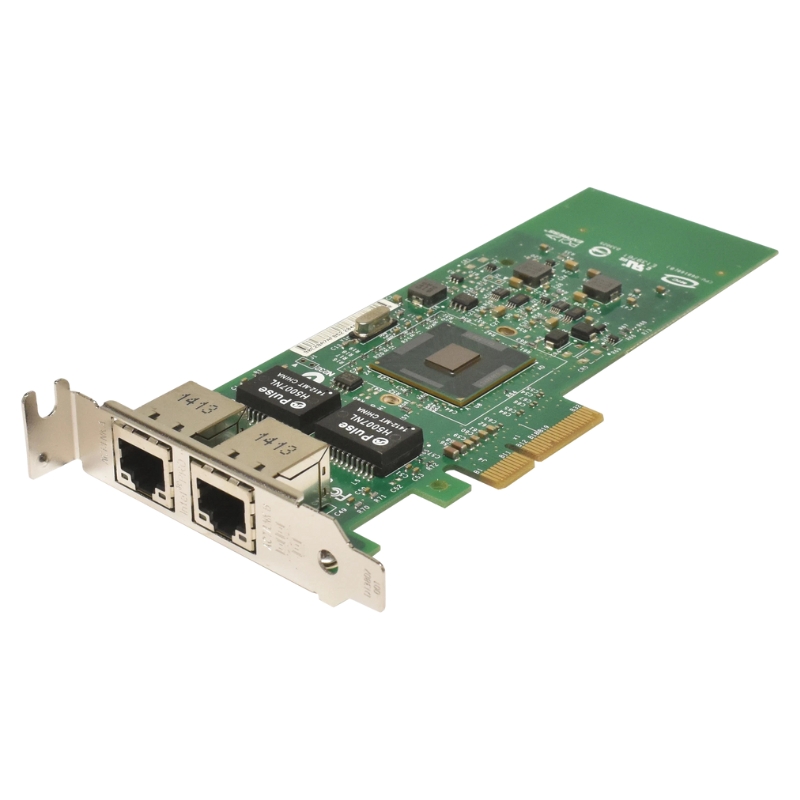


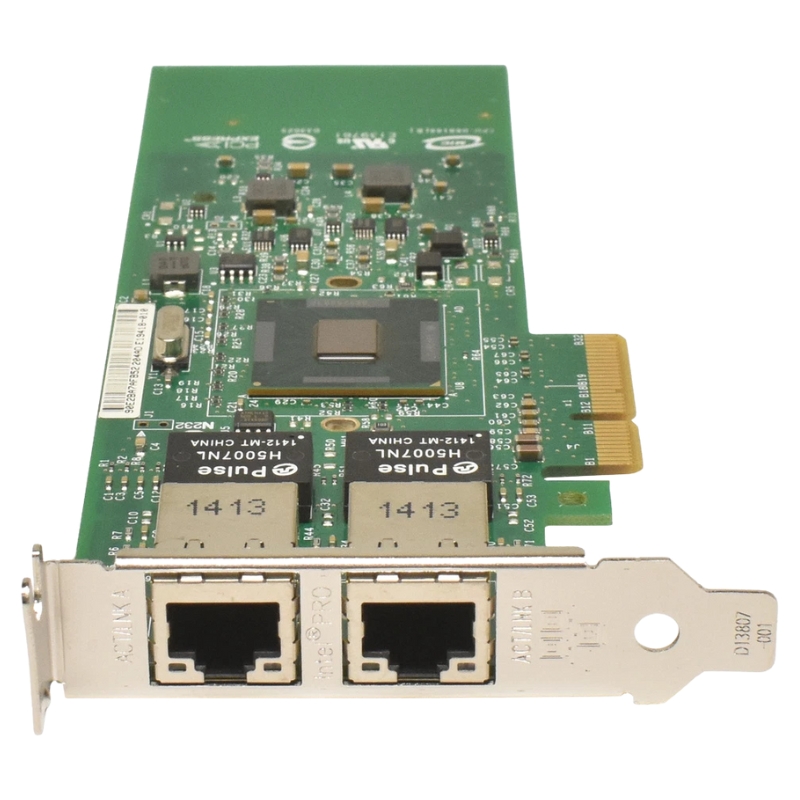
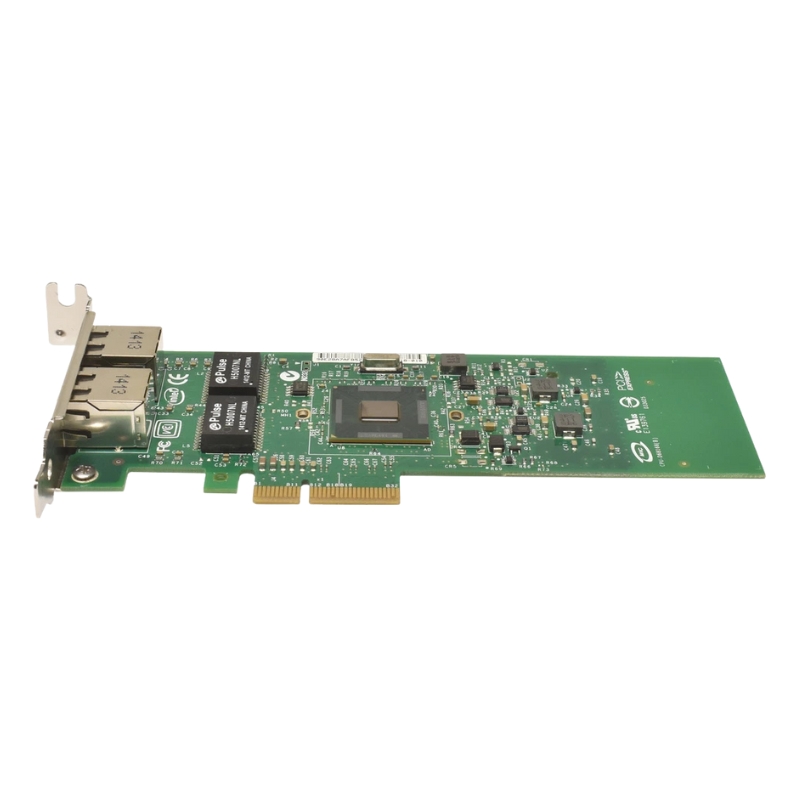
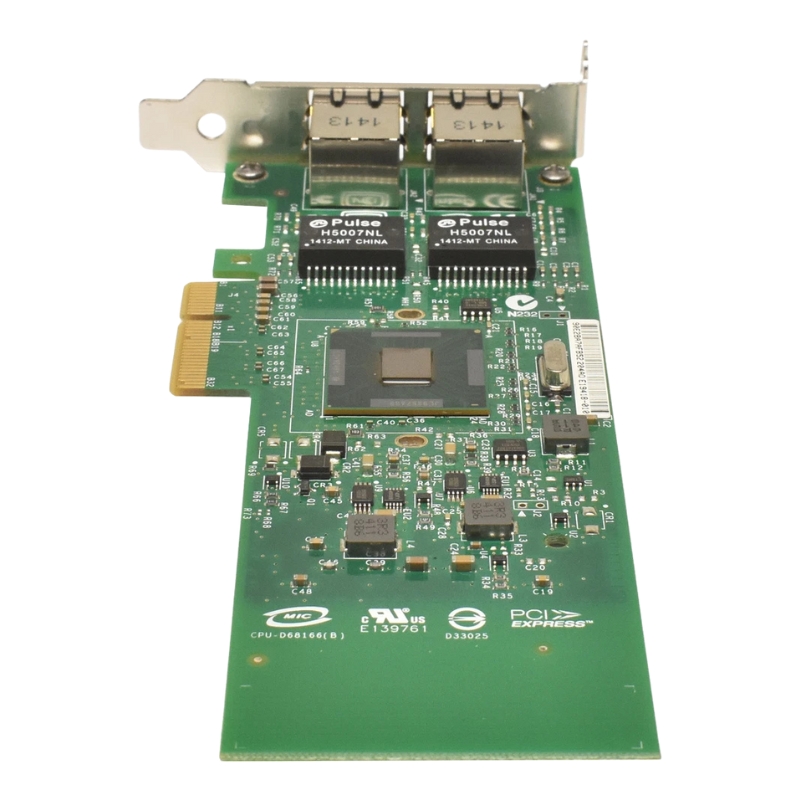
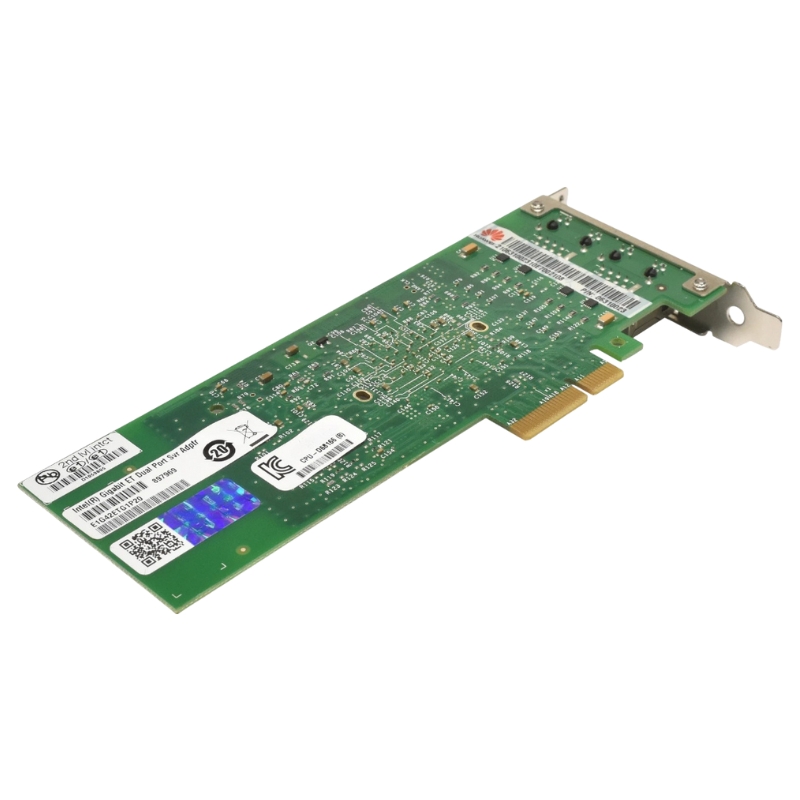
Intel E1G42ETG1P20 Dual-Ports Gigabit Ethernet PCI Express Server Adapter. Excellent Refurbished with 1 year replacement warranty
The Intel E1G42ETG1P20 Dual-Port Gigabit Ethernet PCI Express Server Adapter is a dependable networking solution designed for server environments that need stable wired connectivity, fast data handling, and enterprise-grade performance. Built with dual RJ-45 Gigabit Ethernet ports, this adapter is well suited for virtualization, network segmentation, redundancy, failover, and high-throughput data transfer across business networks. It is engineered for use in rack servers, tower servers, storage systems, and other infrastructure where reliable 10/100/1000 Mbps Ethernet communication is essential.
The Intel E1G42ETG1P20 Dual-Ports Gigabit Ethernet PCI Express Server Adapter belongs to a widely deployed class of enterprise network interface cards built to add dependable copper Gigabit Ethernet connectivity to rack servers, tower servers, edge appliances, virtualization hosts, storage systems, and application platforms that require stable wired network throughput. In environments where reliability, compatibility, and predictable data movement are essential, a dual-port PCI Express server adapter offers a practical balance between performance, flexibility, and deployment efficiency. This category is especially relevant for organizations that need to increase port density without consuming excessive server resources, while also preserving support for common switching infrastructure based on standard RJ45 copper cabling.
As a dual-port Gigabit Ethernet PCI Express server adapter, the Intel E1G42ETG1P20 is positioned for data center and business network deployments where one physical card can deliver two independent Ethernet connections for teaming, failover, segmentation, virtualization, storage traffic separation, or dedicated management paths. The value of this category is not limited to adding network ports. It also includes offload capabilities, reduced CPU overhead for network tasks, simplified cable planning, consistent driver support across major operating systems, and the ability to fit into enterprise servers that require trusted Intel-based networking hardware. In a server environment, network adapters are not simple accessories; they are essential infrastructure components that affect throughput, redundancy, application responsiveness, backup windows, cluster communication, and remote access performance.
Dual-port Gigabit server adapters remain relevant because many enterprise workloads still depend on low-latency, highly compatible copper Ethernet connectivity rather than higher-cost optical infrastructure. File services, virtualization clusters, backup repositories, edge gateways, line-of-business applications, print servers, VoIP support platforms, branch appliances, monitoring systems, and domain services can all benefit from a dual-port adapter that enables port separation and network resilience. The Intel E1G42ETG1P20 category addresses these needs through a PCI Express form factor designed for server use, making it suitable for deployments where consumer desktop adapters would not provide the durability, manageability, and operating system support required in professional environments.
The dual-port architecture is one of the most important advantages of the Intel E1G42ETG1P20 category. Two physical Ethernet ports on a single server adapter allow administrators to design more resilient and more organized network topologies without immediately consuming multiple PCI Express slots. In a modern server, PCIe slot availability is valuable. Storage controllers, RAID adapters, accelerator cards, additional NICs, and specialized interface cards all compete for expansion space. By integrating two Ethernet ports onto one server adapter, this product category helps preserve slot resources while still expanding connectivity.
Each port can be assigned to a distinct role. One port may be used for production application traffic, while the second can support management, backup, replication, cluster heartbeat, or virtual machine migration traffic. In other deployments, both ports may be bonded or teamed to increase redundancy and improve traffic distribution. This flexibility is one of the reasons dual-port server adapters continue to hold value in enterprise hardware planning. They allow a server to support multiple traffic classes without the clutter and cost of separate single-port cards.
In branch environments, the two ports can be used to connect a server to separate switches for failover protection. In virtualization environments, one port can be reserved for host management and hypervisor services while the other carries guest workload traffic. In storage-oriented deployments, a dedicated network path can be assigned to backup software or network attached storage communication. These use cases make the Intel E1G42ETG1P20 category attractive for businesses that need straightforward network segmentation and reliable copper Ethernet performance in a compact server adapter format.
The PCI Express interface is a foundational part of the value proposition behind the Intel E1G42ETG1P20 Dual-Ports Gigabit Ethernet PCI Express Server Adapter. PCIe provides a direct high-speed connection to the host system and is better suited to server workloads than older expansion interfaces. In enterprise servers, PCIe-based networking is preferred because it supports consistent bandwidth delivery, broad platform compatibility, and scalable performance characteristics that align with modern chipsets and server motherboards.
For server administrators, PCIe connectivity matters because it affects how efficiently network traffic is passed between the operating system, CPU, memory, storage stack, and applications. A server adapter in this category is expected to work smoothly with common server platforms, enabling organizations to upgrade network capabilities without requiring specialized chassis modifications or proprietary cabling. PCIe also supports enterprise-oriented features such as hot-plug compatibility in supported platforms, advanced interrupt handling, and integration with server management ecosystems.
Another important benefit of PCIe server adapters is deployment consistency. Many organizations standardize on PCIe-based NICs across mixed server fleets to simplify spares management, imaging, operating system deployment, and troubleshooting. A dual-port Intel adapter category fits well into these practices because it provides a known hardware baseline for copper Ethernet expansion in physical server environments, disaster recovery systems, lab infrastructure, and appliance platforms.
Gigabit Ethernet remains a practical and widely deployed networking standard for countless server workloads. Although high-speed interfaces such as 10GbE, 25GbE, and beyond are increasingly common in large data centers, many applications, branch systems, and dedicated infrastructure services continue to perform exceptionally well on 1GbE links. The Intel E1G42ETG1P20 category serves these environments by delivering two copper Gigabit Ethernet connections that can be used independently or cooperatively depending on network design.
In day-to-day business operations, a dual-port Gigabit server adapter supports file transfer, user authentication, software deployment, web applications, ERP access, remote management, backup operations, and internal communication systems. For organizations with a large installed base of Gigabit switches and structured cabling, the category offers a cost-effective method of expanding or replacing server networking without introducing new optical modules, transceivers, or switch upgrades. The use of standard RJ45 copper Ethernet also helps reduce complexity in small and medium business environments where simplicity and compatibility are often more important than raw bandwidth numbers.
Application servers often require dependable throughput rather than extreme network speed. Business software, middleware platforms, web services, DNS servers, licensing servers, and internal automation tools can all benefit from dual-port Gigabit connectivity. The Intel E1G42ETG1P20 category supports this balance by allowing one port to carry primary application traffic while the second port can remain available for failover or for secondary communication paths such as management and maintenance operations.
This design is useful in production environments because it prevents all network activity from depending on a single physical link. If a cable, switch port, or upstream path experiences problems, a second Ethernet interface can help maintain service continuity when the environment is configured for redundancy. Even in scenarios where full bandwidth aggregation is not required, simply having a second physical port increases operational flexibility and reduces the likelihood of a single point of network failure.
One of the strongest reasons organizations continue to deploy dual-port copper server adapters is the installed base of Category-rated twisted-pair cabling and RJ45 switching equipment. Reusing existing infrastructure can significantly reduce upgrade costs and shorten deployment timelines. The Intel E1G42ETG1P20 category aligns with that requirement by fitting into copper Ethernet networks already used across offices, campuses, server rooms, manufacturing sites, and distributed branch locations.
For IT teams managing legacy and modern systems side by side, copper-based Gigabit adapters simplify migrations. A server can be upgraded, repurposed, or reimaged while remaining compatible with current switches and patch panels. This is particularly important in environments where downtime windows are limited and infrastructure changes must be tightly controlled. Instead of redesigning the network around new media types, administrators can deploy a dual-port adapter and keep cabling practices consistent across the estate.
Virtualization places unique demands on server networking because one physical host may carry traffic for dozens of virtual machines, management interfaces, storage paths, cluster communications, and backup operations at the same time. A dual-port server adapter category such as the Intel E1G42ETG1P20 is useful in these environments because it provides multiple physical network interfaces that can be assigned to different virtual switches, security zones, or operational functions. While large virtualization clusters may use higher-speed networking for storage-heavy workloads, there are still many scenarios where dual-port Gigabit adapters are an excellent fit, especially for branch virtualization, test labs, management clusters, lightweight application hosts, and edge infrastructure.
In a hypervisor deployment, administrators often prefer to separate host management traffic from guest workload traffic. This separation improves security, simplifies monitoring, and makes it easier to apply firewall policies and VLAN assignments. The Intel E1G42ETG1P20 category supports this approach by giving the host two distinct physical interfaces. One port can be dedicated to the hypervisor management plane, remote console access, patching, and monitoring. The second port can be used for virtual machine traffic, tenant services, development workloads, or application front-end communication.
Even in smaller deployments where only a few virtual machines are running, this kind of separation helps preserve order and predictability. It also makes troubleshooting easier because management traffic can be isolated from application traffic when diagnosing latency, switch configuration issues, or security policy conflicts. For organizations operating virtualization platforms in regional offices or edge locations, a dual-port Gigabit server adapter can provide exactly the right amount of physical network separation without adding unnecessary cost.
Virtualization hosts are often expected to remain available for long periods and to tolerate component failures without interrupting critical services. NIC teaming and failover capabilities are therefore highly relevant in this category. By using both Ethernet ports together, the Intel E1G42ETG1P20 category can support resilience strategies where one link remains on standby or where traffic is balanced across both ports depending on the operating system and switch configuration.
This is especially valuable for virtual machine hosts that support internal business applications, development environments, or branch services. If a single cable is disconnected or a switch interface fails, the server may continue operating through the remaining network link. The resulting resilience is not merely a convenience; it can be essential for maintaining authentication services, local application access, print systems, or edge data collection functions in locations where immediate hands-on support is not always available.
The Intel E1G42ETG1P20 Dual-Ports Gigabit Ethernet PCI Express Server Adapter category is well suited to environments where traffic isolation matters. In enterprise networking, not all packets should travel over the same logical or physical path. Backup traffic, management communication, production application sessions, monitoring flows, storage replication, and software distribution often compete for bandwidth if they are forced onto one network interface. Dual-port server adapters give administrators more freedom to create deliberate traffic boundaries.
Servers benefit from a dedicated management path because it allows administrators to reach systems for maintenance, monitoring, patching, and diagnostics without mixing those activities with application traffic. With a dual-port adapter, one interface can be assigned to a management VLAN or isolated administration network. This improves security posture and can simplify access control because only authorized tools and users need visibility into that network segment.
In managed hosting, healthcare, manufacturing, education, and public sector environments, dedicated management networking is often part of standard operational practice. It reduces risk by limiting exposure of sensitive administrative protocols and helps maintain access to a server even when application traffic is under heavy load. The Intel E1G42ETG1P20 category fits neatly into this model because it provides a second physical interface without forcing a move to more expensive multiport solutions.
A major advantage of having two physical Ethernet ports is the ability to connect each port to a different switch. This design reduces dependence on any single top-of-rack or access switch and supports failover planning in case of switch maintenance, firmware issues, or hardware failure. In resilient server designs, switch diversity is a simple but effective way to increase availability without dramatically increasing infrastructure complexity.
The Intel E1G42ETG1P20 category supports this approach in environments ranging from compact server closets to full enterprise racks. One cable can connect to the primary switch and the second to a redundant switch or alternate stack member. When paired with proper operating system or hypervisor configuration, the server can continue communicating even if one network path becomes unavailable. For business systems that must remain accessible outside office hours, this extra layer of resilience is highly valuable.
Server-grade network adapters are expected to do more than simply move packets. They are designed to reduce CPU overhead associated with network processing, allowing the host processor to spend more time on application workloads rather than on repetitive packet-handling tasks. The Intel E1G42ETG1P20 category is relevant in this context because Intel server adapters are commonly associated with intelligent offload capabilities and enterprise driver support that help improve overall host efficiency.
As servers handle increasing volumes of traffic, the operating system must process interrupts, segment data, validate checksums, and move packets through the networking stack. Offload features built into enterprise NIC categories can reduce this burden by shifting selected networking tasks away from the main CPU. The practical result is often lower CPU utilization during sustained network activity, better application responsiveness, and improved scalability when multiple services share the same host.
For file servers, virtualization hosts, web servers, and storage gateways, this matters because network efficiency affects the entire user experience. If the server spends too much CPU time on packet processing, application latency can increase and consolidation ratios may suffer. A dedicated server adapter category from Intel is therefore attractive not only because of connectivity expansion but also because of its role in improving workload balance within the system.
Many enterprise workloads are not glamorous, but they are constant. Authentication requests, log shipping, software updates, monitoring traffic, document access, branch file replication, and internal API calls create a steady flow of network operations throughout the day. The Intel E1G42ETG1P20 category is well suited to these repetitive workloads because it provides dependable Gigabit connectivity with server-oriented design characteristics intended for always-on environments.
Where a desktop NIC might be acceptable in a lab, a server adapter category is preferred in production because it is built for longer duty cycles, validated drivers, broader operating system support, and enterprise feature sets. That distinction becomes more important over time as workloads grow, maintenance windows shrink, and business units expect uninterrupted access to digital services.
One of the most important purchasing considerations in the server adapter category is not visible on the card itself: software compatibility. An enterprise network adapter must work predictably with the operating systems and hypervisors used across the environment. The Intel E1G42ETG1P20 category is valuable because Intel-based server NICs are widely recognized for broad compatibility with major server operating systems, management tools, and virtualization platforms.
Businesses often operate mixed environments. A single data center might contain Windows Server systems, multiple Linux distributions, virtual appliances, backup servers, and dedicated storage hosts. Standardizing on a dual-port Intel server adapter category can simplify deployment because administrators are more likely to find established driver packages, familiar configuration tools, and documented best practices for Intel-based NICs than for obscure or consumer-grade alternatives.
This matters during initial installation, but it matters even more during long-term maintenance. Operating system upgrades, hypervisor patches, security updates, and hardware replacements are easier to manage when the NIC platform is well understood. Consistency reduces risk, speeds troubleshooting, and helps organizations keep spare parts that can be reused across multiple systems rather than stocking different adapters for every server model.
In production IT operations, hardware value is measured over years, not days. A server adapter may remain in service through several operating system revisions, application migrations, and ownership changes. Choosing a category such as the Intel E1G42ETG1P20 can support this long-term perspective because Intel networking hardware is commonly associated with established support ecosystems, firmware guidance, compatibility references, and lifecycle documentation.
Even when a product line reaches discontinued status, many organizations continue to use it in stable environments, maintenance pools, disaster recovery systems, or legacy application platforms. In those cases, the availability of technical documentation, known driver behavior, and cross-platform familiarity becomes a significant advantage. A dual-port Intel server adapter therefore retains value not only as a new deployment option but also as a maintenance and replacement component for installed server fleets.


 Contact Us
 Information
 Catalog
 Solid State Drives (SSD)
 Network Switches
 Hard Disk Drives
 HBA & Controllers
 PC & Servers
 PC & Server Memory
 CPU & Processors
 Network Routers
 Power Supplies
 Tape Drives & Libraries
 Network Devices
 Computer & Network Cables