(7% discount is applied at checkout)
Cart is empty
Your go-to destination for cutting-edge server products
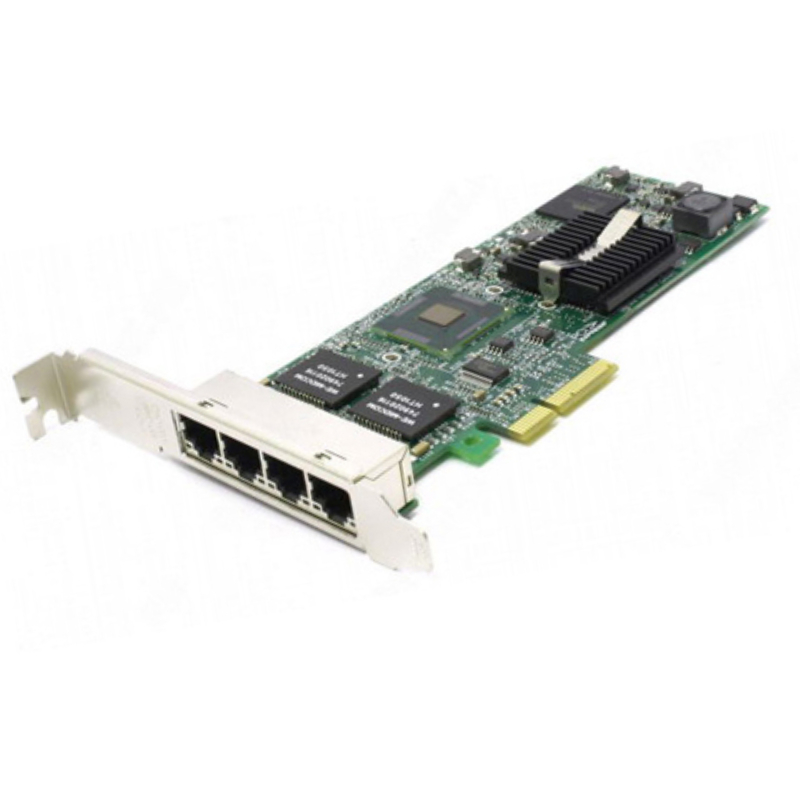


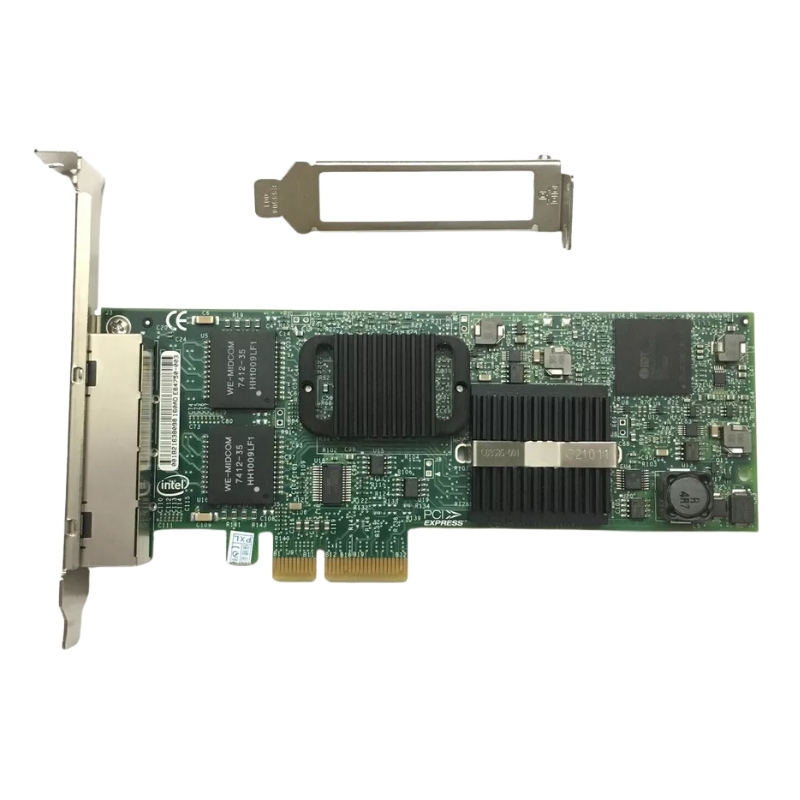
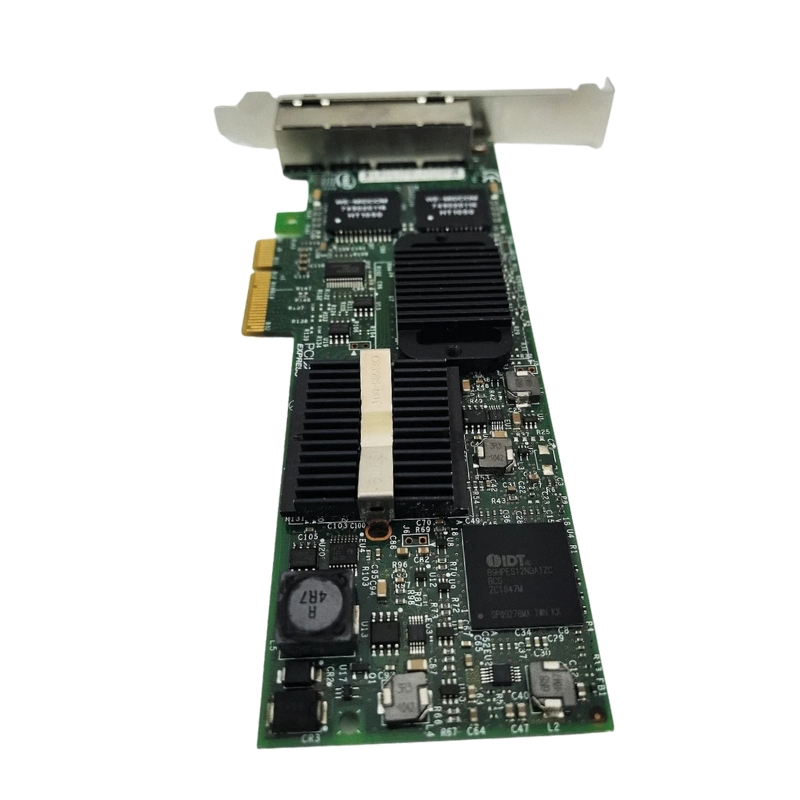
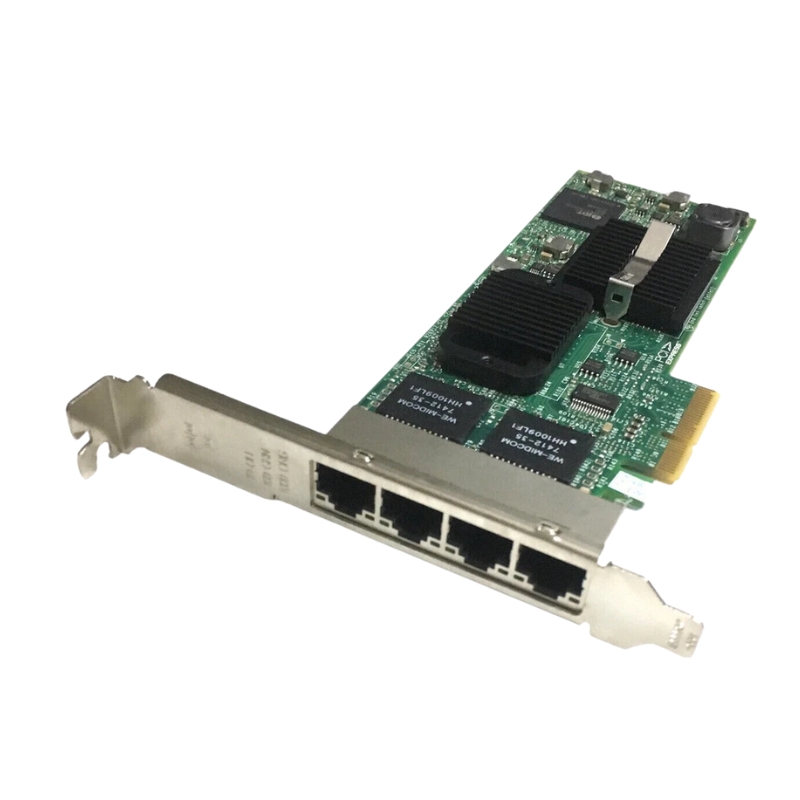
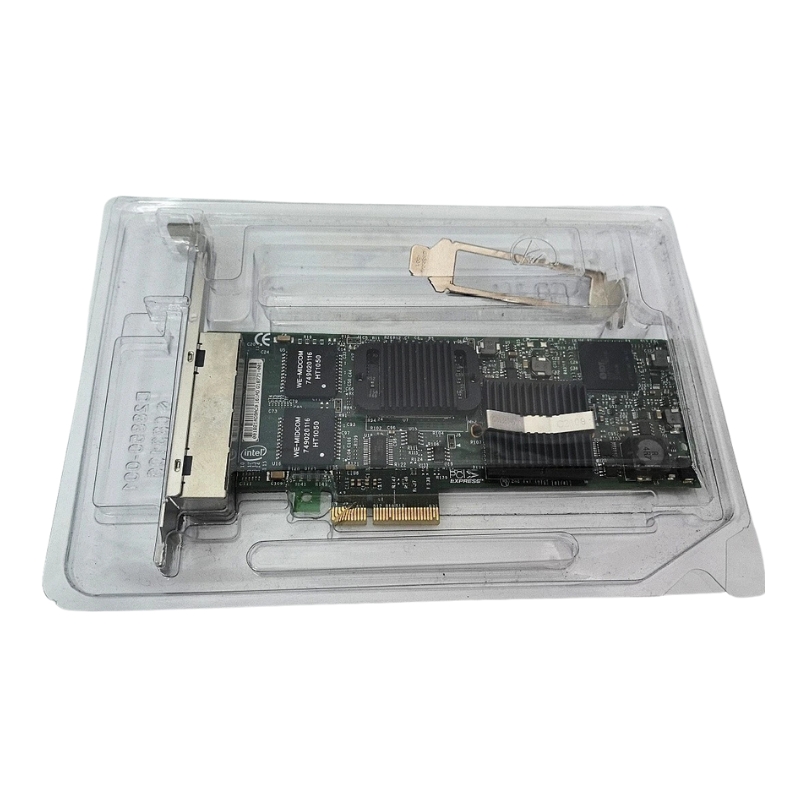
Intel E1G44ET2BLK 4 Ports Ethernet PCI Express x4 Server Adapter. Excellent Refurbished with 1 year replacement warranty
The Intel E1G44ET2BLK is a high-performance 4-port Gigabit Ethernet server adapter built for businesses that need dependable wired connectivity, flexible network expansion, and stable throughput in demanding IT environments. Designed as a PCI Express x4 plug-in card, this Intel network adapter provides four RJ-45 Ethernet ports in a single compact solution, making it an excellent choice for servers, network appliances, virtualization platforms, and data-intensive business applications. With support for 10Base-T, 100Base-TX, and 1000Base-T standards, it delivers broad network compatibility while helping organizations scale bandwidth, improve traffic handling, and streamline infrastructure upgrades.
The Intel E1G44ET2BLK 4 Ports Ethernet PCI Express x4 Server Adapter is built for server environments that require dependable Gigabit Ethernet connectivity, flexible port density, consistent data handling, and efficient network scaling within rack, tower, and appliance-based platforms. As a quad-port server network adapter, this model is designed to expand Ethernet connectivity without consuming multiple expansion slots, making it a practical choice for virtualization hosts, application servers, storage platforms, security appliances, web servers, clustered systems, and infrastructure nodes that must maintain stable network communication across multiple segments at the same time.
Within enterprise networking, a four-port PCI Express Ethernet adapter fills an important role because it combines port consolidation, workload separation, and traffic management in a single server-class card. Instead of relying on multiple single-port or dual-port cards, administrators can deploy the Intel E1G44ET2BLK to add four independent RJ45 Gigabit Ethernet connections through one PCIe x4 slot. This approach helps improve cable organization, supports denser server builds, and simplifies network expansion for systems that must connect to multiple switches, VLANs, subnets, storage networks, management planes, or security zones.
The adapter belongs to a category of Intel server networking hardware designed to support copper-based Gigabit Ethernet deployments while aligning with the performance and reliability expectations of business infrastructure. In a data center or distributed office environment, the value of a quad-port Ethernet adapter extends beyond simple connectivity. It allows a single physical server to separate production traffic from backup traffic, management traffic from application traffic, and virtual machine uplinks from storage communications. This separation improves administrative control, helps reduce congestion across shared links, and gives network teams more options when building resilient, segmented, and performance-aware server environments.
The Intel E1G44ET2BLK is especially relevant in organizations where one physical server performs many roles at once. A virtualization host may run multiple workloads for different departments, a storage appliance may serve both backup and live production data, and a firewall or routing platform may need several physical uplinks for internal, external, and demilitarized network zones. A quad-port adapter enables that kind of design without forcing the administrator to consume additional motherboard slots that may be reserved for RAID controllers, GPU accelerators, HBA cards, or other expansion devices.
In a modern IT environment, server hardware often serves multiple applications simultaneously. A database server may replicate to another node, accept management traffic from administrators, process client requests from front-end systems, and interact with backup software during off-peak windows. If all of that traffic traverses one network interface, the result can be inefficient bandwidth use, limited fault tolerance, and complicated prioritization. The Intel E1G44ET2BLK addresses this by providing four Ethernet ports that can be used independently or combined strategically depending on the design of the environment.
For example, one port may connect to a management network, another to a virtual machine uplink, a third to storage traffic, and a fourth to backup or failover connectivity. In another design, all four ports may be bonded or teamed to create more bandwidth and link resilience for a heavily used application server. In yet another scenario, two ports may be dedicated to production traffic while two are reserved for clustered heartbeat communication and replication. These deployment possibilities make quad-port Ethernet adapters attractive in both legacy server rooms and modern virtualized data centers.
The importance of the PCI Express x4 form factor should also be recognized within this category. A PCIe x4 server adapter is intended to provide sufficient host bandwidth for multi-port Gigabit Ethernet operations while remaining compatible with larger slots such as x8 and x16 in many systems. This improves deployment flexibility across a wide range of server platforms. Organizations can often install the adapter in standard rack servers, custom appliances, branch infrastructure systems, and edge platforms without requiring a proprietary networking module or specialized daughtercard slot.
The defining feature of the Intel E1G44ET2BLK is its four-port copper Ethernet design. Each port supports standard Ethernet connectivity over RJ45 cabling, allowing the adapter to fit naturally into environments built around conventional structured copper cabling. This is particularly valuable for organizations that already operate Category-rated Ethernet infrastructure throughout offices, server rooms, and branch locations. Instead of introducing a different cabling standard, the adapter can be integrated into existing switch and patch panel architectures with minimal disruption.
Four-port connectivity expands the practical networking options available to a server. One immediate benefit is physical network segmentation. Separate ports can be assigned to different functions, allowing traffic isolation at the hardware level. This can support security policy enforcement, simplify firewall rules, and reduce the chance that noncritical traffic interferes with sensitive application flows. In high-availability environments, the four ports can also be distributed across different switches so that a switch failure or cable issue does not fully disconnect the server from the network.
Another advantage is bandwidth distribution. Although each individual connection is a Gigabit Ethernet port, the presence of four ports gives administrators the ability to spread network activity across multiple links. If a server supports several workloads with distinct communication patterns, assigning those patterns to separate interfaces can reduce contention and make troubleshooting easier. Network monitoring tools can observe each path individually, revealing whether backup jobs, replication, user access, or application synchronization is consuming the most bandwidth.
RJ45-based Ethernet remains one of the most practical connection methods for many enterprise and SMB deployments. Copper cabling is familiar to IT teams, cost-effective to deploy, and widely supported across switches, routers, patch panels, and structured building wiring. The Intel E1G44ET2BLK leverages this practicality by offering a quad-port copper interface that can be integrated into standard network designs without requiring fiber transceivers, specialized patching components, or a separate optical infrastructure budget.
This practicality matters in server refresh projects, branch rollouts, lab environments, and secondary data center expansions where organizations need dependable Gigabit Ethernet capacity without moving to a more expensive transport layer. For virtualization clusters, file servers, print servers, ERP nodes, and management appliances, copper Gigabit Ethernet continues to be a useful and efficient networking choice. The Intel E1G44ET2BLK fits naturally into these environments by delivering a balance of port density and familiar deployment methodology.
Because the adapter can support mixed network roles across four ports, administrators can also repurpose servers more easily. A system initially deployed as a backup server may later become a virtualization host, a remote office application platform, or a monitoring node. The availability of four copper ports creates flexibility that can extend the useful life of the server and reduce the need for additional interface hardware later.
The Intel E1G44ET2BLK belongs to the class of server adapters designed for PCI Express integration, a key requirement for modern business systems. PCIe provides a dedicated path between the network adapter and the host system, helping maintain efficient I/O handling compared with older shared-bus technologies. For a quad-port Gigabit Ethernet adapter, the x4 PCIe design is important because it supports the bandwidth and responsiveness needed for multiple simultaneous network streams while remaining compatible with the physical expansion architecture of many server motherboards.
Server builders and infrastructure teams value PCIe-based adapters because they are straightforward to deploy in standard rack and tower platforms. The adapter can be installed as part of a new build, added during a server refresh, or used to extend the life of an existing platform that needs more Ethernet interfaces. In environments with mixed server generations, a PCIe x4 adapter often offers a practical upgrade path because it can fit into appropriately wired PCIe slots that are already present in a wide range of systems.
From an infrastructure planning standpoint, a quad-port PCIe adapter is also an efficient way to conserve slot space. If four Ethernet connections are required, consuming only one expansion slot instead of two or four can have a meaningful effect on system design. The remaining slots can be reserved for storage acceleration, Fibre Channel or SAS HBAs, additional RAID capability, GPU resources, or future upgrades. This is especially important in 1U servers and compact appliances where expansion resources are scarce.
In high-density deployments, slot efficiency is a serious design consideration. A virtualization host, storage node, or edge compute platform may need several different add-in cards to perform its role properly. When a network adapter can provide four ports in one slot, it frees system designers to allocate expansion capacity elsewhere. This can simplify procurement because fewer total components are needed, and it can improve serviceability because there are fewer cards to cable, label, monitor, and replace.
For colocation environments and enterprise data centers where every rack unit and every power draw matters, a consolidated quad-port adapter can support a cleaner and more economical deployment model. The Intel E1G44ET2BLK fits into that model by combining multiple Ethernet interfaces into one server-grade expansion card while retaining the familiar copper connectivity used throughout many facilities.
The Intel E1G44ET2BLK is relevant to a wide variety of server workloads because multi-port Gigabit Ethernet remains useful in many production environments. Application servers that host internal business systems, file servers that provide shared data access, backup targets that receive scheduled transfers, and middleware systems that communicate with several upstream and downstream services can all benefit from multiple physical Ethernet ports. Rather than concentrating all traffic onto one connection, the server can distribute communication flows based on application design, operational priorities, and security requirements.
In file-serving environments, separate interfaces can help isolate user traffic from replication or backup activity. During working hours, user access to shared files can remain on one or more dedicated interfaces while replication to a secondary site or backup target uses a different link. This reduces the chance that large data movement operations will degrade the responsiveness of everyday user access. For organizations that maintain centralized file repositories, imaging libraries, or document management systems, such separation can improve the overall user experience while simplifying network monitoring.
Application servers also benefit from quad-port flexibility. One server may host web services, APIs, management agents, and monitoring exporters at the same time. By assigning different communication roles to different interfaces, administrators can enforce traffic boundaries and improve visibility into how the server is used. If a business platform integrates with a database network, a front-end network, and an administrative management plane, the Intel E1G44ET2BLK provides the physical interface count needed to keep those flows organized.
One of the most important use cases for the Intel E1G44ET2BLK category is server virtualization. Hypervisors consolidate many workloads onto a smaller number of physical hosts, which places greater importance on the networking layer. A virtualization host may carry management traffic, storage traffic, live migration traffic, backup traffic, and multiple tenant or production virtual machine networks all at once. A quad-port server adapter offers the physical interface density needed to build a more controlled and resilient virtual networking design.
In a virtualized cluster, administrators often create separate virtual switches or distributed port groups for distinct purposes. Management interfaces may be isolated from guest workload traffic, while storage and migration traffic use their own uplinks. The Intel E1G44ET2BLK gives the hypervisor multiple physical paths that can be assigned according to the operational requirements of the cluster. This helps reduce contention, supports security segmentation, and allows the administrator to dedicate bandwidth more intentionally.
For small and midsize virtualization deployments, a quad-port Gigabit adapter can be especially practical because it provides enough ports to implement basic traffic separation without requiring a more expensive high-port-count platform. A host can maintain a pair of teamed uplinks for production virtual machines, one port for management, and one for storage or replication. In branch virtualization scenarios, that may be all the connectivity required to support a stable local infrastructure cluster.
Security-conscious environments often require servers to interact with more than one network zone. A firewall appliance may need inside, outside, and management interfaces. A monitoring platform may require a production uplink, a mirror or capture segment, and an administrative interface. A domain controller or management server may need one interface for production services and another for backup or isolated administrative tasks. The Intel E1G44ET2BLK supports these designs by providing four physical Ethernet ports that can be mapped to separate network functions.
Physical segmentation remains valuable even in environments that make heavy use of VLANs. While VLANs are excellent for logical separation, dedicated physical interfaces can still simplify compliance, reduce accidental overlap between traffic classes, and provide additional assurance for sensitive workflows. For example, an organization may choose to keep out-of-band management, production application access, and backup traffic on distinct physical ports, each connected to a different switch fabric or access layer. A quad-port adapter makes this feasible without requiring multiple cards.
Security appliances are another important use case. Software-based routers, intrusion detection systems, packet brokers, WAN optimization devices, and firewall platforms often need several physical interfaces to operate effectively. The Intel E1G44ET2BLK can be useful in such builds because it combines four copper ports into a single adapter that can be installed in a general-purpose server running network security or network services software. This helps create flexible and economical infrastructure for branch offices, labs, and specialized enterprise projects.
When a server has multiple responsibilities, network clarity becomes just as important as raw speed. Troubleshooting is easier when administrators know which port carries which class of traffic. Documentation is cleaner when production, management, backup, and replication paths have their own interfaces. Monitoring is more useful when interface statistics map clearly to business functions. The Intel E1G44ET2BLK supports this clarity by enabling explicit, port-level network role assignment.
Over time, that clarity can translate into lower operational friction. Teams can identify congestion more quickly, understand dependency paths more easily, and perform maintenance with greater confidence. For organizations managing a growing mix of legacy systems, virtual machines, branch workloads, and appliance-based services, these practical operational benefits matter just as much as the technical specifications of the card itself.
Resilience is a major reason to deploy a multi-port server adapter. Even when a workload does not require four active Ethernet paths for performance, it may still benefit from having multiple ports available for failover and redundancy. The Intel E1G44ET2BLK can be used in designs where ports are distributed across different switches or switch stacks, reducing the chance that a single cable, transceiver, or access switch problem will isolate the server completely.
In many server environments, link redundancy is achieved through teaming, bonding, or other host-based link aggregation methods. These technologies allow multiple interfaces to operate together for failover and, depending on the implementation, load distribution. A quad-port adapter provides more flexibility in how those teams are constructed. Administrators can build two independent two-port teams, one four-port team, or a mix of dedicated and redundant interfaces depending on the service profile of the server.
For cluster nodes, this can be particularly useful. A failover cluster may need redundant production access while also maintaining a dedicated heartbeat or replication network. With four ports available, a single Intel E1G44ET2BLK can often cover both needs. In branch office systems where physical server count is limited, the ability to provide both redundancy and segmentation from one card is highly valuable.
Because the adapter provides four ports, it supports a wide range of continuity-focused networking scenarios. One server might use two teamed ports for application traffic and keep the remaining two ports dedicated to backup and management. Another might use all four ports in two redundant pairs connected to separate switches. A security appliance might reserve one port for management, one for monitoring, and a redundant pair for inline traffic handling. The flexibility of these layouts is one of the strongest arguments for a quad-port server NIC in business environments where uptime matters.
As organizations seek to extend server life and reduce unplanned downtime, adapters like the Intel E1G44ET2BLK remain relevant because they help translate network redundancy goals into a practical physical design. They provide the building blocks for continuity without demanding multiple separate cards or a more complex server hardware footprint.
Although the Intel E1G44ET2BLK is fundamentally an Ethernet server adapter, its usefulness extends into storage-adjacent and data movement scenarios where multiple network paths are beneficial. Many organizations use IP-based storage access, replication, and backup workflows that rely on conventional Ethernet rather than dedicated storage fabrics. In these cases, having four physical Gigabit ports allows the server to separate storage-related communication from general user or application traffic, which can improve manageability and reduce contention.
A backup server, for example, may receive scheduled transfers from many systems during a narrow overnight window. If those transfers share the same interface as administrative access or production service traffic, troubleshooting and performance tuning become more difficult. With a quad-port adapter, the backup path can be isolated to one or more dedicated interfaces while the server’s normal management and monitoring functions continue on separate links. This not only helps preserve service quality but also provides clearer visibility into how backup jobs affect network usage.
Similarly, a storage gateway or file replication node may need one network for client access and another for backend synchronization. In disaster recovery environments, systems often replicate data to a remote location while continuing to serve users locally. By assigning replication to a dedicated port or team of ports, administrators can keep recovery-related traffic organized and easier to measure. The Intel E1G44ET2BLK is well suited to these designs because its four-port layout provides enough physical separation to build structured, policy-driven communication paths without consuming multiple expansion slots.


 Contact Us
 Information
 Catalog
 Solid State Drives (SSD)
 Network Switches
 Hard Disk Drives
 HBA & Controllers
 PC & Servers
 PC & Server Memory
 CPU & Processors
 Network Routers
 Power Supplies
 Tape Drives & Libraries
 Network Devices
 Computer & Network Cables