(7% discount is applied at checkout)
Cart is empty
Your go-to destination for cutting-edge server products
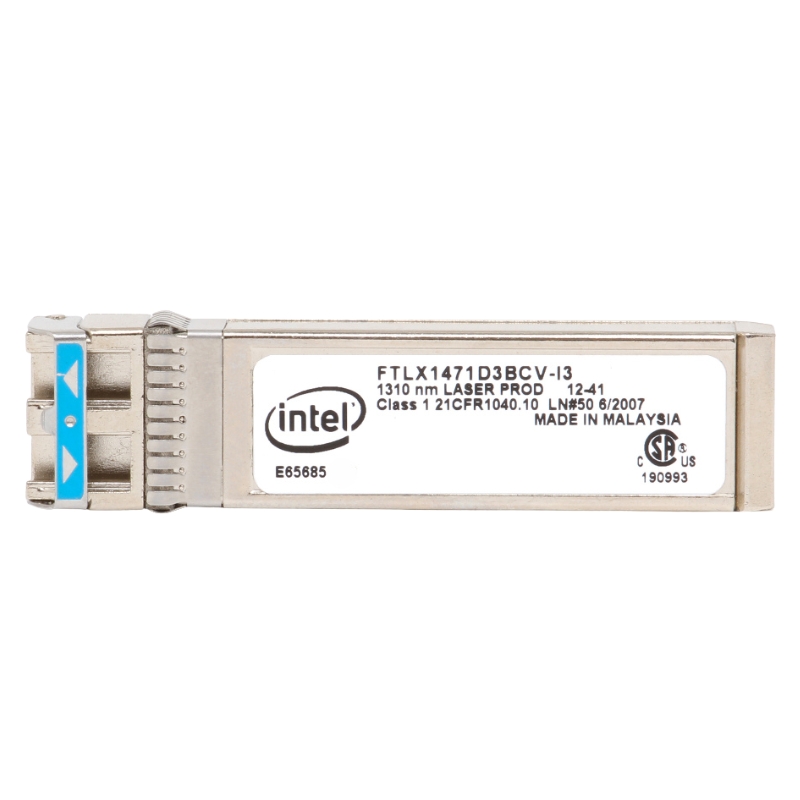


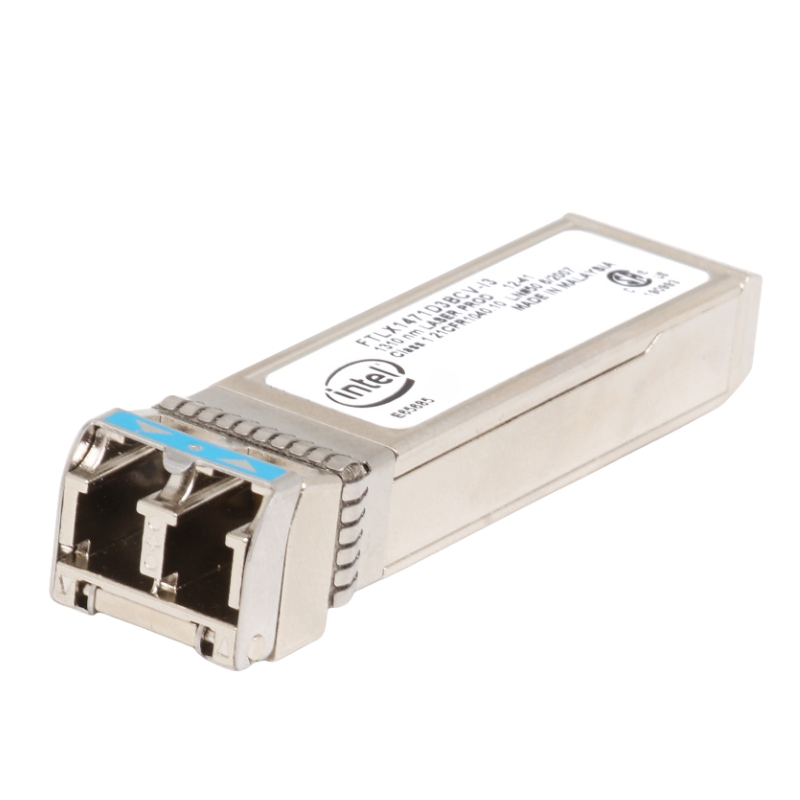
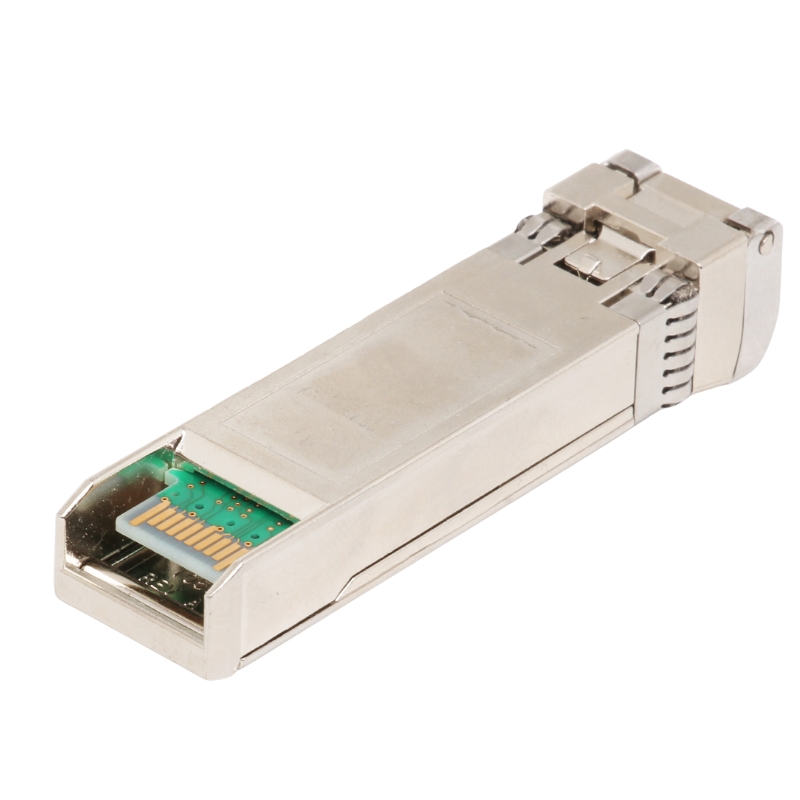
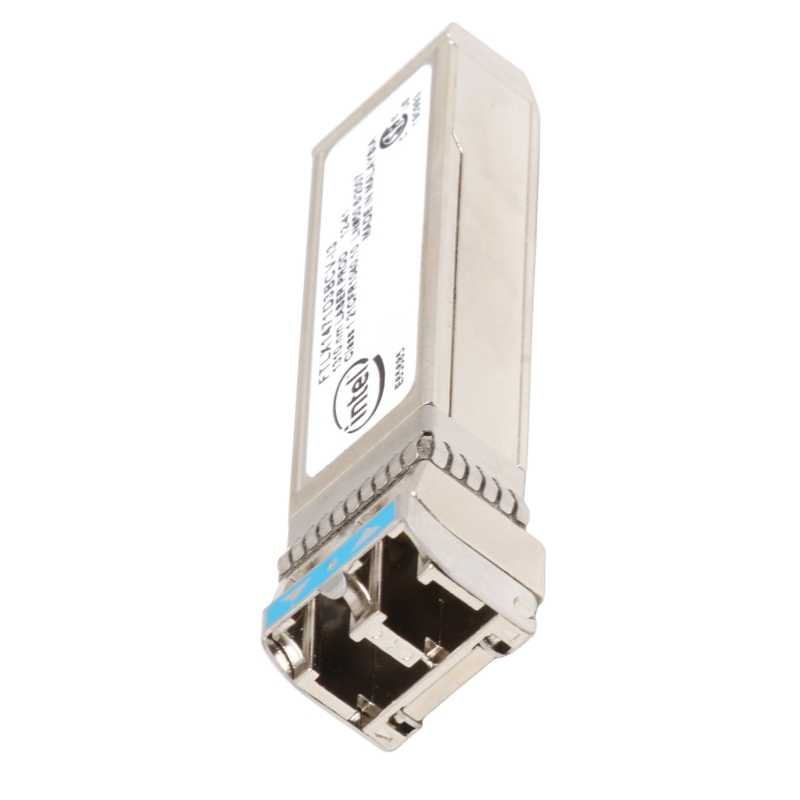
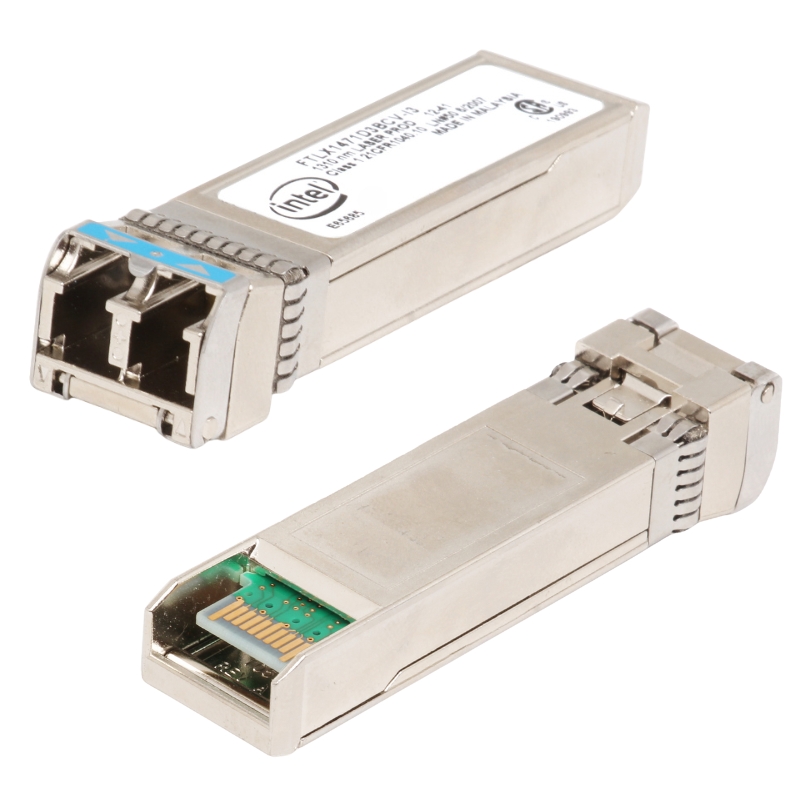
Intel E65685-003 Single-mode Fiber SFP+ 10km, 1310nm Transceiver Module. Excellent Refurbished with 1 year replacement warranty
The Intel E65685-003 is a high-performance SFP+ transceiver module engineered for reliable 10GbE optical networking across long-distance single-mode fiber links. Designed for demanding enterprise, data center, and server-networking environments, this module uses a 1310nm wavelength and supports transmission distances of up to 10 kilometers, making it a practical choice for backbone connectivity, switch uplinks, server adapter links, and infrastructure expansion projects. As a compact plug-in optical module, it enables stable 10Gb Ethernet communication while helping organizations build scalable, low-latency fiber networks with dependable signal integrity.
The Intel E65685-003 Single-mode Fiber SFP+ 10km 1310nm Transceiver Module is built for high-speed optical networking environments that demand reliable 10Gb Ethernet transmission, low-latency data movement, and consistent signal integrity across longer distances. As a compact hot-swappable optical transceiver designed for use in compatible network switches, servers, storage systems, and enterprise networking platforms, this transceiver module supports single-mode fiber infrastructure and enables dependable 10 Gigabit connectivity over distances up to 10 kilometers. It is well suited for data centers, campus backbones, enterprise aggregation layers, service provider links, storage networking deployments, and business-critical communication environments where stable optical performance and clean long-range transmission are essential.
In modern network architecture, transceiver modules play a central role in converting electrical signals from networking equipment into optical signals for transmission across fiber cabling, then converting incoming optical signals back into electrical form at the receiving device. The Intel E65685-003 transceiver is engineered for that purpose within 10GbE environments, making it a valuable component for organizations building scalable and high-bandwidth fiber infrastructures. The use of single-mode fiber, combined with a 1310nm wavelength and a reach of up to 10km, makes this module especially relevant for deployments that extend beyond short in-rack or same-room connections and into cross-building, campus-wide, metropolitan, or distributed enterprise network segments.
As businesses continue to increase their use of virtualization, cloud applications, high-speed storage traffic, video collaboration platforms, security systems, and large-scale data transfer workloads, the need for reliable optical interconnects becomes more important. The Intel E65685-003 category addresses those needs by supporting 10Gb Ethernet performance in a form factor that fits into SFP+ compatible interfaces while maintaining the flexibility, efficiency, and density required in modern switching and routing environments. This makes the module highly relevant for organizations seeking to expand network throughput while preserving clean cable management, platform compatibility, and long-term optical stability.
The defining characteristic of the Intel E65685-003 transceiver module is its support for single-mode fiber cabling. Single-mode fiber is widely used in networking environments that require long-distance transmission, minimal attenuation, and precise optical signaling. Unlike multimode fiber, which is generally suited to shorter runs within buildings or equipment rooms, single-mode fiber is optimized for carrying optical signals across significantly greater distances while preserving signal quality and reducing modal dispersion. This makes it a foundational medium for enterprise backbone links, inter-building connections, carrier handoffs, and long-haul structured cabling strategies.
By supporting single-mode fiber and a reach of up to 10km, the Intel E65685-003 transceiver becomes a practical choice for network planners who need to connect separate facilities, extend high-speed connectivity across campus environments, or support centralized infrastructure models in which computing and storage resources are located away from user access layers. In these cases, the use of single-mode optical links can help maintain consistent performance while reducing the signal limitations commonly associated with copper-based media or short-range optics.
Single-mode fiber transceivers are often selected for environments where future expansion is expected. Since the cabling plant itself may already support long-distance optical transmission, deploying a 10km single-mode SFP+ module allows organizations to take advantage of existing fiber infrastructure while upgrading the active components that drive network performance. This can simplify migration projects, support backbone modernization, and help businesses move from lower-speed optical standards to 10GbE without replacing the entire cabling ecosystem.
Single-mode fiber networking offers multiple operational and architectural advantages for enterprise and commercial environments. The Intel E65685-003 transceiver is aligned with these advantages by supporting the kind of stable optical transport needed in long-distance and high-bandwidth deployments. Because single-mode fiber uses a smaller core designed for a single propagation path, it helps reduce distortion and supports cleaner signal delivery across long spans. This is especially valuable when transmitting data between network closets, across campus routes, into colocation facilities, or between separate buildings in industrial, academic, healthcare, or government environments.
Organizations that choose single-mode transceivers often do so for one or more of the following reasons: the need to connect distant locations with minimal signal degradation, the desire to standardize on fiber infrastructure that can scale with future bandwidth requirements, the requirement for highly reliable transmission in business-critical environments, or the need to support backbone traffic with low error rates and predictable optical behavior. The Intel E65685-003 fits these use cases by combining compact SFP+ form factor flexibility with long-range optical transmission support.
One of the practical strengths of a 10km single-mode transceiver is its suitability for structured network growth. Many organizations deploy fiber infrastructure in phases, starting with core backbone segments and then expanding into distribution, remote equipment rooms, branch facilities, and edge locations. The Intel E65685-003 module can serve as a building block within such a strategy by providing 10Gb optical links that support growth without introducing unnecessary complexity. It can be used in switch uplinks, server interconnects, storage access paths, aggregation layers, and other locations where clean high-speed transmission over longer distances is required.
Because the transceiver is based on the SFP+ standard, it also supports modularity in network design. Rather than relying on fixed optical interfaces, administrators can install or replace transceivers according to distance requirements, fiber type, and platform role. This modularity improves deployment flexibility and helps optimize inventory management across large networking environments.
The Intel E65685-003 Single-mode Fiber SFP+ 10km 1310nm Transceiver Module is intended for 10Gb Ethernet connectivity, a performance class that remains essential for modern enterprise networking. As organizations generate and process larger volumes of data, the demand for faster internal communication grows across nearly every operational area. Virtual machines, cloud gateways, storage replication, backup traffic, business applications, analytics workloads, and collaborative platforms all contribute to the need for robust 10Gb links. A transceiver like the Intel E65685-003 allows compatible equipment to participate in that high-speed ecosystem while leveraging the advantages of optical transport.
10Gb Ethernet is widely used in aggregation and backbone scenarios because it offers a strong balance between performance, cost efficiency, and deployment flexibility. In many enterprise networks, 10GbE serves as the transport layer between access switches and core infrastructure, between top-of-rack switches and server clusters, or between storage systems and virtualization hosts. The Intel E65685-003 transceiver supports this level of performance while extending it over distances that are impractical for most direct-attach copper links or short-range multimode modules.
In application environments where latency, throughput consistency, and link reliability matter, a stable 10Gb optical transceiver can make a measurable difference. High-performance databases, virtual desktop infrastructure, cloud-hosted application delivery, security analytics, surveillance video transport, and large file movement all benefit from network links that maintain steady throughput under load. The Intel E65685-003 category is therefore relevant not only to networking teams but also to infrastructure planners focused on storage, compute, virtualization, and data mobility.
Core and aggregation layers carry the most concentrated traffic in a network, which means the quality of the optical links at these layers can influence the performance of the entire environment. A transceiver module used in these roles must support high-speed communication without becoming a weak point in the path between users, applications, and data resources. The Intel E65685-003 is positioned for these kinds of tasks by offering 10GbE optical connectivity suitable for long-distance infrastructure links.
In a campus network, for example, traffic from multiple access switches may converge at an aggregation switch that then forwards traffic to the core, internet edge, security appliances, or server farm. If these aggregation links span separate buildings or network rooms, single-mode 10km optics become particularly useful. In a data center, the same principle applies when connecting rows of equipment, extending links to disaster recovery environments, or interconnecting compute clusters and storage arrays located in different sections of a facility or nearby sites.
Virtualization and cloud integration have transformed how businesses consume network bandwidth. Instead of traffic flowing only from user devices to a local server, modern traffic patterns often include east-west data movement between virtual hosts, backup targets, hyperconverged nodes, storage clusters, and cloud gateways. This shift places more pressure on internal infrastructure links and makes 10Gb optical connectivity increasingly important.
The Intel E65685-003 module supports these environments by enabling high-speed links over single-mode fiber, which is particularly useful when virtualization hosts, backup repositories, cloud interconnect points, or disaster recovery systems are located outside the same rack or room. In hybrid environments where on-premises systems connect to external facilities or regional branches, long-range optical connectivity can help maintain application responsiveness and data availability while supporting centralized control models.
The Intel E65685-003 transceiver module operates at a wavelength of 1310nm, a common and highly practical optical wavelength for single-mode fiber communication in 10Gb networking environments. The wavelength specification matters because it influences transmission characteristics, compatibility with fiber infrastructure, and achievable distance over the cable plant. In enterprise optical networking, 1310nm is widely associated with reliable medium-to-long-distance transmission and is commonly used for single-mode links that need to balance reach, stability, and broad compatibility.
When deployed over appropriate single-mode fiber cabling, 1310nm optics can provide strong signal behavior over distances such as 10km, making them well suited for enterprise uplinks, inter-building runs, and extended backbone paths. The Intel E65685-003 leverages this wavelength to support a stable optical communication profile for business environments where consistency matters. This is especially relevant in structured networks where uptime, clean signal delivery, and predictable performance are important for business operations.
Wavelength selection is one of the technical characteristics that distinguishes transceiver classes from one another. While short-range modules often use different wavelengths and are designed for shorter multimode links, a 1310nm single-mode SFP+ module is more closely aligned with distance-oriented deployments. For network architects and procurement teams, this helps clarify where the Intel E65685-003 fits within a broader optical strategy. It is not simply a generic 10Gb transceiver, but a specific long-range single-mode solution designed to support defined optical infrastructure goals.
Long-distance optical communication requires careful control of signal quality. Factors such as attenuation, connector quality, fiber condition, and environmental consistency all influence the performance of a fiber link. A 1310nm single-mode transceiver like the Intel E65685-003 is designed to operate within those long-distance parameters and to support the type of stable transmission expected in enterprise environments.
This matters because many organizations rely on optical links not only for basic connectivity but for essential production workloads. If a transceiver is used to carry storage replication traffic, real-time collaboration sessions, security data, voice services, or cloud application flows, the quality of the optical path directly affects user experience and operational continuity. A properly matched 1310nm single-mode transceiver helps support that continuity by aligning with the optical characteristics of longer single-mode links.
Optical networking decisions are often made as part of broader infrastructure planning rather than isolated purchases. The choice of a 1310nm 10km transceiver frequently reflects a design decision to standardize on single-mode fiber for core paths, future expansion, and distance flexibility. The Intel E65685-003 category is relevant in these scenarios because it aligns with a planning model centered on stable backbone links, modular optics, and scalable 10Gb performance.
In organizations where new buildings, remote facilities, warehouse spaces, or campus expansions are likely, a long-range optical strategy can reduce future cabling constraints. By deploying compatible single-mode optics from the start, network teams can avoid being locked into short-range assumptions and can extend services more easily as the environment grows. The Intel E65685-003 fits well into such a roadmap because it supports an established wavelength and distance profile widely used in enterprise optical deployments.
The SFP+ form factor is one of the most widely used interface standards for 10Gb networking, and the Intel E65685-003 benefits from that ecosystem by delivering long-range optical functionality in a compact pluggable design. SFP+ modules are valued for their flexibility, serviceability, and space efficiency. They allow administrators to choose the appropriate transceiver type for each port according to cable media, required distance, and deployment role, rather than being restricted to fixed onboard optical interfaces.
In data centers and enterprise switch deployments, port density matters. Equipment racks often host multiple switches, routers, network interface cards, and security appliances, each with numerous uplink and downlink requirements. A compact transceiver form factor makes it easier to deliver high-speed connectivity without consuming unnecessary physical space. The Intel E65685-003 can be inserted into compatible SFP+ slots to provide single-mode 10Gb optical connectivity while preserving the modular advantages that SFP+ platforms are known for.
This modular approach also supports more efficient maintenance and lifecycle management. If a network segment changes, a transceiver can be replaced with another type that better fits new distance or media requirements. If a faulty optic needs to be swapped, it can typically be removed and replaced without changing the entire switch or server adapter. This reduces downtime, improves serviceability, and supports more agile infrastructure planning across dynamic environments.
One of the practical benefits commonly associated with SFP+ transceiver modules is hot-swappability. In supported environments, administrators can install, replace, or upgrade transceivers without performing a full platform replacement. This is especially valuable in production environments where maintenance windows are limited and where minimizing disruption is a priority.
The Intel E65685-003 module fits into this operational model by allowing organizations to adapt network links as infrastructure requirements evolve. A port that once used short-range optics may later need a longer single-mode connection due to a topology change, equipment relocation, or site expansion. With a modular transceiver design, the network team can adjust the optics at the port level rather than redesigning the hardware platform.
Not every link in a network has the same distance or media requirements. Some links remain within a rack, some run across a room, some connect separate floors, and others extend across buildings or campus zones. A platform built around SFP+ interfaces allows those differences to be addressed on a port-by-port basis. The Intel E65685-003 supports this flexibility by serving the long-range single-mode portion of that design spectrum.
For organizations with mixed infrastructure needs, this can simplify standardization. A compatible switch platform can host different SFP+ transceivers according to location and use case, while still maintaining a consistent hardware base. The Intel E65685-003 becomes a useful option for those ports that require 10km single-mode reach, enabling the network to support distance-sensitive connections without introducing a completely separate hardware architecture.
When selecting a transceiver module, compatibility is one of the most important planning considerations. The Intel E65685-003 category is relevant to environments using compatible Intel and SFP+ based networking hardware where long-range single-mode 10Gb optical connectivity is required. Buyers typically evaluate transceiver compatibility alongside switch models, server adapters, storage platforms, firmware policies, fiber plant specifications, and operational goals. Choosing a module that aligns with both the hardware platform and the optical cabling design helps reduce deployment friction and supports long-term reliability.
From a planning perspective, the Intel E65685-003 is not simply a component purchase but part of a broader network design decision. It supports a move toward modular, scalable, and long-distance optical infrastructure. For businesses upgrading from 1Gb fiber links to 10GbE, standardizing on SFP+ optical modules can improve bandwidth while preserving a familiar deployment model. For organizations already using 10GbE, this module can extend the reach of the network and support more distributed topologies without sacrificing optical consistency.


 Contact Us
 Information
 Catalog
 Solid State Drives (SSD)
 Network Switches
 Hard Disk Drives
 HBA & Controllers
 PC & Servers
 PC & Server Memory
 CPU & Processors
 Network Routers
 Power Supplies
 Tape Drives & Libraries
 Network Devices
 Computer & Network Cables