(7% discount is applied at checkout)
Cart is empty
Your go-to destination for cutting-edge server products
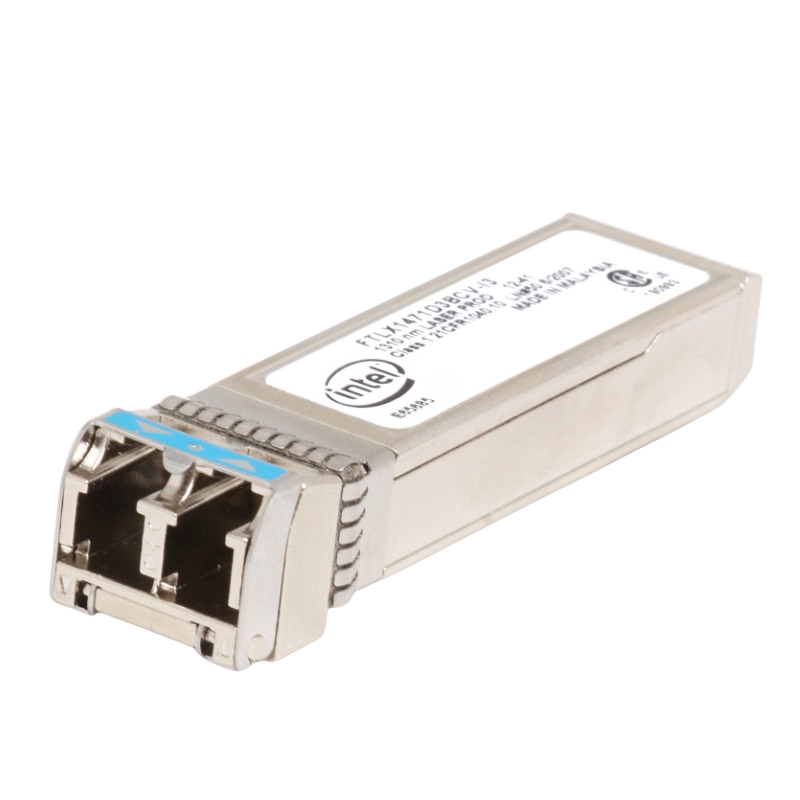


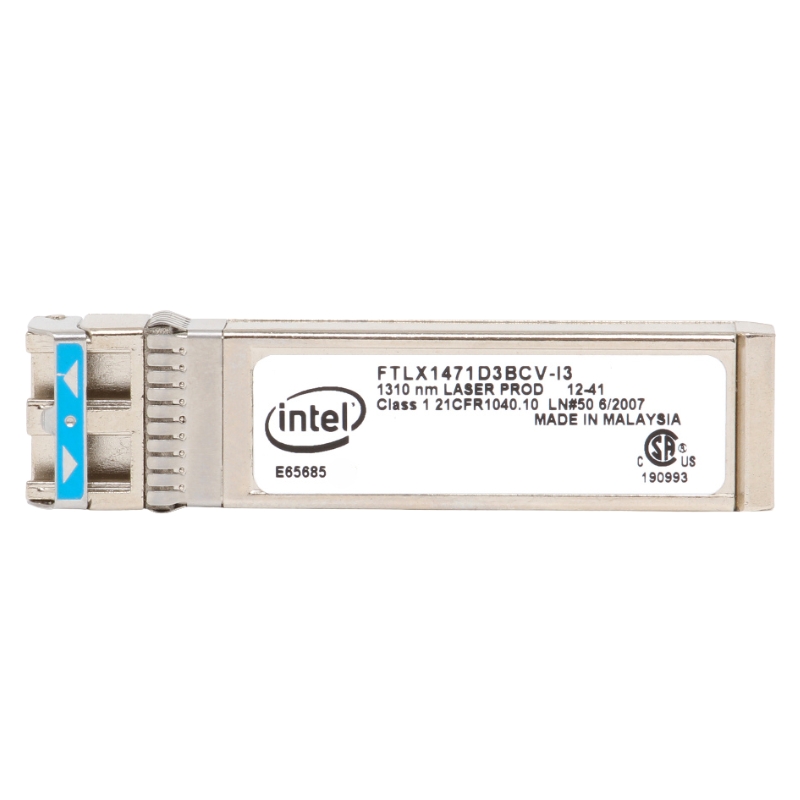
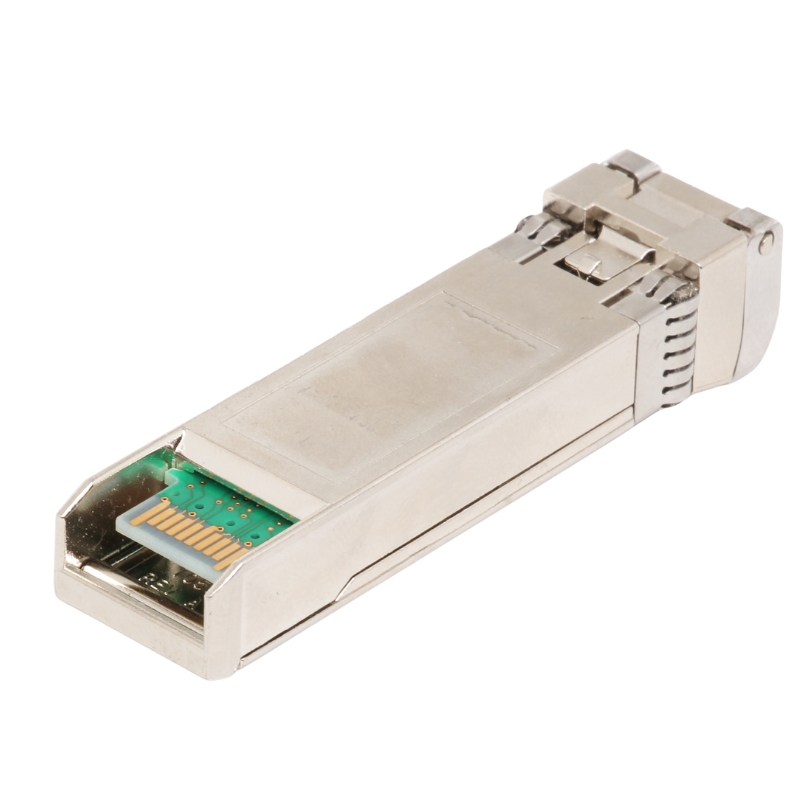
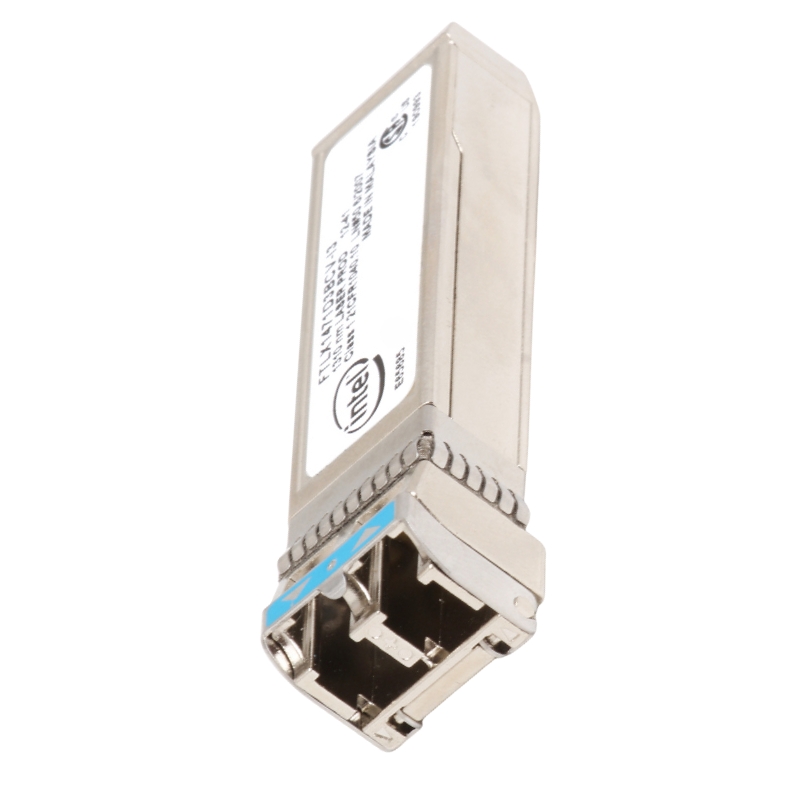
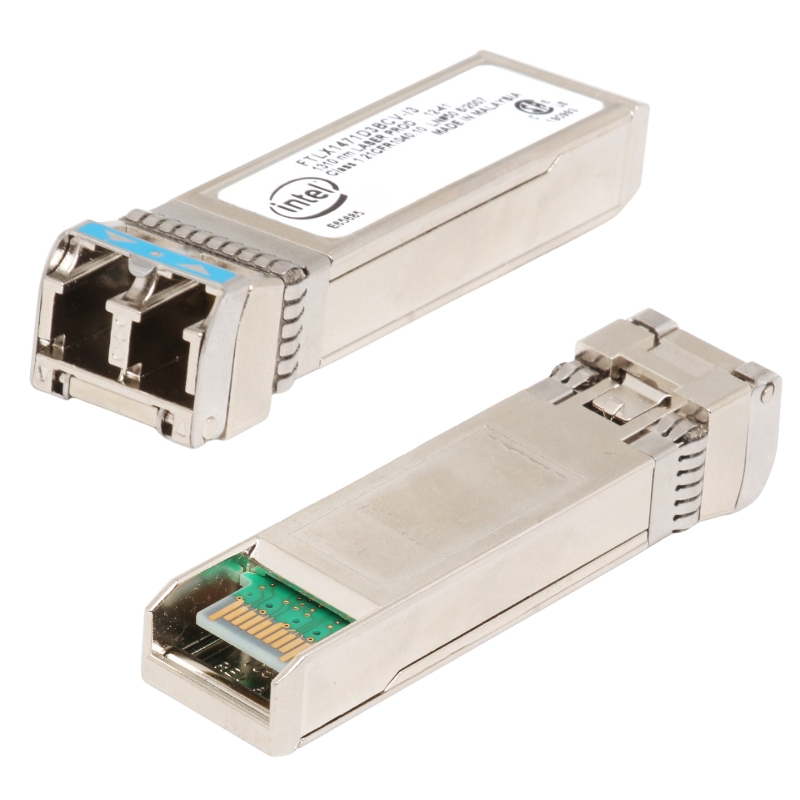
Intel E65685-004 10 Gigabit Dual Rate 10GBase-LR 1310nm SFP+ Optical Transceiver. Factory-Sealed New in Original Box (FSB) with 3 Years Warranty
The Intel E65685-004 is a high-performance SFP+ optical transceiver module built for dependable fiber-based network connectivity in enterprise, server, storage, and data center environments. Designed as a dual-rate optical module, it supports both 1000BASE-LX and 10GBASE-LR network standards, making it a practical choice for infrastructures that require flexible migration from Gigabit Ethernet to 10 Gigabit Ethernet. With its 1310nm wavelength, compact plug-in module form factor, and support for wired high-speed optical networking, this Intel transceiver is engineered for stable long-distance communication across compatible fiber deployments.
The Intel E65685-004 10 Gigabit Dual Rate 10GBase-LR 1310nm SFP+ Optical Transceiver is a high-performance optical networking component engineered for stable, long-distance Ethernet connectivity across enterprise, campus, service provider, and data center environments. Designed around the SFP+ form factor and aligned with long-reach optical networking requirements, this transceiver supports dependable fiber communication for organizations that require consistent throughput, low signal loss, and scalable network expansion. As a dual-rate optical transceiver, the Intel E65685-004 is especially valuable in environments where both Gigabit Ethernet and 10 Gigabit Ethernet support can simplify migration planning, interoperability, and infrastructure standardization.
In modern IT and networking environments, the role of an optical transceiver extends far beyond simple link establishment. It serves as the bridge between switching platforms, routers, storage infrastructure, security appliances, and high-speed network interface cards. The Intel E65685-004 is intended for businesses and technical environments that demand optical reliability, long-distance transmission, and compatibility with fiber-based network architecture. With support for 1310nm optical wavelength transmission and long-range single-mode fiber communication, this Intel optical transceiver is well suited to installations where copper limitations, electromagnetic interference concerns, or structured long-haul building interconnect requirements make fiber the preferred transport medium.
As a member of the 10GBase-LR optical transceiver category, the Intel E65685-004 is relevant to IT buyers, infrastructure architects, systems integrators, and data center managers who need a dependable SFP+ optical module for long-distance links. Whether it is used to connect aggregation switches, top-of-rack equipment, server clusters, network storage, campus buildings, branch offices, or backbone links, this transceiver occupies an important position in modern network design. The Intel brand association further adds value for buyers who want networking components that align with Intel-based server, adapter, and Ethernet ecosystems.
The small form-factor pluggable plus format remains one of the most widely adopted optical module standards in enterprise and data center networking. The Intel E65685-004 uses the SFP+ module design to provide a compact, hot-pluggable, space-efficient interface for optical Ethernet connectivity. This form factor is especially beneficial in dense switching environments, rack-based infrastructure, and modular network deployments where maximizing port density and simplifying cable management are essential operational goals.
Compared with older and bulkier optical module formats, the SFP+ design helps reduce physical footprint while maintaining support for 10 Gigabit networking performance. This makes the Intel E65685-004 suitable for high-density switch ports, server adapters with SFP+ uplinks, and routers that must deliver strong network performance without consuming unnecessary rack or chassis space. The pluggable nature of the transceiver also improves maintenance and upgrade flexibility. Network administrators can replace or deploy optical modules as needed without redesigning the surrounding hardware platform, which contributes to lower operational disruption and improved serviceability.
The hot-swappable design of SFP+ optical transceivers is particularly useful in environments where uptime matters. In many enterprise and data center installations, replacing a failed or outdated transceiver should not require shutting down an entire switch, server, or routing platform. The Intel E65685-004 supports the broader operational model of modular networking, where infrastructure can be maintained, scaled, and optimized at the port level. This flexibility is valuable for organizations building resilient networks that need to evolve over time while minimizing downtime and hardware replacement cycles.
One of the defining characteristics of the Intel E65685-004 is its dual-rate capability. In networking environments, dual-rate optical modules can be especially useful because they allow a smoother transition between legacy Gigabit Ethernet infrastructure and newer 10 Gigabit Ethernet architecture. Rather than forcing an all-at-once migration, dual-rate support can give IT teams additional flexibility in planning staged upgrades, mixed-speed environments, and compatibility-sensitive deployments.
Organizations often operate hybrid infrastructures where some systems, switches, or links continue to use Gigabit Ethernet while others have already transitioned to 10GbE. In these situations, the ability to align with more than one speed profile can reduce complexity during network refresh cycles. This is particularly important in campus environments, distributed enterprise networks, and facilities that expand over time rather than through a single large-scale replacement project. The Intel E65685-004 fits well into these scenarios because it belongs to a category of optical modules associated with flexible deployment planning and practical long-term infrastructure management.
Dual-rate design can also help organizations consolidate purchasing around fewer transceiver types where supported by the target environment. For procurement teams, data center managers, and enterprise network planners, standardizing around a compatible Intel optical transceiver can streamline sparing strategy, inventory control, and lifecycle planning. Rather than stocking multiple separate modules for each link type in certain environments, teams may be able to align around a transceiver model that supports broader deployment needs. This improves operational efficiency and helps reduce the administrative burden of managing optical accessories across multiple sites.
The Intel E65685-004 belongs to the 10GBase-LR optical transceiver category, which is designed for long-reach 10 Gigabit Ethernet communication over single-mode fiber. Long-reach optics are critical in enterprise and institutional environments where distances exceed what short-range multimode modules or copper cabling can support effectively. The 10GBase-LR standard is widely used for inter-building links, data center extension, metropolitan enterprise connectivity, core-to-aggregation uplinks, and secure infrastructure communication between distributed facilities.
In practical terms, long-reach transceivers help organizations build optical links that extend well beyond a single rack or a short equipment room. They are commonly deployed between floors in large office towers, across hospital campuses, between university buildings, throughout manufacturing sites, and across enterprise data center rows where low-loss single-mode cabling is already in place. The Intel E65685-004 is therefore highly relevant to infrastructure planners who require reliable 10 Gigabit optical communication over extended distances while maintaining the familiar and widely supported SFP+ interface.
The long-reach category is also important for futureproofing. Even if an organization initially deploys a transceiver for moderate distance links, using a 10GBase-LR single-mode optical architecture can preserve options for future relocation, expansion, or network redesign. Single-mode fiber is often chosen for its superior distance characteristics and strategic longevity. When paired with a transceiver such as the Intel E65685-004, it becomes a practical foundation for long-term infrastructure growth.
The 1310nm wavelength is a key characteristic of the Intel E65685-004 and a defining feature of the 10GBase-LR transceiver category. In optical networking, wavelength selection directly influences signal behavior, supported distance, and the fiber media best suited for the transceiver. A 1310nm optical transceiver is typically associated with single-mode fiber transmission and is widely used for long-distance Ethernet links because it offers favorable propagation characteristics and dependable performance across extended fiber runs.
Single-mode fiber is the natural pairing for 1310nm long-reach transceivers because it supports narrow optical paths with reduced modal dispersion compared with multimode fiber. This makes it well suited for precise, stable, and long-distance communication in enterprise and carrier-class networks. The Intel E65685-004 is therefore relevant for deployments where network designers prioritize clean optical transmission, strong signal integrity, and support for backbone-grade connectivity. In structured cabling environments that already use single-mode fiber, a 1310nm SFP+ transceiver can help maintain consistency across access, aggregation, and core network layers.
Another advantage of the 1310nm wavelength category is its broad familiarity within professional networking environments. Many long-distance Ethernet deployments are designed around 1310nm optics because they fit common single-mode fiber standards and interconnect practices. As a result, the Intel E65685-004 can serve not only as a replacement transceiver for an existing optical link, but also as part of a standardized optical deployment model across multiple switches, routers, and servers.
The Intel E65685-004 10 Gigabit Dual Rate 10GBase-LR 1310nm SFP+ Optical Transceiver is well suited for a broad set of enterprise networking applications. In many organizations, optical transceivers are deployed at the intersection of high-value workloads, security-sensitive communication, and infrastructure growth initiatives. This makes transceiver selection an important decision that affects network stability, application responsiveness, and future scalability.
One common deployment scenario involves switch uplinks. Enterprise switches often require optical uplinks to aggregation layers, core switches, server farms, and storage platforms. In these cases, the Intel E65685-004 can function as a long-reach optical uplink module that supports stable, high-speed communication between key network tiers. This is particularly useful in multi-floor office environments, large campus buildings, and data centers where uplink distances exceed the practical range of copper cabling.
Another important use case is server and storage connectivity. Modern servers, virtualization hosts, and storage systems frequently rely on 10GbE networking for application delivery, backup, replication, and east-west data traffic. Where the network design uses SFP+ interfaces and single-mode fiber, the Intel E65685-004 can help establish dependable optical links between compute infrastructure and switching platforms. This is relevant for private cloud environments, virtual desktop infrastructure, software-defined storage, and analytics clusters where network throughput and link reliability are critical.
Within the data center, optical transceivers are central to the design of scalable and efficient interconnect architecture. The Intel E65685-004 is relevant to data center operators who need SFP+ optics for connecting top-of-rack switches, end-of-row switches, storage appliances, hyperconverged platforms, and server adapters to aggregation or core network layers. Because data centers frequently demand clean cable routing, low electromagnetic interference, and long-term flexibility, single-mode fiber links with long-reach transceivers remain an important design option.
In smaller data centers or edge facilities, the Intel E65685-004 may be used to connect racks to a central switching cluster using single-mode fiber. In larger data centers, it can support optical handoff between distribution layers, network pods, or physically separated equipment zones. Since many facilities continue to balance legacy infrastructure with newer high-density architectures, the dual-rate and SFP+ characteristics of this transceiver category can help simplify transitions and maintain compatibility across mixed operational environments.
Rack-to-core communication is another area where the Intel E65685-004 can deliver value. High-performance workloads, virtualization traffic, backup windows, and storage replication can all place significant demands on the network. A 10 Gigabit optical link provides the bandwidth needed for these tasks while also supporting longer runs than direct-attach copper or short-range multimode links in certain scenarios. For data center teams planning for predictable performance and structured optical cabling, a long-reach Intel transceiver becomes a practical component in the broader network architecture.
Compatibility is one of the most important factors when selecting an optical transceiver, and it is especially relevant in environments built around Intel networking products, server adapters, and Ethernet controllers. The Intel E65685-004 is positioned as an Intel optical transceiver for organizations that want to align transceiver selection with Intel-based network interface hardware and associated platform requirements. This can be important in server deployments where transceiver validation, firmware behavior, or vendor coding may affect module recognition and operational stability.
In enterprise IT purchasing, there is often a preference for matching optical modules with the server or networking brand already deployed in the environment. This approach can reduce uncertainty, improve compatibility confidence, and streamline support workflows. For organizations using Intel Ethernet adapters, Intel-based server networking ports, or systems designed around Intel networking ecosystems, the Intel E65685-004 offers a category-specific solution that aligns with those platform expectations.
Compatibility considerations also extend to network design standards and transceiver interoperability. Buyers evaluating the Intel E65685-004 typically consider the SFP+ slot type, required Ethernet speed, fiber mode, connector style, link distance, wavelength requirements, and switch or adapter compatibility policies. A long-reach 1310nm single-mode transceiver must be matched carefully with the correct cabling plant and receiving equipment to deliver the expected optical performance. When chosen appropriately, it becomes a highly effective part of a stable and scalable network architecture.
The Intel E65685-004 belongs to a class of transceivers that support single-mode fiber, and that distinction is important from a long-term infrastructure perspective. Single-mode fiber is widely recognized as a strategic cabling choice for organizations that want distance flexibility, long operational life, and readiness for future network growth. Even when a deployment begins at 10 Gigabit Ethernet, single-mode fiber can preserve the option to support higher-capacity optical technologies later, depending on the surrounding platform and optics roadmap.
For IT planners, the decision to deploy long-reach single-mode optics often reflects a broader infrastructure philosophy. Rather than optimizing only for immediate lowest cost, organizations may choose an optical foundation that supports future building expansions, backbone upgrades, and changing data traffic patterns. The Intel E65685-004 fits into this strategy by delivering a 10GBase-LR transceiver option that works within single-mode fiber networks commonly used for campus backbone, metropolitan enterprise links, and structured data center cabling.
Reliability is one of the primary reasons organizations continue investing in quality optical networking components. The Intel E65685-004 is part of a transceiver category intended for stable Ethernet transmission, and that matters in business environments where packet loss, intermittent links, and unstable uplinks can directly affect application performance and user experience. Optical transceivers are small components, but they have a major influence on the consistency of the physical network layer.
Signal integrity is especially important in long-distance links. In a well-designed single-mode fiber deployment, a 1310nm 10GBase-LR transceiver helps preserve clean communication over the target link while minimizing the constraints associated with short-range cabling technologies. For enterprises operating voice systems, business applications, cloud-connected services, security monitoring platforms, and storage traffic over the same infrastructure, dependable optics contribute to a more stable and predictable network foundation.
Efficiency also matters in terms of space, manageability, and service workflow. Because the Intel E65685-004 uses the SFP+ format, it supports modularity and fast replacement in environments where ports may be repurposed, upgraded, or repaired over time. Instead of treating every network interface as fixed and permanent, IT teams can adapt individual optical links as requirements evolve. This makes the transceiver not only a connectivity component but also a practical tool for ongoing infrastructure optimization.


 Contact Us
 Information
 Catalog
 Solid State Drives (SSD)
 Network Switches
 Hard Disk Drives
 HBA & Controllers
 PC & Servers
 PC & Server Memory
 CPU & Processors
 Network Routers
 Power Supplies
 Tape Drives & Libraries
 Network Devices
 Computer & Network Cables