(7% discount is applied at checkout)
Cart is empty
Your go-to destination for cutting-edge server products
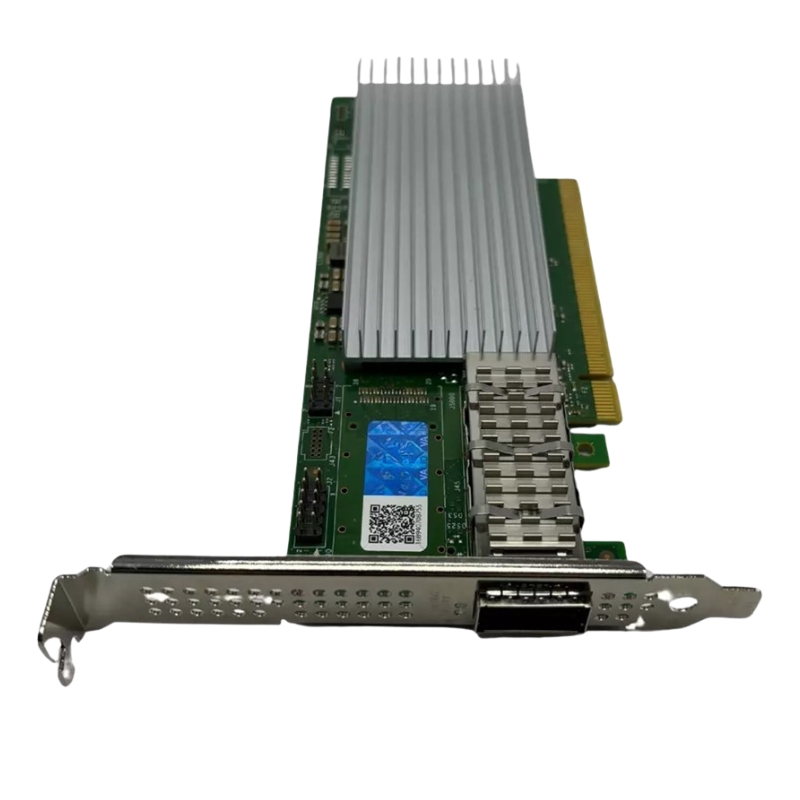


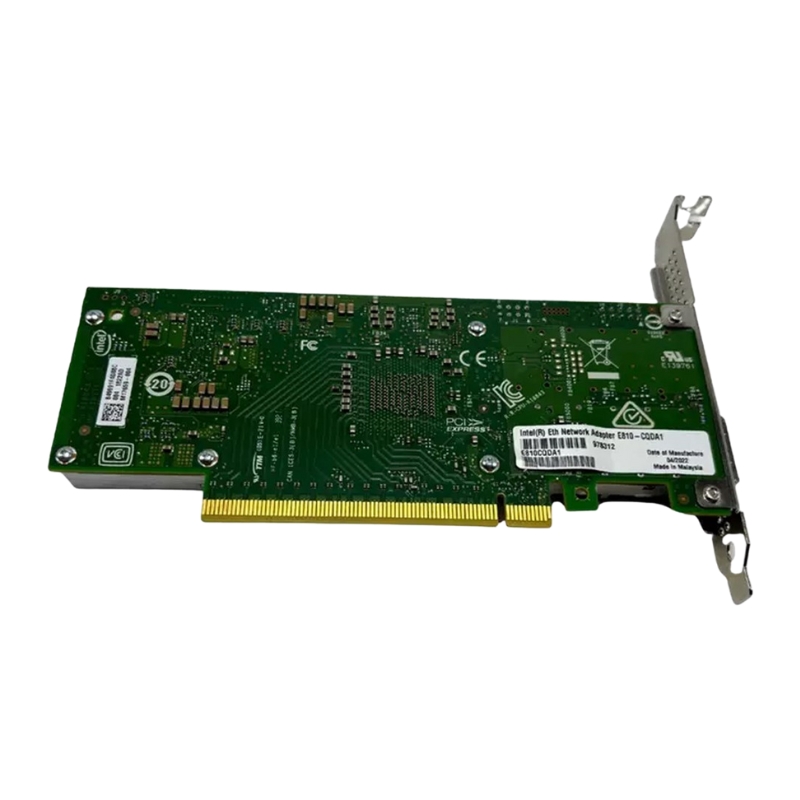
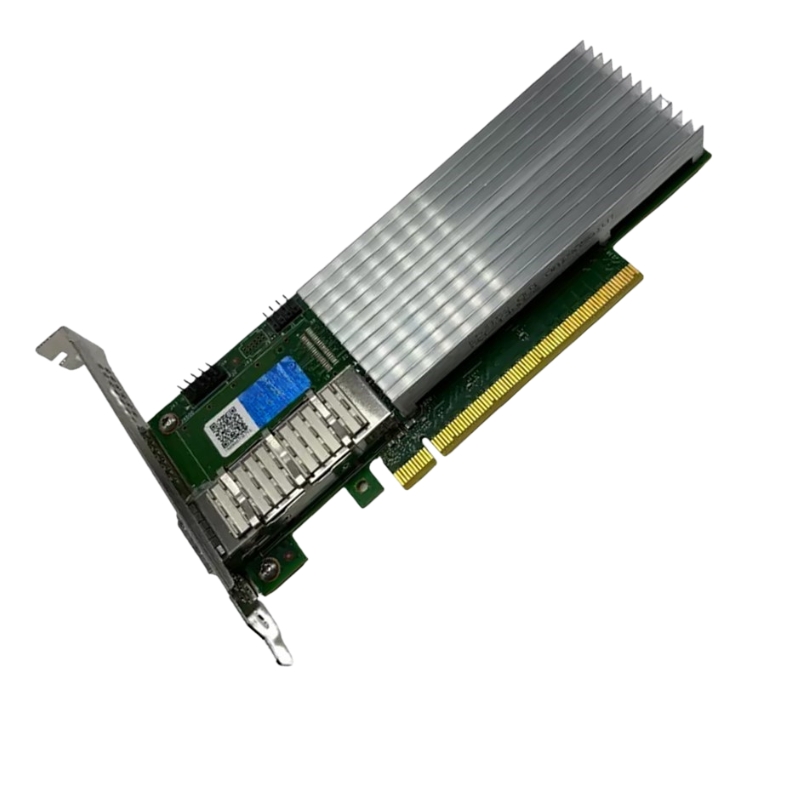
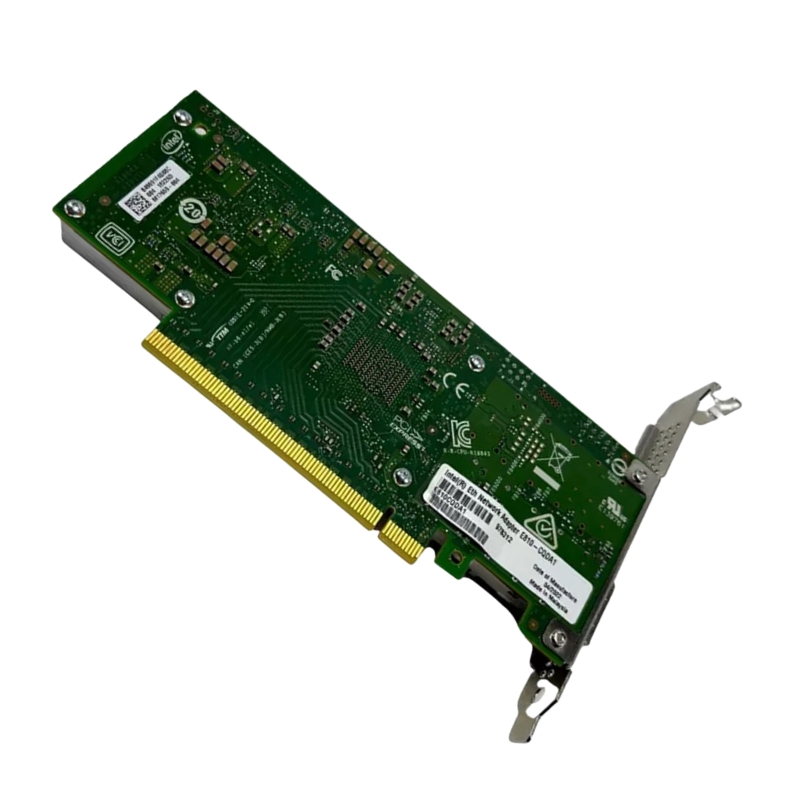
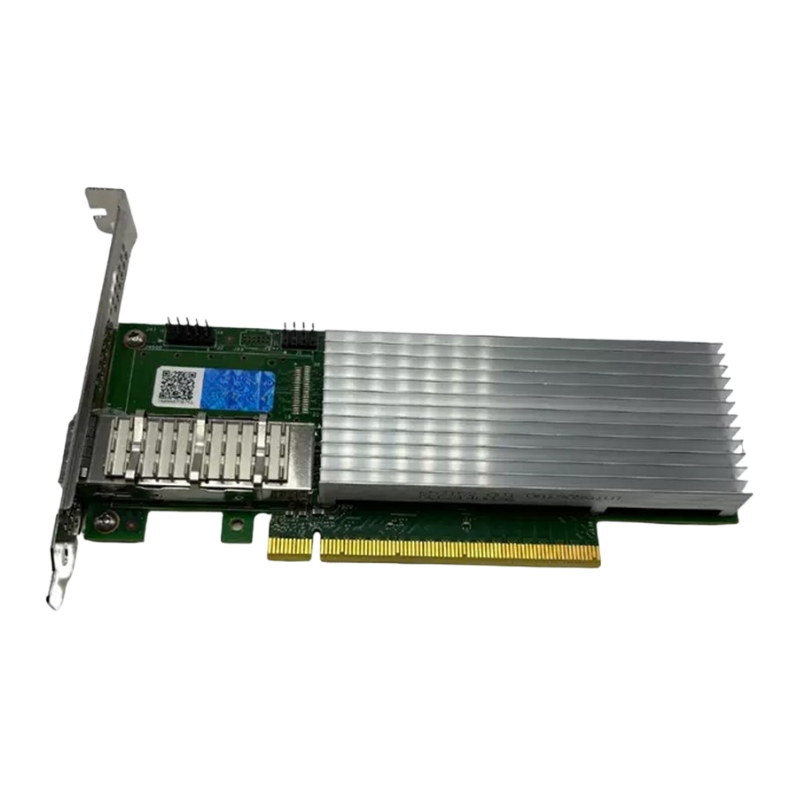
Intel E810-CQDA1 1 Port PCI Express 100 Gigabit Ethernet Adapter. Factory-Sealed New in Original Box (FSB) with 3 Years Warranty
The INTEL E810-CQDA1 is a high-performance 100 Gigabit Ethernet adapter designed for modern networking environments. This cutting-edge adapter ensures superior data transmission capabilities, making it an essential component for servers requiring robust connectivity.
The Intel E810-CQDA1 PCI Express Adapter Overview
The Intel E810-CQDA1 1 Port PCI Express 100 Gigabit Ethernet Adapter represents a high-performance networking solution engineered for modern data-intensive infrastructures that demand ultra-low latency, extreme bandwidth, and advanced packet processing capabilities. Designed as part of Intel’s E810 network adapter family, this PCIe-based NIC integrates cutting-edge architecture optimized for cloud-scale deployments, hyperscale data centers, high-performance computing environments, and enterprise-grade virtualization platforms. With a single-port 100GbE QSFP28 interface, it delivers exceptional throughput while maintaining efficiency, scalability, and reliability across complex networking workloads.
As organizations increasingly shift toward distributed computing, AI-driven workloads, and software-defined networking environments, the demand for high-speed and highly reliable network interfaces has grown significantly. The Intel E810-CQDA1 addresses this demand through advanced hardware acceleration features, programmable pipeline architecture, and enhanced support for emerging networking standards, ensuring that it remains a future-ready solution for evolving IT ecosystems.
At the core of the Intel E810-CQDA1 adapter lies a next-generation Ethernet controller designed to maximize throughput while minimizing CPU overhead. This architecture is built around Intel’s emphasis on hardware offloading, where critical networking tasks such as packet classification, segmentation, and encryption processing are handled directly by the adapter. This reduces reliance on host CPU resources and improves overall system efficiency, especially in high-load environments where thousands of concurrent connections are common.
The adapter utilizes a PCI Express interface that ensures high-speed communication between the network card and the host system. The PCIe architecture is carefully optimized to reduce latency bottlenecks and ensure consistent data flow even under heavy traffic conditions. By leveraging multiple PCIe lanes, the E810-CQDA1 maintains stable throughput that aligns with the demands of 100 Gigabit Ethernet performance, ensuring that no bandwidth is lost due to interface constraints.
The data path within the adapter is designed to support efficient packet movement from the network interface to system memory. This includes optimized DMA (Direct Memory Access) engines that reduce CPU intervention and enable faster data transfers. The result is a streamlined communication pipeline that enhances application performance, particularly in latency-sensitive workloads such as financial trading systems and real-time analytics platforms.
The Intel E810-CQDA1 supports a single 100GbE port utilizing QSFP28 connectivity, enabling extremely high data throughput suitable for backbone network infrastructures. This level of bandwidth is essential for modern cloud service providers, enterprise data centers, and AI training clusters where massive datasets must be transferred rapidly between compute nodes and storage systems.
One of the defining characteristics of this adapter is its ability to maintain ultra-low latency across high traffic loads. The hardware is optimized to process packets with minimal delay, ensuring that time-sensitive applications such as distributed databases and real-time video processing systems can operate efficiently without network-induced lag.
The Intel E810-CQDA1 is engineered with hyperscale data center environments in mind. Its design supports large-scale horizontal scaling where thousands of network interfaces must operate in unison across distributed server clusters. The adapter’s ability to handle high connection densities makes it suitable for cloud providers that require consistent networking performance across multi-tenant environments.
Software-defined networking (SDN) has become a core component of modern infrastructure management, and the E810-CQDA1 is fully optimized for such environments. Its programmable data path allows integration with SDN controllers and orchestration systems, enabling dynamic network configuration, traffic shaping, and automated policy enforcement without requiring hardware changes.
In virtualized environments, the adapter supports efficient resource sharing across multiple virtual machines. Through hardware-based virtualization acceleration, network traffic can be isolated and directed efficiently to ensure consistent performance for each tenant. This is particularly beneficial in private cloud deployments where resource allocation must be both flexible and secure.
Remote Direct Memory Access (RDMA) support enables direct memory-to-memory data transfer between servers without involving the CPU in the data path. This significantly reduces latency and improves throughput for distributed applications such as high-performance computing clusters and real-time data analytics systems.
The adapter supports RDMA over Converged Ethernet (RoCE), allowing high-speed, low-latency communication across Ethernet networks. This capability is essential for workloads that require rapid synchronization between nodes, such as AI model training and large-scale simulation environments.
Security is a critical consideration in modern network infrastructure, and the Intel E810-CQDA1 incorporates multiple hardware-level security enhancements. These features include secure boot capabilities, encryption acceleration, and traffic isolation mechanisms that protect sensitive data in transit across shared networks.
The Intel E810-CQDA1 is supported across a wide range of operating systems, including major Linux distributions, Windows Server environments, and virtualization platforms. This broad compatibility ensures that the adapter can be deployed in diverse infrastructure ecosystems without requiring specialized configurations.
The drivers for the adapter are designed for deep kernel-level integration, enabling efficient communication between hardware and operating system networking stacks. This integration reduces overhead and improves packet processing efficiency, especially in high-throughput environments.
In HPC environments, the Intel E810-CQDA1 plays a critical role in enabling fast inter-node communication. Its high bandwidth and low latency characteristics make it ideal for scientific simulations, weather modeling, and complex computational workloads that require synchronized processing across multiple nodes.


 Contact Us
 Information
 Catalog
 Solid State Drives (SSD)
 Network Switches
 Hard Disk Drives
 HBA & Controllers
 PC & Servers
 PC & Server Memory
 CPU & Processors
 Network Routers
 Power Supplies
 Tape Drives & Libraries
 Network Devices
 Computer & Network Cables