(7% discount is applied at checkout)
Cart is empty
Your go-to destination for cutting-edge server products
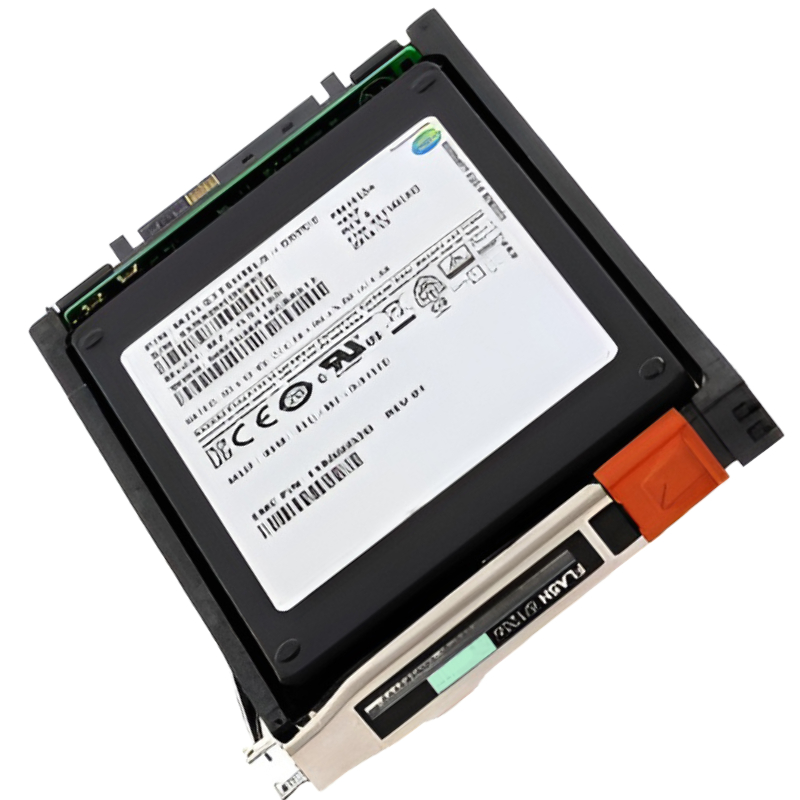


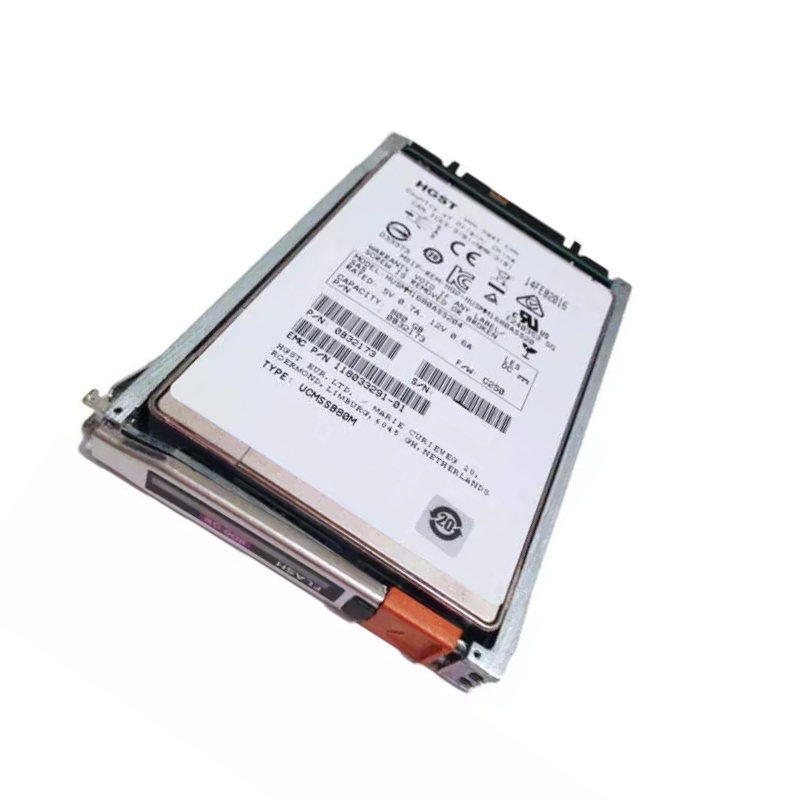
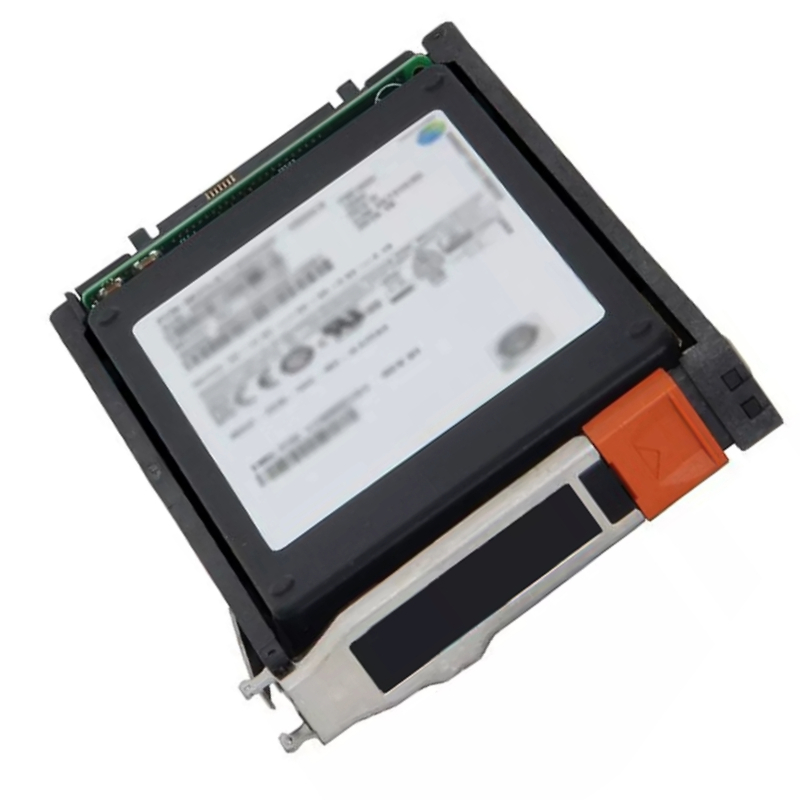
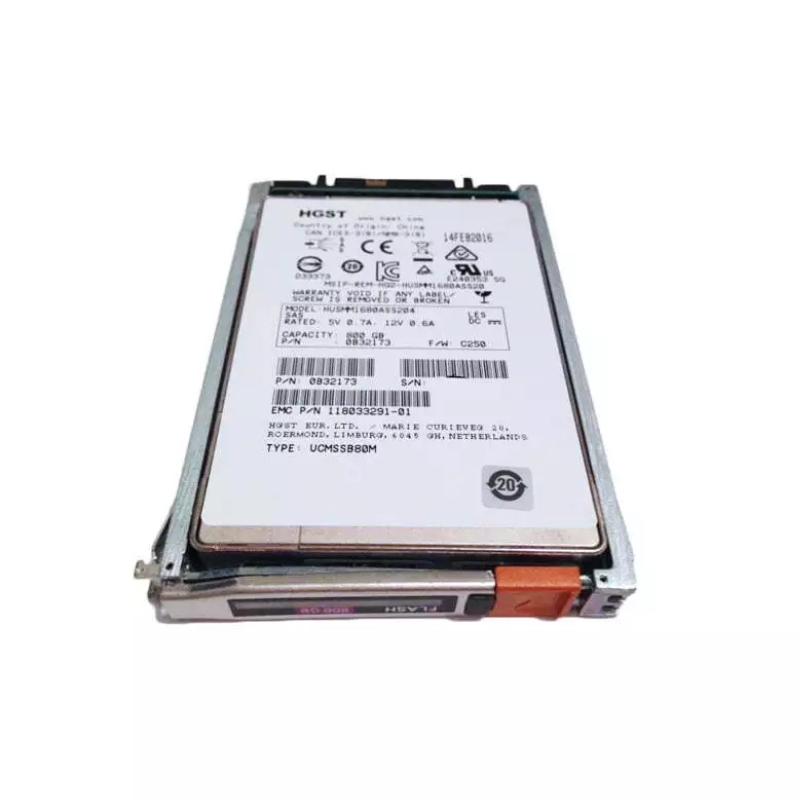
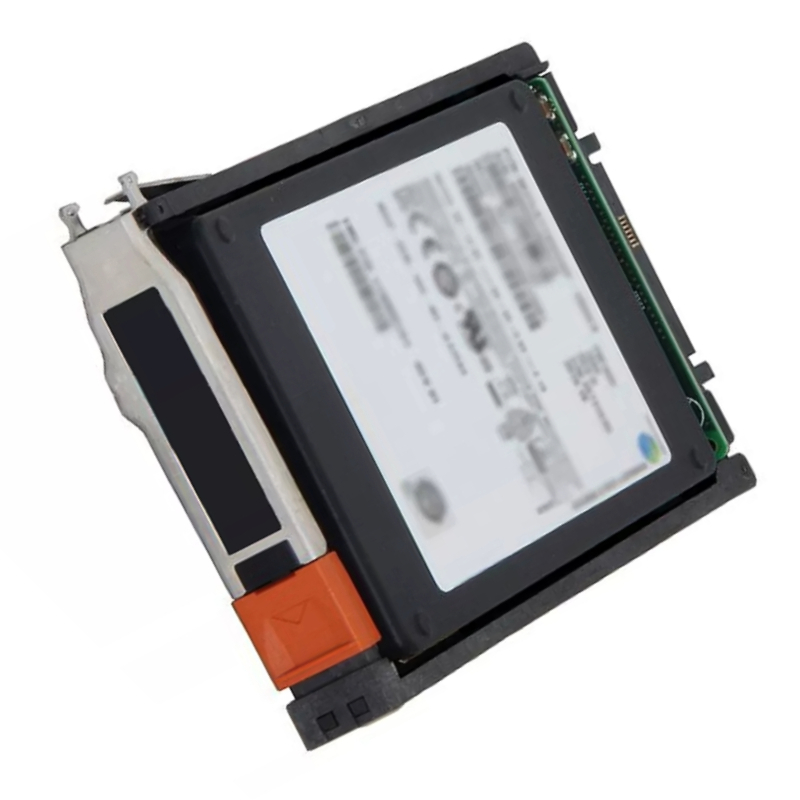
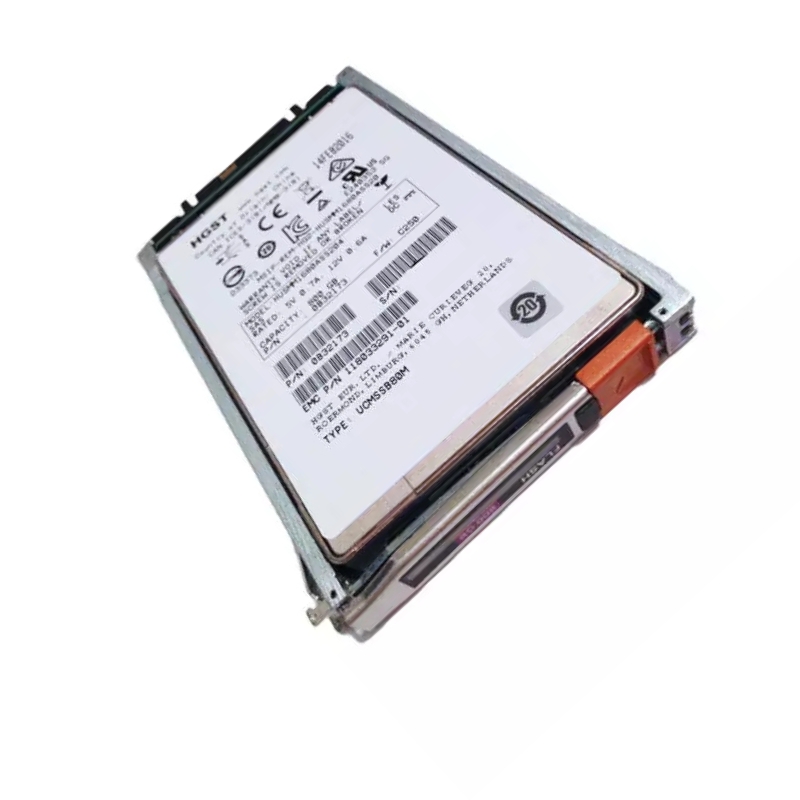
EMC 005050785 800GB SAS 6GBPS 2.5inch Enterprise Solid State Drive. Excellent Refurbished with 1 year Replacement Warranty
This SSD is suitable for:
Emc 005050785 800GB SAS 6Gbps 2.5inch Enterprise Solid State Drive represents a focused category of high-performance, rack-optimized storage devices designed for enterprise-class servers and storage arrays. Built to satisfy demanding I/O workloads, this category bridges the gap between raw throughput and enterprise-grade reliability, delivering strong random read/write performance, predictable latency, and sustained throughput for mixed and write-intensive workloads. The product family emphasizes compatibility with legacy and modern SAS infrastructures, making it an ideal choice for IT teams that require straightforward integration into existing storage arrays, SAN environments, and converged infrastructure platforms.
Emc 005050785 drives are engineered with an enterprise-first mindset: durability, manageability, and interoperability. They target data center workloads such as virtualization hosts, database systems, transactional application servers, and storage tiering where low latency and high IOPS are required. The 800GB capacity provides a balance between usable space and performance density, enabling administrators to consolidate more I/O-hungry workloads without sacrificing predictable behavior under sustained load. This capacity point often fits into tiered storage strategies where SSDs serve as performance tiers above higher-capacity spinning disks.
Enterprise SAS SSDs in this category prioritize low-latency access and consistent IOPS across both read and write operations. The SAS 6Gbps interface supplies a reliable channel for data movement, and the drive's internal architecture—often optimized with enterprise-grade controllers and firmware tailored for sustained workloads—works to minimize latency jitter. Typical behavior for these drives includes high random read IOPS, strong mixed workload performance, and firmware-managed features that protect against performance degradation during heavy write cycles or during background housekeeping tasks.
Latency predictability is a defining trait for enterprise-class SSDs, and the EMC 005050785 category places special emphasis on consistent response times. This predictability is critical for multi-tenant environments and latency-sensitive applications such as OLTP databases and virtual desktop infrastructure (VDI) where spikes in latency can translate directly into user experience issues or application timeouts. Quality of Service (QoS) controls available at the controller or array level can be combined with the drive's inherent stability to create predictable service envelopes for business-critical workloads.
Enterprise SSDs are rated and tested for endurance in drive writes per day (DWPD) or total terabytes written (TBW) across the warranty period. The EMC 005050785 800GB drives typically include overprovisioning and robust error correction mechanisms such as strong ECC algorithms, end-to-end data path protection, and power-loss protection capacitors or equivalent mechanisms to ensure that in-flight data is preserved during unexpected power events. These drives are manufactured to rigorous quality control standards to deliver consistent operation over tens of thousands of hours, and their firmware often incorporates background wear-leveling and bad-block management to extend usable life.
Interoperability is central to enterprise deployments. Drives in this category are typically validated against major server and storage vendors, and firmware is often tuned for compatibility with common RAID controllers and storage controllers used in EMC and third-party arrays. The SAS 6Gbps interface provides broad compatibility with a range of backplanes and controllers, allowing these drives to be installed into legacy enclosures while still benefiting from enterprise features. Certification matrices and HCL (hardware compatibility list) confirmations from storage platform vendors reduce deployment risk and accelerate rollouts.
The 2.5-inch form factor is widely adopted for enterprise SSDs because it maximizes rack density while supporting efficient cooling and hot-swap replacement. The low-profile nature allows data centers to deploy multiple drives per chassis and to optimize storage density within blade, rack, and converged systems. These drives are usually offered with enterprise-grade trays or caddies designed for hot-plug serviceability, and their mechanical design addresses vibration tolerance and thermal dissipation within dense enclosures.
Encryption and data protection features are standard expectations for enterprise SSDs. Drives in the EMC 005050785 series commonly support self-encrypting drive (SED) capabilities that offload encryption operations to hardware, delivering minimal performance overhead while protecting data at rest. Support for standards such as TCG Opal and enterprise key management integration ensures that organizations can meet compliance and regulatory requirements for sensitive data. Additionally, firmware-level safeguards guard against unauthorized firmware changes and maintain chain-of-trust protections.
Firmware plays a pivotal role in the lifecycle of enterprise SSDs. The firmware utilized in this product category is engineered to optimize garbage collection, wear leveling, and error management without causing disruptive performance drops. Vendors provide firmware update mechanisms that can be enacted through host-based tools or storage array management consoles, and enterprise processes often mandate staged firmware rollouts to validate stability across mixed-version environments. Firmware also often includes telemetry hooks that feed into predictive analytics and operational dashboards.
When deployed behind sophisticated RAID or storage controllers, EMC 005050785 drives function as part of a holistic storage strategy. Controllers can manage caching, tiering, and redundancy, utilizing SSDs as primary tiers for hot data or as read/write caches to accelerate slower media. The drives’ enterprise features—consistent latency, power-loss protection, and endurance—ensure that when combined with controller-level caching algorithms, the overall system maintains strong performance under heavy, diverse workloads.
The 800GB capacity fits a variety of enterprise scenarios: high-performance database shards, virtual machine storage for medium to large VDI deployments, application servers with high transaction rates, and analytics nodes that require fast random access. These drives are also used in hybrid arrays where they form the performance tier, absorbing hot data while allowing colder data to reside on higher-capacity spinning disks. Their predictable behavior makes them suitable for mixed read/write workloads where consistent response times influence application SLAs.
In virtualized infrastructures, single-drive performance and predictable latency directly affect the density and consolidation ratio of virtual machines per host. EMC 005050785 drives help administrators achieve higher VM density without violating performance SLAs, particularly for VMs running database services or latency-sensitive middleware. In private cloud and managed service environments, these drives support multi-tenant isolation by enabling fine-grained QoS on the storage layer.
Databases and transactional systems benefit from the low-latency characteristics and strong random I/O throughput of these drives. For OLTP workloads, the ability to serve thousands of small, random reads and writes with minimal latency variance translates to faster transaction commits and improved user response times. Analytics workloads that require rapid access to hot partitions can also gain from placing frequently accessed datasets on these SSDs, which speeds query response and reduces overall job completion time.
Capacity planning for enterprise SSDs requires consideration of usable capacity after RAID overhead, overprovisioning, and filesystem requirements. The nominal 800GB figure represents the raw capacity; usable capacity within an array may be reduced by redundancy schemes like RAID 1, RAID 6, or erasure coding. Administrators must also plan for write amplification and endurance budgets to ensure drives meet lifecycle expectations under projected workloads. The tradeoff between capacity and endurance often informs whether 800GB drives are the right fit or whether higher or lower capacities better align with long-term TCO goals.
Successful deployment of EMC 005050785 drives depends on adherence to vendor compatibility matrices, staged firmware updates, and thorough pre-deployment testing. Administrators should validate drive behavior under representative workloads, monitor SMART metrics from day one, and integrate the drives into existing backup and snapshot strategies. Proper thermal management, including airflow verification and drive placement, is essential to maintaining performance and extending usable life of each drive.
Comparing EMC 005050785 800GB SAS 6Gbps drives to other enterprise storage options requires examining interface speed, endurance rating, protocol, and manufacturer support. While NVMe SSDs deliver higher raw throughput and lower protocol overhead, SAS SSDs remain relevant where existing infrastructure and controller compatibility are priorities. For organizations with SAS-based arrays and backplanes, 6Gbps SAS drives offer a cost-effective upgrade path with familiar management workflows and proven interoperability.
As NVMe adoption grows, the choice between SAS and NVMe comes down to architecture strategy, cost, and performance requirements. SAS drives are advantageous in environments where array controllers, midrange storage systems, or server backplanes lack native NVMe support. They also simplify migrations within established SAN environments. Conversely, greenfield deployments or high-performance compute clusters may opt for NVMe to extract maximum I/O density and minimal latency.
Enterprise drives must meet various environmental and regulatory standards related to emissions, RoHS compliance, and operational temperature ranges. The EMC 005050785 category adheres to industry-standard specifications for vibration tolerance, shock resistance, and operating altitude, ensuring compatibility with diverse data center environments. For regulated industries, ensuring encryption features and audit-friendly logs can assist with compliance to frameworks such as GDPR, HIPAA, or industry-specific mandates.
SSDs generally consume less power and produce less heat than equivalent-capacity HDD arrays, but enterprise SSDs still require careful thermal planning in dense rack deployments. Monitoring drive temperatures and ensuring adequate airflow will prevent thermal throttling and preserve drive longevity. Energy savings from lower power draw can factor into TCO calculations, particularly in large-scale deployments where cooling costs are significant.
High-converting pages combine technical specifications with trust signals: warranty details, support options, customer testimonials, and deployment guides. Providing clear compatibility information and links to technical resources such as firmware downloads, HCL lists, and whitepapers reduces buyer friction. For enterprise buyers, emphasizing procurement options—such as bulk pricing, support tiers, and certified spares—aligns content with purchasing workflows and procurement team needs.


 Contact Us
 Information
 Catalog
 Solid State Drives (SSD)
 Network Switches
 Hard Disk Drives
 HBA & Controllers
 PC & Servers
 PC & Server Memory
 CPU & Processors
 Network Routers
 Power Supplies
 Tape Drives & Libraries
 Network Devices
 Computer & Network Cables