(7% discount is applied at checkout)
Cart is empty
Your go-to destination for cutting-edge server products
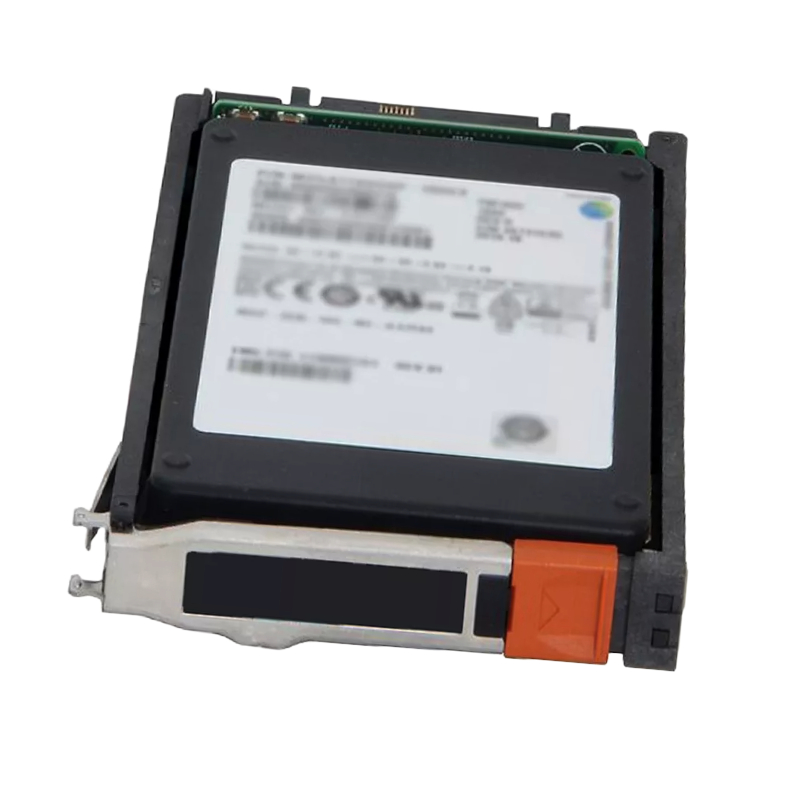


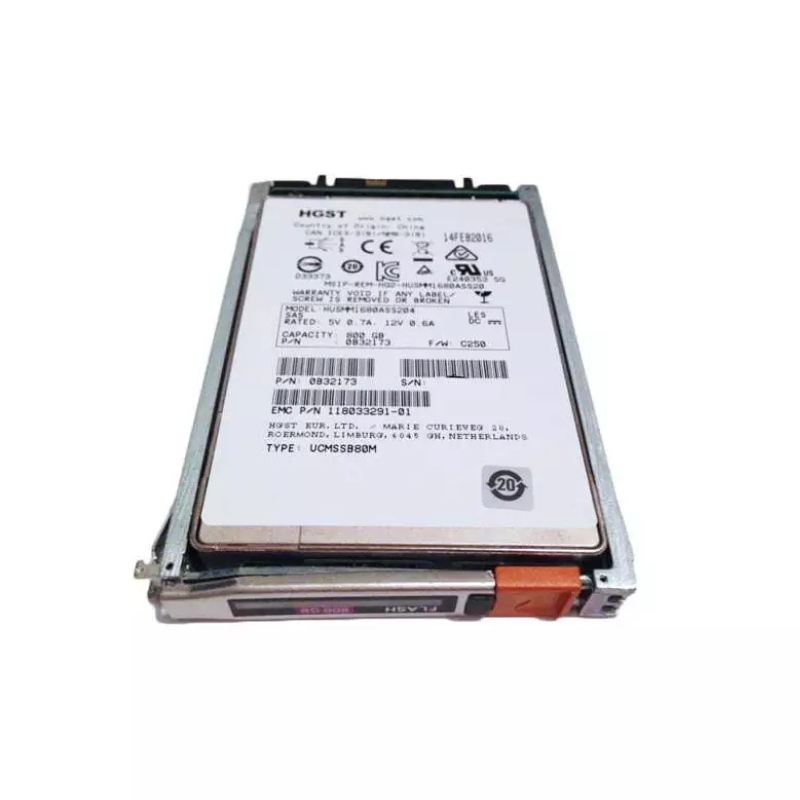
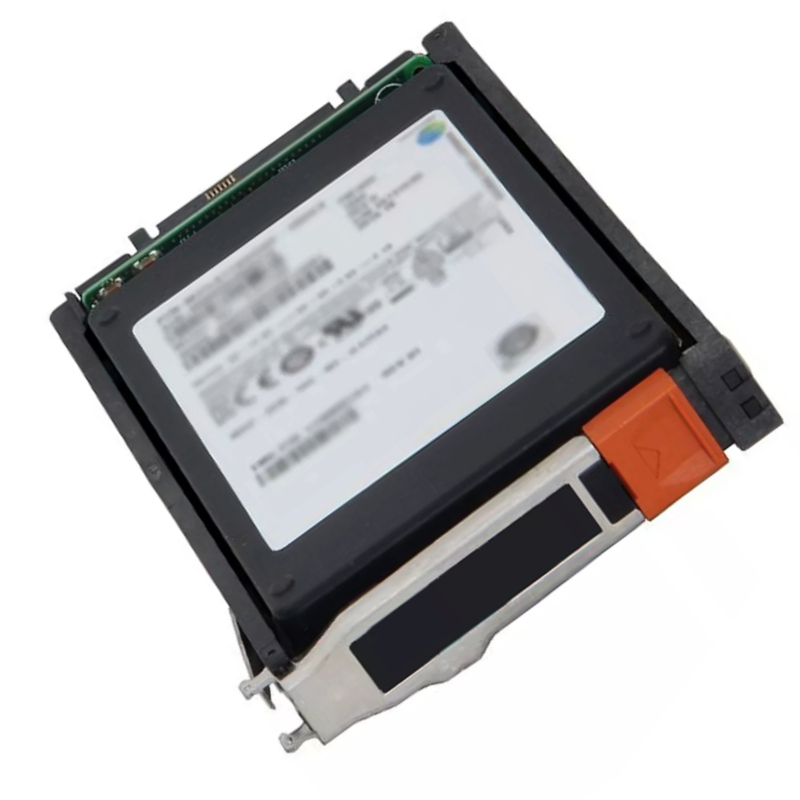
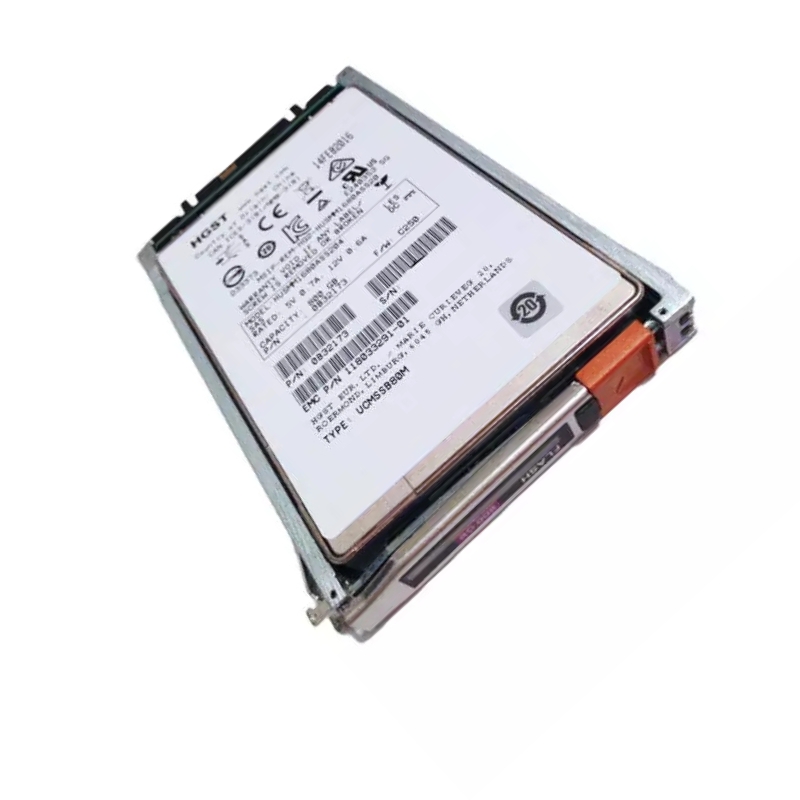
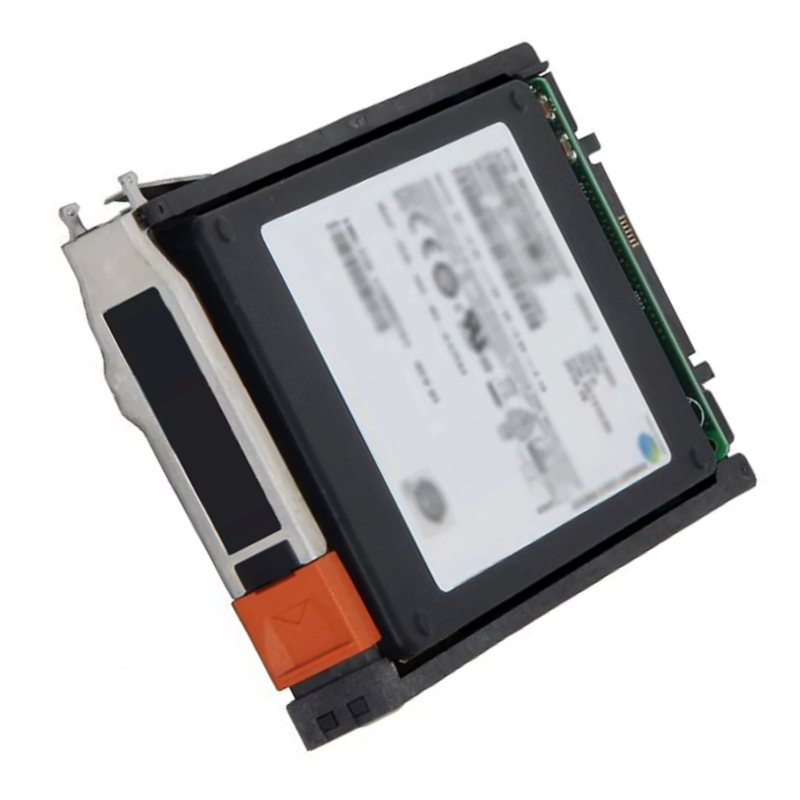
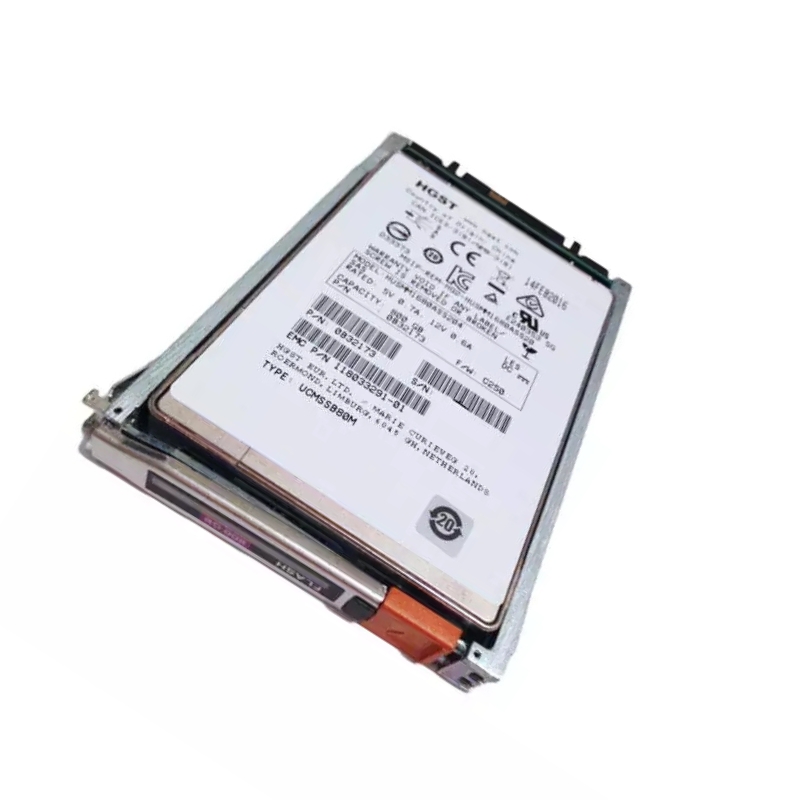
EMC 005052220 800GB SAS 6GBPS 2.5 Inch Enterprise SSD. Excellent Refurbished with 1 year replacement warranty
The EMC 005052220 solid-state drive delivers robust performance and reliability, built for enterprise-level storage solutions. With an 800GB capacity and a 2.5-inch form factor, this internal SSD uses a 6Gbps SAS interface to ensure consistent data transfer speeds and superior durability for demanding workloads.
This storage device combines enterprise-grade endurance with the speed of SAS architecture. Designed for data centers and high-load systems, it ensures rapid data access and consistent performance over time.
SAS (Serial Attached SCSI) technology offers superior throughput, better command queuing, and higher data integrity compared to SATA. This makes the EMC 005052220 ideal for mission-critical applications that require uninterrupted performance.
Whether you're upgrading an existing system or building a new storage array, the 800GB SAS SSD from EMC integrates seamlessly into most data center infrastructures. Its 2.5-inch footprint makes it suitable for dense server environments without sacrificing performance.
With a reputation for excellence in enterprise hardware, EMC ensures long-term dependability. The EMC 005052220 SSD is built to withstand intensive workloads and provide consistent performance under heavy use.
This 2.5-inch SAS SSD is designed for compatibility with a wide range of server platforms and storage controllers. Whether you're operating on Dell EMC PowerEdge, HP ProLiant, or other enterprise environments, installation is smooth and efficient.
The EMC 005052220 800 GB SAS 6 Gbps 2.5-inch enterprise solid‑state drive represents a high-performance, high-reliability storage option tailored for demanding data center environments. This category encompasses enterprise‑class SAS SSDs that deliver predictable low latency, enhanced endurance, and seamless integration into storage arrays, servers, and virtualization clusters. Below, we present a comprehensive breakdown of the features, capabilities, deployment scenarios, and technical advantages associated with this class of drives, with focus on the EMC 005052220 model.
The inclusion of SAS at 6 Gbps ensures sustained bandwidth and advanced features over legacy or consumer SATA. Benefits include:
Enterprise SAS SSDs deliver a suite of performance advantages in heavy-use scenarios:
Unlike consumer or mid-tier SSDs, enterprise-level drives like the EMC 005052220 are engineered to withstand punishing usage patterns:
The EMC 005052220 can be deployed inside storage clusters, SAN/NAS back ends, or hybrid arrays. Its SAS interface enables integration into RAID shelves and JBOD enclosures. Its high reliability and performance make it suitable for mission-critical RAID groups (RAID 10, RAID 6, RAID 50, etc.). Balancing performance and redundancy, administrators may place these drives in caching tiers or metadata volumes rather than bulk cold storage.
Within virtualization platforms (e.g., VMware, Hyper-V, KVM), this drive can serve as a fast-backed datastore, high-speed scratch or swap device, or to host virtual machine images demanding frequent I/O. Because 2.5" SAS SSDs have a compact footprint, data centers can maximize density without sacrificing cooling or airflow design.
For workloads like OLTP databases, real-time analytics, caching layers, ledger systems, and high-frequency transaction engines, latency consistency and IOPS stability are paramount. The EMC 005052220 supports such environments by minimizing performance variability, ensuring that heavy analytic or query loads do not degrade response times perceptibly.
EMC’s proprietary firmware includes:
EMC enforces rigorous validation across temperature, shock, vibration, and humidity to qualify these drives for datacenter deployment. Drives undergo extended endurance testing and analysis before shipping. In addition, EMC typically backs these drives with firm warranty programs and field support—integral for enterprise deployments that demand guaranteed uptime.
Understanding how the EMC 005052220 stands relative to other storage options helps clarify its niche. Below we compare it to competing classes.
NVMe and PCIe SSDs often deliver lower latency and higher maximum throughput. However, the SAS-based EMC drive offers advantages in compatibility, existing infrastructure fit, and sometimes cost-per-GB in enterprise use cases. For many data centers still standardized on SAS backplanes or mid-tier architectures, a drive like the EMC 005052220 is the pragmatic performance workhorse.
As with all high-performance drives, adequate cooling and airflow are vital. Ensure that the server or array chassis maintains proper front-to-back airflow, and monitor temperatures via drive telemetry. Thermal throttling or lifespan degradation can result if ambient heat is excessive.
Keep firmware current to benefit from performance optimizations, bug fixes, and longevity improvements. Leverage SMART and EMC’s telemetry feeds to track wear, error counts, and predictive failure indicators. Ideally, integrate these into storage monitoring dashboards or alerting systems.
By allocating some portion of the volume’s addressable space as a spare pool (i.e., not fully filling the drive), you can give extra headroom for block replacement and prolong write endurance. Similarly, reserve one or more drives in each RAID group as hot spares ready for immediate takeover on failure.
Use the EMC 005052220 in workload tiers that require high transaction volumes or low-latency access (e.g. OS boot volumes, active database partitions, cache layers). Offload colder, less demanding datasets to bulk storage (e.g., spinning disks or lower-cost SSDs) for better cost efficiency.
Select RAID levels (e.g. RAID 10, RAID 6) that balance performance and fault tolerance. Because SAS SSDs can recover faster from failures than HDDs, smaller raid groups often suffice. Use consistent drive models to avoid performance mismatches in mixed arrays.
Strong performance under random access patterns is a hallmark of enterprise SSDs. The EMC 005052220 is expected to deliver high and consistent IOPS even under sustained random I/O workloads.
Although enterprise workloads often involve random I/O, sequential throughput still matters for batched transfers, rebuilds, and streaming tasks. A well-engineered SAS SSD maintains elevated bandwidth without stalling under load.
Low tail latencies and minimal jitter are critical. Enterprise drives should keep 99th percentile latencies tight even when faced with peaks or background tasks. Consistency is often more important than raw peak performance.
Drivers in this category specify endurance in terms of TB writes or drive writes per day. A robust enterprise-grade SSD like the EMC 005052220 should support multiple full-drive writes per day over many years without failure—a necessity for mission-critical systems.
Mean Time Between Failures (MTBF) and Unrecoverable Bit Error Rate (UBER) are essential indicators. Enterprise models maintain ultra-low UBER values and high MTBF to reduce risk of data loss and downtime.
In the broader marketplace of enterprise SAS SSDs, the EMC 005052220 is distinguished by the following attributes:
Many drives skew toward either low capacity/high endurance or high capacity/low endurance. The 800 GB model delivers a balanced package ideal for scalable enterprise infrastructure without overpaying for unused headroom.
Because it is an EMC-branded drive, it’s more likely to be well vetted for compatibility with EMC / Dell EMC storage arrays, replication systems, and management frameworks—offering smoother support and unified firmware management.
Unlike many consumer SSDs that begin throttling or entering fallback modes under stress, enterprise SAS models like this one should maintain consistent throughput across a variety of mixed workloads, even in degraded states or rebuild scenarios.
In rack systems or drive shelves designed for hot swap, the EMC 005052220 can be replaced tray-by-tray without shutting down the system. Plan for redundancy so that rebuild load does not compromise performance unduly.
Work with your vendor to track firmware obsolescence. When drives reach their end-of-life or firmware stop-updates, migrate critical data to newer models well before failure risks increase.
Always design for failure. Integrate hot spares, RAID with rebuild options, and redundant paths to reduce impact from individual disk failures. This drive’s consistency helps shorten rebuild windows and maintain performance stability during recovery.
As storage architectures evolve, the SAS SSD category continues to innovate. Below are key trajectories shaping enterprise adoption.
Next-generation SAS interfaces (e.g. 12 Gbps) provide higher throughput to reduce bandwidth constraints in scaling architectures. Future models may upgrade while maintaining backward compatibility.
Many data centers combine SAS SSDs with NVMe, SATA, and even disk tiers to optimize performance and cost. The EMC 005052220 class may be allocated as a mid-performance “hot tier” within multi-tier systems.
As a representative example, the EMC 005052220 800 GB SAS SSD showcases the blend of performance and endurance suitable for data centers, virtualization, transactional systems, and caching layers.
Ideal for RAID arrays, storage appliances, virtual machine back ends, high-throughput analytics, and other latency-sensitive workloads. Its compact 2.5" footprint supports dense server configurations without sacrificing drive capacity.
Compared to SATA SSDs, it delivers stronger reliability and function. Compared to NVMe SSDs, it offers infrastructure compatibility and predictable performance suited for existing SAS-based architectures.
Success with this category depends on proper cooling, firmware maintenance, spare capacity planning, monitoring, redundancy design, and lifecycle replacement strategy.


 Contact Us
 Information
 Catalog
 Solid State Drives (SSD)
 Network Switches
 Hard Disk Drives
 HBA & Controllers
 PC & Servers
 PC & Server Memory
 CPU & Processors
 Network Routers
 Power Supplies
 Tape Drives & Libraries
 Network Devices
 Computer & Network Cables