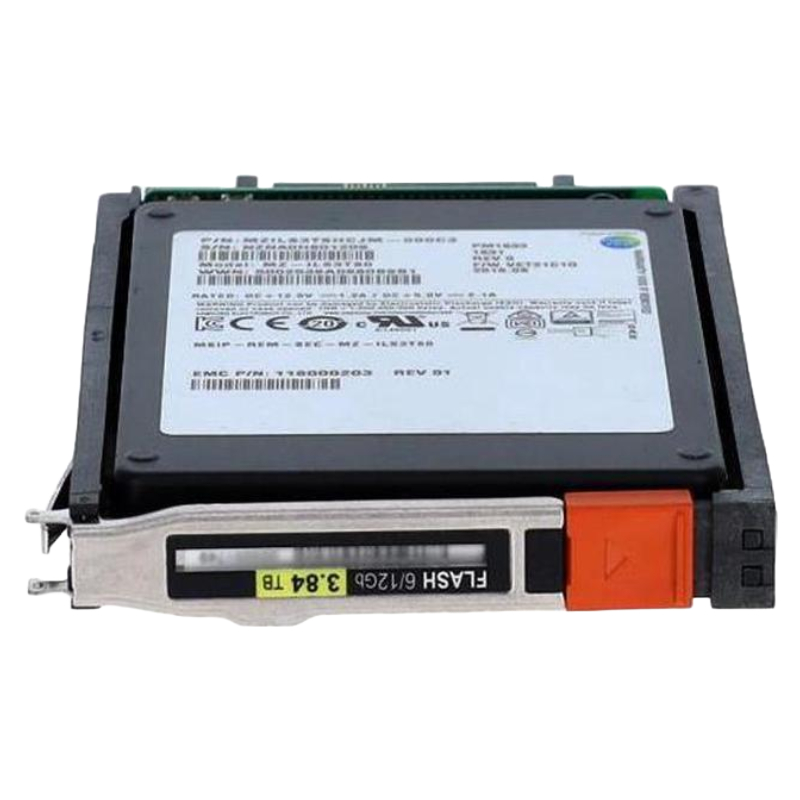
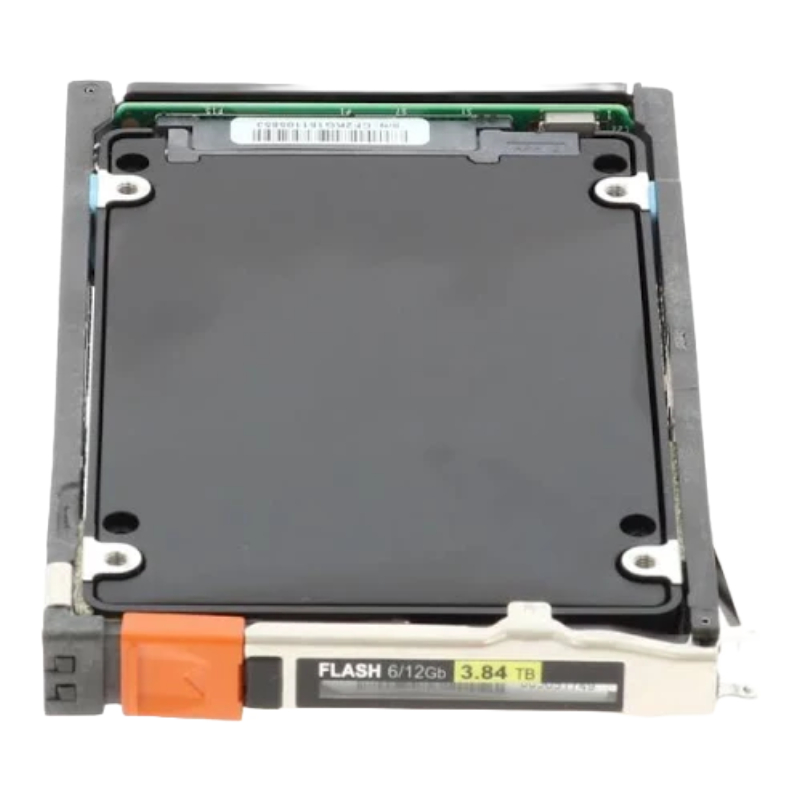
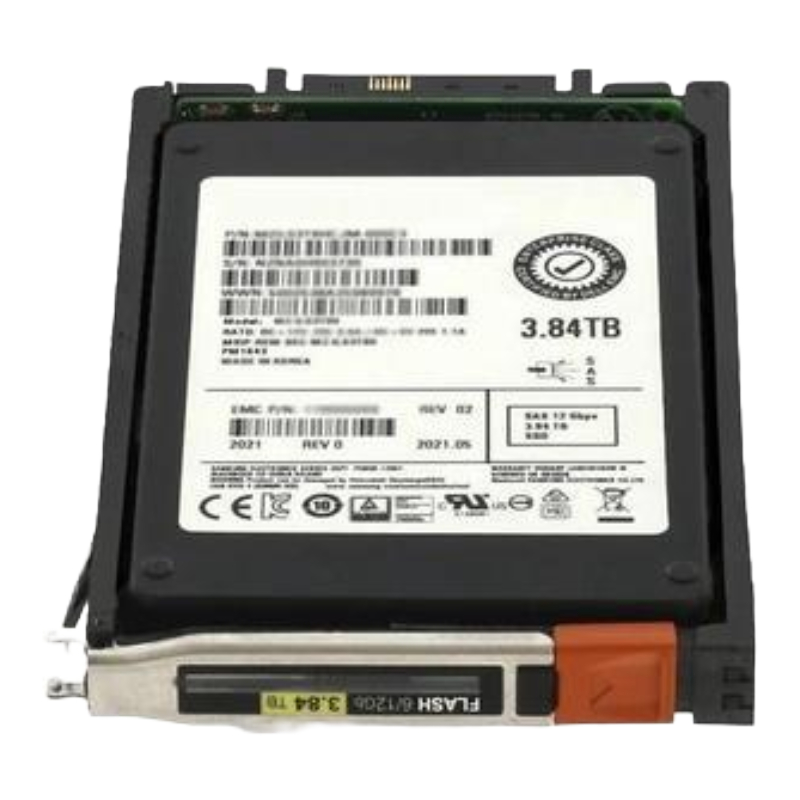
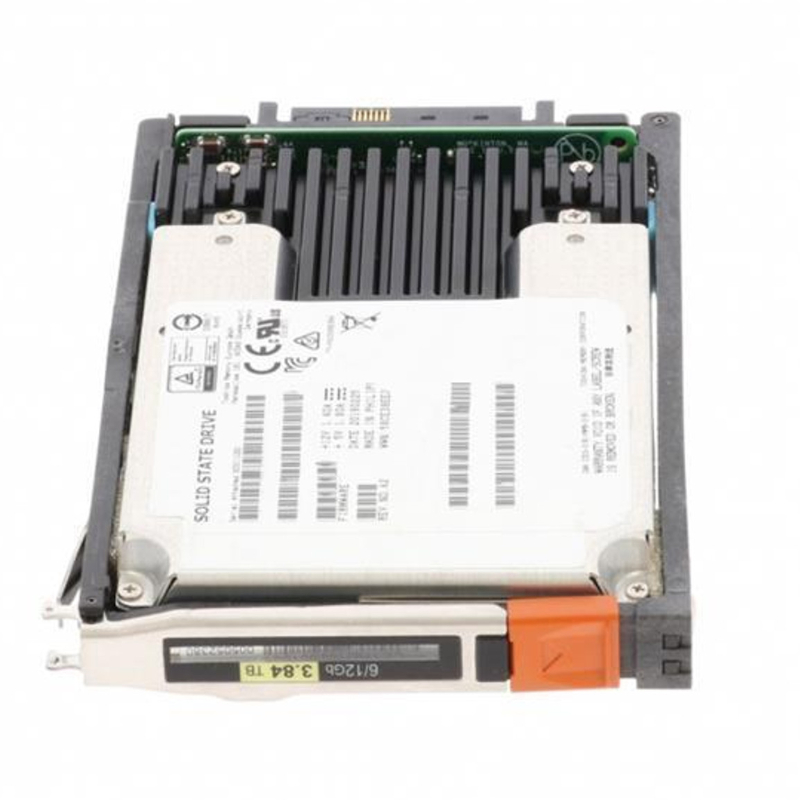
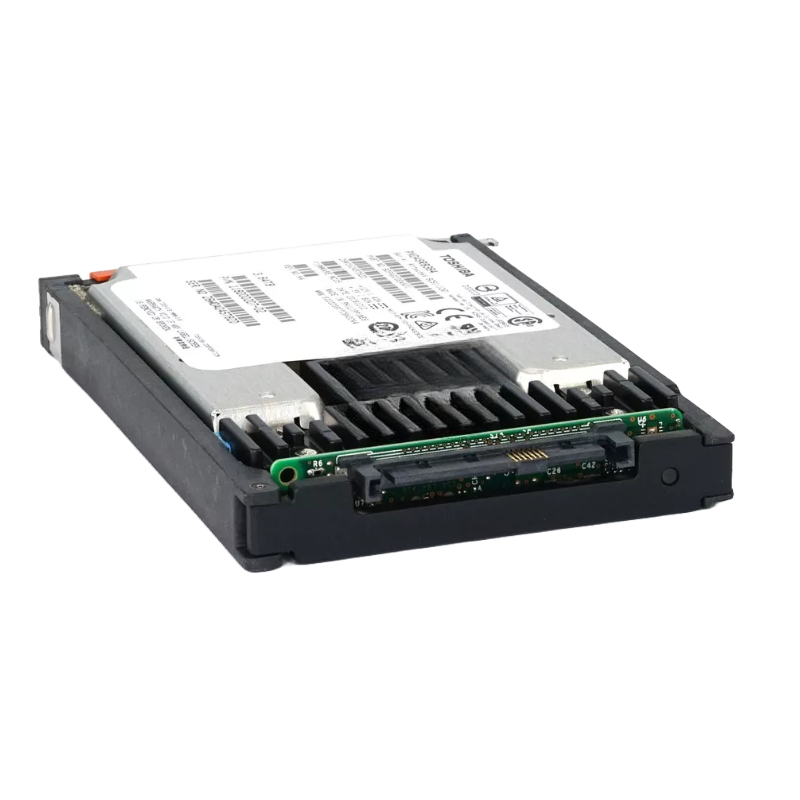
EMC 005052386 3.84TB SAS-12Gbps SSD Overview
The EMC 005052386 3.84TB SAS-12Gbps 2.5-Inch Enterprise Solid State Drive (SSD) is engineered to deliver outstanding
speed, reliability, and high-capacity storage for enterprise environments. Designed for mission-critical operations,
virtualization, and data-intensive workloads, this SSD offers consistent performance, efficient power management, and
seamless integration into server and storage infrastructures.
Main Information
- Manufacturer: EMC
- Part Number: 005052386
- Product Type: Solid State Drive (SSD)
- Storage Capacity: 3.84TB
- Form Factor: 2.5-Inch
Technical Specifications
- Drive Type: Internal Enterprise Solid State Drive
- Interface: SAS 12Gbps
- Data Transfer Rate: Up to 1.2Gbps
- Optimized for continuous enterprise workloads
Technical Overview
The EMC 005052386 is engineered for high-performance enterprise applications. With a SAS 12Gbps interface, it provides
fast data transfer, low latency, and superior reliability. Its compact 2.5-inch form factor allows for high-density
deployment, making it ideal for modern data centers and server racks where space efficiency is crucial.
Technical Advantages
- High-capacity 3.84TB storage for large-scale enterprise workloads
- SAS 12Gbps interface for rapid data access and seamless operations
- Optimized for continuous 24/7 use with high reliability
- Compact 2.5-inch design for efficient rack and server integration
- Supports up to 1.2Gbps transfer speed for fast and responsive data processing
- Durable construction for long-term enterprise use
Enterprise Use Cases
The EMC 005052386 SSD is suitable for a variety of enterprise scenarios that demand high performance, consistent
throughput, and robust reliability. It effectively supports database management, virtualization, cloud deployments, and
mission-critical applications.
SAS 12Gbps Interface Benefits
The SAS 12Gbps interface ensures high-speed, reliable connectivity for enterprise workloads. Dual-port capability
provides redundancy and continuous uptime, while advanced error correction and command queuing optimize performance for
multi-tasking and high I/O operations.
Reliability and Durability
EMC 005052386 is built to endure heavy workloads and constant enterprise use. Wear-leveling technology and thermal
management ensure consistent performance, while power-loss protection safeguards data integrity, providing long-term
durability for high-demand operations.
Reliability Features
- Advanced wear-leveling extends SSD lifespan
- Robust error correction maintains data accuracy
- Power-loss protection prevents data corruption
- Thermal management ensures stable operation under high workloads
- Enterprise-grade endurance for continuous performance
Integration and Scalability
The 2.5-inch design and SAS 12Gbps interface allow the EMC 005052386 to integrate seamlessly with enterprise servers
and storage arrays. Its scalable architecture supports future growth, enabling expansion of storage resources as
organizational needs increase.
Deployment Flexibility
- Compatible with enterprise servers and storage systems
- Supports hybrid and cloud storage deployments
- High-density rack integration for efficient space utilization
- Scalable for growing storage requirements
Security and Data Protection
Data protection is essential in enterprise environments. EMC 005052386 provides advanced safeguards including end-to-end
data path protection, secure firmware management, and power-loss protection to maintain data integrity and prevent
corruption.
Security Features
- End-to-end error correction for data integrity
- Power-loss protection safeguards active transactions
- Secure firmware management prevents unauthorized access
- Reliable storage for sensitive enterprise data
Key Advantages
- Enterprise-grade reliability and high performance
- Large 3.84TB storage capacity for extensive data needs
- Compact 2.5-inch design for dense deployments
- SAS 12Gbps interface ensures fast and stable performance
- Energy-efficient design reduces operational costs
- Powerful data protection and security features
- Long-lasting endurance for demanding enterprise environments
Defining Features and Core Attributes
Products in the EMC 005052386 category are distinguished by several key characteristics:
- Form factor: 2.5-inch enterprise mechanical profile compatible with standard server bays and storage enclosures.
- Interface: SAS 12 Gbps, delivering reliable performance and broad enterprise compatibility.
- Capacity: 3.84TB, providing a balance between high storage density and enterprise-grade performance.
- Endurance: Optimized for sustained write workloads with high DWPD/TBW ratings.
- Advanced firmware features: Power-loss protection, wear leveling, error correction, and telemetry for drive health monitoring.
Capacity and Storage Architecture
With a 3.84TB capacity, these drives employ high-density NAND flash modules paired with enterprise-grade controllers:
- High-density MLC or TLC NAND for optimal balance of performance, cost, and endurance.
- Advanced SSD controllers managing wear leveling, bad block management, and background garbage collection.
- DRAM or DRAM-less caching mechanisms for improved random I/O performance.
- Overprovisioning and firmware optimizations to enhance longevity and maintain consistent performance.
IOPS, Throughput, and Latency
These enterprise-class SAS SSDs are engineered for predictable performance:
- High random read IOPS for virtual machine boot storms and multi-user workloads.
- Random write IOPS tuned for database transactions and mixed workload patterns.
- Low and consistent latency, critical for OLTP, analytics, and real-time data processing.
- Sequential read/write throughput suitable for backup, replication, and large-scale data ingestion.
Endurance, Reliability, and Data Protection
- Endurance metrics expressed in DWPD or TBW to reflect suitability for heavy write workloads.
- Power-loss protection to safeguard in-flight data during sudden power outages.
- Advanced ECC algorithms and background data scrubbing for error correction and data integrity.
- High MTBF and low annualized failure rates to ensure continuous operation in enterprise environments.
Firmware, Management, and Interoperability
Firmware Features
- Adaptive read/write optimization for sustained mixed workloads.
- Telemetry and SMART reporting for proactive drive health monitoring.
- Support for secure firmware updates with rollback capability to ensure stability.
- Integration with vendor management platforms for centralized monitoring and control.
Compatibility Considerations
Compatibility is crucial for enterprise deployments:
- Validated firmware bundles for servers and storage arrays.
- Support for SAS expanders, RAID controllers, and multipath I/O environments.
- Ensure proper power and thermal management in high-density deployments.
- Check host bus adapter and RAID controller compatibility for optimal performance.
Performance Tuning and Best Practices
System Configuration Tips
- Ensure firmware and driver updates are current to maximize stability and performance.
- Align RAID stripe sizes with logical volumes to minimize unaligned I/O.
- Use RAID 10 for low latency and high write performance or RAID 6/5 for capacity efficiency with parity overhead.
- Configure caching and write-back settings according to vendor recommendations for power-loss protection.
Thermal Management
- Maintain consistent airflow and temperature within recommended ranges.
- Monitor drive temperatures and configure alerts for sustained high temperatures.
- Use chassis baffles or blanking panels to prevent hot spots in dense configurations.





 Contact Us
 Information
 Catalog
 Solid State Drives (SSD)
 Network Switches
 Hard Disk Drives
 HBA & Controllers
 PC & Servers
 PC & Server Memory
 CPU & Processors
 Network Routers
 Power Supplies
 Tape Drives & Libraries
 Network Devices
 Computer & Network Cables