(7% discount is applied at checkout)
Cart is empty
Your go-to destination for cutting-edge server products
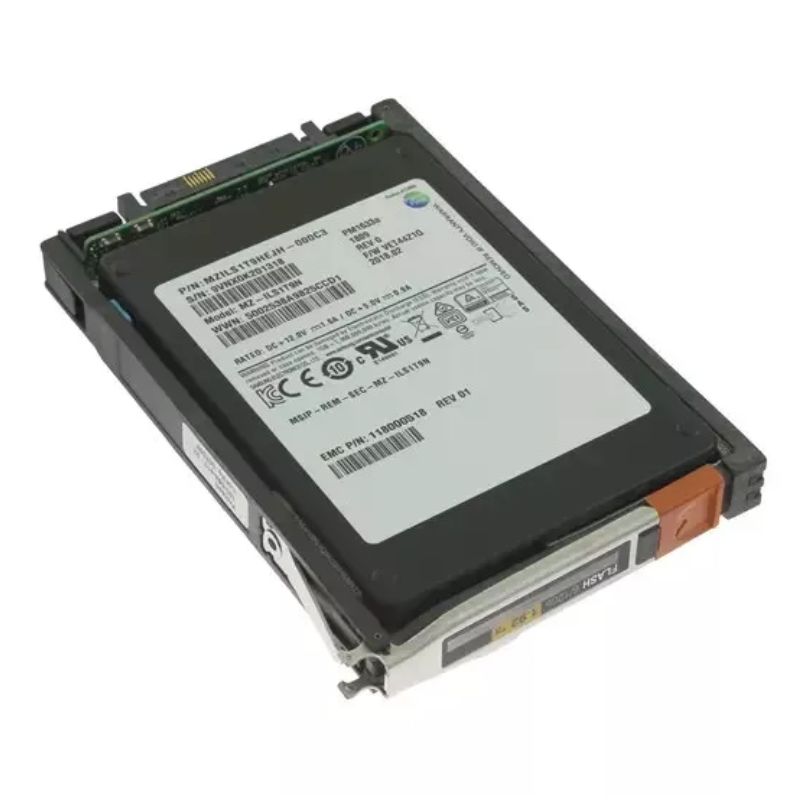


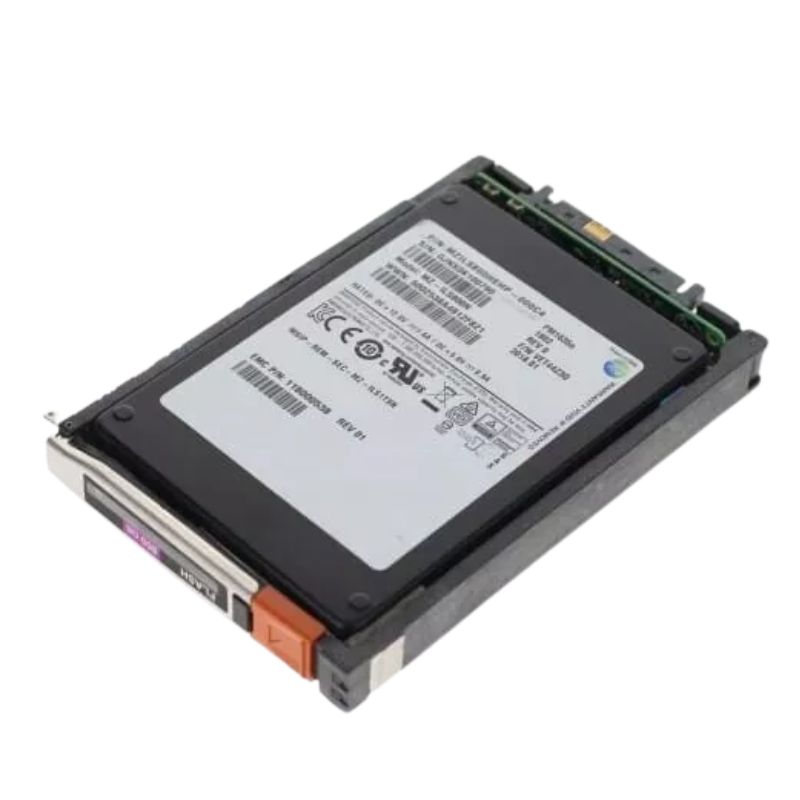
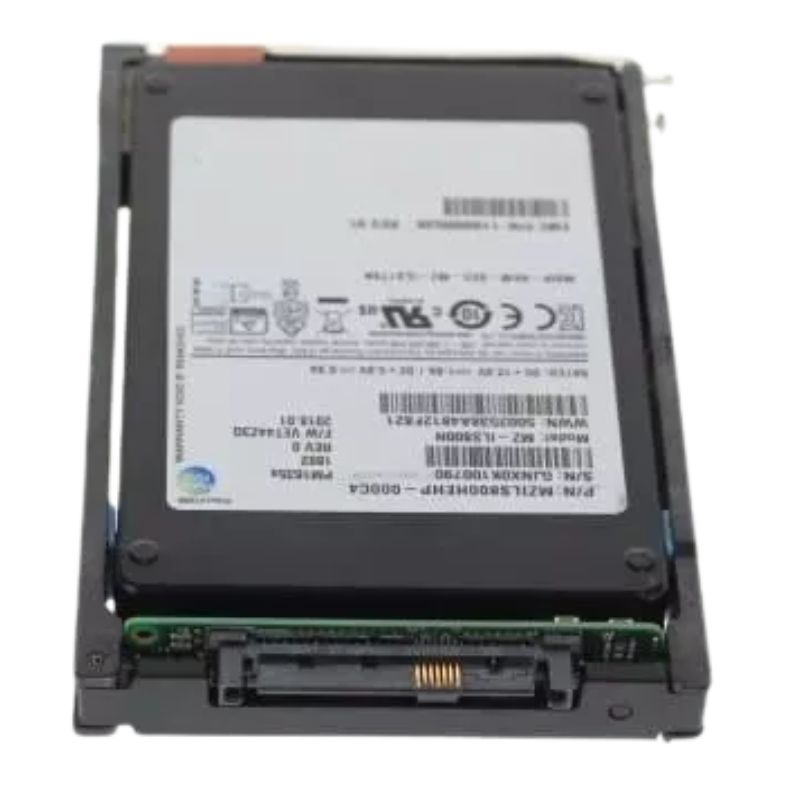
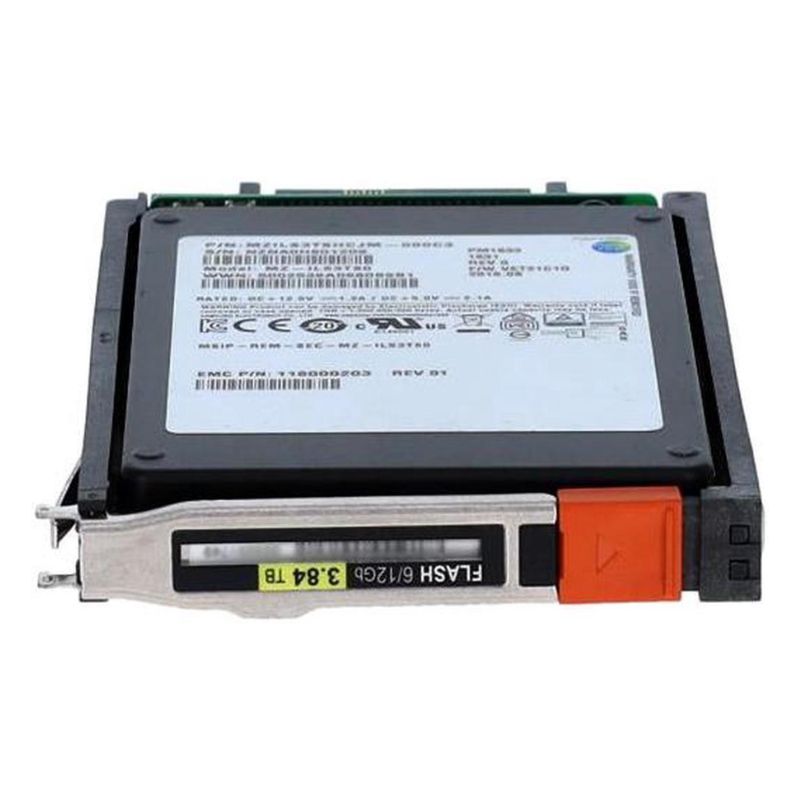
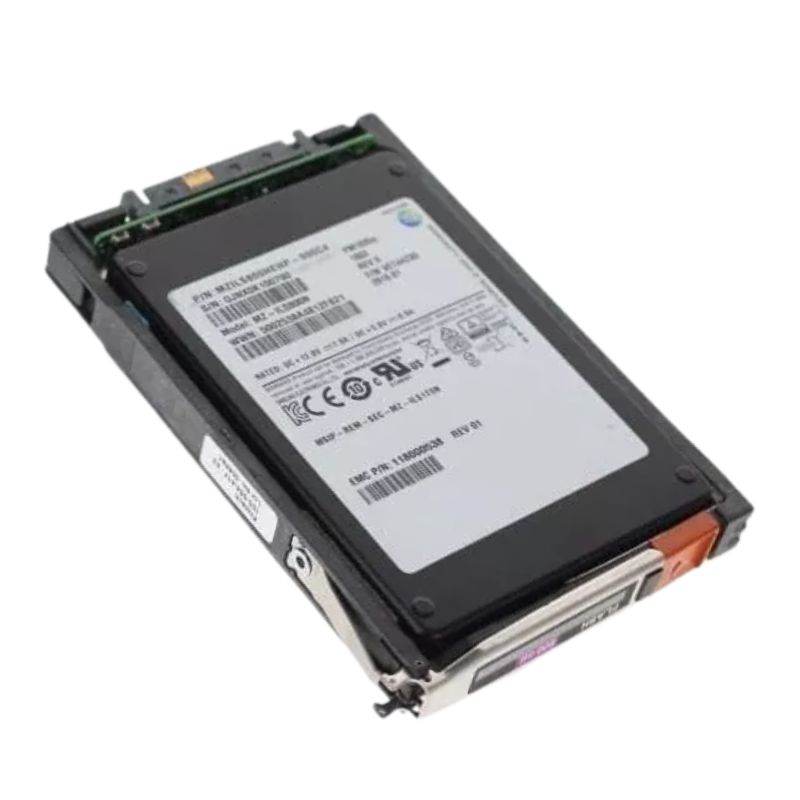
EMC 005053159 - 3.84TB SAS-12Gbps 2.5" Enterprise SSD. Excellent Refurbished with 1 year replacement warranty
The EMC 005053159 is a high-performance enterprise solid-state drive engineered for mission-critical storage arrays and data center environments. With a 3.84TB capacity, a 2.5" form factor and a SAS 12 Gb/s interface, this drive delivers low latency, sustained throughput and enterprise-grade reliability for virtualization, databases, and heavy I/O workloads.
The 3.84TB capacity provides ample usable space for large databases, VM catalogs and high-density application data. The 2.5" small-form factor (SFF) enables dense drive population in 1U/2U enclosures and blade chassis.
The drive communicates over a single SAS 12 Gb/s link, offering enterprise-class throughput and robust full-duplex operation. SAS connectivity ensures broad compatibility with enterprise controllers and RAID systems.
Built to deliver consistent low latency and strong IOPS, the EMC 005053159 is suitable for mixed and read/write-intensive enterprise workloads:
Enterprise SSDs such as the EMC 005053159 emphasize endurance, data integrity and availability. These characteristics reduce downtime and protect business data in demanding deployments.
The drive provides built-in mechanisms to maintain data integrity under stress, enabling safer operation inside RAID arrays and clustered storage systems.
Proper thermal management is important in dense server environments. The EMC 005053159 is designed to operate within enterprise thermal envelopes and power budgets.
Enterprise SSDs often incorporate security measures; verify supported features for your deployment to meet compliance needs.
In the realm of high-performance computing and enterprise storage, the shift from traditional Hard Disk Drives (HDDs) to Solid State Drives (SSDs) has been nothing short of revolutionary. Enterprise-grade SSDs, like the EMC 005053159 3.84TB SAS model, are specifically engineered to meet the relentless demands of 24/7 data center operations. Unlike consumer SSDs, which are optimized for bursty workloads and occasional use, enterprise SSDs are built for endurance, consistent low-latency performance, and extreme reliability under constant, heavy write cycles. They serve as the primary storage tier for mission-critical applications, virtualized environments, high-frequency databases, and real-time analytics platforms, where every millisecond of latency translates to business impact.
The Serial Attached SCSI (SAS) interface is the gold standard for performance and reliability in enterprise storage environments. The "12Gbps" designation refers to the theoretical data transfer rate of 12 gigabits per second per lane, a significant leap over the previous 6Gbps SAS generation.
While SATA and NVMe are common in consumer and performance-centric applications respectively, SAS holds distinct advantages in traditional enterprise arrays.
Unlike SATA, which is half-duplex (data can only travel in one direction at a time), SAS is full-duplex. This means the drive can send and receive data simultaneously, dramatically improving throughput in mixed read/write workloads typical of servers.
This is a critical feature for high-availability systems. SAS SSDs have two independent physical ports, allowing them to be connected to two different host controllers simultaneously. If one controller, cable, or path fails, the other can maintain uninterrupted access to the drive, ensuring continuous operation—a non-negotiable requirement for mission-critical applications.
The SAS protocol includes more robust T10 Protection Information (T10 PI or DIF) compared to SATA. This feature helps to prevent data corruption by verifying the integrity of data as it moves between the host and the drive, a vital function in data-sensitive environments like financial services and healthcare.
It's important to note that NVMe, which operates over PCIe lanes, offers significantly higher I/O speeds and lower latency than SAS by bypassing the SCSI command set. However, SAS remains dominant in storage arrays that require a large number of drives, proven reliability, dual-porting, and compatibility with existing SAN infrastructures. The choice often comes down to the specific architecture and requirements of the data center.
The 2.5-inch small form factor (SFF) has become the standard for dense storage configurations. Its compact size allows storage array manufacturers to pack a tremendous amount of storage capacity and performance into a single rack unit, maximizing the storage density per square foot in the data center.
Drives like the EMC 005053159 are designed not just as generic components but are often qualified for specific storage systems. This ensures seamless integration, firmware compatibility, and optimal performance within ecosystems from vendors like Dell EMC (PowerEdge servers, PowerMax, Unity, VMAX arrays), HPE, IBM, and Cisco. Always verify compatibility with your specific system model.
This capacity is well-suited for a variety of demanding applications:
High-speed databases benefit immensely from the low latency and high IOPS of SAS SSDs, speeding up transaction times, queries, and reporting.
Virtualized environments host multiple virtual machines on a single physical server, creating a random I/O "storm." SAS SSDs can handle this intense workload, ensuring smooth performance for all VMs.
Applications that process massive datasets in real-time require the fastest possible access to data, making high-capacity enterprise SSDs a necessity.
In hybrid storage arrays, SSDs are often used as a cache layer in front of larger HDDs. A 3.84TB SSD can cache a substantial amount of "hot" (frequently accessed) data, accelerating overall system performance.
Endurance is arguably the most critical metric for an enterprise SSD. It defines how much data can be written to the drive over its lifetime, directly impacting its longevity and total cost of ownership.
DWPD measures how many times you can overwrite the entire user-accessible capacity of the drive every day, for the duration of its warranty period. For example, an SSD with a 5-year warranty and a DWPD of 3 allows you to write 3 x 3.84TB = 11.52TB of data to it every single day for 5 years.
Many enterprise drives, including likely this EMC model, use eMLC NAND. eMLC is a grade of MLC flash that is specially screened and tuned for higher endurance and reliability than standard MLC, though it often comes at a higher cost. TLC NAND, which stores three bits per cell, is common in consumer drives and offers higher densities (and lower cost) but lower endurance. However, advanced enterprise TLC (eTLC) drives with sophisticated controllers and high over-provisioning are closing this gap and becoming more prevalent for read-intensive workloads.
Enterprise SSDs are typically categorized by the type of workload they are designed to handle, which correlates directly with their endurance rating (DWPD/TBW).
These drives are optimized for applications where reads dominate the I/O pattern, such as web serving, streaming media, and boot drives. They typically have a lower endurance rating (e.g., 1-3 DWPD) and are often built on TLC NAND for a lower cost per gigabyte.
As the name implies, these drives are balanced for environments with a more even mix of read and write operations, such as database applications, virtualization, and general-purpose server workloads. They feature moderate endurance ratings (e.g., 3-5 DWPD) and often use eMLC NAND.
These are the workhorses for the most demanding write-heavy tasks, including log files, data logging, AI/ML training data, and high-frequency trading platforms. They boast the highest endurance ratings (e.g., 10+ DWPD) and are built with the most durable NAND, such as SLC or high-grade eMLC, commanding a premium price.
The EMC 005053159 3.84TB SAS SSD, with its substantial capacity and robust SAS interface, is likely positioned as a Mixed-Use or Read-Intensive drive, capable of handling a broad spectrum of enterprise applications with reliability and performance.


 Contact Us
 Information
 Catalog
 Solid State Drives (SSD)
 Network Switches
 Hard Disk Drives
 HBA & Controllers
 PC & Servers
 PC & Server Memory
 CPU & Processors
 Network Routers
 Power Supplies
 Tape Drives & Libraries
 Network Devices
 Computer & Network Cables