(7% discount is applied at checkout)
Cart is empty
Your go-to destination for cutting-edge server products
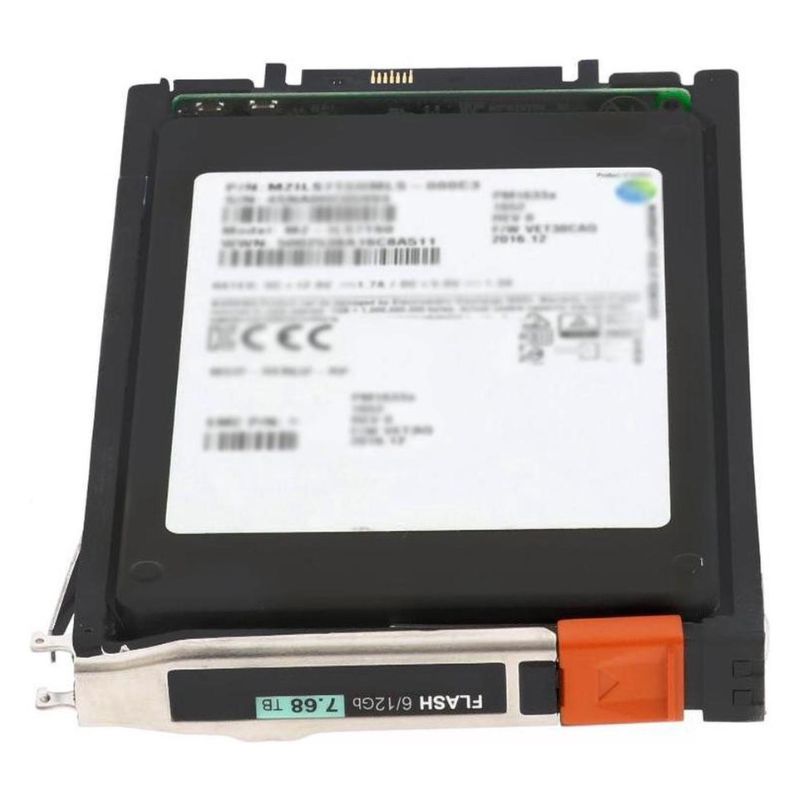


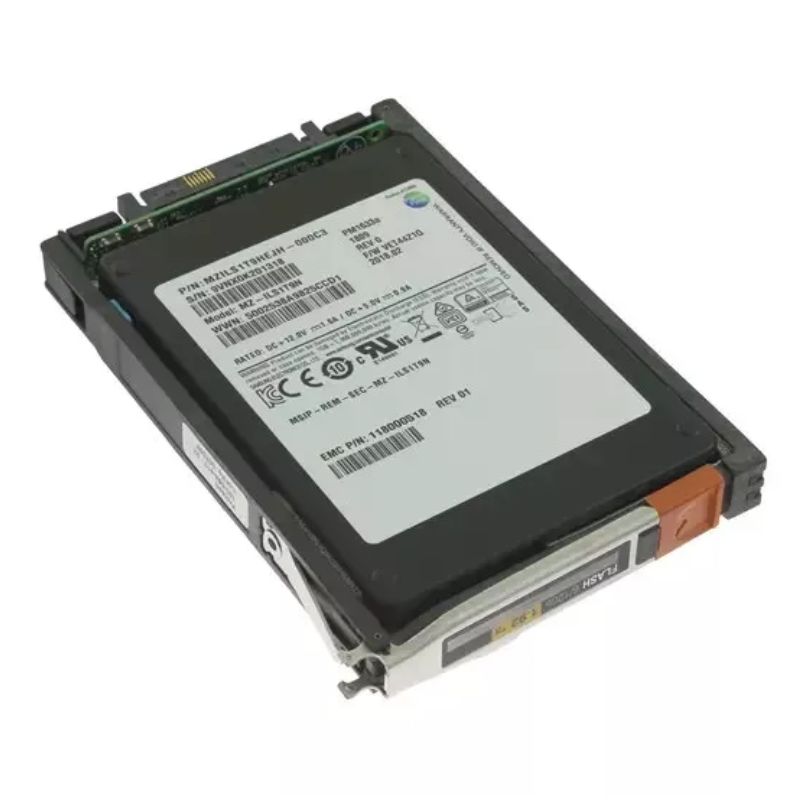
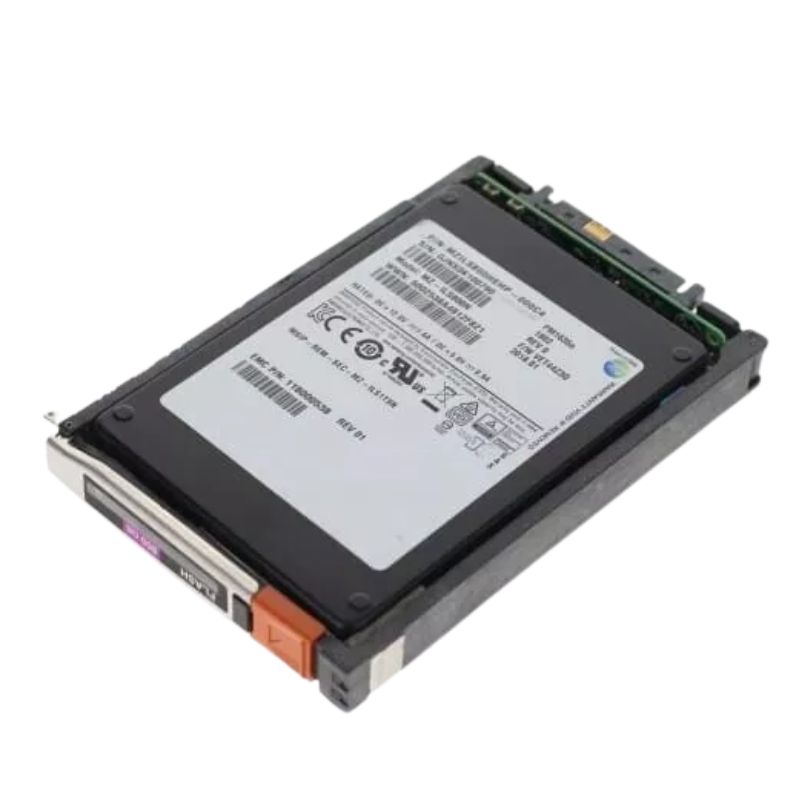
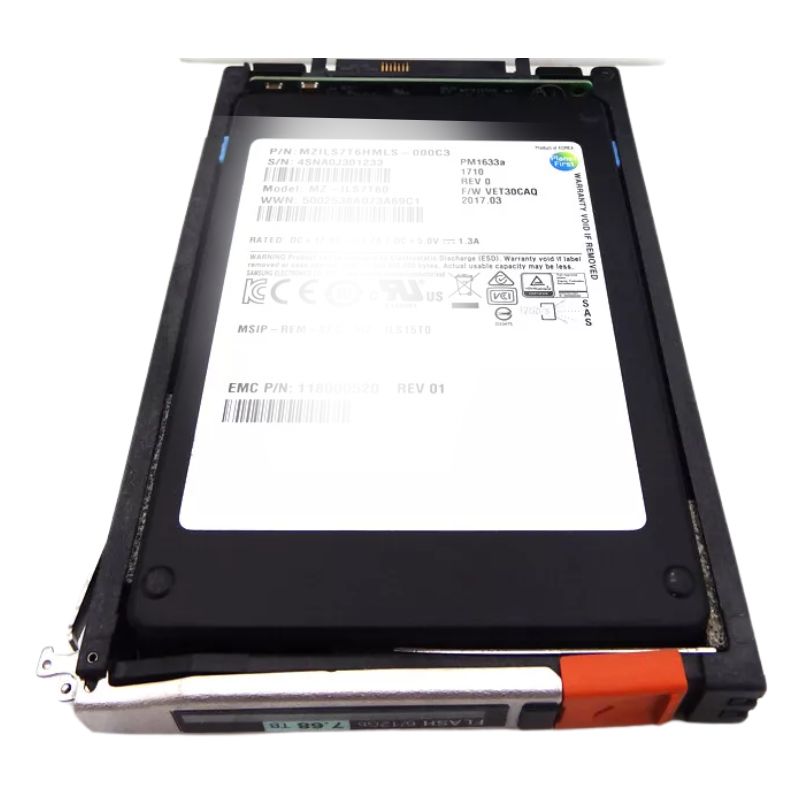
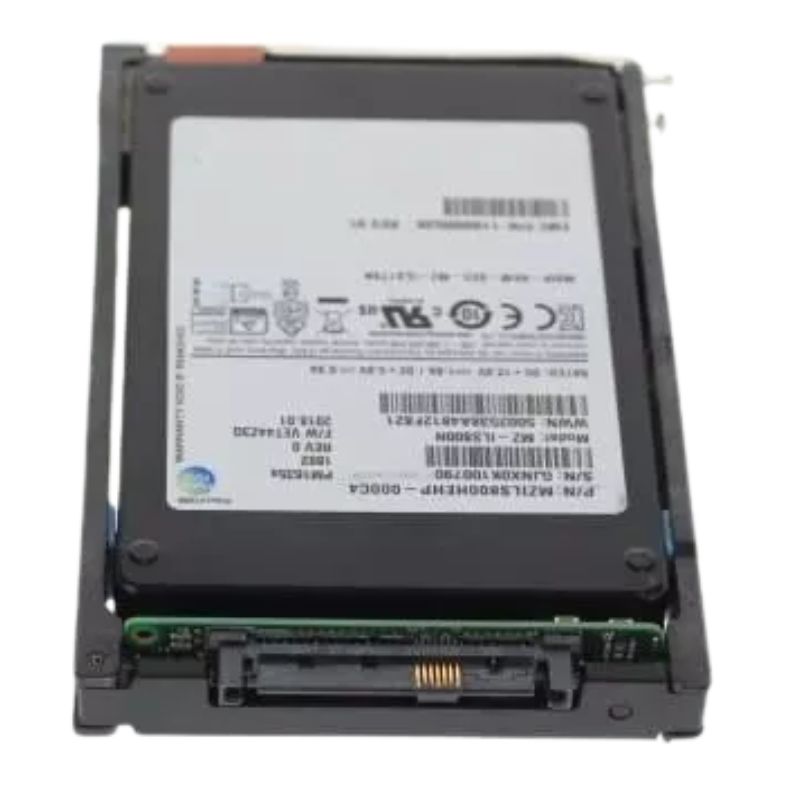
EMC 005053161 7.68TB SAS-12GBPS Enterprise Solid State Drive for 2.5-inch Drives. Excellent Refurbished with 1 year replacement warranty
The EMC 005053161 is a high-capacity, enterprise-grade 2.5-inch solid state drive engineered for data centers, storage arrays, and mission-critical applications. With 7.68 TB of usable capacity and a SAS 12 Gb/s interface, this SSD delivers dependable storage density, low-latency access, and robust reliability for heavy I/O workloads.
Designed to integrate into modern server and SAN environments, the EMC 005053161 supports fast serial connectivity and simple bay compatibility for straightforward expansion and replacement.
While raw benchmark figures depend on host configuration and firmware, enterprise SAS SSDs such as the EMC 005053161 are optimized to provide:
Built to meet enterprise reliability demands, this drive is suitable for 24/7 operation and heavy transactional workflows. It helps reduce downtime and data risk when deployed in RAID arrays or clustered storage systems.
A 7.68 TB 2.5-inch SSD increases storage density per rack unit, enabling higher capacity in the same physical footprint — a key advantage for space-constrained installations and consolidation projects.
In the demanding landscape of modern enterprise IT, storage is not merely a component; it is the foundation upon which application performance, data analytics, and business continuity are built. The EMC 005053161 represents a critical category within this ecosystem: the high-capacity, high-performance Enterprise Solid State Drive (SSD). Designed specifically for 2.5-inch drive form factors and leveraging the robust SAS-12Gbps interface, this 7.68TB drive is engineered for mission-critical applications where latency, throughput, and reliability are non-negotiable. This category of storage is the workhorse for tier-0 and tier-1 storage arrays, high-performance databases, virtualized environments, and data-intensive computing tasks that power today's leading organizations.
The Serial Attached SCSI (SAS) interface has long been the gold standard for enterprise storage connectivity, and the 12Gbps generation represents its peak in widespread adoption. Unlike consumer-grade SATA interfaces, SAS is built from the ground up for the rigors of 24/7 data center operation.
The choice of SAS-12Gbps over other interfaces like SATA or even NVMe in certain configurations is a deliberate one, rooted in specific enterprise requirements.
Unlike SATA, which operates in half-duplex mode (data can either be sent or received at any given time, but not both simultaneously), SAS is a full-duplex interface. This means the EMC 005053161 SSD can read and write data at full speed concurrently. This is critical for mixed-workload environments common in enterprises, where database transactions (writes) and report generation (reads) happen simultaneously.
This is arguably the most significant differentiator for mission-critical systems. SAS SSDs like the 005053161 feature two independent physical ports. These ports allow the drive to be connected to two different host controllers (HBAs) within a storage array or server. In the event of a controller failure, the second port immediately takes over, ensuring continuous data availability with zero downtime—a fundamental requirement for applications like online transaction processing (OLTP), financial trading platforms, and healthcare information systems.
The SAS protocol includes extensive error-checking and recovery mechanisms that far exceed those of SATA. Combined with a deep command queue (typically 256 or more commands), it ensures data integrity and optimal performance under heavy, complex workloads. The protocol is designed to manage a large number of I/O requests efficiently, minimizing latency and preventing bottlenecks.
SAS-12Gbps drives are backward compatible with 6Gbps SAS infrastructure. While they will operate at the lower speed when connected to an older controller, this provides a clear upgrade path for existing data centers. The physical connector is also designed to prevent accidental connection to a SATA-only backplane, ensuring system integrity.
The 2.5-inch drive size has become the dominant form factor in modern servers and storage arrays. Its compact dimensions allow for significantly higher storage density within a fixed rack unit (e.g., 2U) compared to legacy 3.5-inch drives. The EMC 005053161 conforms to this standard, but it's essential to understand the nuances of the enterprise 2.5-inch design.
The drive adheres to the standard 2.5-inch form factor with a height of 15mm. This "15mm tall" variant is common for high-capacity enterprise SSDs as it provides the physical space necessary for the increased number of NAND flash packages required to achieve a 7.68TB capacity while maintaining adequate cooling and structural integrity. It is crucial to verify that your server or storage array chassis supports 15mm drives, as some are limited to the thinner 7mm or 9.5mm designs typically used for lower-capacity drives.
Enterprise drives are designed for hot-swapping, meaning they can be removed and replaced without powering down the entire system. The EMC 005053161 is built with this in mind, often shipped with or requiring a specific drive tray or carrier that includes features like an activity LED, a failure LED, and a tactile handle for safe insertion and removal. Proper alignment and seating are critical to maintaining the integrity of the dual-port SAS connection.
The 7.68TB capacity point is not arbitrary; it is a strategic sweet spot in enterprise storage tiering. It represents an optimal balance between performance, cost-per-gigabyte, and density for primary storage workloads.
SSD performance and longevity are directly tied to the amount of spare area, or over-provisioning (OP), available to the controller. A 7.68TB drive, built from underlying NAND that may be 8TB or more, inherently includes a significant portion of OP. This extra space is used for garbage collection (reclaiming blocks of deleted data), wear leveling (distributing write cycles evenly across all memory cells), and bad block management. This results in consistent performance over the drive's lifespan and a higher DWPD (Drive Writes Per Day) rating, which is a key endurance metric.
Modern databases, virtual machine disks (VMDKs), and analytics datasets frequently run into the multi-terabyte range. A 7.68TB capacity allows a single drive, or a small number of drives in a RAID group, to host these large datasets without the performance penalty associated with spanning them across many smaller drives. This simplifies storage management and reduces latency for data access.
At the heart of any SSD is the NAND flash memory. The type of NAND used is a primary determinant of cost, performance, and endurance.
The EMC 005053161 likely utilizes a grade of NAND flash designed for enterprise use, often referred to as eMLC. This is distinct from consumer-grade MLC. eMLC NAND is engineered for a higher number of Program/Erase (P/E) cycles, meaning each memory cell can be written to and erased many more times before it wears out. This is achieved through a combination of higher-quality silicon, more robust firmware algorithms, and conservative factory settings, resulting in a much higher endurance rating suitable for write-intensive enterprise applications.
Endurance is typically quantified by the DWPD metric. For example, a 7.68TB drive with a 3 DWPD rating is warrantied to withstand 3 full drive writes (3 * 7.68TB = ~23TB of data) every day for its warranty period (e.g., 5 years). The EMC 005053161 is built to sustain such heavy write workloads, making it ideal for tasks like logging, data caching, and high-frequency transaction processing.
As an EMC-branded drive, the 005053161 is engineered and qualified for seamless integration into a wide range of Dell EMC storage systems. This is a critical aspect of the enterprise value proposition.
This drive is not a generic third-party component. It features Dell EMC-specific firmware that is meticulously tuned and tested for compatibility with arrays such as the PowerMax, Unity XT, VMAX, and Isilon F800. This firmware ensures optimal performance, advanced feature support (like data compaction and deduplication in all-flash arrays), and deep integration with the array's management and monitoring tools.
When installed in a compatible Dell EMC system, the drive is automatically recognized and integrated into the array's health monitoring system. Tools like Dell EMC SupportLink and Unisphere provide detailed insights into the drive's status, including wear-level indicators, pre-failure alerts, and temperature monitoring. This proactive management helps prevent unexpected failures and enables predictive maintenance, maximizing system uptime.
The combination of high capacity, SAS-12Gbps speed, and enterprise endurance makes this drive category suitable for a well-defined set of demanding applications.
Databases like Oracle, Microsoft SQL Server, and SAP HANA that power e-commerce, banking, and ERP systems require ultra-low latency and high IOPS for random read/write operations. The EMC 005053161 provides the consistent performance needed to ensure fast transaction times and user responsiveness.
Virtualized environments, especially Virtual Desktop Infrastructure (VDI), create "boot storms" when hundreds or thousands of users log in simultaneously. This generates an enormous, random read workload. The high IOPS capability of this SSD category ensures a smooth user experience. Furthermore, for persistent VDI, the high endurance handles the constant writes from user activity.
Applications in scientific research, financial modeling, and big data analytics often involve working with massive datasets that exceed the capacity of system RAM. The fast read speeds of the 7.68TB SSD act as an extension of memory, allowing for rapid data access and significantly reducing processing times compared to traditional hard drives.
In storage arrays that mix SSDs and HDDs, the EMC 005053161 serves as the top-tier (Tier-0) for hosting the most active "hot" data. Automated tiering software dynamically moves frequently accessed blocks to these SSDs, ensuring peak application performance while leveraging more economical HDDs for colder, less frequently accessed data.
While SAS-12Gbps is a high-performance interface, the industry is increasingly adopting NVMe (Non-Volatile Memory Express), especially in its NVMe-oF (NVMe over Fabrics) incarnation. It is important to understand the context of this drive category within that evolution.
SAS technology is mature, with a vast installed base of servers, HBAs, switches, and storage arrays. It offers proven stability, robust management features, and excellent reliability. For many enterprises, especially those with existing SAS infrastructure, upgrading to high-performance SAS SSDs like the 005053161 is a cost-effective and low-risk path to significantly improved performance without a complete infrastructure overhaul.
NVMe is a protocol designed specifically for flash storage, bypassing the legacy SCSI command set used by SAS. It operates over the PCIe bus, offering significantly lower latency and higher potential bandwidth. However, adopting NVMe often requires new hardware, including NVMe-enabled servers, HBAs, and switches. The choice between a high-end SAS SSD and an entry-level NVMe drive can be nuanced, depending on the specific workload, existing infrastructure, and budget.
It is not a simple replacement scenario. Many modern all-flash arrays from Dell EMC and other vendors support a dual-mode architecture where NVMe drives are used for the sheer performance front-end, while high-capacity SAS SSDs like the 7.68TB model provide the persistent capacity tier, leveraging the strengths of both technologies within a single system.


 Contact Us
 Information
 Catalog
 Solid State Drives (SSD)
 Network Switches
 Hard Disk Drives
 HBA & Controllers
 PC & Servers
 PC & Server Memory
 CPU & Processors
 Network Routers
 Power Supplies
 Tape Drives & Libraries
 Network Devices
 Computer & Network Cables