(7% discount is applied at checkout)
Cart is empty
Your go-to destination for cutting-edge server products


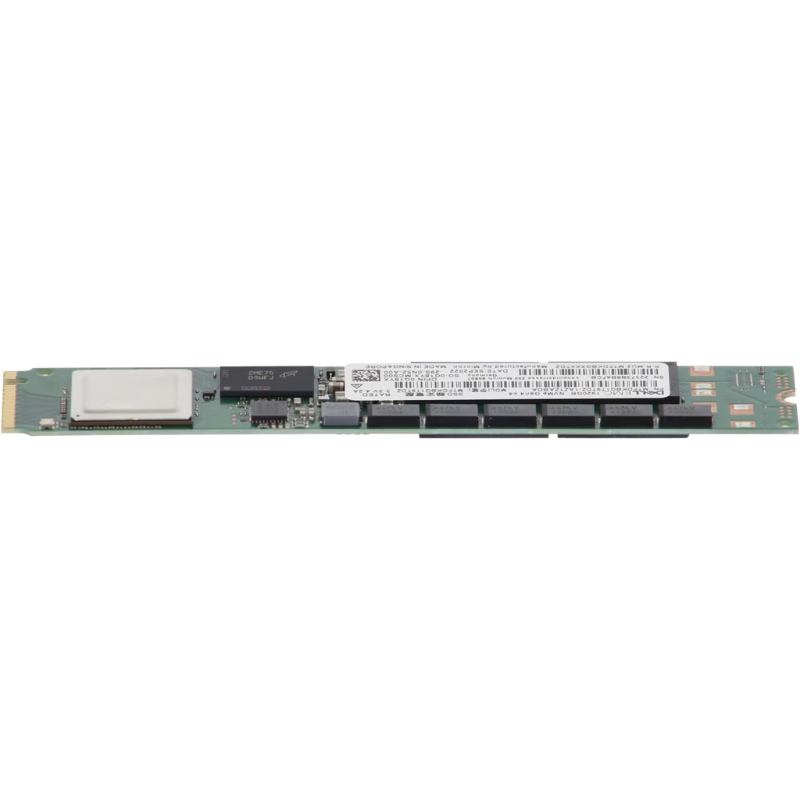
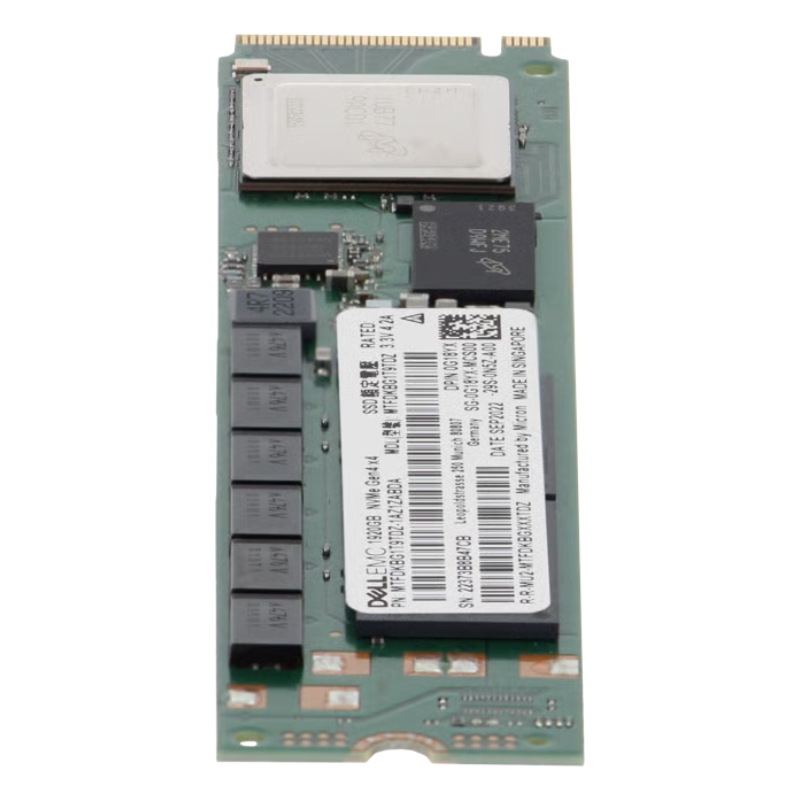
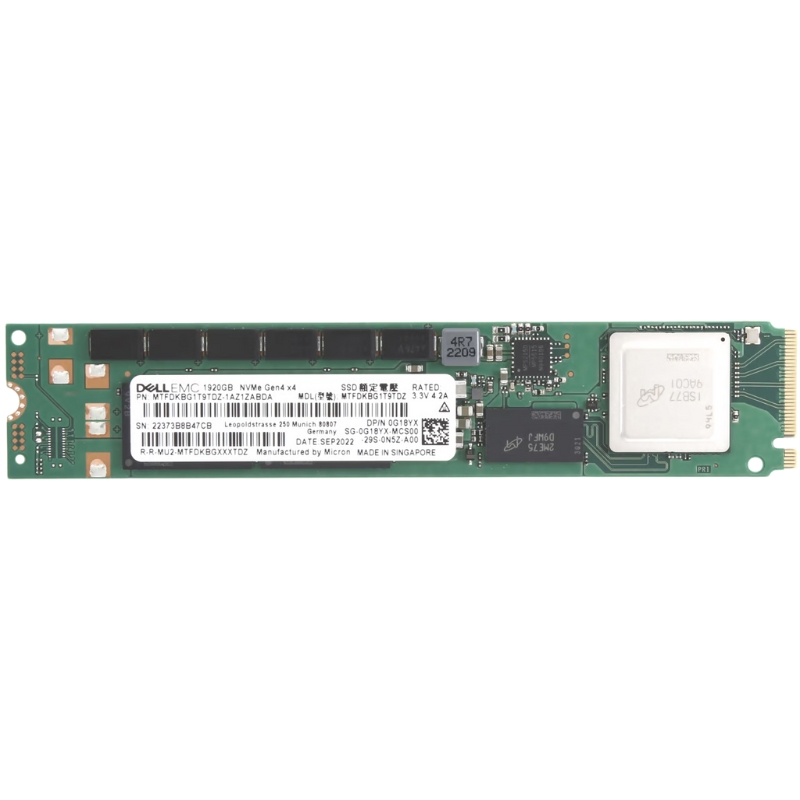
Dell G18YX 1.92TB Ec Nvme 7400 Read Intensive M.2 110 Gen4 SSD. Excellent Refurbished with 1 year replacement warranty
The G18YX Dell 1.92TB EC NVMe 7400 Read Intensive M.2 SSD represents a pinnacle in enterprise-grade storage designed for environments where read-intensive workloads demand both high throughput and consistent low latency. Built for modern data center environments, this drive leverages NVMe protocol efficiencies and ECC NAND technologies to deliver unparalleled performance and reliability. It is engineered for applications such as large-scale data analytics, high-performance caching, content delivery, search indexing, and virtual desktop infrastructure (VDI) boot optimization.
This drive offers significant benefits over traditional SATA SSDs and legacy enterprise storage systems. The adoption of the NVMe protocol over PCIe lanes provides far greater bandwidth and reduced latency, while the M.2 form factor enables dense storage architectures. Its 1.92TB capacity delivers an optimal balance of storage density and performance, making it suitable for high-speed caching layers, metadata indexes, and other performance-critical read operations. ECC NAND technology further enhances endurance and data integrity, ensuring enterprise-class reliability even under sustained workloads.
The G18YX Dell 1.92TB EC NVMe 7400 SSD is engineered to deliver exceptionally high sequential read speeds and ultra-low latency access. NVMe’s parallelized architecture allows the drive to handle multiple queues and thousands of simultaneous commands, which translates into drastically reduced latency compared to SATA SSDs. This performance advantage is essential for demanding workloads such as real-time analytics, high-speed database queries, and large-scale content distribution systems.
Endurance in this category is optimized for read-intensive workloads. ECC NAND flash reduces the risk of data corruption, while advanced wear-leveling algorithms extend the usable life of the drive. The G18YX series is rated with high MTBF figures, ensuring consistent operation in mission-critical environments. This combination of endurance, data integrity, and performance makes it a preferred choice for enterprise applications that require predictable behavior and long-term reliability.
The G18YX Dell SSD uses the NVMe 1.4 protocol over PCIe Gen4 x4, which delivers dramatically higher bandwidth compared to SATA-based solutions. The M.2 22110 form factor ensures compatibility with high-density server configurations and modern storage appliances, offering significant advantages in physical space utilization. The M.2 format also enables higher storage density per rack unit, making it ideal for compact storage systems, hyper-converged infrastructure, and edge deployments.
This drive incorporates enterprise-grade ECC NAND that offers exceptional read performance while safeguarding data integrity. ECC algorithms detect and correct errors in real time, preventing data corruption and ensuring the accuracy of stored information. The NAND configuration is tuned specifically for read-intensive workloads, maximizing IOPS performance while optimizing endurance metrics such as Terabytes Written (TBW).
The G18YX leverages a high-performance enterprise NVMe controller designed to handle sustained read loads and maintain consistent Quality of Service (QoS). The controller is responsible for managing error correction, wear leveling, garbage collection, and thermal management, all of which contribute to the drive’s consistent performance under heavy workloads. These capabilities make it suitable for storage architectures requiring predictable low-latency reads at scale.
Performance benchmarks for the G18YX Dell 1.92TB EC NVMe 7400 SSD typically highlight very high sequential read speeds often exceeding 6,500 MB/s, and random read IOPS in the hundreds of thousands. These metrics translate to substantial reductions in query times for large datasets and dramatically improve response times in latency-sensitive environments. Write performance, while tuned for read-centric workloads, remains competitive for metadata updates, small configuration writes, and system logging.
The G18YX is particularly well suited for high-performance caching layers in multi-tier storage systems. By placing frequently accessed datasets on a read-intensive NVMe SSD, organizations can dramatically reduce access times and improve system responsiveness. In hybrid storage environments, this SSD acts as a high-speed tier that accelerates reads while offloading colder data to lower-cost, high-capacity storage.
Enterprise search platforms such as Elasticsearch, Solr, and Splunk benefit significantly from NVMe’s high random read performance. The G18YX enables search nodes to sustain high query rates with minimal latency, making it ideal for environments where fast access to large indexes is crucial. This results in faster search results, reduced query latency, and improved user experience.
VDI environments experience intense read workloads during login storms and profile loads. Deploying G18YX SSDs for VDI boot drives or golden image caches ensures rapid user logins and smooth desktop performance. The NVMe interface significantly accelerates boot times compared to SATA SSDs, delivering better scalability for virtual desktop deployments.
In content delivery networks (CDNs) and edge computing scenarios, the G18YX delivers the performance needed to serve high volumes of data with consistent low latency. The M.2 form factor supports high-density edge server deployments where space and power efficiency are critical. This drive enables edge nodes to cache popular content locally, reducing latency for end users and decreasing upstream bandwidth consumption.
Analytics platforms and AI inference engines often require high-speed access to large datasets. The G18YX excels in such scenarios by delivering consistent read performance that accelerates analytical queries and model inference tasks. Its high IOPS capability is crucial for environments processing large volumes of data with complex access patterns.
The G18YX Dell SSD is compatible with a wide range of modern servers, storage arrays, and high-density computing platforms that support the M.2 NVMe interface. Dell PowerEdge servers, high-density blades, and certain hyper-converged appliances can leverage the performance benefits of this drive without requiring major infrastructure changes. It is essential to validate the motherboard and BIOS support for PCIe Gen4 NVMe drives to achieve optimal performance.
Enterprise NVMe drives such as the G18YX are supported by vendor management tools like Dell OpenManage, enabling administrators to monitor drive health, firmware versions, temperature, and wear levels. Firmware updates are available to address performance optimization, reliability improvements, and compatibility enhancements. These tools facilitate integration into existing monitoring and management frameworks, ensuring that SSDs perform reliably throughout their lifecycle.
Optimal performance and endurance of the G18YX require careful provisioning. Enterprise workloads benefit from deliberate over-provisioning, where a portion of the drive’s capacity is reserved to assist wear leveling and garbage collection. This approach reduces write amplification and improves long-term drive performance, particularly under sustained read loads interspersed with periodic writes.
Tuning file systems for NVMe drives can deliver measurable performance gains. Configurations such as aligning partitions to NVMe block sizes, enabling TRIM/discard commands where supported, and selecting file systems optimized for SSD performance are recommended. Modern operating systems such as Linux, Windows Server, and VMware ESXi provide native support for NVMe SSDs, but administrators should confirm that firmware and driver versions are aligned for maximum throughput and stability.
In enterprise environments, RAID configurations using NVMe drives require careful consideration. While RAID can provide redundancy, it introduces complexity for SSDs due to their high performance and parallelism. The G18YX performs well in RAID configurations but may require specific controller support to maintain low latency and optimal performance. Administrators should verify NVMe RAID controller compatibility and understand how the RAID configuration affects TRIM/discard support and rebuild performance.
The G18YX supports hardware-based AES-256 encryption, enabling enterprises to protect sensitive data without impacting performance. This feature can be integrated into enterprise key management systems to streamline encryption key handling and compliance with data security regulations.
Secure erase functions allow the drive to be sanitized in accordance with industry standards, ensuring data is unrecoverable before repurposing or disposal. For regulated environments, compliance with standards such as NIST SP 800-88 is critical, and the G18YX supports secure erase processes that meet such requirements.
Compared to SATA-based SSDs, the G18YX NVMe drive delivers significantly higher throughput, reduced latency, and higher IOPS performance. SATA SSDs remain constrained by interface limitations, while NVMe SSDs such as the G18YX utilize multiple PCIe lanes to achieve superior bandwidth, making them ideal for high-performance enterprise applications.
The G18YX is optimized specifically for read-intensive workloads. Write-intensive NVMe drives offer higher endurance and write performance but at a higher cost and lower read optimization. For applications where reads dominate and writes are relatively low, the G18YX delivers superior cost-to-performance efficiency.
HDDs offer higher capacity at a lower price point but suffer from high latency and lower IOPS performance. Hybrid architectures that incorporate the G18YX as a high-speed caching tier deliver the best balance of performance and capacity, enabling rapid access to hot data while storing cold data on HDD tiers.
The G18YX is well suited for tiered storage architectures, acting as the high-speed read tier above slower SSDs or HDDs. Automated tiering policies can dynamically move hot data to the NVMe tier and colder data to lower-cost storage, optimizing performance and reducing costs.
In edge computing deployments, the M.2 form factor and NVMe interface allow dense storage configurations in compact hardware. The G18YX can serve as a primary read cache or storage tier in edge nodes, delivering high performance while minimizing power and space requirements.
VDI environments benefit significantly from NVMe read-intensive SSDs, especially when booting multiple virtual machines simultaneously. The G18YX enables rapid boot and application load times, reducing login storm effects and improving end-user experience in high-density virtualized environments.


 Contact Us
 Information
 Catalog
 Solid State Drives (SSD)
 Network Switches
 Hard Disk Drives
 HBA & Controllers
 PC & Servers
 PC & Server Memory
 CPU & Processors
 Network Routers
 Power Supplies
 Tape Drives & Libraries
 Network Devices
 Computer & Network Cables