(7% discount is applied at checkout)
Cart is empty
Your go-to destination for cutting-edge server products
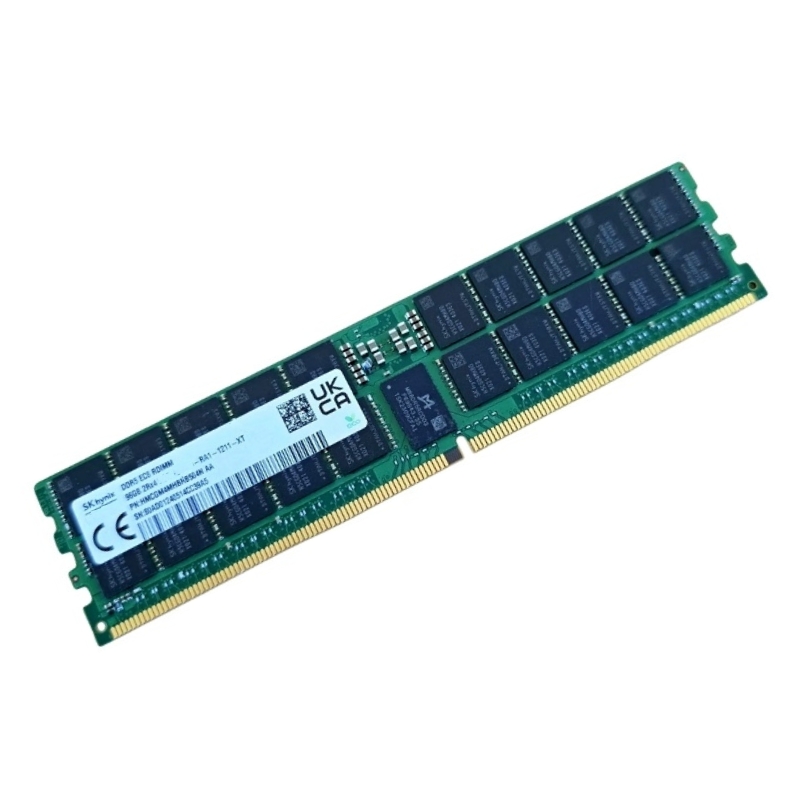


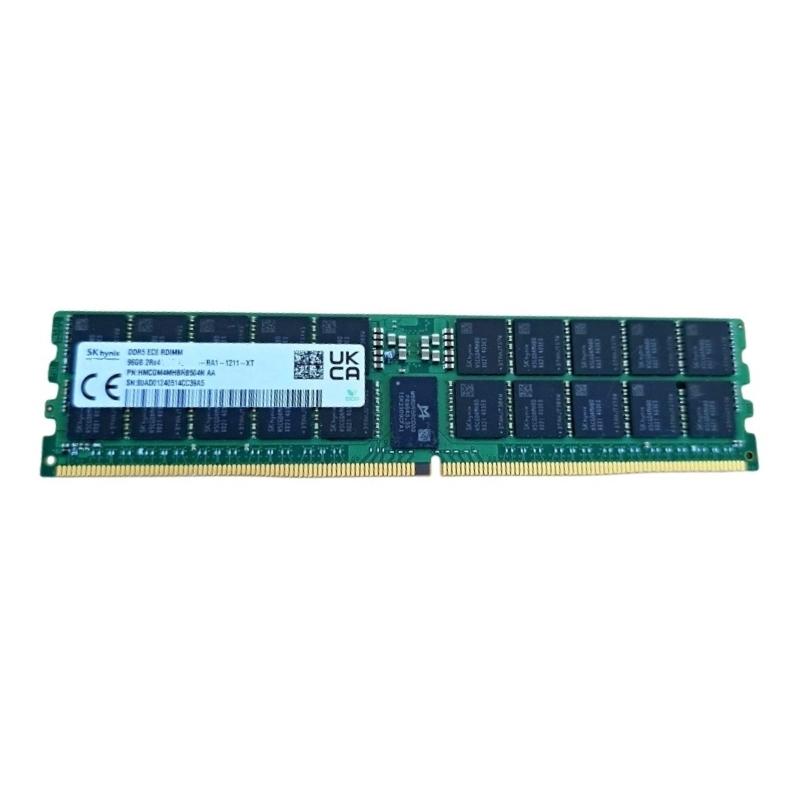
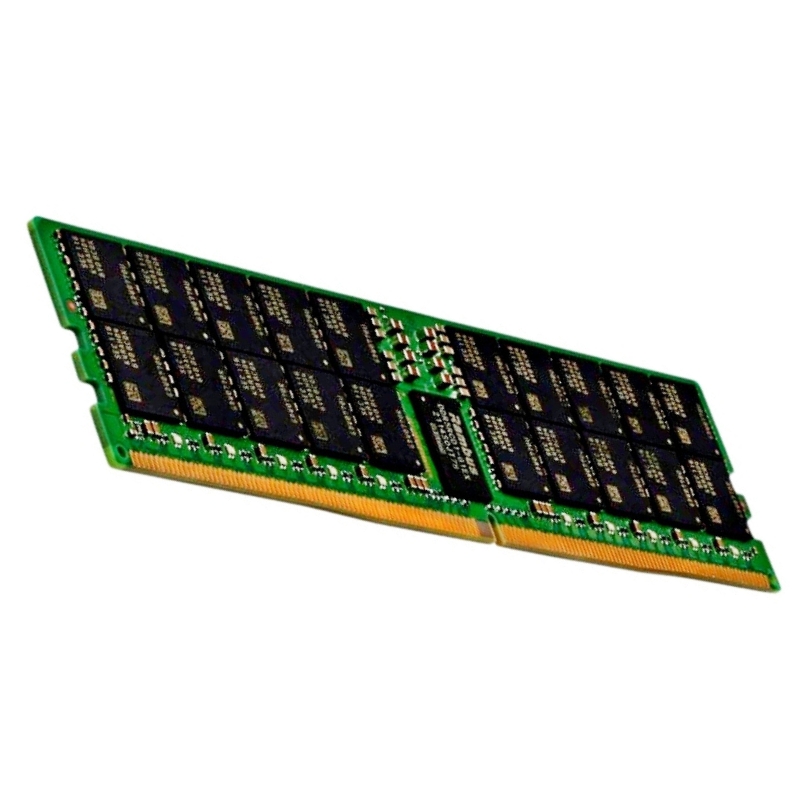
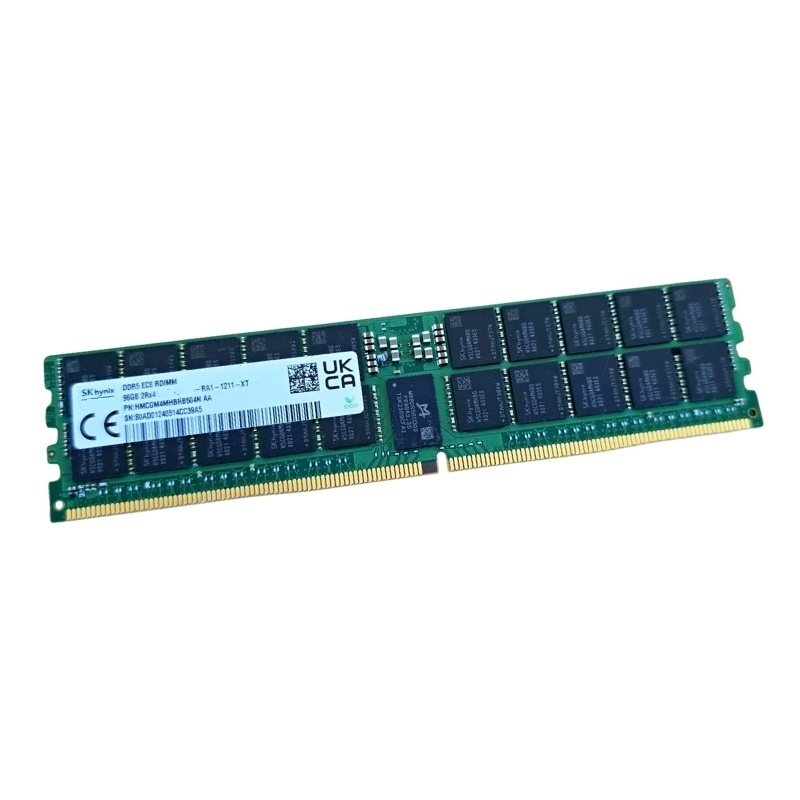
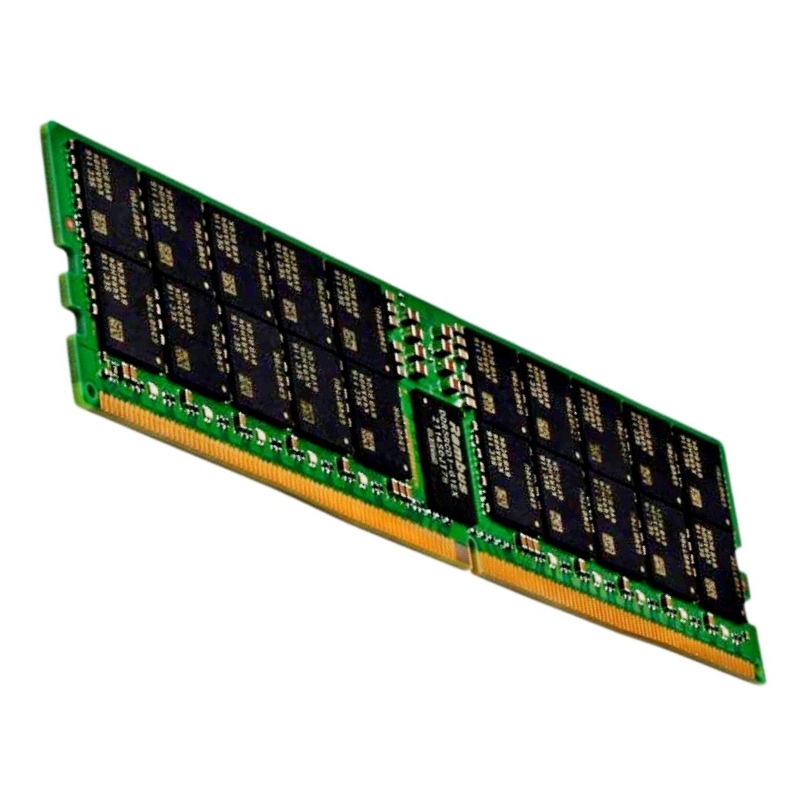
HMCGM4MGBRB Hynix 96GB PC5-44800 DDR5 5600MHz Cl46 ECC 288-pin RDIMM Memory Module. New (System) Pull with 1 Year Replacement Warranty
The HMCGM4MGBRB Hynix 96GB PC5-44800 DDR5 5600MHz CL46 ECC 288-pin RDIMM Memory Module represents the latest in high-performance enterprise memory technology. Designed for servers, data centers, and mission-critical computing environments, this module combines high-density 96GB capacity with DDR5 5600MHz speed and ECC error correction to deliver unparalleled performance, reliability, and efficiency. Engineered to support modern workloads such as AI, machine learning, virtualization, and large-scale databases, the HMCGM4MGBRB ensures both speed and stability across demanding applications.
With a massive 96GB per module, this RDIMM reduces the number of DIMMs required in server configurations while maximizing available memory. Fewer DIMMs per server improve airflow and thermal management, lower power consumption, and simplify system expansion. The high-density configuration is ideal for virtualization, large-scale database management, cloud computing environments, and data-intensive AI workloads.
The module operates at DDR5-5600MHz, providing a maximum bandwidth of PC5-44800. Compared to DDR4, DDR5 offers improved data rates, reduced latency in sustained workloads, and greater overall efficiency. This speed enhancement is particularly beneficial for workloads that rely on high-throughput memory operations, including AI training, large-scale simulations, and real-time analytics.
Featuring a CAS latency (CL) of 46, the module is optimized to balance high-speed performance with low-latency access. While latency is slightly higher than previous DDR4 modules, the significantly increased bandwidth of DDR5 offsets this, ensuring superior real-world performance for multi-threaded and memory-intensive applications.
The integrated ECC technology detects and corrects single-bit errors, preventing data corruption and system crashes. This feature is essential for industries where reliability is critical, such as finance, healthcare, government, and cloud service providers. ECC support ensures continuous operation and data integrity under heavy workloads.
The module’s 288-pin RDIMM architecture includes a register buffer that minimizes electrical load on the memory controller. This allows multiple modules to be installed in servers without compromising signal integrity, ensuring stable performance even at large-scale memory capacities.
The dual-rank (2Rx4) structure optimizes memory channel utilization, increasing effective bandwidth and access efficiency. This configuration enables servers to maintain high performance in multi-core processing environments and parallelized workloads.
DDR5 technology provides nearly double the bandwidth of DDR4, and the HMCGM4MGBRB’s 5600MHz speed ensures high data throughput. This capability is critical for applications like AI training, machine learning inference, high-frequency trading, and enterprise virtualization, which require rapid data access and processing.
In addition to external ECC, DDR5 features on-die ECC that corrects minor internal memory errors before they reach the system level. This dual-layer error correction enhances reliability, especially in high-capacity, high-performance environments.
DDR5 modules split each DIMM into two independent 32-bit subchannels, allowing for parallel memory access. This design reduces latency, improves memory utilization, and provides consistent performance across multi-core server processors.
DDR5 modules like the HMCGM4MGBRB integrate PMICs, enabling improved voltage regulation directly on the module. This reduces overall power consumption, improves energy efficiency, and ensures stable performance under varying workloads, helping data centers reduce operational costs and environmental impact.
High-capacity database workloads, such as Oracle, SQL Server, PostgreSQL, and in-memory platforms like SAP HANA, benefit from the module’s high-speed DDR5 memory. It improves query execution times, enables larger in-memory datasets, and supports real-time analytics with minimal latency.
HPC clusters used in scientific simulations, engineering modeling, and climate prediction require robust memory modules. The HMCGM4MGBRB’s ECC reliability, high bandwidth, and low-latency design ensure stable performance across thousands of parallel processes.
From ERP solutions to real-time transaction processing, this module supports continuous uptime for mission-critical enterprise software. The combination of high capacity, ECC protection, and fast DDR5 performance ensures business operations remain reliable and efficient.
Dual-layer error correction protects data from corruption, ensuring high reliability in financial systems, healthcare databases, and government infrastructures. Single-bit errors are automatically detected and corrected, preventing downtime and maintaining operational integrity.
Integrated thermal monitoring enables proactive cooling management. Data centers can monitor memory temperature and adjust airflow or cooling systems to maintain optimal performance, preventing overheating in dense rack environments.
The RDIMM register buffer improves signal integrity, enabling reliable performance even when multiple modules are installed across memory channels. This is critical in servers with high-density memory configurations.
The HMCGM4MGBRB is compatible with servers designed for DDR5 RDIMM memory. Ensure BIOS and firmware are updated to support 5600MHz modules for optimal performance.
For maximum performance, memory modules should be installed in matched pairs or across balanced channels. This ensures optimal bandwidth utilization and system stability.
Although DDR5 reduces power consumption compared to DDR4, 96GB modules in high-density configurations require adequate cooling and power planning. Proper airflow and server layout help prevent thermal throttling.
Low-latency, high-bandwidth memory is critical for trading platforms, fraud detection, and real-time transaction systems. ECC support ensures that financial data remains accurate and secure.
Medical imaging, genomic analysis, and patient data management require reliable memory solutions. HMCGM4MGBRB supports these workloads with high capacity and error-free operation.
High-security, mission-critical systems require robust and reliable memory modules. ECC protection and stable RDIMM architecture ensure operational integrity for government infrastructure and defense applications.
Real-time communication networks, billing systems, and large subscriber databases benefit from high-bandwidth, high-capacity memory like HMCGM4MGBRB, enabling fast processing and reduced latency.
As Intel and AMD servers evolve to support DDR5, HMCGM4MGBRB ensures compatibility and scalability for future hardware upgrades. It supports the latest memory standards and advanced multi-core processing.
Deploying multiple 96GB modules allows servers to reach multi-terabyte memory capacities, supporting future AI, cloud, and big data workloads.
DDR5’s 1.1V–1.2V operation reduces energy consumption, lowering operational costs and contributing to sustainable IT practices in large-scale data centers.


 Contact Us
 Information
 Catalog
 Solid State Drives (SSD)
 Network Switches
 Hard Disk Drives
 HBA & Controllers
 PC & Servers
 PC & Server Memory
 CPU & Processors
 Network Routers
 Power Supplies
 Tape Drives & Libraries
 Network Devices
 Computer & Network Cables