
(7% discount is applied at checkout)
Cart is empty
Your go-to destination for cutting-edge server products
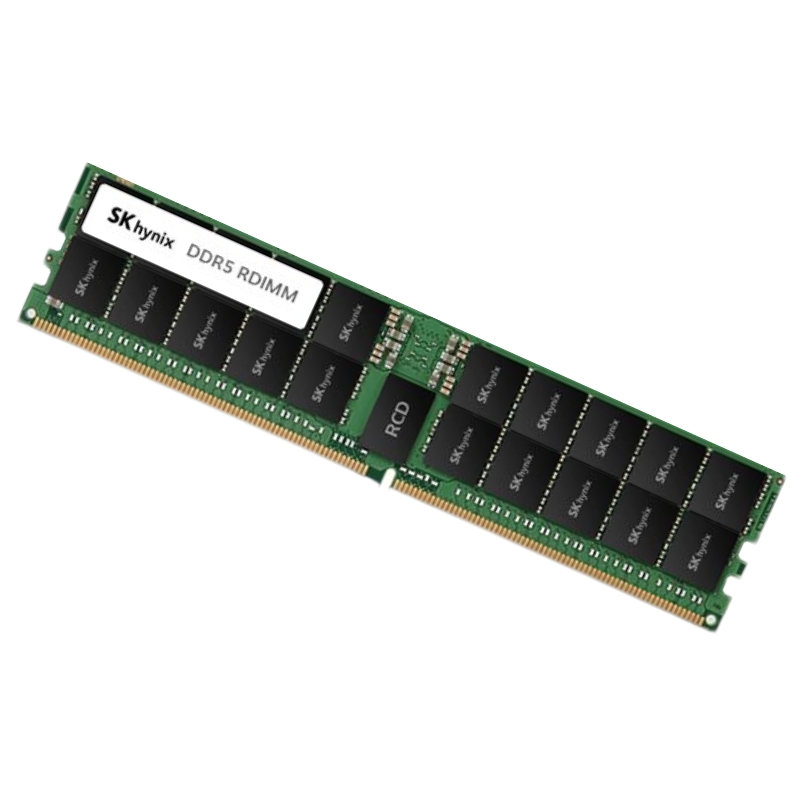
Hynix HMCT14MEERA 256GB(1x256GB) DDR5 4800MHz Pc5-38400 ECC Registered Cl40 288-pin 8rx4 RDIMM Memory Module. New Sealed in Box (NIB)
| SKU/MPN | Warranty | Price | Condition | You save |
|---|---|---|---|---|
| HMCT14MEERA | 1 Year Warranty | Contact us for a price | New Sealed in Box (NIB) | |
| HMCT14MEERA | 1 Year Warranty | $9,498.00 | New (System) Pull | You save: $3,324.30 (26%) |
The HMCT14MEERA Hynix 256GB DDR5 4800MHz PC5-4800 Memory is a high-performance RAM solution designed for advanced computing systems. This module delivers exceptional speed, reliability, and efficiency for professional workloads and enterprise environments.
The Hynix HMCT14MEERA 256GB (1x256GB) DDR5 4800MHz PC5-38400 ECC Registered CL40 288-pin 8Rx4 RDIMM Memory Module represents a major advancement within the enterprise memory category. This class of memory is designed for servers and workstations that demand exceptional stability, massive capacity per module, and rapid data throughput. DDR5 RDIMM technology brings an entirely new structure compared to DDR4, enabling higher performance ceilings and increased efficiency for data-intensive workloads. This category focuses heavily on reliability, scalability, and optimized electrical signaling to support next-generation multi-core processors. Each aspect of the module’s architecture aligns with the evolving requirements of modern data processing environments such as AI computation, cloud-scale virtualization, complex databases, and HPC operations.
High-capacity Registered DDR5 modules play a central role in enabling systems to handle expansive datasets without performance degradation. A single 256GB module significantly expands the available memory footprint, offering headroom for applications that require substantial in-memory operations. When utilized in multi-slot server configurations, these modules support terabytes of memory within a single system chassis. This capability directly impacts productivity in fields like data analytics, computational modeling, and large-scale container orchestration. The use of registered architecture ensures that command and address signals remain stable even when managing high memory densities. This level of dependability is crucial for mission-critical computing environments where downtime or data corruption cannot be tolerated.
DDR5 memory technology introduces an entirely new set of enhancements that elevate performance beyond previous generations. One of the defining characteristics of this category is the presence of dual-channel DIMM architecture for each module, allowing smoother data flow and better bandwidth distribution. The inclusion of on-die ECC strengthens data accuracy at the cell level, reducing the probability of bit errors and reinforcing overall system integrity. The increased decision feedback equalization and optimized power management structure differentiate DDR5 RDIMMs from earlier DDR4 variants. The category as a whole focuses on supporting greater capacity, higher frequencies, and enhanced power efficiency. These improvements make DDR5 RDIMM memory essential for systems designed to deliver consistent, long-term performance under demanding workloads.
The 8Rx4 configuration of this memory module illustrates the high-ranked structure that contributes to its massive capacity. In enterprise memory taxonomy, modules with multiple ranks provide additional banks of memory that can be accessed in complex patterns, allowing servers to distribute and manage data efficiently. This structure benefits virtualization hosts and database servers that must maintain simultaneous access to multiple memory lines. The presence of eight ranks enhances depth and density, enabling the creation of robust computing systems capable of managing extensive memory-resident processes. The x4 data width design further improves reliability by reducing the load on memory channels while supporting advanced ECC mechanisms designed to preserve stability during heavy use.
The DDR5 4800MHz speed rating places the Hynix HMCT14MEERA module among the high-performance options available to enterprise clients. Operating at PC5-38400 bandwidth, the module is able to support accelerated data retrieval and improved processing times for applications that rely on swift memory responses. This bandwidth category is particularly beneficial for systems that utilize multi-threaded workloads where memory latency and throughput become major performance determinants. The CL40 latency rating aligns with the typical design goals of high-capacity RDIMMs, balancing stability with speed to ensure predictable and regulated operation across long periods. This performance tier drives improved task efficiency for computational engines and infrastructures that rely on minimized bottlenecks at the memory interface.
As computing systems evolve, frequency increases such as 4800MHz yield transformative improvements in data processing efficiency. The memory speed influences how quickly the CPU can receive essential data, promoting faster workload completion and more consistent performance across parallel operations. Servers outfitted with modules in this frequency class demonstrate heightened responsiveness when handling concurrent user requests or processing vast calculations. This performance improvement supports large-scale enterprise applications like cloud-hosted services, search indexing engines, AI model training, and orchestrated microservice communication. The memory speed also reduces pressure on caching layers by delivering data directly to the processor at higher rates, further improving workflow efficiency and throughput.
PC5-38400 bandwidth represents one of the most notable upgrades in DDR5 technology, providing more expansive data channels than DDR4 equivalents. Within this category, bandwidth directly correlates to improved capacity for managing high-traffic data streams. Systems equipped with such memory are capable of maintaining balanced performance even under peak demands. These benefits extend to multi-socket configurations in server hardware, allowing both processors to access memory resources without creating bottlenecks. Expanded bandwidth also helps maintain predictable performance levels for real-time analytics and financial modeling tasks that depend on rapid memory cycling. The optimization improvements within this category include streamlined instruction handling, better use of parallel processing, and enhanced buffer management.
The CL40 latency profile is engineered to correspond with the high density and multi-rank complexity of this module. While latency values may appear higher compared to smaller modules, the category focuses primarily on balancing stability with speed at large memory capacities. The registered memory configuration significantly reduces electrical noise and signal disruption, which becomes more important as module density increases. This latency behavior ensures that the module can maintain consistent command accuracy even during peak load. In addition, internal circuitry enhancements minimize timing deviations, helping servers remain responsive regardless of workload size. The latency design prioritizes predictable performance and long-term operational stability over raw millisecond reductions.
ECC and error-correcting enhancements are core attributes of this memory category. The module incorporates advanced data validation processes that detect and correct inconsistencies before they affect system integrity. This robust reliability framework is critical for sectors such as finance, medical research, telecommunications, and large-scale data management. Registered memory further reinforces stability by buffering communication between the memory controller and the DRAM chips. These features help prevent data corruption, improve uptime, and reduce the risk of unexpected failures. The category emphasizes resilience to ensure uninterrupted server performance, even in environments where workloads operate continuously around the clock.
ECC technology becomes increasingly essential as module capacities expand. High-density memory structures are more susceptible to minor electrical fluctuations that could lead to errors if left uncorrected. ECC mitigates these risks by verifying data integrity as it travels across memory cells. In enterprise servers where accuracy is paramount, ECC ensures that mission-critical operations remain secure and consistent. This function enhances system trustworthiness in workloads like digital forensics, mathematical simulations, medical data processing, and risk management analytics. The ability to identify and repair single-bit errors automatically reduces the need for manual diagnostics and prevents minor issues from evolving into system-wide complications.
The registered buffering system within this category serves to stabilize electrical command signals. As memory density increases, signal distortion becomes more likely, making registered modules essential for maintaining precision. The buffer ensures that commands arriving from the CPU are properly aligned and evenly distributed among the DRAM chips. This reduces strain on the memory controller and allows servers to support far larger configurations than they could with unbuffered memory. Registered memory is a foundational requirement for enterprise hardware due to its ability to preserve predictability under load. This mechanism extends component lifespan by reducing stress on electrical pathways, resulting in more dependable long-term operation.
Modern DDR5 memory introduces on-die ECC that operates at the chip level. This enhancement focuses on protecting the smallest data units from corruption caused by electrical interference or environmental variations. While system-level ECC corrects data that has passed through to the memory controller, on-die ECC works preemptively within each chip. This layered protection model offers stronger safeguarding and ensures that memory cells remain accurate under varying thermal or voltage conditions. This protection is essential for high-capacity modules that must preserve stable operation during extended periods of heavy utilization. The improved reliability offered by this mechanism strengthens the overall resilience of the DDR5 RDIMM category.
The standardized 288-pin layout provides compatibility with modern server motherboards designed for DDR5 RDIMMs. The interface ensures fast and accurate communication with the memory controller. This alignment is engineered to maintain signal clarity and reduce latency introduced by poor electrical contact. The mechanical stability of the form factor helps maintain reliable performance even during high-intensity operation. This consistency is essential for servers that must operate continuously without unexpected interruptions. The design allows for easy insertion and removal, supporting efficient maintenance cycles in data center environments where downtime must be minimized.
DDR5 introduces a major change in power management with on-module power delivery components such as the Power Management IC. This allows the module to regulate its own voltage, improving efficiency and reducing dependence on the motherboard for stable power distribution. This innovation minimizes fluctuations and enhances overall electrical behavior. This power architecture helps maintain consistent performance during heavy workloads by optimizing energy consumption at the module level. It supports more stable operation, reduces heat output, and improves long-term component reliability. The improved power regulation ability also contributes to smoother frequency scaling and memory training operations.
Thermal regulation is an important engineering focus for high-density memory modules. The internal layout of DDR5 RDIMMs prioritizes efficient heat distribution to prevent thermal hotspots. The advanced fabrication process reduces power consumption and lowers thermal output. Servers equipped with proper airflow benefit from modules that maintain stable temperatures without requiring additional cooling accessories. Efficient heat dissipation preserves signal stability, enhances longevity, and ensures performance consistency during sustained high-traffic operation. The category continues to adopt thermal improvements to accommodate larger capacities and higher bandwidths.
Modules in this capacity and performance class are specifically engineered for enterprise scenarios requiring robust memory architectures. The 256GB capacity supports highly parallelized workloads, large simulation engines, and extensive virtualization environments. The module’s ability to sustain large in-memory datasets empowers systems to execute complex operations without constant reliance on secondary storage. This directly benefits cloud providers, research institutions, financial institutions, and operational analytics platforms. The category blends high capacity with fast performance to enhance multi-tenant hosting, AI model development, and system-wide memory allocation efficiency.


 Contact Us
 Information
 Catalog
 Solid State Drives (SSD)
 Network Switches
 Hard Disk Drives
 HBA & Controllers
 PC & Servers
 PC & Server Memory
 CPU & Processors
 Network Routers
 Power Supplies
 Tape Drives & Libraries
 Network Devices
 Computer & Network Cables