(7% discount is applied at checkout)
Cart is empty
Your go-to destination for cutting-edge server products
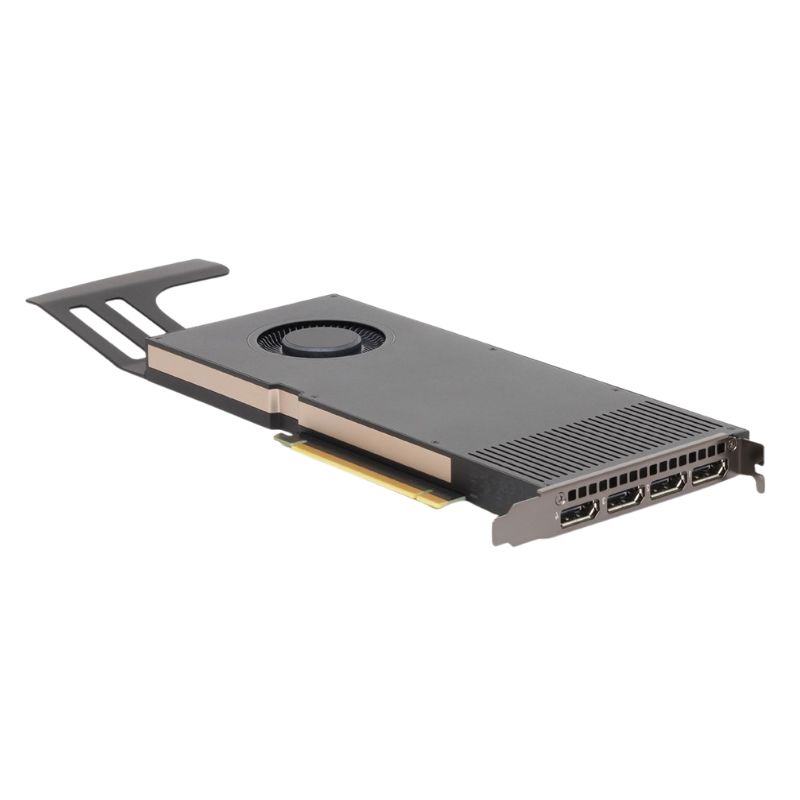


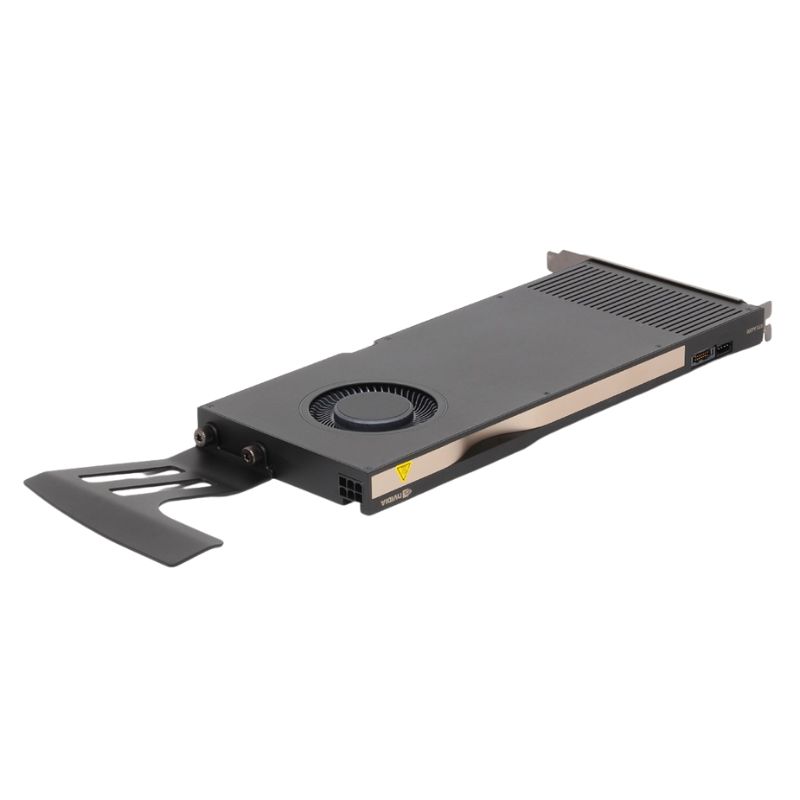
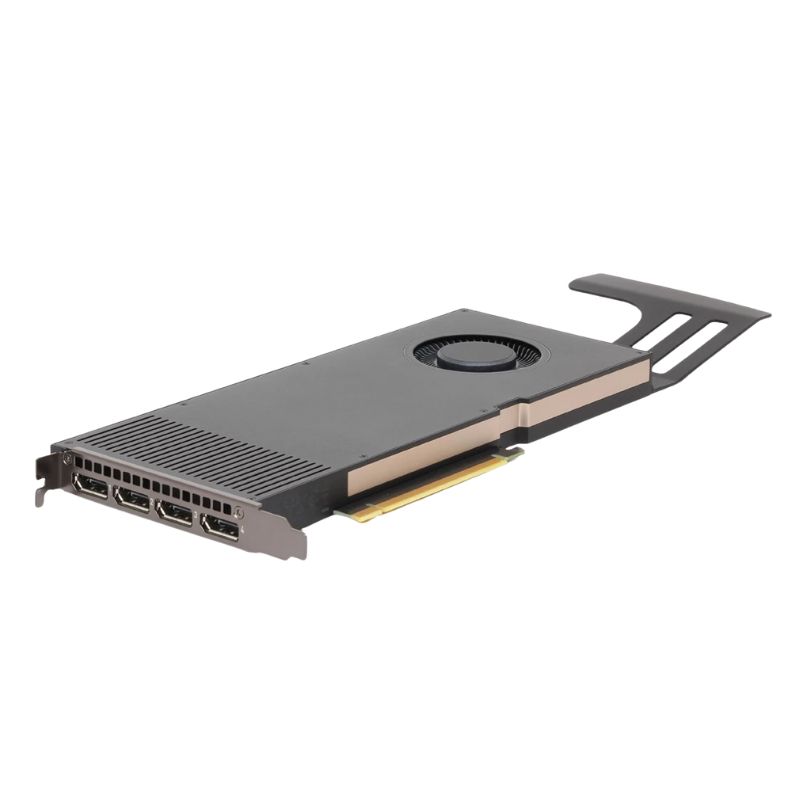
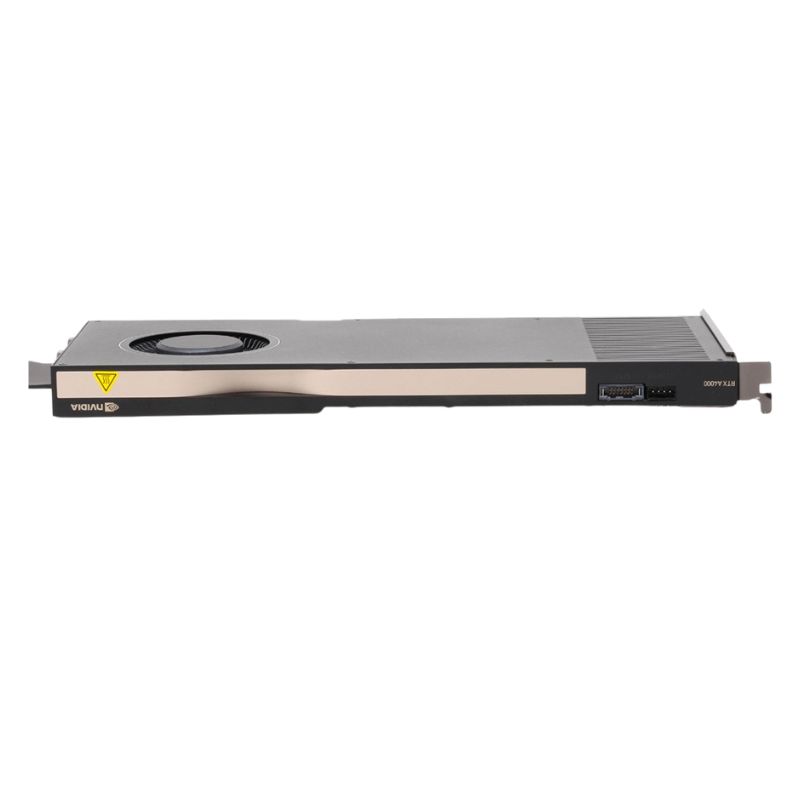
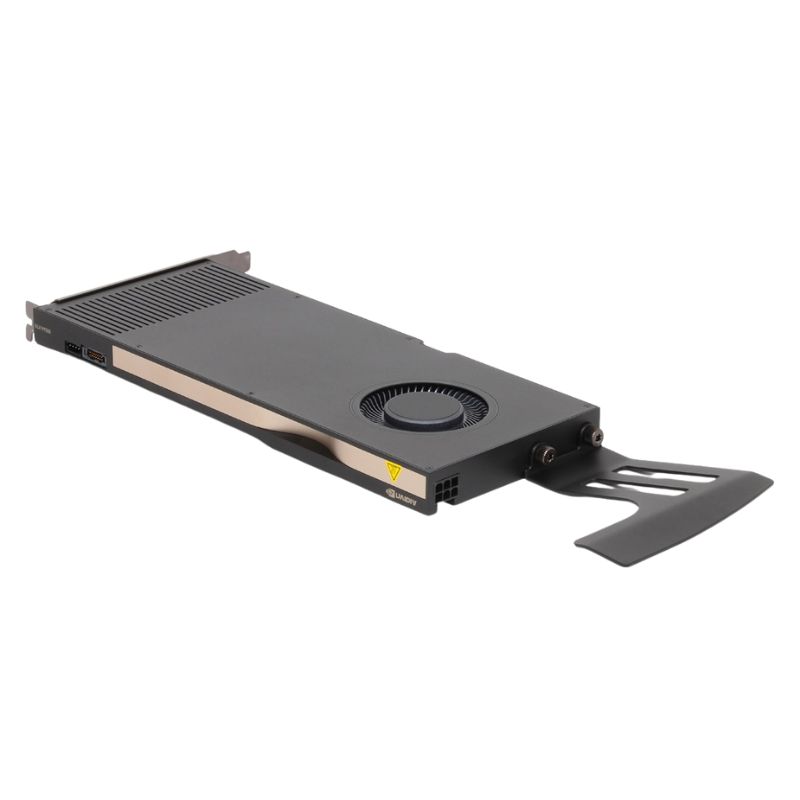
HPE 20X24AA Nvdia Rtx A4000 16GB 256-bit GDDR6 ECC 140W PCIE X16 4.0 4x Display Port. Excellent Refurbished with 1-Year Replacement Warranty.
The HPE 20X24AA Nvidia RTX A4000 stands as a reliable, high-performance GPU designed for demanding professional workflows. With advanced architecture, exceptional power efficiency, and robust rendering capabilities, this graphics card is ideal for engineers, designers, and creators seeking precision and stability.
Powered by the Ampere-based Nvidia RTX architecture, this GPU delivers remarkable efficiency across rendering, AI, and real-time visualization tasks. Its PCIe 4.0 x16 interface ensures faster data throughput, enabling smoother multitasking and seamless integration with professional applications.
The HPE RTX A4000 GPU supports a vast range of APIs, offering flexibility for developers and professionals in various fields. Its compatibility extends to multiple advanced software ecosystems, ensuring smooth graphical performance across different workloads.
Equipped with 16GB of high-speed GDDR6 ECC memory, the RTX A4000 delivers flawless data integrity and smooth real-time rendering. The 256-bit memory interface enhances throughput, making it suitable for large-scale simulations and visualizations.
Designed for multi-display setups, the RTX A4000 offers robust connectivity through four DisplayPort 1.4a outputs. It allows professionals to manage multiple 4K or 8K monitors with ease, enhancing productivity and workflow efficiency.
The GPU combines compact design with powerful performance, fitting seamlessly into various workstation configurations. The active cooling solution ensures reliable temperature control, prolonging the lifespan of the hardware.
The HPE 20X24AA, built around the NVIDIA RTX A4000 GPU, represents a focused solution for professionals who demand a balance of high compute density, power efficiency, and workstation-grade reliability. This product targets engineers, 3D artists, architects, visualization specialists, and data scientists who require sustained performance for real-time rendering, complex simulations, and AI-accelerated workflows. As a single-slot, full-length workstation card with 16 gigabytes of GDDR6 memory and ECC support, the HPE-branded RTX A4000 delivers a combination of memory capacity and data integrity that is frequently required in mission-critical design and compute environments.
The model number 20X24AA identifies HP’s SKU for the NVIDIA RTX A4000 variant and signals that this is an OEM-validated solution tailored for HPE desktop and tower workstations. While the underlying GPU silicon is NVIDIA’s Ampere-based RTX A4000, HP’s SKU indicates compatibility testing, firmware integration, and packaging optimized for HPE hardware and support channels. This helps procurement teams and enterprise IT quickly match hardware to validated workstation platforms and service contracts.
One of the defining features of the RTX A4000 is its 16GB of GDDR6 memory paired with a 256-bit memory interface. For professionals working with large datasets, multi-layered CAD assemblies, complex textures, or high-resolution simulation meshes, 16GB of frame buffer gives the GPU the headroom to hold large scenes in memory and reduces the need to repeatedly stream data across slower system interconnects. The inclusion of error-correcting code (ECC) in the memory subsystem adds resilience by detecting and correcting single-bit errors, which is critical for accurate scientific computing, long-running simulations, and financial modeling where silent data corruption cannot be tolerated. These memory specifications are central to why the A4000 is chosen for dependable, content-creation pipelines and technical compute workloads.
The card’s PCI Express Gen 4 x16 interface provides a significant uplift in host-to-device bandwidth compared with previous PCIe generations. This increased throughput benefits data-intensive workflows that stream large geometry datasets, video frames, or training data between CPU/system memory and the GPU. Systems equipped with PCIe Gen 4-capable CPUs and motherboards can therefore extract improved end-to-end performance, especially when pairing the RTX A4000 with fast NVMe storage or high-bandwidth compute nodes. Still, the A4000 is also backwards compatible with PCIe Gen 3 slots, making it adaptable for a wide range of existing workstation fleets where organizations prefer phased upgrades.
The RTX A4000’s Ampere architecture combines rasterization throughput with dedicated RT Cores for ray tracing and Tensor Cores for AI acceleration. With thousands of CUDA cores, multiple generations of Tensor and RT cores, and a thermal/power envelope tuned for workstation chassis, the A4000 provides a compelling mix of real-time viewport responsiveness and production-level rendering throughput. For creative professionals, this means quicker interactive sessions when manipulating large models, faster progressive ray-traced previews, and the ability to leverage denoising and AI-based upscaling features in modern DCC (digital content creation) software. For machines used in AI inference or training at smaller scales, the Tensor Core acceleration allows common frameworks and libraries to run optimized workloads efficiently without requiring a data center GPU. Specific core counts, TFLOPS figures, and hardware accelerators are enumerated in NVIDIA’s official datasheet and product pages.
When evaluating GPUs for technical compute, it helps to think in terms of three complementary resources: general-purpose CUDA cores for parallel compute and shading, RT cores for hardware ray-tracing acceleration, and Tensor cores for matrix-heavy AI operations. The RTX A4000 provides a balanced allocation of these resources so that workloads which require a mixture of physics simulation, ray-traced lighting, and neural network inference can run efficiently on a single card. This multi-domain capability is particularly valuable in modern pipelines where design, simulation, and AI-driven tools are increasingly interwoven. For precise counts of these accelerators and their theoretical performance, vendors’ technical documentation contains the verified figures.
Equipped with four DisplayPort outputs, the HPE 20X24AA supports multi-monitor workspaces that are common in professional setups, enabling expansive timelines, simultaneous viewports, and multi-document layouts. The card supports high-resolution displays and multi-display synchronization, making it practical for users pushing 4K or even 8K output across several monitors. DisplayPort 1.4a support brings modern features such as HDR metadata transport and higher per-link bandwidth for high-refresh, high-resolution monitors. This combination makes the card suitable for content creators working on multi-monitor color-accurate workflows, live visualization setups, and technical review stations.
Beyond raw resolution support, workstation GPUs like the RTX A4000 integrate with professional display pipelines to provide consistent color reproduction and LUT workflows used in post-production and design verification. Support for standards-compliant drivers and color management tools reduces risks of mismatch between on-screen previews and final render outputs, which is essential in industries where visual accuracy is non-negotiable. When combined with calibrated displays and validated drivers, the card helps designers and colorists maintain end-to-end fidelity from asset creation to client deliverables.
The RTX A4000 is notable for its single-slot form factor and compact physical profile, which allows it to fit into a wide variety of workstation enclosures, including smaller towers that prioritize density. Despite the small package, the card maintains an active cooling solution engineered to sustain its rated 140 watt power draw under load while keeping thermals within operating limits. For system integrators and IT teams, this implies that many workstation power supplies sized for professional desktop use can support the card without requiring dramatic PSU upgrades. However, careful system-level thermal planning is still required in compact chassis to ensure sufficient airflow and component longevity.
With a maximum power consumption around 140 watts, the A4000 sits in a middle ground between low-power entry-level workstation GPUs and high-end, datacenter-class accelerators. This makes it more accessible for standard workstation power budgets while still providing substantial performance. OEM SKUs such as HPE’s 20X24AA typically ship with any required adapter brackets and external power adapters endorsed for the card’s installation, simplifying deployment for service technicians and reducing integration friction. Always consult HPE’s installation notes or the product packaging for the exact list of included accessories and recommended PSU capacities for your target chassis.
HPE’s selection of this NVIDIA GPU as an OEM product means that enterprises can procure a GPU that has been evaluated for compatibility with specific HPE workstation families. This validation often includes BIOS compatibility, thermal profiling within the chassis, and warranty support integration. For IT departments managing fleets of workstations, using OEM SKUs reduces variability and helps maintain predictable service and spare-parts strategies. HP’s documentation for workstation families lists supported graphics options and any chassis-specific installation instructions relevant to the 20X24AA SKU. When planning rollouts, coordinate with HPE’s hardware compatibility lists to ensure the chosen workstation models support the card without mechanical or electrical constraints.
One of the advantages of workstation-class GPUs is validated driver stacks and ISV certification programs. Professional drivers tuned for stability and determinism are made available by NVIDIA and packaged by OEM partners to align with industry applications ranging from CAD and CAE suites to content creation applications and scientific tools. Many ISVs publish certified hardware lists that reference the RTX A4000 and its OEM variants, making the card a low-surprise option for enterprises seeking predictable performance with certified application versions. The card benefits from NVIDIA’s regular driver updates, which include performance optimizations, security updates, and feature additions, but enterprise deployments typically follow a managed cadence to balance stability and new functionality.


 Contact Us
 Information
 Catalog
 Solid State Drives (SSD)
 Network Switches
 Hard Disk Drives
 HBA & Controllers
 PC & Servers
 PC & Server Memory
 CPU & Processors
 Network Routers
 Power Supplies
 Tape Drives & Libraries
 Network Devices
 Computer & Network Cables