(7% discount is applied at checkout)
Cart is empty
Your go-to destination for cutting-edge server products
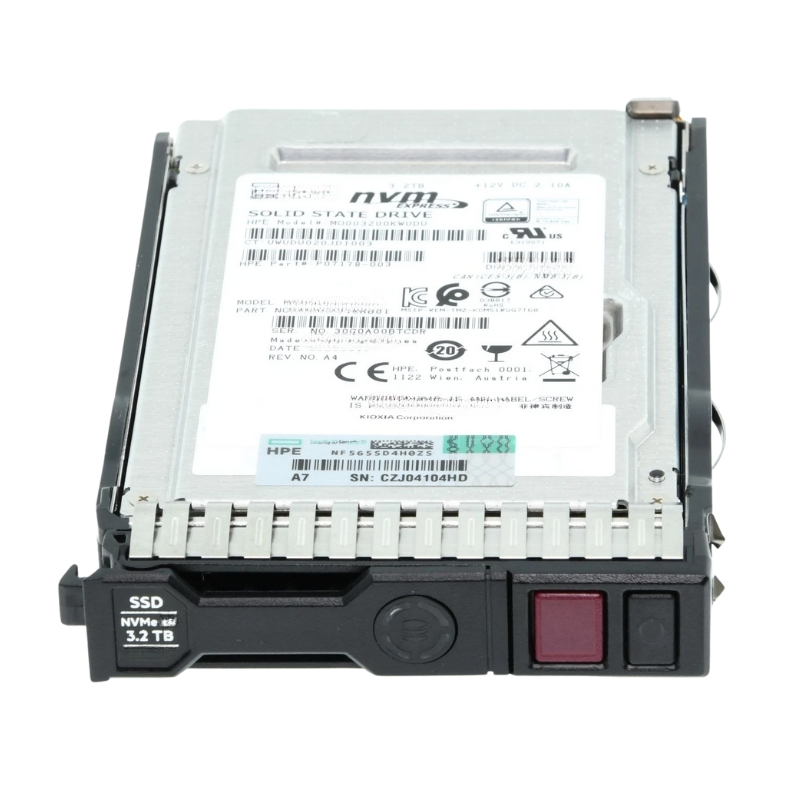


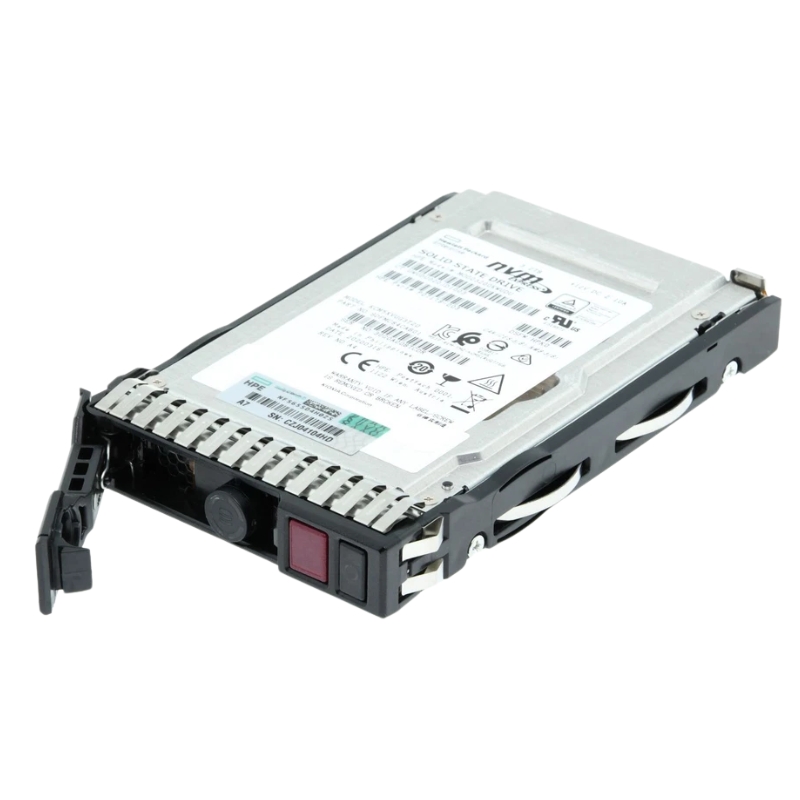
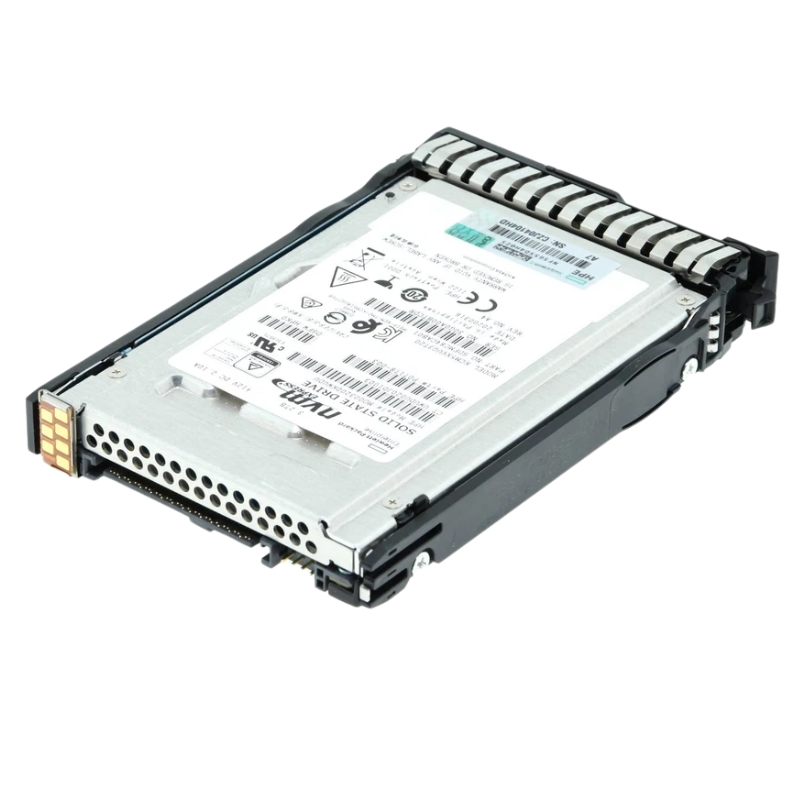
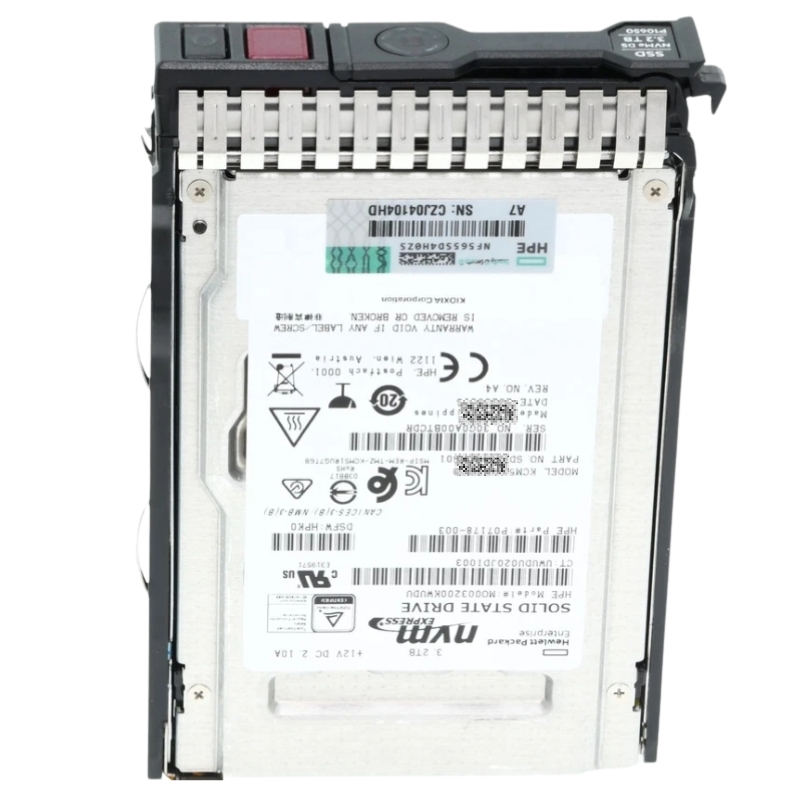
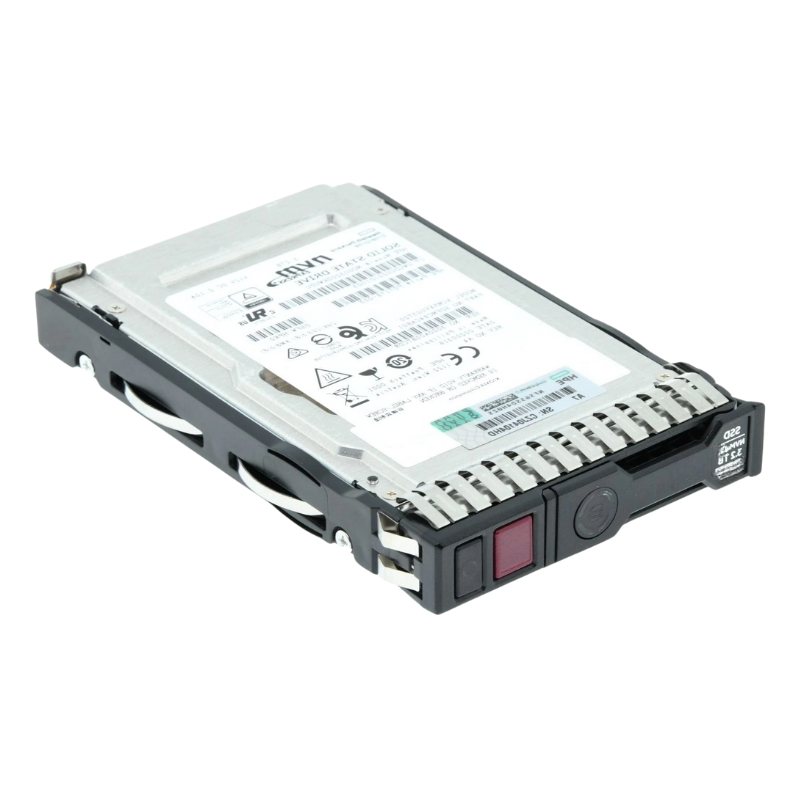
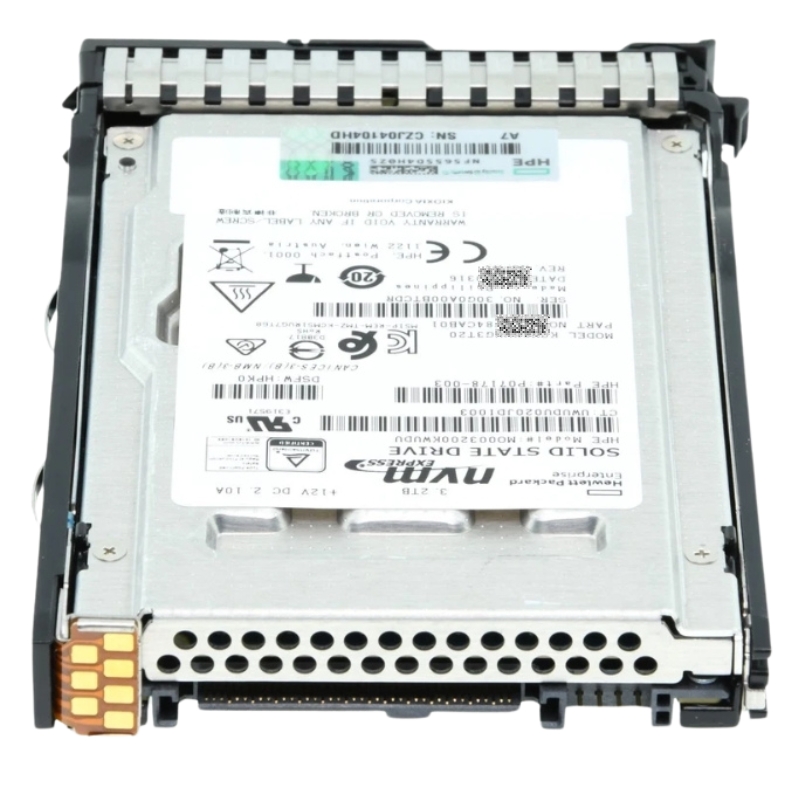
HPE P42594-001 3.2TB NVMe Gen4 High Performance Mixed Use Small Form Factor (SFF) BC Self-encrypting Fips U.3 Solid State Drives for Servers. Excellent Refurbished with 1 year replacement warranty
Discover the HPE 3.2TB NVMe Gen4 SSD, engineered for exceptional performance in Gen10 Plus servers. This self-encrypting drive meets FIPS standards, ensuring data security while providing rapid access speeds.
This SSD is ideal for:
HPE P42594-001 3.2TB solid state drives represent a class of high-performance, enterprise-grade NVMe storage engineered specifically for demanding server workloads. Designed to deliver a balance of capacity, low latency, and sustained throughput, these U.3-form-factor drives bring PCIe Gen4 bandwidth into dense 2.5" SFF server environments. Whether deployed as primary storage in virtualized clusters or as fast-tier capacity in database and analytics stacks, the P42594-001 is tuned for mixed-use profiles where performance and endurance must coexist.
Performance for enterprise NVMe drives is not just headline bandwidth — it is a combination of IOPS at realistic queue depths, sequential throughput for large transfers, and latency consistency under mixed-read/write traffic. The P42594-001 leverages PCIe Gen4 x4 lanes to unlock higher sequential and random throughput compared with Gen3 devices, delivering measurable improvements to application responsiveness. Drive firmware is optimized for mixed-use workloads, reducing jitter and maintaining lower tail latency during sustained activity spikes typical of multi-tenant server environments.
Mixed-use classification means the drive firmware and NAND provisioning are balanced to support frequent write operations without compromising read performance. This is ideal for scenarios like database caching, virtual machine boot/storage volumes, and content delivery where read and write patterns are interleaved. The result is a drive that can sustain heavy I/O over extended periods while protecting performance levels critical to SLAs.
At 3.2TB, each P42594-001 drive offers substantial per-slot capacity, enabling higher storage density in blade and rack servers that accept 2.5" SFF modules. Large capacity NVMe drives reduce the number of drives required for a given usable pool, simplifying cabling, reducing power per terabyte, and lowering management overhead. When scaled across multi-node clusters or hyperconverged appliances, 3.2TB NVMe units help minimize footprint while delivering the low-latency access modern applications require.
These SSDs are implemented in a 2.5" small form factor (SFF) and are compatible with HPE's basic carrier (BC) configurations and U.3 backplanes. That compatibility ensures straightforward hot-swap serviceability inside supported ProLiant generations and other HPE solutions that accept U.3 NVMe devices. The combination of SFF density and U.3 interface convenience makes the P42594-001 suitable for rack-mounted server chassis where serviceability and high-density storage are both priorities.
Security is an intrinsic design point for modern enterprise storage, and the P42594-001 ships as a self-encrypting drive (SED) with cryptographic controls implemented in hardware. FIPS-validated encryption ensures that sensitive data at rest is protected to standards demanded by regulated industries. Hardware encryption offloads cryptographic work from the host CPU, maintaining peak drive performance while providing robust key management options compatible with HPE security ecosystems.
Implementing encryption at the drive level simplifies compliance workflows because data leaving the drive remains encrypted and tamper-resistant. For IT teams, this reduces the need for host-side encryption stacks and streamlines disk retirement procedures: drives can be cryptographically sanitized using secure erase commands, expediting decommissioning while preserving compliance with data-protection mandates.
Endurance is a core metric for enterprise SSDs and is typically expressed as drive-writes-per-day (DWPD) or terabytes written (TBW) over the warranty period. The P42594-001 categorization as mixed-use indicates a careful NAND and over-provisioning strategy that supports consistent writes over time without accelerated wear-out. For administrators, predictable endurance numbers translate directly into confident capacity planning and lower risk of mid-life replacements.
Compatibility with HPE ProLiant platforms and certified server families is a central advantage. The P42594-001 drive maps to spare and option part numbers used by HPE firmware and lifecycle controllers, ensuring that firmware updates and diagnostic routines operate correctly. Administrators benefit from HPE’s validated interoperability lists and maintenance documentation that describe supported firmware bundles and carrier types for specific server generations.
Hpe P42594-001 drives are purpose-built for several enterprise-class use cases. In virtualization hosts, they speed VM boot storms and reduce latency for high-density consolidation. For database acceleration, they provide consistent I/O to transactional workloads and analytics engines when low-latency reads and predictable writes are essential. In software-defined storage or caching tiers, they act as a fast-tier layer that significantly shortens query times and increases overall cluster throughput.
When used as local VM storage, large NVMe drives help maximize the number of VMs per host while preserving responsiveness. The combination of Gen4 throughput and a mixed-use endurance profile is ideal when each VM imposes a mix of reads and writes that varies over time.
For OLTP and mixed analytic workloads, predictable low latency and high IOPS are crucial. Deploying P42594-001 drives minimizes I/O bottlenecks that can throttle transaction throughput or elongate query response times. Their large capacity also allows for more in-memory-like data sets to be held locally, reducing costly network round trips.
Higher capacity per drive reduces the number of devices needed to meet capacity targets, which in turn lowers aggregate power draw and cooling requirements per terabyte. For data centers aiming to optimize operational expenses, migrating to high-capacity Gen4 NVMe devices yields immediate gains in rack-level density and long-term TCO through reduced drive count, lower maintenance cycles, and simplified inventory management.
High-speed NVMe devices can generate significant heat under sustained load. HPE’s carrier designs and server chassis airflow engineering are intended to maintain safe operating temperatures for drives like the P42594-001, preserving performance and avoiding thermal throttling. Implementers should follow vendor placement and cooling recommendations to ensure consistent throughput under heavy workloads.
Serviceability is a monetary and operational consideration in enterprise deployments. The hot-pluggable SFF design and alignment with HPE carrier standards streamline field replacements. Drive part numbers and spare references are maintained across product generations to simplify procurement and spares stocking. Warranties and support channels from OEM distributors further reduce the risk and time to resolution when a drive requires replacement.
Within the HPE NVMe portfolio, administrators must balance capacity per device versus peak performance and endurance. The P42594-001 targets organizations that require significant usable capacity in each slot, while still demanding Gen4 performance and mixed-use endurance. For workloads with extremely write-heavy profiles, one might evaluate higher-endurance models; conversely, for mostly read-heavy cold caches, capacity-optimized drives may be preferable.
When architecting clusters, mixing P42594-001 drives with complementary tiers (e.g., ultra-high-endurance NVMe or high-capacity SATA/NVMe SSDs) enables hybrid designs that match cost to performance across datasets. Smart tiering and automated data placement can keep hot data on Gen4 NVMe while archival or infrequently accessed objects live on lower-cost tiers.


 Contact Us
 Information
 Catalog
 Solid State Drives (SSD)
 Network Switches
 Hard Disk Drives
 HBA & Controllers
 PC & Servers
 PC & Server Memory
 CPU & Processors
 Network Routers
 Power Supplies
 Tape Drives & Libraries
 Network Devices
 Computer & Network Cables