(7% discount is applied at checkout)
Cart is empty
Your go-to destination for cutting-edge server products
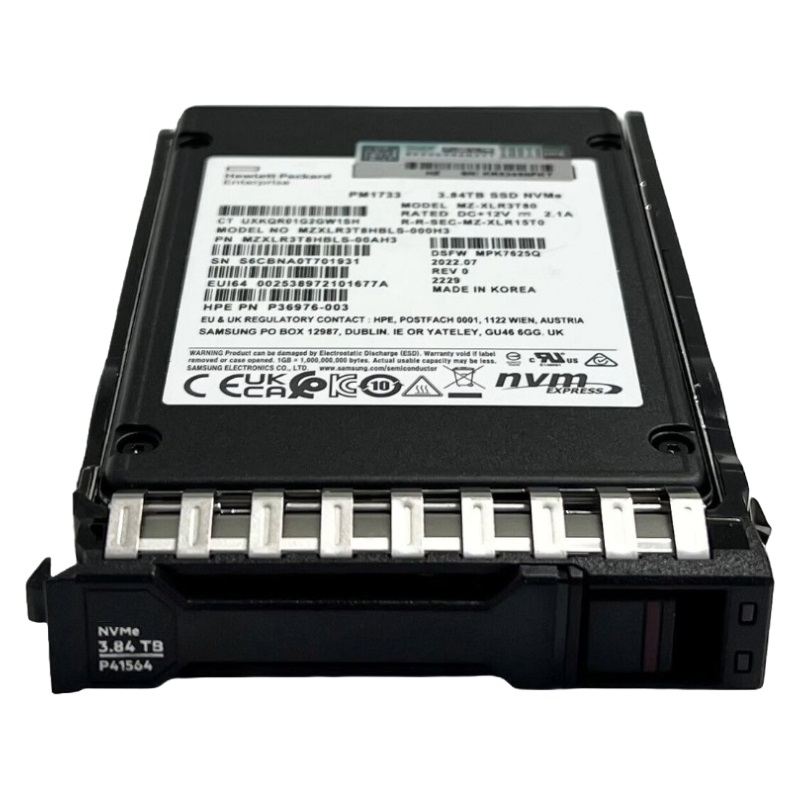


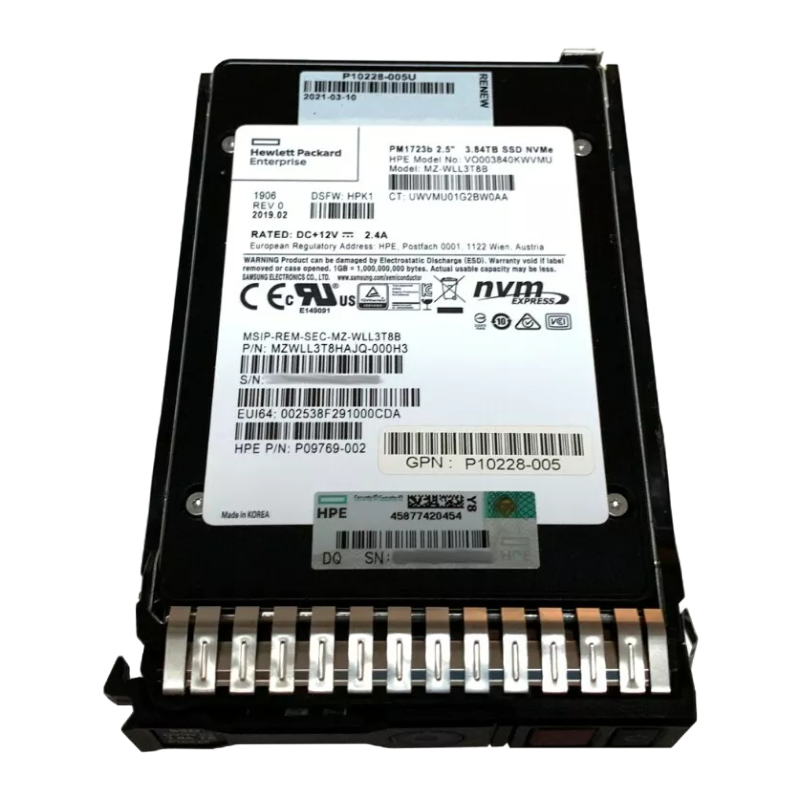
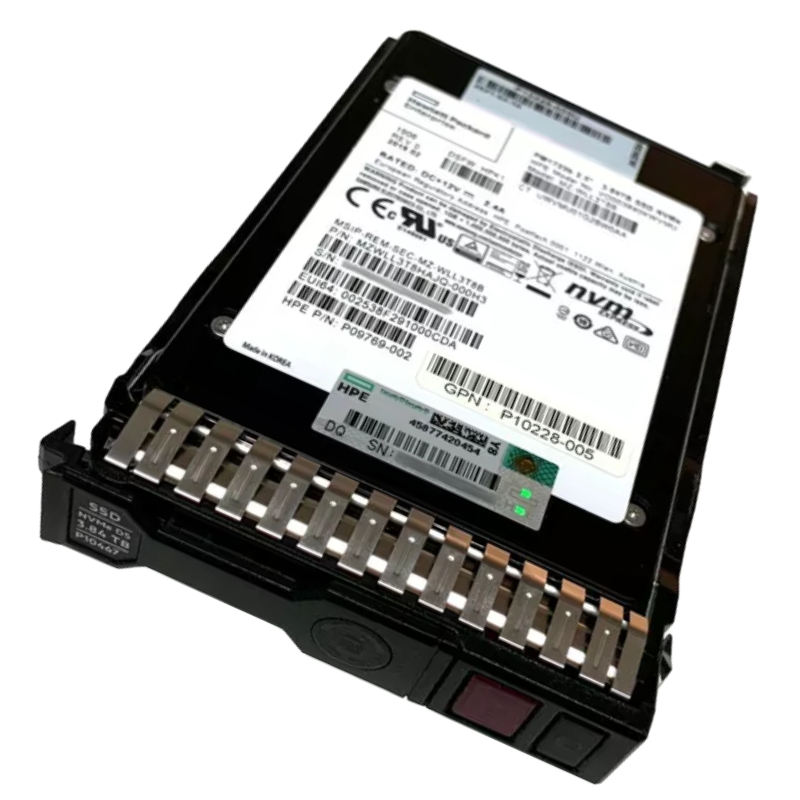
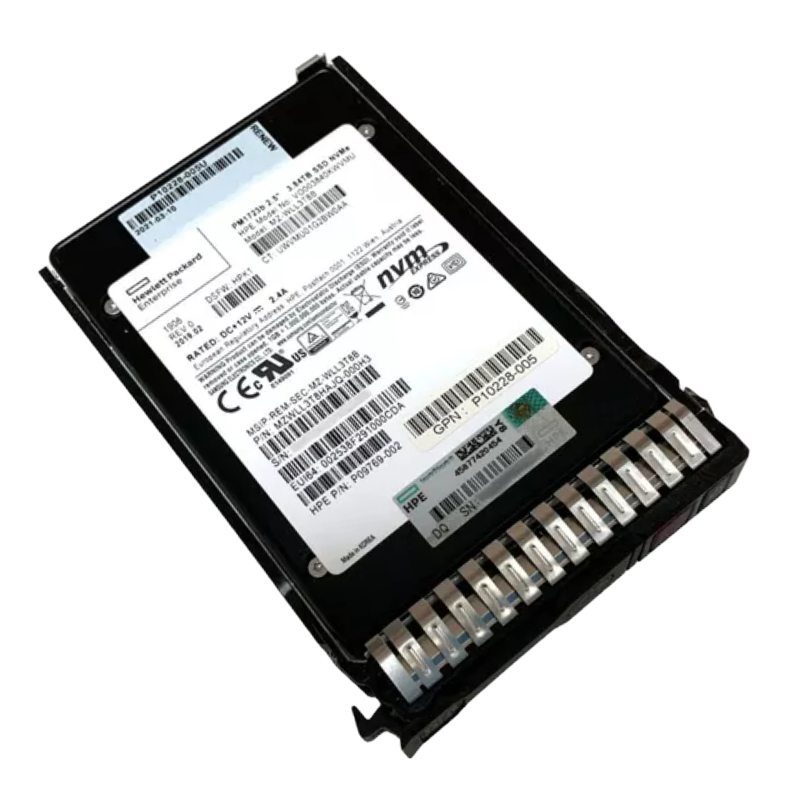
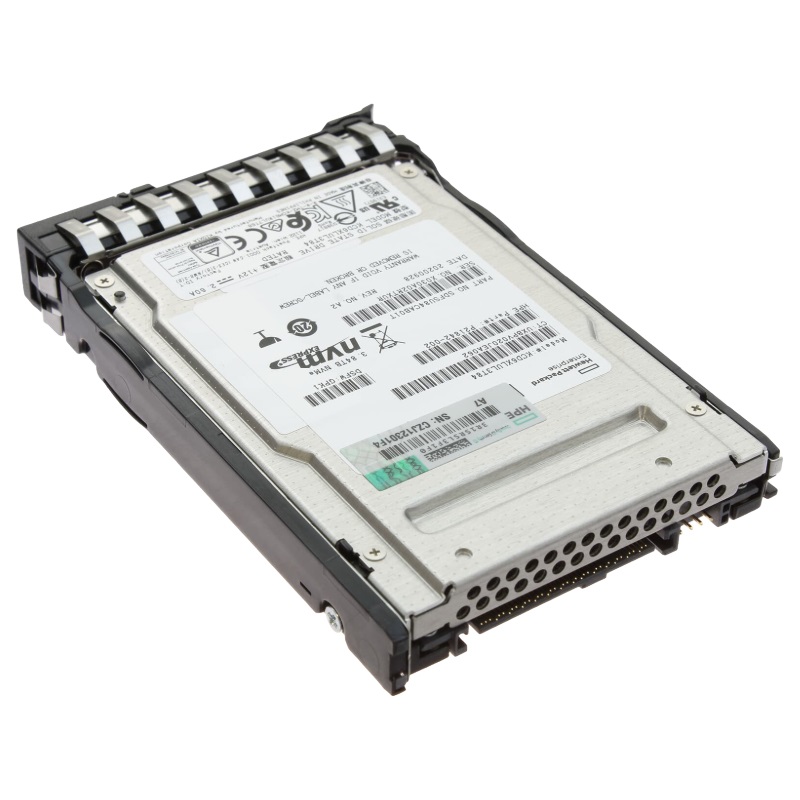
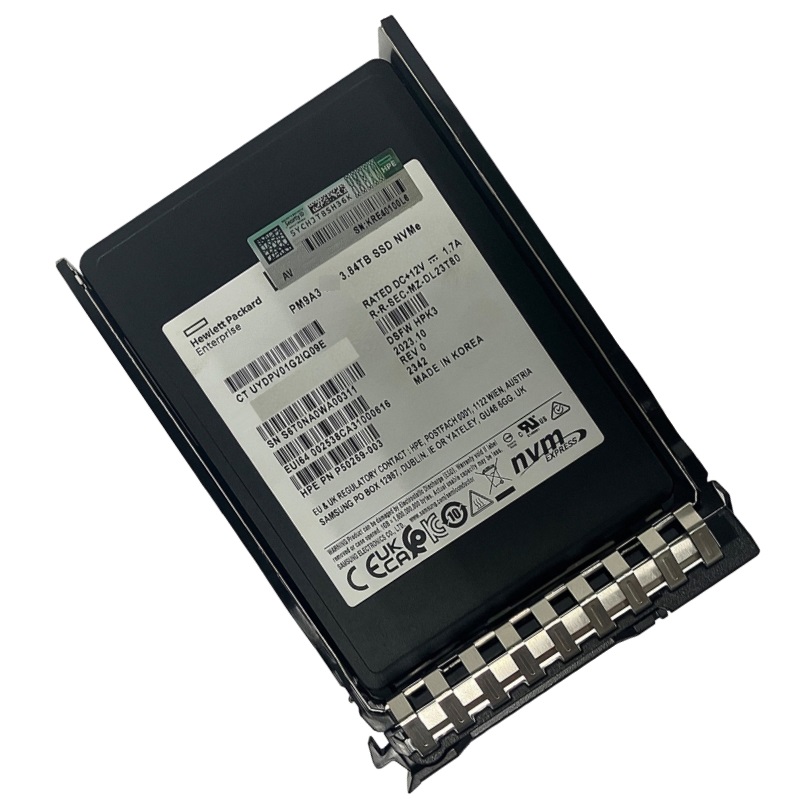
HPE P58749-B21 3.84TB DX Read Intensive PCI-Express 4.0 X4 NVMe 2.5inch Hot Swap Bc Multi Vendor FIO Solid State Drive. Excellent Refurbished with 1-Year Replacement Warranty
HPE P58749-B21 3.84TB DX Read Intensive PCI-Express 4.0 x4 NVMe 2.5-inch Hot Swap BC Multi Vendor FIO Solid State Drive represents a purpose-built solution for modern read-dominant workloads in enterprise and hyperscale environments. Designed to deliver high throughput and low latency while optimizing cost per gigabyte, this category of DX read intensive NVMe drives addresses the growing need for rapid access to large datasets, whether deployed in servers, storage arrays, or mixed-vendor storage infrastructures. The product's 3.84TB capacity positions it squarely in the sweet spot for many database, caching, and content-delivery workloads where large usable capacity and fast read performance are both essential.
HPE P58749-B21 is defined by a collection of technical attributes that together create a compelling value proposition. The PCI-Express 4.0 x4 NVMe interface doubles the per-lane bandwidth available in PCIe 3.0 designs, enabling significantly higher sequential throughput and better utilization of parallelism within the drive. The 2.5-inch hot-swap form factor ensures compatibility with common enterprise server bays and storage sleds, while hot-swap capability simplifies in-rack maintenance and reduces planned downtime. The DX read intensive designation denotes firmware and media optimizations tuned for workloads where read operations significantly outnumber writes, delivering long-term endurance for read-heavy patterns without the premium cost associated with higher write endurance classes.
Read performance is the centerpiece of the HPE P58749-B21 category. Expect high sequential read throughput, measured in gigabytes per second, and outstanding random read IOPS at low queue depths — characteristics that directly benefit OLTP databases, search indexes, virtual desktop infrastructure, and content delivery networks. NVMe’s efficient command set reduces software overhead and CPU cycles per I/O, which further improves system-level performance. The PCIe 4.0 interface and NVMe protocol together allow these drives to saturate downstream controllers and maximize the efficiency of NVMe-oF (NVMe over Fabrics) deployments.
Although classed as read intensive, these drives still incorporate enterprise-grade endurance features. Robust wear-leveling, background garbage collection, and power-loss protection mechanisms help preserve data integrity across the drive’s operational life. Multi-vendor firmware compatibility (BC Multi Vendor) emphasizes interoperability across diverse hardware ecosystems, making these SSDs suitable for heterogeneous datacenter fleets where consistent behavior across vendor platforms is essential. The drives typically support SMART reporting, telemetry outputs, and telemetry integration for predictive maintenance and proactive fleet management.
Read intensive drives like the HPE P58749-B21 category are optimized for real-world production workloads where read operations dominate. Content delivery, caching layers, analytics, and archival retrieval are examples where fast reads deliver direct user experience improvements and compute savings. By selecting a drive optimized for read-heavy patterns, organizations achieve a better balance of cost, capacity, and performance compared with choosing a high-endurance mixed-use or write-intensive SSD. This targeted selection minimizes wasted write endurance while still providing the throughput and IOPS needed by demanding applications.
Enterprise applications that benefit from 3.84TB DX read intensive NVMe drives include database read replicas, metadata servers, streaming and CDN edge nodes, large-scale virtualization hosts running read-heavy VDI workloads, and analytics nodes querying large datasets. In clustered filesystems and object stores, these drives accelerate read-heavy read/write ratios by serving hot data and index structures. The 2.5-inch, hot-swap form factor makes them easy to add to existing server chassis and expansion shelves, lowering integration friction and reducing the time to value for performance upgrades.
HPE-branded drives such as the P58749-B21 are engineered for compatibility with HPE ProLiant servers, storage enclosures, and ecosystem partners, but the BC Multi Vendor FIO designation signals that these drives are also validated for interoperability with other major server and storage vendors. When integrating these drives into existing infrastructure, verify firmware revision compatibility and platform support matrices — especially when deploying at scale or within heterogeneous fleets. NVMe-enabled host BIOS/firmware, controller drivers, and OS-level NVMe stack versions should be up to date to extract full performance and reliability benefits from PCIe 4.0 devices.
These drives are commonly deployed in several architectural patterns that maximize their strengths. In cache layering, the NVMe drive acts as a read-optimized caching tier in front of higher-capacity HDDs, dramatically accelerating cache hits and reducing latency for the most frequently accessed content. In all-flash database clusters where read latency is critical, these drives provide a cost-effective way to scale read capacity without overspending on write endurance. In hyperconverged infrastructure, read intensive NVMe drives improve VM boot storms and read-heavy application responsiveness.
At 3.84TB per drive, the HPE P58749-B21 category permits significant capacity density within standard 1U and 2U server designs. When combined with chassis and backplane designs that support many 2.5-inch bays, system architects can deploy multi-terabyte NVMe pools that deliver sub-millisecond read latencies across a large dataset. Scale-out architectures should account for NVMe namespace management and orchestration tools to automate provisioning, firmware updates, and health monitoring across thousands of drives.
NVMe over Fabrics (NVMe-oF) dramatically extends the benefits of local NVMe storage by making remote NVMe media appear as local block devices across a fabric. HPE P58749-B21 class drives are ideal candidates for NVMe-oF front-end storage nodes where the combination of PCIe 4.0 throughput and NVMe efficiencies lowers request latencies for remote clients. In this role, these drives enable disaggregation strategies that separate compute and storage while keeping read latency close to that of local NVMe.
One of the strongest arguments for read intensive NVMe drives is total cost of ownership (TCO). By aligning drive endurance and feature set with the actual workload profile — read dominant rather than write-heavy — organizations lower unit costs compared to purchasing mixed-use or write-intensive SSDs. Additionally, higher read throughput and lower latency enable more work per CPU core, sometimes allowing consolidation of compute resources and reducing power and cooling demands. When measured across a fleet, these improvements compound into meaningful operational savings.
PCIe 4.0 NVMe devices can consume more power under peak throughput compared to older interfaces, and data center designers must account for this in power provisioning and thermal management. The 2.5-inch hot-swap form factor is engineered to fit within standard airflow profiles, but rack-level cooling, proper direction of airflow, and chassis fan controls should be optimized to prevent thermal throttling under sustained load. Many drives provide telemetry for power draw and temperature, which can be fed into datacenter monitoring systems to trigger automated responses and avoid performance degradation.
Security features in enterprise SSDs are increasingly important. The HPE P58749-B21 category typically includes support for secure erase, device-level encryption (self-encrypting drive capabilities), and host-managed security features. These functions help satisfy regulatory and compliance requirements by ensuring that data at rest can be protected or securely removed at the end of the drive’s lifecycle. Integration with HPE server management and storage management tools further simplifies centralized security policy enforcement across large fleets.
Advanced error correction codes (ECC), bad-block management, and background data integrity checks contribute to the resilience of these drives. Enterprise controllers employ sophisticated error detection and correction algorithms that reduce the incidence of silent data corruption. Coupled with end-to-end data path protection — from the host to the NAND media — these mechanisms ensure that read operations return accurate data even as the media ages, which is especially critical in read-intensive, high-availability environments.
Integration with vendor management suites and open management standards ensures that the HPE P58749-B21 class drives are visible, manageable, and maintainable in enterprise environments. Tools that provide firmware orchestration, inventory tracking, and bulk deployment capabilities make large-scale rollouts manageable. For environments running containerized workloads, integration points with orchestration platforms can help dynamically assign NVMe-backed volumes to container workloads that require fast read access.
When procuring 3.84TB DX read intensive NVMe drives, specify the expected workload profile and lifecycle expectations. Understand warranty coverage, RMA processes, and end-of-life policies to avoid surprises during long-term operations. The BC Multi Vendor designation suggests broader compatibility, but confirm vendor-specific procurement SKUs and part numbers to ensure you receive firmware and support tailored to your platform. Planning spare pools, firmware compatibility lists, and replacement timelines will streamline operations during the drive lifecycle.
Hot-swap capability paired with an adequate inventory of compatible spares reduces mean time to repair (MTTR). Administrators should maintain a small pool of pre-staged replacement drives in the relevant capacity and firmware family to accelerate field replacement. For high-availability clusters, design redundancy at the software or array level so that drive replacement can be handled without service interruption, and automate validation checks post-replacement to confirm the drive has been correctly provisioned and is functioning within expected performance parameters.
Benchmarks and synthetic testing provide a baseline, but real-world application-level validation is essential. Use workload-specific tests — such as FIO profiles tuned to your application’s read I/O size, queue depth, and randomness — to validate that the HPE P58749-B21 class drives meet performance expectations. Performance consistency over time is as important as peak numbers; test sustained read throughput under realistic background housekeeping to understand how drive behavior changes under daily operational patterns.
Read intensive NVMe drives are not a one-size-fits-all solution, but they are the right choice in many scenarios. Compared with mixed-use or write-intensive SSDs, read intensive drives offer better cost-per-GB for workloads where writes are limited. If your environment experiences a large, sustained amount of writes, or if you plan to use the drives for heavy database indexing or logging without sufficient write amplification controls, a mixed-use or write-optimized drive may be more appropriate. However, for read-heavy cache layers, content delivery, and read-replicas, HPE P58749-B21 class drives usually provide the best balance of capacity, performance, and cost.
When deciding between drive classes, evaluate workload read-to-write ratios, required latency percentiles, capacity requirements, power constraints, total cost of ownership, and vendor support. Examine metrics such as IOPS per dollar, latency at relevant percentiles, and endurance metrics measured in DWPD (drive writes per day) or TBW (terabytes written) to match the expected workload profile and operational goals.


 Contact Us
 Information
 Catalog
 Solid State Drives (SSD)
 Network Switches
 Hard Disk Drives
 HBA & Controllers
 PC & Servers
 PC & Server Memory
 CPU & Processors
 Network Routers
 Power Supplies
 Tape Drives & Libraries
 Network Devices
 Computer & Network Cables