(7% discount is applied at checkout)
Cart is empty
Your go-to destination for cutting-edge server products
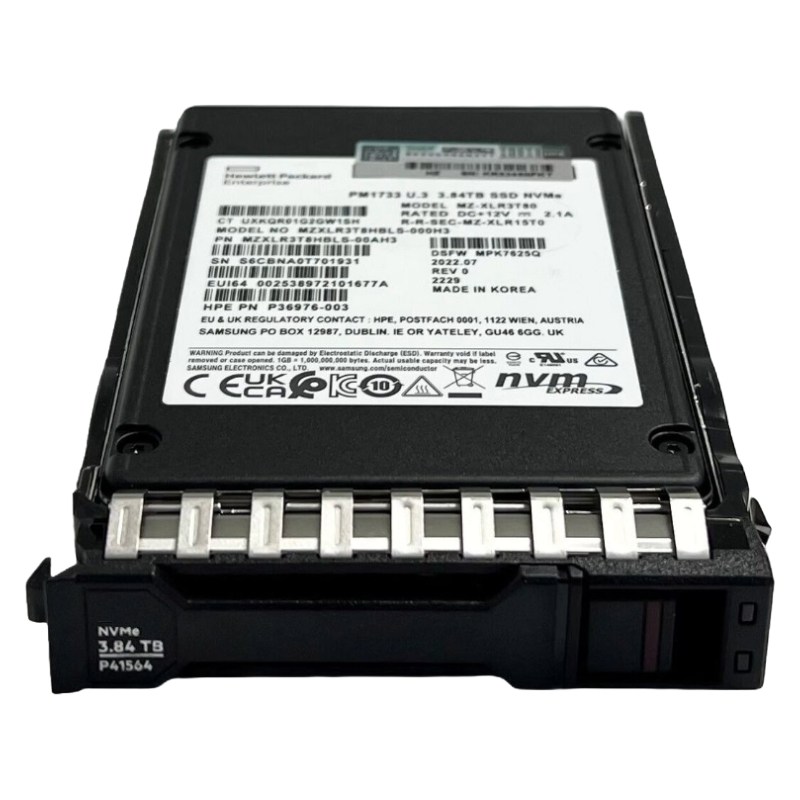


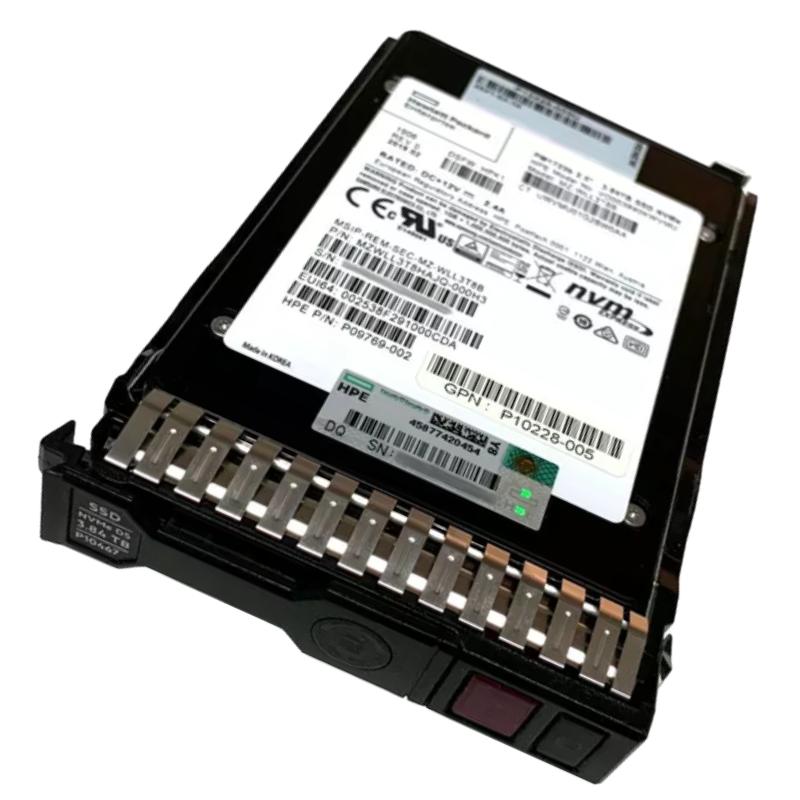
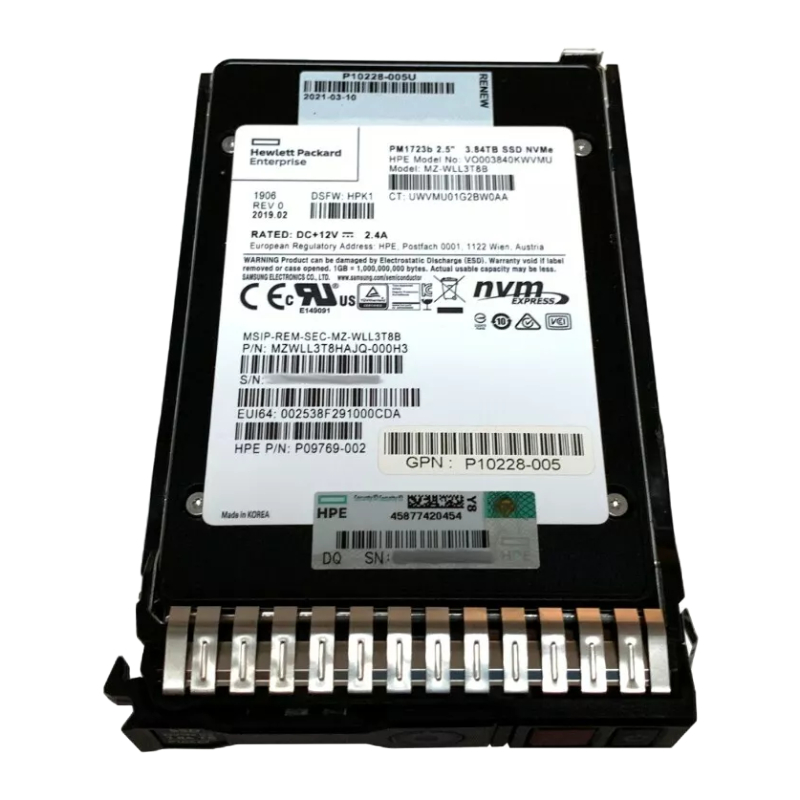
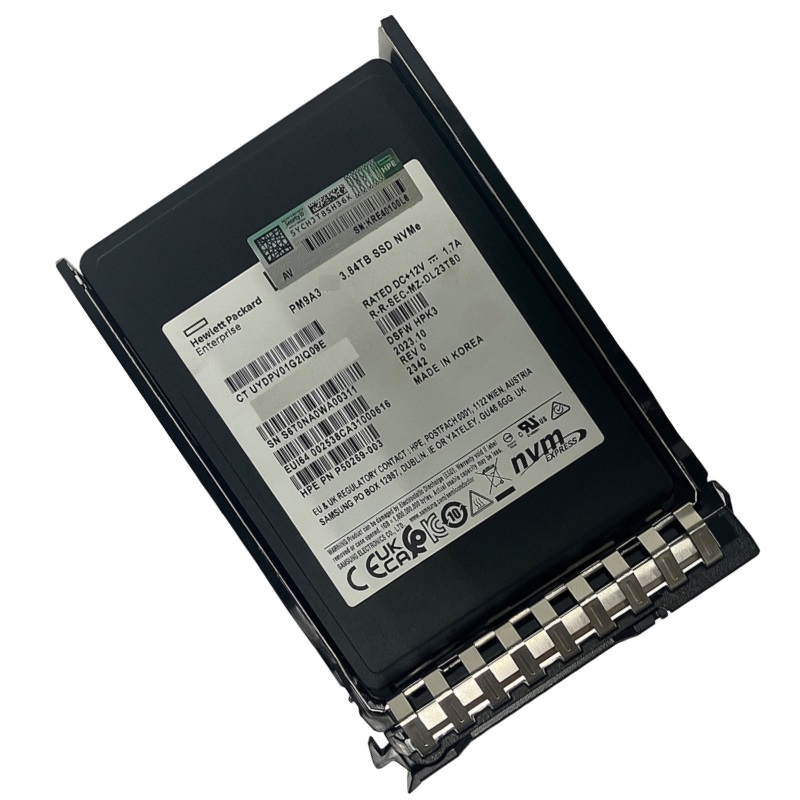
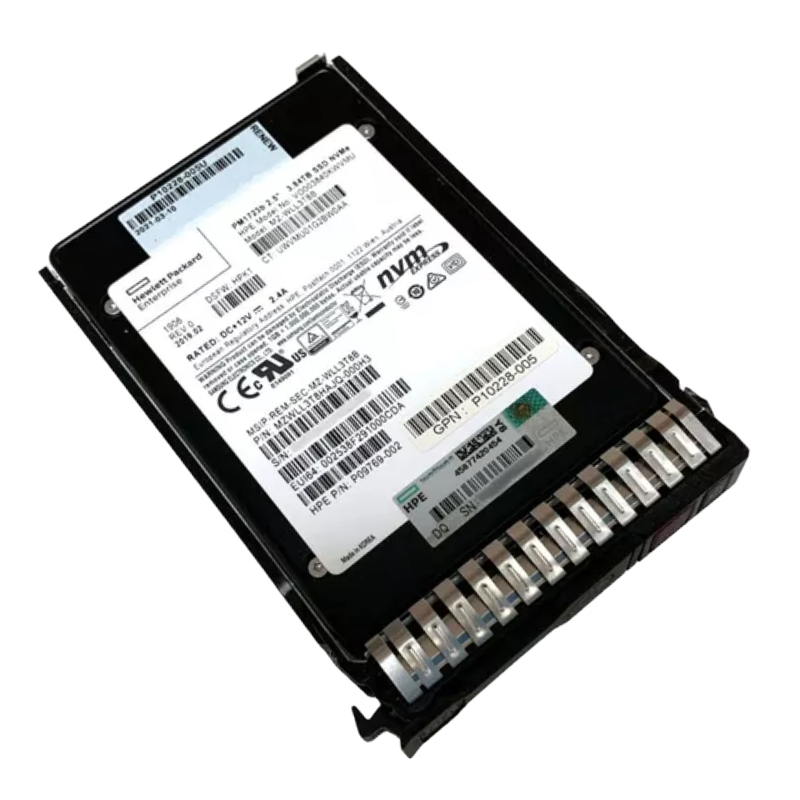
HPE P57758-B21 3.84TB PCI Express NVMe Read Intensive 2.5 Inch SFF Hot Swap SSD, Multi Vendor FIO Solid State Drive. Excellent Refurbished with 1 Year Replacement Warranty
Enhance your server performance with the HPE P57758-B21 3.84TB NVMe Solid State Drive. Designed for read-intensive workloads, this enterprise-grade storage device offers superior speed, dependability, and easy integration in small form factor environments.
With HPE’s renowned reliability and support, the P57758-B21 SSD ensures your data is stored securely and accessed swiftly when needed. It’s an excellent investment for businesses looking to upgrade their infrastructure with modern, high-speed storage solutions.
The category of Enterprise NVMe solid‑state drives represented by the HPE P57758‑B21 3.84 TB SSD addresses the high‑performance storage demands of modern data centres, servers, and high‑availability infrastructures. These drives are designed for read‑intensive workloads, utilising the PCI Express 4.0 x4 interface and 2.5‑inch small form factor packaging to deliver reliable, high‑speed data throughput. They form part of HPE’s enterprise‑grade storage family and are suited to environments where rapid access to large volumes of data, minimal latency, and high reliability are critical factors.
Within this category, the drives are tailored for workloads that demand sustained read performance rather than heavy write cycles. Use cases include large‑scale databases, content delivery platforms, caching layers, virtualisation platforms where read I/O dominates, and high‑performance compute clusters. The 3.84 TB capacity supports significant data sets while the read‑intensive classification ensures the drive is optimised for scenarios where data retrieval speed and consistent access times are more important than write endurance. In virtual machine storage, for example, boot storms or numerous concurrent reads benefit from such high‑performance drives. In analytics or high‑throughput streaming scenarios the low latency and high bandwidth of the category shine through. Moreover, the hot‑swap 2.5‑inch SFF form factor simplifies maintenance and integration into existing server infrastructure with minimal disruption.
The small form factor (2.5‑inch SFF) of this SSD category resolves many of the mechanical constraints of data centre racks and server sleds. By employing a 2.5‑inch footprint, the drives can slot into hot‑swap carriers common to enterprise servers, enabling system administrators to replace or upgrade storage modules without powering down systems. Coupled with the Universal Drive Carrier or specific HPE Basic Carriers supplied, this category delivers seamless physical integration into HPE ProLiant servers, storage enclosures and converged infrastructure systems. The ease of insertion, removal and replacement is particularly valued in environments where uptime is paramount and maintenance windows are limited.
A defining feature of this SSD category is the use of the PCI Express 4.0 x4 (NVMe) interface. This interface provides vastly higher throughput, lower latency, and better scalability compared to legacy SATA or SAS interfaces. The HPE P57758‑B21 drives, for example, are advertised with PCIe 4.0 x4 connectivity, enabling rapid data transfer via NVMe protocol, which bypasses many of the bottlenecks associated with older storage buses. In addition, this category supports hot‑swappable operation and is constructed for compatibility with 2.5‑inch drive bays prevalent in enterprise servers. By combining high‑bandwidth interface, NVMe protocol and compact 2.5‑inch physical size, these drives strike a compelling balance of performance, capacity and form‑factor flexibility.
Within this category, performance is optimised for read‑heavy workloads rather than write‑intensive patterns. The “read‑intensive” designation indicates that while writes are supported, the endurance targets are aligned with elevated read throughput rather than extremely high drive‑writes‑per‑day. Typical performance characteristics include high sequential read rates, excellent random read I/O per second (IOPS) and minimal latency even under load. The HPE P57758‑B21 drive is marketed with capacity of 3.84 TB, form factor 2.5” SFF, interface PCIe 4.0 x4 (NVMe) and hot‑swap readiness. :contentReference[oaicite:1]{index=1} Because the architecture emphasises reads, this category is ideal where reliability of read access, consistent latency and long‑term stability are more critical than maximizing write endurance. In data‑warehouse, caching and streaming applications this optimisation translates into fewer performance bottlenecks and smoother scaling as the organisation’s data footprint increases.
A standout benefit of this category stems from the use of the NVMe protocol over PCI Express. Compared with older SAS/SATA interfaces, NVMe delivers far lower latency, enabling faster queue depths and more efficient parallelism in I/O operations. This means that server systems employing drives from this category will experience faster response times for data requests, improved concurrency and better utilisation of storage resources. For enterprise environments where milliseconds matter — such as real‑time analytics, in‑memory databases, online transaction processing (OLTP) systems, and virtualised workloads — the latency reduction of the category makes a measurable impact on user experience, throughput and system efficiency.
The 3.84 TB capacity level offered in drives like the HPE P57758‑B21 reflects the mid‑to‑high tier of enterprise SSD capacity within the read‑intensive class. This category allows data centre architects to deploy fewer drives for equivalent capacity compared to lower‑capacity alternatives, reducing rack space, power consumption and cooling needs. The reduction in drive count also simplifies infrastructure management. As data volumes continue to swell in modern enterprises, having drives in this category means administrators can plan for growth, scaling out capacity without proportional expansion in infrastructure footprint. Moreover, as the drives are designed for read‑intensive workloads, they align well with large‑capacity pools leveraged for analytics, big data storage, high‑performance caching and read‑dominant archival layers.
Although drives in this category prioritise read operations, they do not compromise on the enterprise‑grade features expected in mission‑critical infrastructure. This includes hot‑swappable design for minimal downtime, small form factor compatibility, firmware optimised for data centre workloads, and full integration with HPE server ecosystems. For example, the manufacturer lists the product description as a “High‑performance HPE Read Intensive Solid State Drive” and emphasises hot‑swap capability and large capacity. :contentReference[oaicite:2]{index=2} Endurance ratings for read‑intensive drives typically are lower in terms of write durability compared to “write‑intensive” class, but in scenarios aligned with the drive’s workload design the endurance is more than sufficient and the reduced cost per TB makes the category highly cost‑effective for read‑dominated applications. Over time, using the correct drive class for each workload ensures reliability, cost optimization and performance stability.
Additionally, the 2.5‑inch form factor and hot‑plug design enable replaceability and serviceability without affecting system uptime, a crucial element in high‑availability deployments. Maintenance operations such as drive swap or upgrade can be accomplished without lengthy service windows, allowing businesses to focus on continuous operations rather than scheduled downtime.
An important strength of this category is its compatibility with existing enterprise server platforms. The small form factor size, use of NVMe and hot‑swap carriers make these drives plug‑and‑play in many HPE ProLiant servers, storage systems and chassis that support 2.5‑inch SFF drives. Because the drive is bundled with an HPE Basic Carrier (in many listings) and is marketed for 2.5‑inch drives in hot‑swap bays, the integration process is streamlined. :contentReference[oaicite:3]{index=3} For organisations already standardised on HPE infrastructure, this means less need for adapter kits, less configuration overhead and faster deployment cycles. Moreover, as rack densities increase and server architectures evolve, being able to drop in a high‑performing read‑intensive SSD into familiar carrier systems greatly simplifies storage consolidation, refresh cycles and overall infrastructure lifecycle management.
The SSD category represented by HPE P57758‑B21 benefits from the reduced power draw, lower heat generation and more efficient operation inherent to solid‑state flash technology. Compared to spinning hard drives or legacy SSDs using older interfaces, NVMe drives in this category offer improved I/O per watt and higher density storage in the same chassis footprint. In data centre environments where cooling and power budgets are under pressure, this efficiency becomes a differentiator. By deploying fewer drives to meet capacity requirements, operators reduce required cooling loads. Additionally, because the small form factor and hot‑swap design reduce complex mechanical assemblies, the overall system reliability improves and thermal hotspots are easier to manage.
To get the most out of this SSD category, organisations should align the drive class with the workload profile. For workloads where reads dominate and writes are minimal — for example, content delivery, SQL read‑heavy databases, analytics, virtual machine boot volumes and caching layers — selecting a drive such as the HPE P57758‑B21 ensures optimal alignment of performance and cost. It is advisable to ensure the server or storage enclosure supports PCIe 4.0 NVMe interface and 2.5‑inch hot‑swap carriers. Adequate cooling and ventilation are also key when deploying high‑density NVMe drives in server racks, as the heat profile of NVMe can be higher than SATA equivalents. Monitoring firmware versions, compatibility with the server’s storage controller or NVMe backplane, and correct carrier insertion via the HPE Basic Carrier all contribute to a successful deployment. Further, because the endurance rating is geared toward read‑intensive use, workloads with heavy write cycles or high drive‑write‑per‑day (DWPD) demands may be better served by a “write‑intensive” class drive to avoid premature wear or capacity limitations. By choosing the correct classification and ensuring system compatibility, organisations can maximise performance, reliability and cost effectiveness.
As data requirements continue to grow in enterprise and hyperscale environments, the SSD category exemplified by the HPE P57758‑B21 offers a scalable foundation. The NVMe interface, high capacity, and enterprise‑grade design mean that deployments built today will be able to handle tomorrow’s workloads with fewer hardware refresh cycles. The compact form factor allows denser storage configurations within racks, while the hot‑swap architecture supports maintenance and scaling with minimal disruption. Organisations can adopt a modular growth strategy: begin with a smaller drive footprint, and as data volumes increase simply populate additional 2.5‑inch bays with higher‑capacity NVMe read‑intensive drives. The alignment of this category with modern server architectures and enterprise storage ecosystems ensures that deployments remain relevant, flexible and maintainable over multiple technology cycles.


 Contact Us
 Information
 Catalog
 Solid State Drives (SSD)
 Network Switches
 Hard Disk Drives
 HBA & Controllers
 PC & Servers
 PC & Server Memory
 CPU & Processors
 Network Routers
 Power Supplies
 Tape Drives & Libraries
 Network Devices
 Computer & Network Cables