(7% discount is applied at checkout)
Cart is empty
Your go-to destination for cutting-edge server products


| SKU/MPN | Warranty | Price | Condition | You save |
|---|---|---|---|---|
| 814790-B21 | 1 Year Warranty | $528.00 | Factory-Sealed New in Original Box (FSB) | You save: $184.80 (26%) |
| 814790-B21 | 1 Year Warranty | $373.00 | New (System) Pull | You save: $130.55 (26%) |
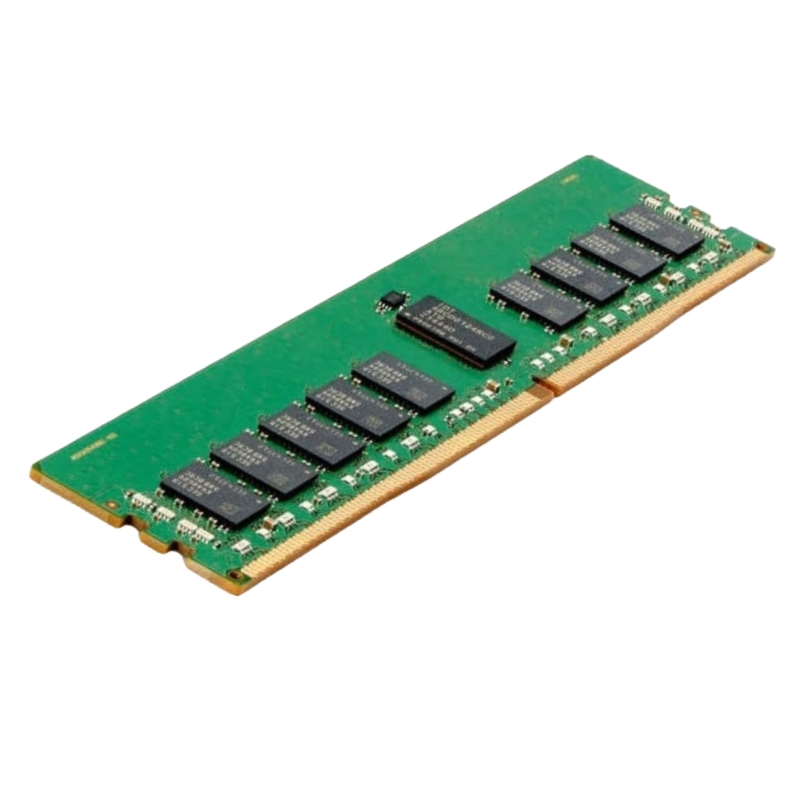
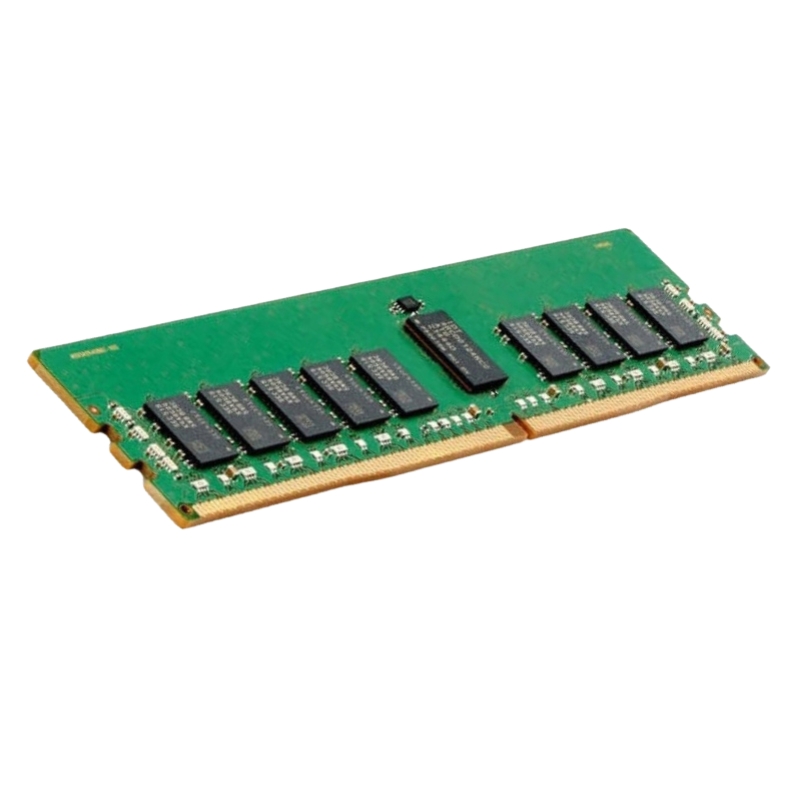
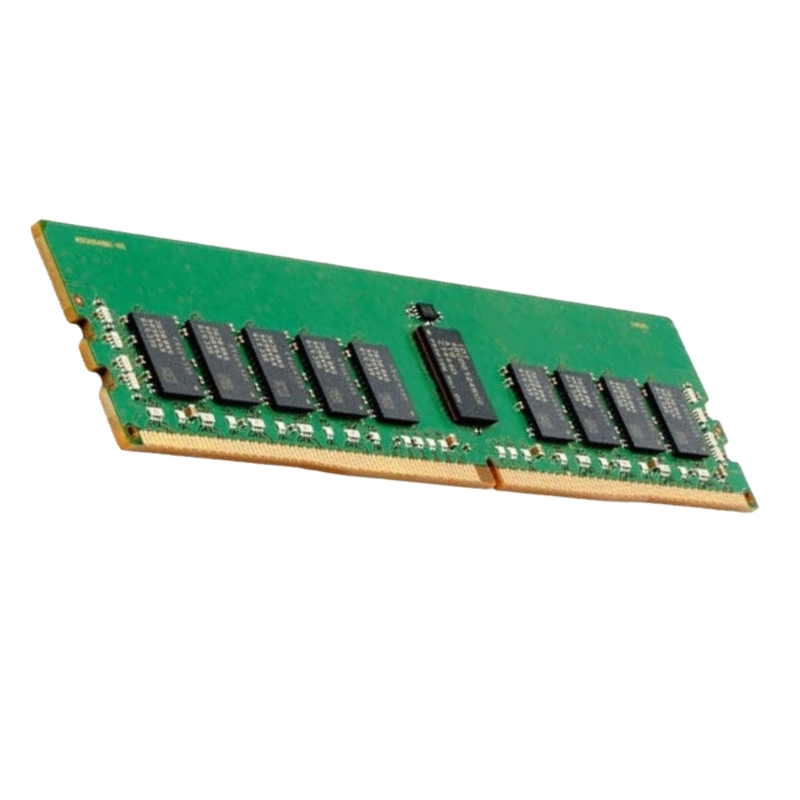
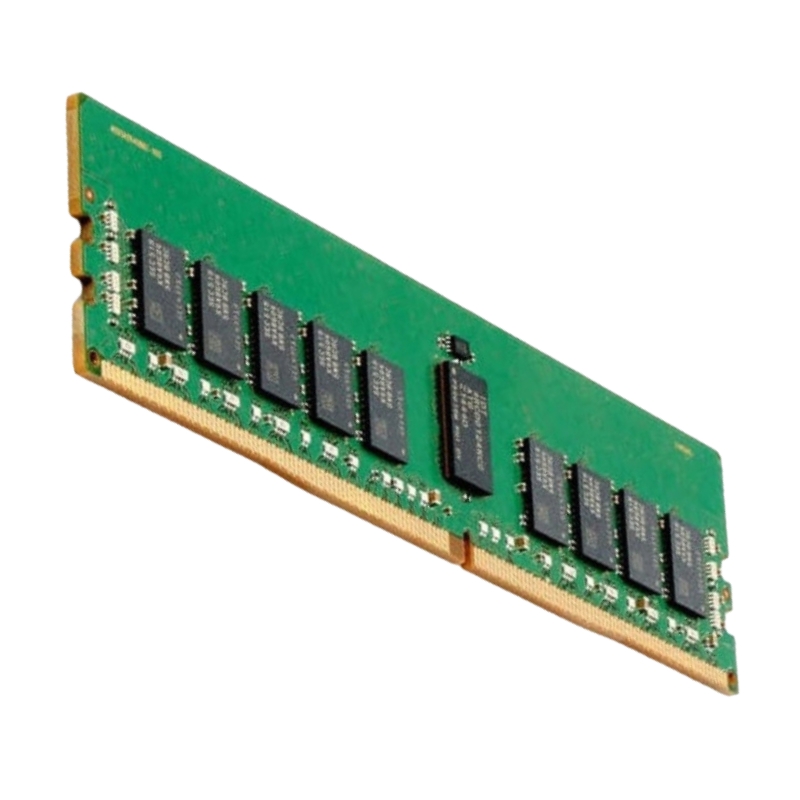
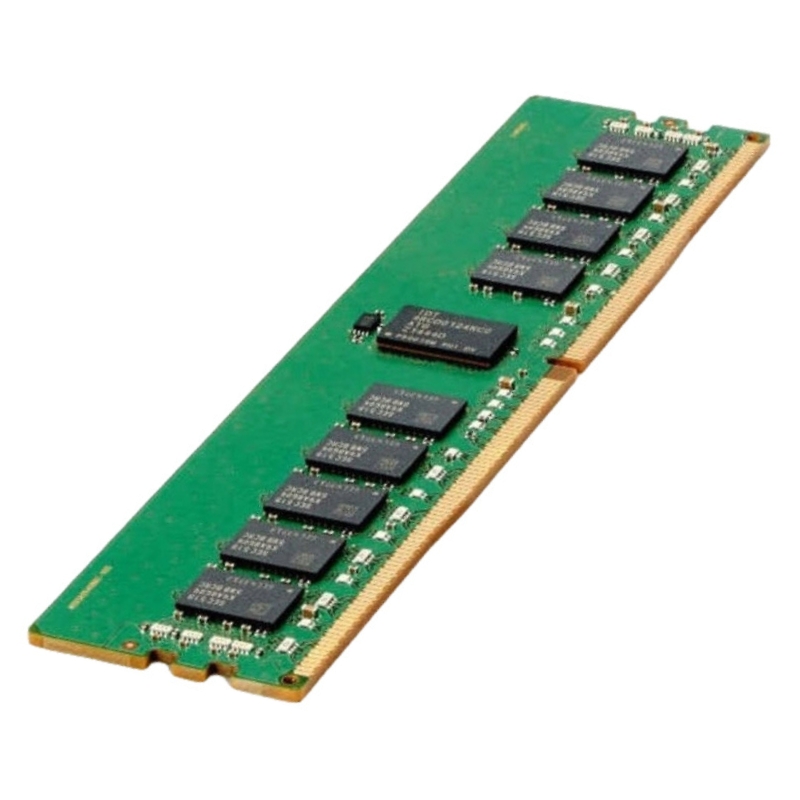
Boost server performance with the HPE 814790-B21 32GB DDR4-2133 SDRAM LR-DIMM. This quad-rank, ECC registered, load-reduced memory module delivers stable throughput, reduced latency, and enterprise-grade reliability for HPE ProLiant and Apollo systems.
Designed for seamless integration across a wide range of HPE Gen9 systems, ensuring plug-and-play stability and certified support.
The HPE 814790-B21 represents a high-performance 32GB DDR4 memory module engineered specifically for enterprise server environments. This single dual in-line memory module (DIMM) provides substantial memory capacity ideal for memory-intensive applications and virtualization workloads. The 32GB capacity per module allows for significant memory density in compatible server systems, enabling organizations to maximize their computing resources while minimizing physical space requirements within server chassis.
Operating at 2133MHz (PC4-17000), this memory module delivers a data transfer rate of 17,000 MB/s per module. The 2133MHz frequency represents a balanced performance point in the DDR4 spectrum, offering excellent throughput while maintaining optimal power efficiency. The PC4-17000 designation specifically refers to the peak transfer rate of 17,000 MB/s, calculated as 2133 million transfers per second multiplied by 8 bytes per transfer (64-bit data width).
Error Correcting Code technology represents a critical feature for enterprise environments where data integrity is paramount. The HPE 814790-B21 incorporates advanced ECC capabilities that can detect and correct single-bit memory errors automatically, while also detecting double-bit errors. This proactive error correction significantly reduces system crashes, data corruption, and unexpected downtime in mission-critical server applications. The ECC functionality operates transparently to the operating system and applications, providing continuous protection without performance degradation.
As a registered memory module (RDIMM), this DIMM includes memory registers positioned between the system's memory controller and the DRAM chips. These registers buffer command and address signals, reducing the electrical load on the memory controller and enabling support for higher memory capacities per channel. The registered design allows servers to accommodate more memory modules while maintaining signal integrity and system stability, making it ideal for memory-intensive applications and large-scale database operations.
The HPE 814790-B21 is specifically validated for use across multiple HPE ProLiant server generations, including Gen9 and compatible Gen10 systems. This memory module undergoes rigorous testing and validation within HPE's quality assurance laboratories to ensure seamless integration and optimal performance. The compatibility extends to various ProLiant models including DL380, DL360, DL580, and other rack-mounted servers within these generations.
Each HPE memory module undergoes platform-specific tuning to ensure optimal performance within HPE server ecosystems. The 814790-B21 includes specialized firmware and SPD (Serial Presence Detect) programming that enables advanced features such as memory temperature monitoring, predictive failure analysis, and integration with HPE's iLO (Integrated Lights-Out) management systems. This deep integration provides administrators with comprehensive memory health monitoring and management capabilities.
Proper memory configuration is essential for optimal system performance. The HPE 814790-B21 should be installed in matching pairs or sets according to the specific server's memory population guidelines. Most compatible systems require installation in multiples per processor, with specific slot sequencing to ensure balanced memory access across channels. HPE provides detailed configuration guides for each server model, specifying optimal population sequences for various memory capacity requirements.
While the HPE 814790-B21 can often operate alongside other compatible HPE memory modules, best practices recommend using identical memory types throughout a system. Mixed memory configurations may operate at the speed of the slowest module and could potentially impact overall system performance. For mission-critical environments, homogeneous memory configurations are strongly recommended to ensure predictable performance and compatibility.
The theoretical maximum bandwidth of 17,000 MB/s represents ideal conditions, while real-world performance typically achieves 80-90% of this maximum depending on workload characteristics and system configuration. Memory-intensive applications such as database servers, virtualization hosts, and scientific computing environments benefit significantly from the sustained throughput capabilities of the 2133MHz operating frequency. The module's performance characteristics make it particularly well-suited for applications requiring consistent, low-latency memory access patterns.
DDR4 memory technology introduces improved latency characteristics compared to previous generations, with the HPE 814790-B21 featuring optimized timing parameters for server workloads. While specific CAS latency values are managed dynamically by the system's memory controller, the underlying DDR4 architecture provides enhanced command efficiency and reduced bank conflict penalties, resulting in improved overall system responsiveness under heavy memory utilization.
The HPE 814790-B21 implements advanced patrol scrubbing capabilities that proactively scan memory addresses for potential errors before they can impact system stability. This background maintenance process identifies and corrects soft errors that may occur due to environmental factors or electrical fluctuations. The scrubbing process operates transparently during system operation, providing continuous memory integrity validation without requiring scheduled downtime or maintenance windows.
Leveraging DDR4 architectural advancements, this memory module supports post-package repair (PPR) capabilities that can remap failing memory addresses to spare cells within the memory chips. This hardware-level repair mechanism extends the usable lifespan of memory modules by compensating for age-related degradation or isolated manufacturing defects. The PPR functionality works in conjunction with the system's memory controller to maintain optimal memory reliability throughout the module's operational lifetime.
HPE employs rigorous component selection processes for the 814790-B21, utilizing premium-grade DRAM chips that undergo extensive testing and binning procedures. Each memory module undergoes comprehensive testing at multiple stages of the manufacturing process, including individual component validation, assembled module testing, and system-level compatibility verification. This multi-tiered testing approach ensures consistent performance and reliability across production batches.
Before certification, the HPE 814790-B21 undergoes extensive environmental stress testing including thermal cycling, vibration testing, mechanical shock resistance, and extended burn-in procedures. These tests simulate years of typical server operation within compressed timeframes, identifying potential early-life failures and ensuring long-term reliability in diverse operating environments. The modules are designed to withstand the mechanical stresses of data center environments, including frequent installation/removal cycles and transportation.
Virtualization platforms such as VMware vSphere, Microsoft Hyper-V, and Proxmox VE benefit significantly from the high-capacity, high-reliability characteristics of the HPE 814790-B21. Each virtual machine consumes dedicated memory resources, making substantial physical memory capacity essential for supporting dense virtual machine deployments. The 32GB module size provides an optimal balance between memory density and flexibility for allocating appropriate memory resources to virtual workloads of varying sizes.
Advanced virtualization features such as memory overcommitment and transparent page sharing place additional demands on physical memory subsystems. The HPE 814790-B21's ECC protection and reliable performance characteristics ensure stable operation even under aggressive memory utilization scenarios. The module's consistent performance profile enables predictable virtual machine performance, which is critical for maintaining service level agreements in virtualized environments.
Modern database systems increasingly leverage in-memory processing for improved performance, with platforms like SAP HANA, Oracle Database In-Memory, and Microsoft SQL Server In-Memory OLTP requiring substantial, reliable memory resources. The HPE 814790-B21's 32GB capacity and ECC protection make it ideally suited for these memory-intensive database applications, where data integrity and consistent low-latency access are critical for transaction processing and real-time analytics.
The HPE 814790-B21 leverages DDR4's innovative bank group architecture, which divides memory banks into separate groups that can operate more independently than in previous generations. This architectural improvement increases overall memory efficiency by allowing simultaneous access to different bank groups, reducing access conflicts and improving effective bandwidth for complex memory access patterns. The bank group structure is particularly beneficial for multi-threaded applications and virtualized environments with diverse memory access characteristics.
HPE typically maintains component availability throughout the supported lifecycle of compatible server platforms, with the 814790-B21 remaining available for purchase and configuration throughout the service life of Gen9 and Gen10 ProLiant systems. HPE provides advance notice of product discontinuation, allowing organizations to plan for future upgrades and procurement needs. This lifecycle management approach ensures consistent supply for maintenance and expansion requirements throughout the server's operational lifespan.
While the HPE 814790-B21 is specifically validated for Gen9 and compatible Gen10 systems, its standard DDR4 architecture provides potential compatibility with selected future platforms, though specific validation is required for each new server generation. Organizations planning platform migrations should consult HPE's compatibility matrices to determine optimal memory reuse strategies across server generations, potentially extending the investment value of existing memory infrastructure.


 Contact Us
 Information
 Catalog
 Solid State Drives (SSD)
 Network Switches
 Hard Disk Drives
 HBA & Controllers
 PC & Servers
 PC & Server Memory
 CPU & Processors
 Network Routers
 Power Supplies
 Tape Drives & Libraries
 Network Devices
 Computer & Network Cables